Koopman-based control of nonlinear systems with closed-loop guarantees
-
Robin Strässer
 ,
Julian Berberich
,
Julian Berberich

Abstract
In this paper, we provide a tutorial overview and an extension of a recently developed framework for data-driven control of unknown nonlinear systems with rigorous closed-loop guarantees. The proposed approach relies on the Koopman operator representation of the nonlinear system, for which a bilinear surrogate model is estimated based on data. In contrast to existing Koopman-based estimation procedures, we state guaranteed bounds on the approximation error using the stability- and certificate-oriented extended dynamic mode decomposition (SafEDMD) framework. The resulting surrogate model and the uncertainty bounds allow us to design controllers via robust control theory and sum-of-squares optimization, guaranteeing desirable properties for the closed-loop system. We present results on stabilization both in discrete and continuous time, and we derive a method for controller design with performance objectives. The benefits of the presented framework over established approaches are demonstrated with a numerical example.
Zusammenfassung
In dieser Arbeit geben wir eine Übersicht und Erweiterung eines kürzlich entwickelten Frameworks zur datengetriebenen Regelung unbekannter nichtlinearer Systeme mit rigorosen Garantien. Der betrachtete Ansatz basiert auf der Koopman-Operator-Darstellung des nichtlinearen Systems, für das ein bilineares Ersatzmodell anhand von Daten geschätzt wird. Im Gegensatz zu bestehenden Verfahren zur Koopman-basierten Schätzung bieten die gezeigten Methoden garantierte Schranken auf den Approximationsfehler unter Verwendung des stability- and certificate-oriented extended dynamic mode decomposition (SafEDMD)-Frameworks. Das resultierende Ersatzmodell und die Unsicherheitsgrenzen ermöglichen die Auslegung von Reglern mittels robuster Regelungstheorie und Sum-of-Squares-Optimierung und gewährleisten dabei wünschenswerte Eigenschaften für das geregelte System. Wir präsentieren Ergebnisse zur Stabilisierung sowohl in diskreter als auch in kontinuierlicher Zeit und entwickeln eine Methode zum Reglerentwurf mit Performancekriterien. Die Vorteile des vorgestellten Frameworks gegenüber etablierten Ansätzen werden anhand eines numerischen Beispiels demonstriert.
About the authors
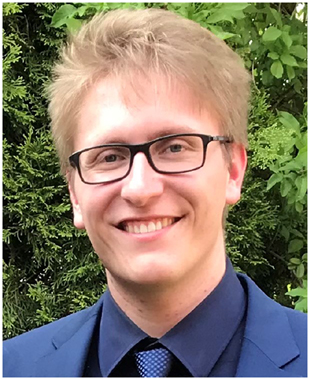
Robin Strässer received a master’s degree in Simulation Technology from the University of Stuttgart, Germany, in 2020. Since 2020, he has been a Research and Teaching Assistant with the Institute for Systems Theory and Automatic Control and a member of the Graduate School Simulation Technology at the University of Stuttgart. His research interests include data-driven system analysis and control, with a focus on nonlinear systems. Robin Strässer received the Best Poster Award at the International Conference on Data-Integrated Simulation Science (SimTech2023).
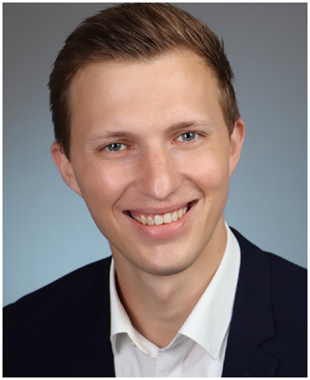
Julian Berberich is a Lecturer (Akademischer Rat) at the Institute for Systems Theory and Automatic Control at the University of Stuttgart, Germany. He received his Ph.D. in Mechanical Engineering in 2022, and a Master’s degree in Engineering Cybernetics in 2018, both from the University of Stuttgart, Germany. In 2022, he was a visiting researcher at ETH Zürich, Switzerland. He is a recipient of the 2022 George S. Axelby Outstanding Paper Award as well as the Outstanding Student Paper Award at the 59th IEEE Conference on Decision and Control in 2020. His research interests include data-driven analysis and control as well as quantum computing.

Manuel Schaller obtained the M.Sc. and Ph.D. in Applied Mathematics from the University of Bayreuth in 2017 and 2021 respectively. From 2020 to 2023 he held a Lecturer position and a Junior Professorship at Technische Universität Ilmenau, Germany. Since August 2024, he is tenure track assistant professor at Chemnitz University of Technology, Germany. His research focuses on data-driven control with guarantees, port-Hamiltonian systems and efficient numerical methods for optimal control. For his research he has been named junior fellow of the GAMM (Society for Applied Mathematics and Mechanics), received the Best Poster Award at the workshop on systems theory and PDEs (WOSTAP 2022) and is an elected member of the Young Academy of the European Mathematical Society (EMS) in 2024–2027.
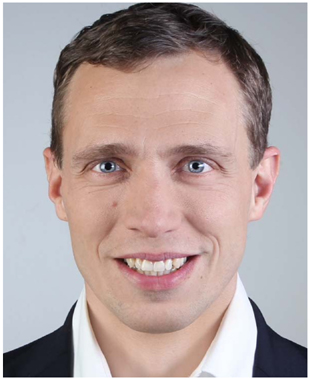
Karl Worthmann received his Ph.D. degree in mathematics from the University of Bayreuth, Germany, in 2012. 2014 he become assistant professor for “Differential Equations” at Technische Universität Ilmenau (TU Ilmenau), Germany. 2019 he was promoted to full professor after receiving the Heisenberg-professorship “Optimization-based Control” by the German Research Foundation (DFG). He was recipient of the Ph.D. Award from the City of Bayreuth, Germany, and stipend of the German National Academic Foundation. 2013 he has been appointed Junior Fellow of the Society of Applied Mathematics and Mechanics (GAMM), where he served as speaker in 2014 and 2015. His current research interests include systems and control theory with a particular focus on nonlinear model predictive control, stability analysis, and data-driven control.

Frank Allgöwer studied engineering cybernetics and applied mathematics in Stuttgart and with the University of California, Los Angeles (UCLA), CA, USA, respectively, and received the Ph.D. degree from the University of Stuttgart, Stuttgart, Germany. Since 1999, he has been the Director of the Institute for Systems Theory and Automatic Control and a professor with the University of Stuttgart. His research interests include predictive control, data-based control, networked control, cooperative control, and nonlinear control with application to a wide range of fields including systems biology. Dr. Allgöwer was the President of the International Federation of Automatic Control (IFAC) in 2017–2020 and the Vice President of the German Research Foundation DFG in 2012–2020.
-
Research ethics: Not applicable.
-
Informed consent: Not applicable.
-
Author contributions: All authors have accepted responsibility for the entire content of this manuscript and approved its submission.
-
Use of Large Language Models, AI and Machine Learning Tools: None declared.
-
Conflict of interest: The authors state no conflict of interest.
-
Research funding: F. Allgöwer is thankful that this work was funded by the Deutsche Forschungsgemeinschaft (DFG, German Research Foundation) under Germany's Excellence Strategy – EXC 2075 – 390740016 and within grant AL 316/15-1 – 468094890. K. Worthmann gratefully acknowledges funding by the German Research Foundation (DFG; grant WO 2056/14-1 – 507037103). R. Strässer thanks the Graduate Academy of the SC SimTech for its support.
-
Data availability: Not applicable.
Appendix A Proof of Theorem 3
We consider the Lyapunov function candidate
with some ɛ > 0 for all x ∈ Ω(c*). To this end, we establish closed-loop stability of the bilinear surrogate with state
Then, by exploiting L(z) ⊗ z = (K(z) ⊗ z)P, Q(z) ∈ SOS[z,2α]2N+m ensures
for all
which is equivalent to
for all
Using again the Schur complement, now w.r.t. the last two block rows and columns, (43) reads equivalently
Note that (44) can be decomposed into
Substituting z by
for all
Now, recall
where we exploit (6). Hence, we have established the desired Lyapunov inequality (41) with
the residual satisfies (47) for
Appendix B Proof of Theorem 7
In the following, we establish exponential stability and quadratic performance of the lifted system (30) and thus, if the proportional error bound (21) holds, of the nonlinear system (26). To this end, we define the Lyapunov candidate function
Then, multiplying (34) from the left and the right by
and its transpose, respectively, yields
for all
Using again the Schur complement, now w.r.t. the three last block rows and columns, (54) is equivalent to
Note that (55) can be equivalently decomposed into
Recall (32) for the supply rate s(w, y) and (30) for the lifted (closed-loop) dynamics, i.e.,
Then, substituting z by
for all
Hence, by integrating (60) from t = 0 to ∞, we establish (33) by using x(0) = 0 and limt→∞x(t) = 0, and, thus, quadratic performance according to Definition 6.□
Appendix C Proof of Corollary 9
Recall that Theorem 7 establishes the Lyapunov inequality (59) for all
Using
where we define
Note that the left-hand side of the inequality is just the total time derivative of e βt V(x(t)). Thus, integrating both sides on the interval [t, t + χ] for any χ > 0 yields
Hence,
For all x(t) ∈ Ω(c*), i.e., V(x(t)) ≤ c*, we obtain
for all ‖w(t)‖2 ≤ ν. Thus, we have established the existence of a ν > 0 such that the RoA Ω(c*) is robust positively invariant.
References
[1] Z.-S. Hou and Z. Wang, “From model-based control to data-driven control: survey, classification and perspective,” Inf. Sci., vol. 235, pp. 3–35, 2013. https://doi.org/10.1016/j.ins.2012.07.014.Search in Google Scholar
[2] I. Markovsky and F. Dörfler, “Behavioral systems theory in data-driven analysis, signal processing, and control,” Annu. Rev. Control, vol. 52, pp. 42–64, 2021. https://doi.org/10.1016/j.arcontrol.2021.09.005.Search in Google Scholar
[3] H. J. van Waarde, J. Eising, M. K. Camlibel, and H. L. Trentelman, “The informativity approach to data-driven analysis and control,” IEEE Control Syst. Mag., vol. 43, no. 6, pp. 32–66, 2023. https://doi.org/10.1109/mcs.2023.3310305.Search in Google Scholar
[4] T. Faulwasser, R. Ou, G. Pan, P. Schmitz, and K. Worthmann, “Behavioral theory for stochastic systems? A data-driven journey from Willems to Wiener and back again,” Annu. Rev. Control, vol. 55, pp. 92–117, 2023. https://doi.org/10.1016/j.arcontrol.2023.03.005.Search in Google Scholar
[5] J. Berberich and F. Allgöwer, “An overview of systems-theoretic guarantees in data-driven model predictive control,” Annu. Rev. Control, Robot., Auton. Syst., vol. 8, 2024.10.1146/annurev-control-030323-024328Search in Google Scholar
[6] T. Martin, T. B. Schön, and F. Allgöwer, “Guarantees for data-driven control of nonlinear systems using semidefinite programming: a survey,” Annu. Rev. Control, vol. 56, 2023, Art. no. 100911. https://doi.org/10.1016/j.arcontrol.2023.100911.Search in Google Scholar
[7] B. O. Koopman, “Hamiltonian systems and transformation in Hilbert space,” Proc. Natl. Acad. Sci. U. S. A., vol. 17, no. 5, pp. 315–318, 1931. https://doi.org/10.1073/pnas.17.5.315.Search in Google Scholar PubMed PubMed Central
[8] I. Mezić, “Spectral properties of dynamical systems, model reduction and decompositions,” Nonlinear Dyn., vol. 41, nos. 1–3, pp. 309–325, 2005. https://doi.org/10.1007/s11071-005-2824-x.Search in Google Scholar
[9] J. L. Proctor, S. L. Brunton, and J. Nathan Kutz, “Generalizing Koopman theory to allow for inputs and control,” SIAM J. Appl. Dyn. Syst., vol. 17, no. 1, pp. 909–930, 2018. https://doi.org/10.1137/16m1062296.Search in Google Scholar PubMed PubMed Central
[10] S. E. Otto and C. W. Rowley, “Koopman operators for estimation and control of dynamical systems,” Annu. Rev. Control, Robot., Auton. Syst., vol. 4, pp. 59–87, 2021. https://doi.org/10.1146/annurev-control-071020-010108.Search in Google Scholar
[11] A. Mauroy, I. Mezić, and Y. Susuki, The Koopman operator in systems and Control, Berlin, Springer, 2020.10.1007/978-3-030-35713-9Search in Google Scholar
[12] P. Bevanda, S. Sosnowski, and S. Hirche, “Koopman operator dynamical models: learning, analysis and control,” Annu. Rev. Control, vol. 52, pp. 197–212, 2021. https://doi.org/10.1016/j.arcontrol.2021.09.002.Search in Google Scholar
[13] M. Korda and I. Mezić, “Linear predictors for nonlinear dynamical systems: Koopman operator meets model predictive control,” Automatica, vol. 93, pp. 149–160, 2018. https://doi.org/10.1016/j.automatica.2018.03.046.Search in Google Scholar
[14] S. Peitz, S. E. Otto, and C. W. Rowley, “Data-driven model predictive control using interpolated Koopman generators,” SIAM J. Appl. Dyn. Syst., vol. 19, no. 3, pp. 2162–2193, 2020. https://doi.org/10.1137/20m1325678.Search in Google Scholar
[15] M. O. Williams, M. S. Hemati, S. T. M. Dawson, I. G. Kevrekidis, and C. W. Rowley, “Extending data-driven Koopman analysis to actuated systems,” IFAC-PapersOnLine, vol. 49, no. 18, pp. 704–709, 2016. https://doi.org/10.1016/j.ifacol.2016.10.248.Search in Google Scholar
[16] A. Surana, “Koopman operator based observer synthesis for control-affine nonlinear systems,” in Proc. 55th IEEE Conference on Decision and Control (CDC), 2016, pp. 6492–6499.10.1109/CDC.2016.7799268Search in Google Scholar
[17] B. Huang, X. Ma, and U. Vaidya, “Feedback stabilization using Koopman operator,” in Proc. 57th IEEE Conference on Decision and Control (CDC), 2018, pp. 6434–6439.10.1109/CDC.2018.8619727Search in Google Scholar
[18] J. J. Bramburger, S. Dahdah, and J. R. Forbes, “Synthesizing control laws from data using sum-of-squares optimization,” in Proc. IEEE Conference on Control Technology and Applications (CCTA), 2024, pp. 505–510.10.1109/CCTA60707.2024.10666531Search in Google Scholar
[19] M. Williams, I. Kevrekidis, and C. Rowley, “A data-driven approximation of the Koopman operator: extending dynamic mode decomposition,” J. Nonlinear Sci., vol. 25, no. 6, pp. 1307–1346, 2015. https://doi.org/10.1007/s00332-015-9258-5.Search in Google Scholar
[20] M. Korda and I. Mezić, “On convergence of extended dynamic mode decomposition to the Koopman operator,” J. Nonlinear Sci., vol. 28, no. 2, pp. 687–710, 2018. https://doi.org/10.1007/s00332-017-9423-0.Search in Google Scholar
[21] D. Bruder, X. Fu, R. Brent Gillespie, C. David Remy, and R. Vasudevan, “Koopman-based control of a soft continuum manipulator under variable loading conditions,” IEEE Robot. Autom. Lett., vol. 6, no. 4, pp. 6852–6859, 2021. https://doi.org/10.1109/lra.2021.3095268.Search in Google Scholar
[22] J. S. Kim, Y. S. Quan, and C. C. Chung, “Koopman operator-based model identification and control for automated driving vehicle,” Int. J. Control Autom. Syst., vol. 21, no. 8, pp. 2431–2443, 2023. https://doi.org/10.1007/s12555-023-0193-1.Search in Google Scholar
[23] M. Budišić, R. Mohr, and I. Mezić, “Applied Koopmanism,” Chaos, vol. 22, no. 4, 2012, Art. no. 047510. https://doi.org/10.1063/1.4772195.Search in Google Scholar PubMed
[24] Y. Chen and U. Vaidya, “Sample complexity for nonlinear stochastic dynamics,” in Proc. IEEE American Control Conference (ACC), 2019, pp. 3526–3531.10.23919/ACC.2019.8815138Search in Google Scholar
[25] F. Nüske, S. Peitz, F. Philipp, M. Schaller, and K. Worthmann, “Finite-data error bounds for Koopman-based prediction and control,” J. Nonlinear Sci., vol. 33, no. 14, 2023, Art. no. 14. https://doi.org/10.1007/s00332-022-09862-1.Search in Google Scholar
[26] I. Mezić, “On numerical approximations of the Koopman operator,” Mathematics, vol. 10, no. 7, p. 1180, 2022. https://doi.org/10.3390/math10071180.Search in Google Scholar
[27] C. Zhang and E. Zuazua, “A quantitative analysis of Koopman operator methods for system identification and predictions,” C. R. Mec., vol. 351, no. S1, pp. 1–31, 2023. https://doi.org/10.5802/crmeca.138.Search in Google Scholar
[28] L. Bold, L. Grüne, M. Schaller, and K. Worthmann, “Data-driven MPC with stability guarantees using extended dynamic mode decomposition,” IEEE Trans. Autom. Control, vol. 70, no. 1, pp. 534–541, 2025. https://doi.org/10.1109/tac.2024.3431169.Search in Google Scholar
[29] R. Strässer, J. Berberich, and F. Allgöwer, “Robust data-driven control for nonlinear systems using the Koopman operator,” IFAC-PapersOnLine, vol. 56, no. 2, pp. 2257–2262, 2023. https://doi.org/10.1016/j.ifacol.2023.10.1190.Search in Google Scholar
[30] R. Strässer, M. Schaller, K. Worthmann, J. Berberich, and F. Allgöwer, “Koopman-based feedback design with stability guarantees,” IEEE Trans. Autom. Control, vol. 70, no. 1, pp. 355–370, 2025. https://doi.org/10.1109/tac.2024.3425770.Search in Google Scholar
[31] R. Strässer, M. Schaller, K. Worthmann, J. Berberich, and F. Allgöwer, “SafEDMD: a certified learning architecture tailored to data-driven control of nonlinear dynamical systems,” arXiv:2402.03145, 2024.Search in Google Scholar
[32] N. Chatzikiriakos, R. Strässer, F. Allgöwer, and A. Iannelli, “End-to-end guarantees for indirect data-driven control of bilinear systems with finite stochastic data,” arXiv:2409.18010, 2024.Search in Google Scholar
[33] K. Worthmann, R. Strässer, M. Schaller, J. Berberich, and F. Allgöwer, “Data-driven MPC with terminal conditions in the Koopman framework,” in Proc. 63rd IEEE Conference on Decision and Control (CDC), 2024, pp. 146–151.10.1109/CDC56724.2024.10886773Search in Google Scholar
[34] R. Strässer, J. Berberich, and F. Allgöwer, “Koopman-based control using sum-of-squares optimization: improved stability guarantees and data efficiency,” Proc. European Control Conference (ECC), Preprint: arXiv:2411.03875, 2025.Search in Google Scholar
[35] F. M. Philipp, M. Schaller, K. Worthmann, S. Peitz, and F. Nüske, “Error bounds for kernel-based approximations of the Koopman operator,” Appl. Comput. Harmon. Anal., vol. 71, 2024, Art. no. 101657. https://doi.org/10.1016/j.acha.2024.101657.Search in Google Scholar
[36] P. Bevanda, B. Driessen, L. Cristian Iacob, R. Toth, S. Sosnowski, and S. Hirche, “Nonparametric control-Koopman operator learning: flexible and scalable models for prediction and control,” arXiv:2405.07312, 2024.Search in Google Scholar
[37] L. Bold, F. M. Philipp, M. Schaller, and K. Worthmann, “Kernel-based Koopman approximants for control: flexible sampling, error analysis, and stability,” arXiv:2412.02811, 2024.Search in Google Scholar
[38] F. Köhne, F. M. Philipp, M. Schaller, A. Schiela, and K. Worthmann, “L∞-error bounds for approximations of the Koopman operator by kernel extended dynamic mode decomposition,” SIAM J. Appl. Dyn. Syst., vol. 24, no. 1, pp. 501–529, 2025. https://doi.org/10.1137/24m1650120.Search in Google Scholar
[39] R. Strässer, M. Schaller, J. Berberich, K. Worthmann, and F. Allgöwer, “Kernel-based error bounds of bilinear Koopman surrogate models for nonlinear data-driven control,” arXiv:2503.13407, 2025.Search in Google Scholar
[40] P. J. Schmid, “Dynamic mode decomposition of numerical and experimental data,” J. Fluid Mech., vol. 656, pp. 5–28, 2010. https://doi.org/10.1017/s0022112010001217.Search in Google Scholar
[41] R. Strässer, J. Berberich, and F. Allgöwer, “Control of bilinear systems using gain-scheduling: stability and performance guarantees,” in Proc. 62nd IEEE Conference on Decision and Control (CDC), 2023, pp. 4674–4681.10.1109/CDC49753.2023.10384021Search in Google Scholar
[42] M. Vatani, M. Hovd, and S. Olaru, “Control design and analysis for discrete time bilinear systems using sum of squares methods,” in Proc. 53rd IEEE Conference on Decision and Control (CDC), 2014, pp. 3143–3148.10.1109/CDC.2014.7039874Search in Google Scholar
[43] J. Löfberg, “YALMIP: a toolbox for modeling and optimization in MATLAB,” in Proc. IEEE International Conference on Robotics and Automation, 2004, pp. 284–289.10.1109/CACSD.2004.1393890Search in Google Scholar
[44] J. Löfberg, “Pre- and post-processing sum-of-squares programs in practice,” IEEE Trans. Autom. Control, vol. 54, no. 5, pp. 1007–1011, 2009. https://doi.org/10.1109/tac.2009.2017144.Search in Google Scholar
[45] MOSEK ApS, The MOSEK Optimization Toolbox for MATLAB Manual. Version 9.3.21, 2022. Available at: https://docs.mosek.com/latest/faq/faq.html#how-do-i-cite-mosek-in-an-academic-publication.Search in Google Scholar
[46] S. L. Brunton, B. W. Brunton, J. L. Proctor, and J. Nathan Kutz, “Koopman invariant subspaces and finite linear representations of nonlinear dynamical systems for control,” PLoS One, vol. 11, no. 2, pp. 1–19, 2016. https://doi.org/10.1371/journal.pone.0150171.Search in Google Scholar PubMed PubMed Central
[47] W. Tan, “Nonlinear control analysis and synthesis using sum-of-squares programming,” Ph.D. dissertation, University of California, Berkeley, 2000.Search in Google Scholar
[48] S. P. Boyd and L. Vandenberghe, Convex Optimization, Cambridge, Cambridge University Press, 2004.10.1017/CBO9780511804441Search in Google Scholar
© 2025 Walter de Gruyter GmbH, Berlin/Boston
Articles in the same Issue
- Frontmatter
- Editorial
- Data-driven and learning-based control – perspectives and prospects
- Methods
- Towards explainable data-driven predictive control with regularizations
- Two-component controller design to safeguard data-driven predictive control
- Robustness of online identification-based policy iteration to noisy data
- Koopman-based control of nonlinear systems with closed-loop guarantees
- Applications
- Data-driven feedback optimization for particle accelerator application
- Application of stochastic model predictive control for building energy systems using latent force models
- Learning-based model identification for greenhouse climate control
Articles in the same Issue
- Frontmatter
- Editorial
- Data-driven and learning-based control – perspectives and prospects
- Methods
- Towards explainable data-driven predictive control with regularizations
- Two-component controller design to safeguard data-driven predictive control
- Robustness of online identification-based policy iteration to noisy data
- Koopman-based control of nonlinear systems with closed-loop guarantees
- Applications
- Data-driven feedback optimization for particle accelerator application
- Application of stochastic model predictive control for building energy systems using latent force models
- Learning-based model identification for greenhouse climate control
