
“Others Are Misled, Not Me”: Third-Person Perception and Misinformation Sharing Among Chinese Elderly on WeChat
-
Jingya Hao
 ,
Cristina M. Pulido
und
Yi Song
,
Cristina M. Pulido
und
Yi Song


Abstract
In the context of the post-truth era, characterized by the diverse manifestations of misinformation across varying cultural backgrounds, older adults, often considered more susceptible to misinformation, require focused research to understand their perceptions regarding its spread. Therefore, this study investigated the third-person perception of misinformation sharing behavior among Chinese older adults (N = 317), a group that requires greater research attention. Results confirmed the existence of third-person perception in misinformation sharing on WeChat. Furthermore, results indicate that this perception is stronger among individuals with better fact-checking habits, higher misinformation verification abilities, and lower trust in information. Analyzing these findings within the Chinese cultural context, the study bridges the classic third-person effect hypothesis and cultural specificity, offering empirical insights into an underexplored demographic.
1 Introduction
The development of digital media has not only facilitated people’s lives but also transformed the way they live. For instance, platforms like WhatsApp, Facebook, and X have altered how people receive messages. In China, one of the most prominent instant messaging and social media applications is WeChat. With numerous functions encompassing “social media,” “services,” “payment,” and “shopping,” WeChat is generally regarded as a multifunctional application. Today, it is one of the most popular applications in China, not only among young people but also among older adults. However, the rapid evolution of social media has introduced challenges, particularly by altering the way people access information and enabling anyone to become an information producer. One of the results is the spread of fake news, rumors, and misinformation, which became particularly prominent after the 2016 American presidential election. In 2016, “post-truth” was named Word of the Year by the Oxford Dictionary.
Globalization has made the social media environment and the impact of the post-truth era more complex. Misinformation may present differently across various cultural backgrounds and reflect unique cultural characteristics. Take WeChat as an example. It is not only a technical tool but also an extension of the daily cultural practice of Chinese users. The use of social media is deeply connected to cultural background. WeChat incorporates traditional Chinese cultural customs through its functional design, such as the “red envelope” feature. At the same time, its characteristics of close social communication ties also align with the importance of social relationships in China’s collectivist culture.
Thus, in the Chinese context, misinformation may carry more specialized connotations on WeChat. Specifically, WeChat serves not only as a social media platform but also as a fundamental “address book.” Therefore, information received on WeChat is typically forwarded by close contacts such as relatives and friends. Additionally, some false information leverages the uniqueness of Chinese culture and traditional concepts. For example, some misinformation exploits the Chinese public’s trust in traditional knowledge such as Chinese medicine and health preservation to enhance credibility. Such misinformation is often imbued with Chinese traditional concepts or values to increase its persuasiveness and reach, which is less prevalent in other cultures. For instance, some misinformation leverages Chinese family culture by using phrases like “please forward it to the ones you care about” to encourage sharing.
This raises the critical question of whether findings from previous research are directly applicable to the unique Chinese context. Therefore, it is necessary to conduct an in-depth investigation into misinformation within the Chinese cultural context. Given that older adults are commonly seen as the group most affected by misinformation, understanding their self-perception regarding misinformation spread is crucial.
Researchers have paid attention to the impact of fake news and misinformation. Such as Nicoleta et al.’s research on fake news and the third-person effect (Ștefăniță, Corbu, and Buturoiu 2018), and S. Mo Jang et al.’s research on the third-person effect of fake news and media literacy interventions (Jang and Kim 2018). It is observed in these studies that individuals often perceive others as more susceptible to media effects than themselves, which is the core idea of Davison’s (1983) third-person perception hypothesis. Third-person perception (TPP) suggests that people tend to have the perception that others are more vulnerable to media influence than they are.
This research applies TPP as the main theoretical framework to investigate differences in Chinese elderly adults’ perceptions of others and their own susceptibility to misinformation-sharing behavior on WeChat. Additionally, this study examines the strength of TPP among individuals with varying levels of media trust, fact-checking habits, and misinformation verification abilities. Given that gender is often a significant factor in third-person effect research, it will also be discussed in this study. Instead of investigations of the effects of news, advertisements, and political issues, especially in Western contexts, this study seeks to explore third-person perception within the Chinese social media context. Furthermore, this research aims to address the gap in research concerning Chinese elderly adults, a group that has received limited but necessary attention.
Thus, research questions in this study are put forward as follows:
RQ1:
Does the third-person perception exist in the misinformation sharing behavior among Chinese older people on WeChat?
RQ2:
If the third-person perception exists, does the strength of this effect vary among Chinese older people with different fact-checking habits, levels of trust, and verification abilities?
RQ3:
Are there gender differences in third-person perception and misinformation verification abilities?
2 Literature Review and Hypotheses
2.1 The Third-Person Perception Theory
The third-person perception hypothesis was first introduced by sociologist Philip Davison in 1983. The hypothesis predicts that individuals tend to believe others are more easily influenced by mass media messages than themselves (Davison 1983). This hypothesis has been supported by numerous studies in different contexts. For instance, research on the behavioral component of the third-person effect on the preparations for Y2K (the year 2000) confirmed the idea that people believe others would overprepare for Y2K (Tewksbury, Moy, and Weis 2004). Pham, Shancer, and Nelson applied both qualitative and quantitative research methods and found third-person perception regarding undesirable behaviors on Facebook among user perceptions (Pham, Shancer, and Nelson 2019). There have been some studies in the Asian context as well. For example, Lv and Wu, drawing on the research design of P. C. Meirick and examined whether third-person perception exists in Chinese youth’s perception of cigarette advertisements. Moreover, within the Chinese cultural context, the “anti-first-person effect” was identified (Lv and Wu 2021).
Over the years, third-person perception has been supported in various research topics, such as advertising, political issues, news, and pornography. Generally, there are three main research domains: the entertainment domain (e.g., media violence, pornography, and media use (e.g. Tsay-Vogel 2016; Pham, Shancer, and Nelson 2019; Caron and Light 2016; Lev-On 2017); the persuasion domain (e.g., the effect of advertising), and the news domain (e.g., avian flu news and fake news (Ham and Nelson 2016; Henriksen and Flora 1999; Jang and Kim 2018; Ștefăniță, Corbu, and Buturoiu 2018; Wei, Lo, and Lu 2008). With the development of social media, researchers began to explore whether TPP exists within this context. Especially since 2015, the key research terms have been “social media,” “Facebook” and “network” and other words related to new media (Fu, Chen, and Yu 2020). For example, Nicoleta et al. studied the impact of TPP among Facebook young users (Corbu, Ştefǎnițǎ, and Buturoiu 2017). Research on comments in social interactions also confirmed the existence of TPP. It is found that people believed that uncivil comments had a greater negative impact on others than on themselves (Chen and Ng 2017). At the same time, the research scope has expanded further. For instance, Stavrositu and Kim (2014) analyzed the third-person effect of online health news, adding a new dimension to the traditional third-person effect research by examining social media indicators, such as shares and comments (Stavrositu and Kim 2014).
Although there have been many studies on social media and third-person effects, only a few studies focus on the third-person effect in the Chinese context. He Hongyan and Han Hong investigated WeChat rumors during the COVID-19 epidemic, exploring the manifestations and unique characteristics of the “third-person effect” on social media, and found a significant third-person effect in the spread of rumors on WeChat (He and Han 2021).
The third-person perception can be generally divided into two components: perceptual level and behavioral level. Studies on this hypothesis have been extended from the perceptual component to the behavioral component, including attitudes, behavioral intentions, and actual behaviors. The perceived impact disparity between self and others may lead to some behavior, such as media restrictions (Gunther 1995), support for censorship, and parental mediation (Hoffner and Buchanan 2002). Pham, Shancer and Nelson’s study confirmed TPP regarding undesirable behaviors on Facebook (Pham, Shancer, and Nelson 2019). Likewise, misinformation sharing behavior, a form of undesirable behavior, leads to the following hypothesis:
H1:
Others will be perceived as sharing misinformation on WeChat more frequently than oneself (TPP).
As for the possible reasons why TPP exists, many possible explanations have been proposed by numerous researchers by applying different theories. For example, Henriksen and Flora attributed third person perception to a superiority bias, the tendency to regard oneself as better or better off than others (Henriksen and Flora 1999). Further, when theorizing TPP and behavioral consequences such as support for censorship or regulations, paternalism is often suggested as a reason for why individuals with TPP would support censorship for others. However, Golan and Banning argued that paternalism only explains TPP for negative messages but lack of effectiveness when it comes to positive messages (Golan and Banning 2008). They suggested explaining the behavioral aspect of TPP with Fishbein and Ajzen’s theory of reasoned action, which posits that people are trying to provide a favorable outcome to meet the social expectations of others (Fishbein and Ajzen 1975). Similarly, Sun, Shen, and Pan (2008) suggested that such behavior aims to rectify problematic situations. In a comparative analysis of TPP between Asia and the rest of the world, it is found that the most commonly applied theories are social comparison theory and social identity theory (Lo et al. 2016). However, the explanations are broad, and no universally accepted explanation has been achieved.
2.2 TPP in the Post-Truth Era
With the emergence of the “post-truth” era and the development of social media, some studies have shifted their focus to TPP in relation to fake news and misinformation. For instance, a study conducted in Romania confirmed the existence of TPP, finding that individuals perceived the impact of fake news as stronger on others than on themselves (Ștefăniță, Corbu, and Buturoiu 2018). Another study examined TPP in fake news and found that a higher TPP inclination led individuals to support media literacy (i.e., the ability to access, analyze, evaluate, and create media) over media regulation as a way to combat fake news online (Jang and Kim 2018). In earlier studies, social distance, perceived knowledge, and media exposure have been the main factors examined in TPP studies (Conners 2005). However, with the proliferation of social media and the empowerment of information producers, critical thinking factors, such as media trust, fact-checking habits, and misinformation verification ability have become essential in the post-truth era.
Previous studies have shown that the perceived credibility of media content can mitigate TPP. For instance, Wei, Lo, and Lu’s research on TPP in the context of tainted food product recall news found that higher perceived message credibility reduces the perceived effect gap. With higher perceived credibility of the messages, the perceived effect increases on both oneself and others, but the gap between the two narrows (Wei, Lo, and Lu 2008). In a study on WeChat rumors and the third person effect, it was found that perceived credibility significantly impacts message-forwarding behavior and support for regulation. However, whether credibility influences the third-person effect itself remains unclear (He and Han 2021). Another study on TPP in social media sites found that lower perceived information credibility led individuals to believe they were less likely to be influenced while perceiving others as more susceptible (Li et al. 2021). Furthermore, the perceived effect on oneself promotes information-seeking behavior and protective actions (Wei, Lo, and Lu 2008). Therefore, it can be hypothesized that individuals with lower trust in a specific media source may seek information from alternative sources. Additionally, individuals with better fact-checking habits might exhibit higher levels of critical thinking and a stronger ability to verify information. Hence, based on the research questions and literature review, the following hypotheses are proposed:
H2:
The third-person perception effect is stronger among Chinese older adults with better fact-checking habits.
H3:
The third-person perception effect is stronger among Chinese older adults with lower trust in information on WeChat.
H4a:
Among Chinese older adults, a higher self-reported ability to detect misinformation is associated with a stronger third-person perception effect.
H4b:
Among Chinese older adults, better objectively tested ability to detect misinformation is associated with a stronger third-person perception effect.
Moreover, demographic factors are important, as individual differences may impact TPP on social media (Tsay-Vogel 2016). Among those demographics, gender differences have been widely discussed. Previous studies have identified consistent patterns in gender-related differences concerning the third-person perception effect. One typical example is research on pornography, where gender has consistently been identified as a key factor in the strength of the TPP effect (Gunther 1995; Lo and Wei 2002). It was found that females tend to perceive greater negative effects of pornography on males than on females (Lo and Wei 2002). Similarly, studies on TPP in the context of online gaming have shown that the effect is stronger among females than males (Zhang 2013). Thus, it is essential to examine if the third person perception is stronger among males or females regarding misinformation sharing behavior on WeChat. Given past findings that females are more likely to perceive others as influenced by negative media messages, we propose the following hypothesis:
H5:
The third-person perception is stronger among older Chinese females than among males.
Additionally, examining potential gender differences in both self-reported and objectively measured misinformation verification abilities is valuable. We aim to explore whether traditional gender stereotypes——suggesting that males are generally more independent and rational, while females are considered more dependent and emotional (Bardwick and Douvan 1971; Maccoby and Jacklin 1974)—are reflected in individuals’ self-reported and objectively measured abilities. Based on this, we propose the following hypotheses:
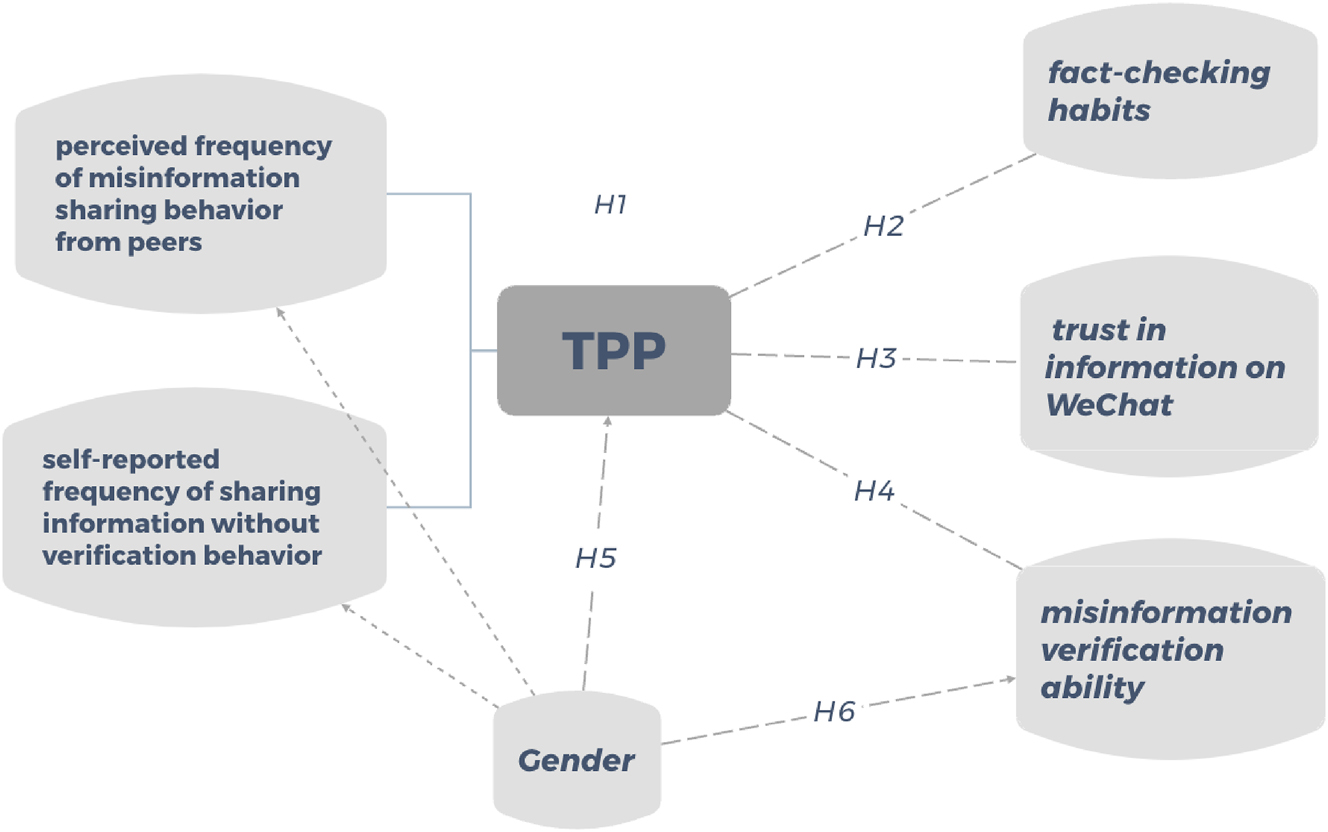
Hypothesized research model for third-person perception (TPP) and misinformation sharing behavior on WeChat.
H6a:
Males’ self-reported misinformation verification ability is hypothesized to be higher than that of females.
H6b:
Males’ objectively tested misinformation verification ability is hypothesized to be higher than that of females. Accordingly, our research model is presented as follows (see Figure 1):
3 Research Methods
3.1 Research Design
A questionnaire in Chinese and English was designed for research on the use and misinformation on WeChat, and the present research is part of this project. This questionnaire was approved by three experts from both China and Spain. Given the complexity of Chinese society and the significant urban–rural divide, this research focuses on urban China only.
Considering that the targeted population is older adults, the standard 5-point Likert scale may be difficult for them to understand. Therefore, we adapted the 5-point scales to be more understandable. For example, instead of asking “my peers often share rumors” with answers ranging from “strongly disagree” to “strongly agree,” we adapted this question to rate the frequency of sharing rumors from peer, reducing the difficulty in understanding the questions.
Before conducting the full-scale survey, a pilot test with 30 respondents was first carried out. Based on the results of the pilot test, some minor modifications were made. The full-scale survey lasted nearly one month.
A total of 345 responses were collected. Since we limited the scope to Chinese people aged 45 and above (including 45) who live in urban area, responses from individuals aged under 45 and people not living in urban area were excluded. After removing ineligible responses, the number of valid questionnaire replies was 317, which met the expected number (300 responses).
3.2 Participants
A sample of 317 participants (N = 317, 153 females and 164 males) aged 45–74 (M = 52.46, SD = 5.06) participated in this research. Most participants (87.7 %) had no prior experience in media-related work, and the average monthly income was 6,848 RMB. The sample was drawn from 28 provinces, autonomous regions, and municipalities in China (Figure 2), with only urban samples retained, excluding rural samples.
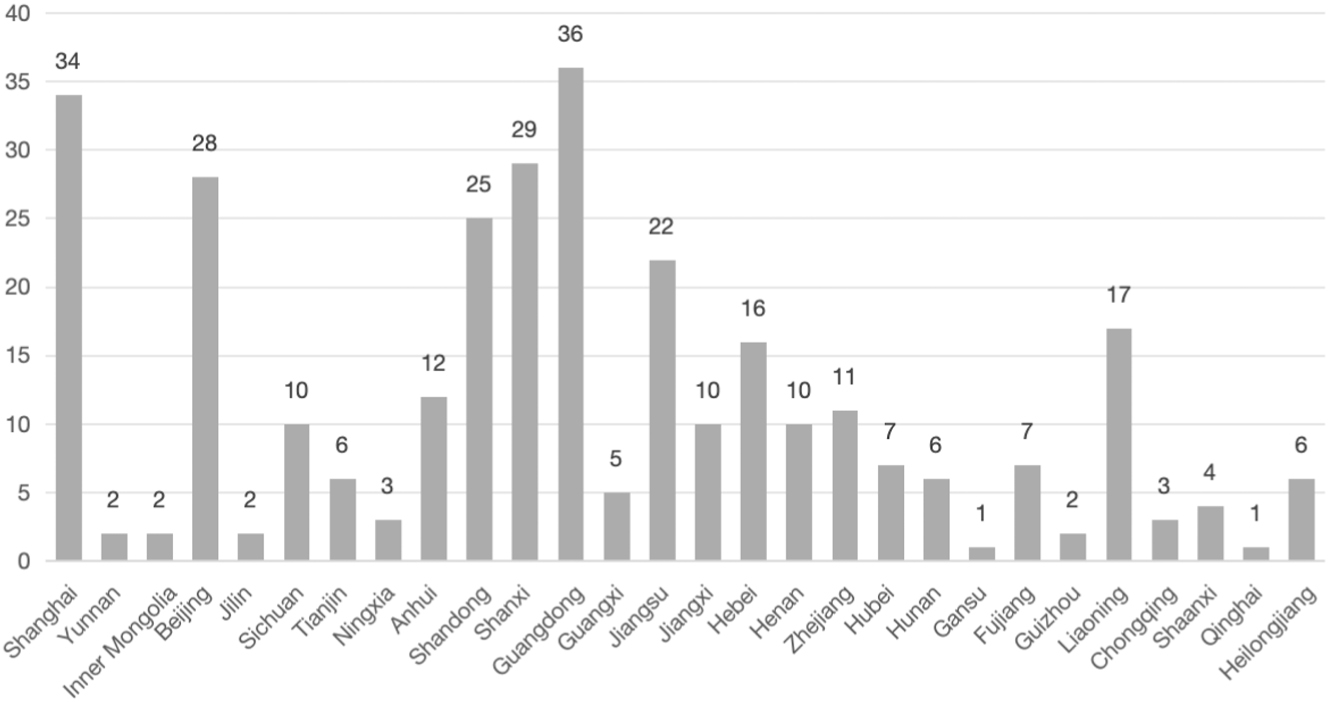
Geographic and distribution of participants.
3.3 Measures
3.3.1 Third-Person Perception (TPP)
To assess participants’ self-perceived misinformation-sharing behavior on WeChat, they were asked to evaluate their frequency of sharing information without verification (1 = never, 5 = very often). The perceived misinformation-sharing behavior of peers on WeChat was measured by asking participants to evaluate the frequency of sharing rumors from their peers (1 = never, 5 = very often, M = 2.81, SD = 0.90). Given that participants may report a lower frequency of sharing misinformation when asked directly, this study did not replace “yourself” with “peers” in the same question format, as done in previous studies (e.g.: Chung 2019; Jang and Kim 2018). Instead, in this research, the question for measuring self-perceived frequency of misinformation-sharing behavior was adapted to “the frequency of sharing information without verification” to minimize potential response biases caused by the wording of the questions. The TPP indicator was calculated by subtracting the perceived frequency of peers’ misinformation-sharing behavior from the participants’ self-perceived frequency of misinformation sharing.
3.3.2 Fact-Checking Habits
To assess fact-checking habits, participants were asked what actions they typically take when they encounter information that they consider important while reading news or articles on WeChat. The response options ranged from: “I usually do not search for information in other media;” “I usually look for information in other media that I consider reliable” and “I usually look for information from different sources and compare them.” In this research, these options are ranked from worst to best fact-checking habits, with the latter response indicating better fact-checking habits than the former.
3.3.3 Trust in Information on WeChat
To assess the level of trust in information on WeChat, participants were asked to evaluate the reliability of information on WeChat, with responses ranging from 1 = “I don’t think any of it is reliable” to 5 = “I think all of it is reliable.” This approach aimed to capture participants’ overall trust perception regarding information on WeChat.
3.3.4 Information Verification Ability
Information verification ability was assessed using both a self-reported measure and a verification test. First, participants were asked to self-assess their ability to identify misinformation (1 = “not at all,” 5 = “in all cases can”). Then, a verification test was included in the survey, consisting of three pieces of information for participants to verify as real information or misinformation. Of the three items, two were misinformation, and one was real.
4 Results
4.1 Third-Person Perception (TPP)
The first hypothesis predicted the existence of TPP. H1 proposed that third person perception would be observed in misinformation sharing behavior, such that others are perceived as performing this undesirable behavior more frequently than oneself on WeChat. To investigate whether TPP exists in misinformation sharing behavior, a paired t-test analysis was conducted. Results show that the scores for participants’ self-perceived misinformation-sharing behavior (M = 1.89, SD = 0.95) were significantly lower than those for perceived misinformation-sharing behavior of their peers (M = 2.81, SD = 0.90, p < .01). Thus, the third-person effect was observed in misinformation-sharing behavior, and H1 is supported.
4.2 TPP and Fact-Checking Habits
H2 focuses on third-person perception and fact-checking habits. To test whether the third-person perception effect is stronger among individuals with active fact-checking habits, an ANOVA was conducted. Results show significant differences between groups, so post hoc tests were conducted to identify whether each group differs significantly from the others. The results show that the TPP effect among individuals who usually do not search for information in other media (M = 0.67, SD = 1.04) is significantly larger than among those who usually look for information from different sources and compare them (M = 1.26, SD = 1.26), F (2, 314), p < .01 (see Table 1). The effect among individuals who typically seek information from other media they consider reliable is medium (M = 0.88, SD = 1.27) in between the other two groups (see Figure 3). Thus, the third-person perception effect is stronger among those with better fact-checking habits. H2 is supported.
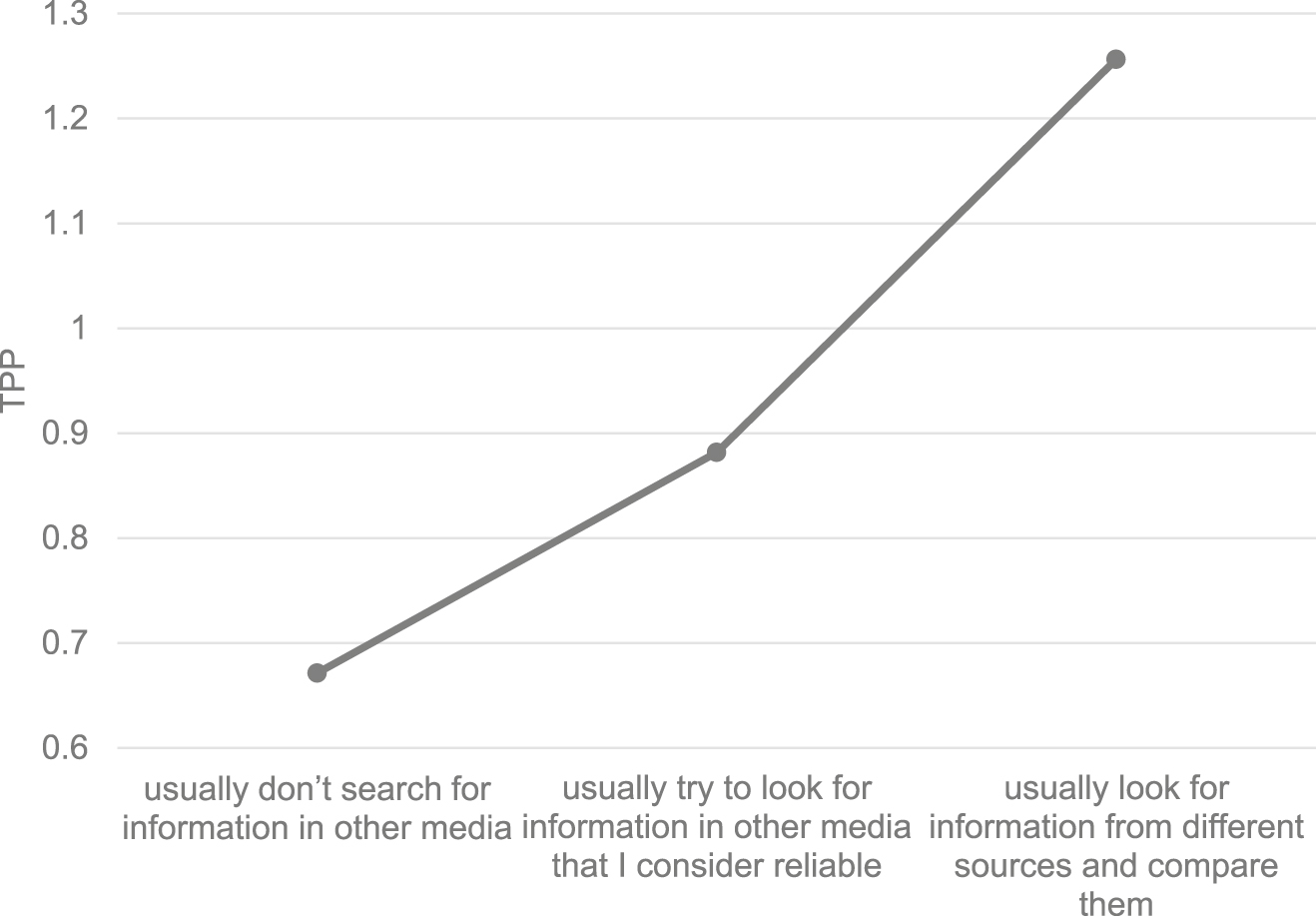
Mean TPP among individuals with different fact-checking habits.
Since TPP is measured by two aspects, further analysis was conducted to investigate whether the gap of TPP primarily arises from participants’ evaluations of others or themselves. As shown in the figure (Figure 4), individuals with better fact-checking habits are more likely to report a lower frequency of their own misinformation sharing behavior, F (2, 314) = 4.04, p < .05. However, in terms of the evaluation of others, there is no statistically significant difference between groups with varying levels of fact-checking habits (p > .05). Nevertheless, there is a sight trend suggesting that individuals with better fact-checking habits tend to rate the frequency of misinformation sharing by peers slightly higher (Table 1).
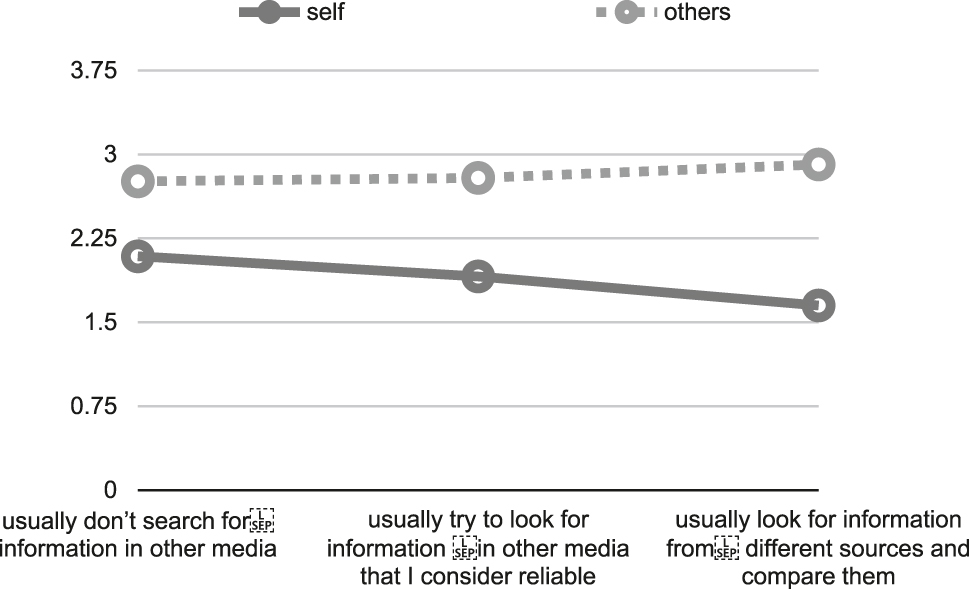
Mean estimates of misinformation sharing behavior for self and others by fact-checking habits.
Mean TPP among individuals with different fact-checking habits.
| Fact-checking habits | F | Sig. | |||
|---|---|---|---|---|---|
| (1) Usually don’t search for information in other media | (2) Usually try to look for information in other media that I consider reliable | (3) Usually look for information from different sources and compare them | |||
| Self | 2.090 | 1.91 | 1.65 | 4.029 | 0.019 |
| Others | 2.76 | 2.79 | 2.91 | 0.631 | 0.533 |
| TPP | 0.67 | 0.88 | 1.26 | 9.008 | 0.003 |
4.3 TPP and Trust Degrees in Information on WeChat
H3 proposed that the third person perception effect is stronger among individuals with lower levels of trust in information on WeChat. After comparing the mean value, we observed a clear decreasing trend as the trust level in information on WeChat increased (Figure 5). Results indicate that the TPP effect is stronger among individuals with lower trust in the information on WeChat. Thus, H3 is supported.
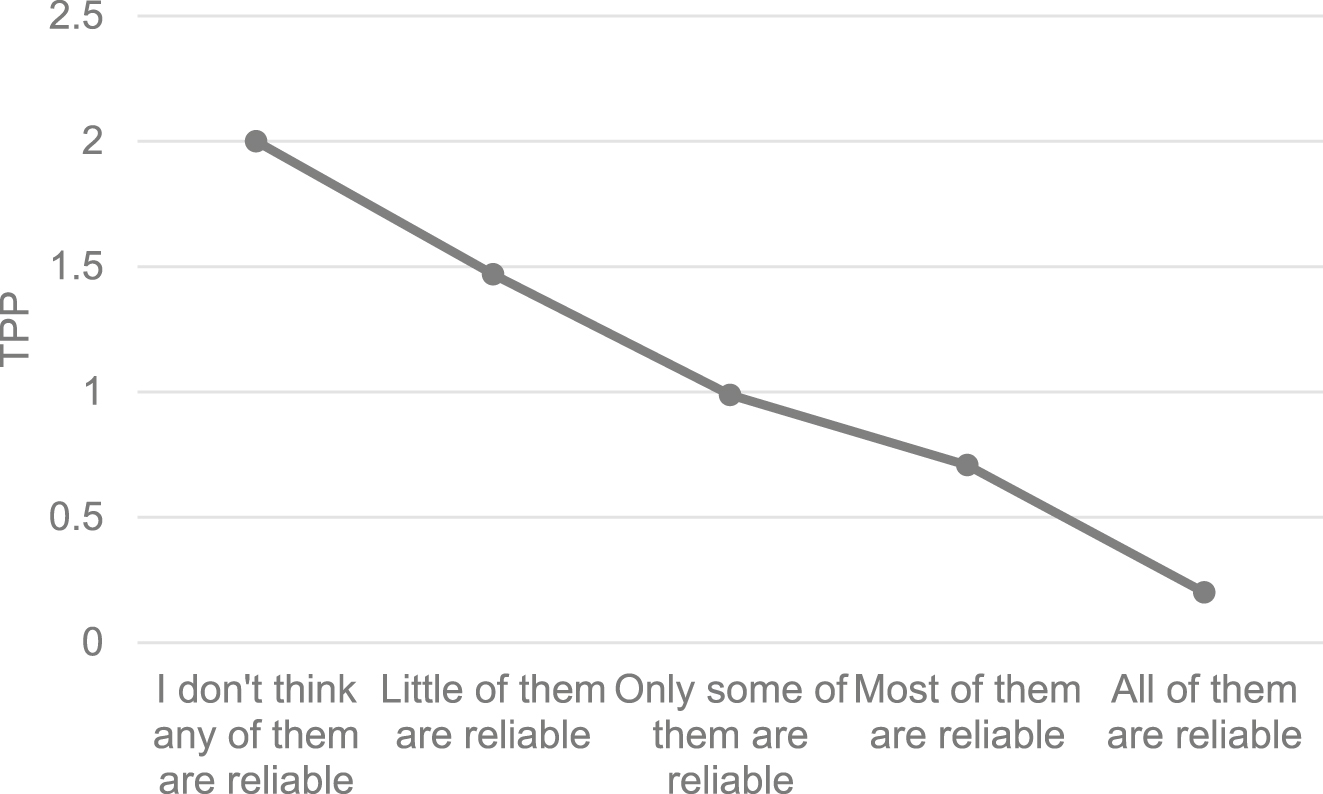
Average TPP among individuals with different levels of trust in information on WeChat.
Following the same approach used to analyze TPP and fact-checking habits, we conducted further analysis on the effect of varying trust levels in information on WeChat. As shown in Figure 6, individuals with lower trust in WeChat information, tend to rate others as having a higher likelihood of sharing misinformation on WeChat while rating themselves as having a lower likelihood. In other words, the perception gap arises from the perception of others, and the self-perception of the participants.
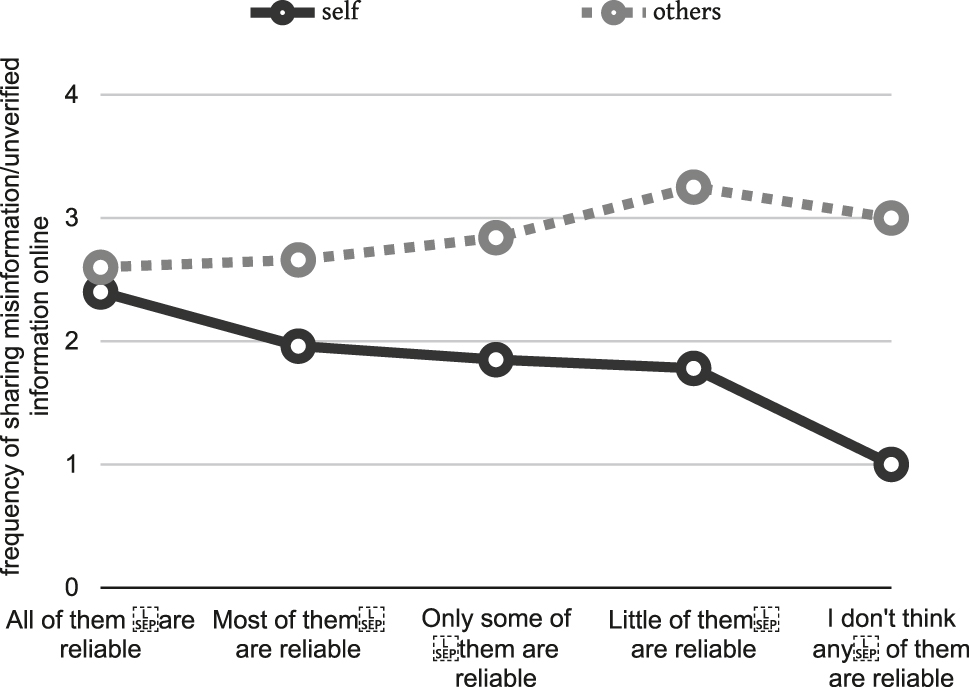
Reliability of information on WeChat and mean estimates of misinformation sharing behavior for self and others.
4.4 TPP and Information Verification Ability
H4a examines the relationship between TPP and self-reported information verification ability, while H4b focuses on TPP, and information verification ability assessed through a set of tests. As shown in Table 2, there are no significant trends or relationships between the strength of TPP and self-reported verification ability. Across different levels of self-reported verification ability, the mean value of third-person perception fluctuates irregularly. Therefore, H4a cannot be supported here.
Mean TPP among individuals with varying self-reported verification abilities.
| Self-reported verification ability | Mean | N | Std. deviation | % of total N |
|---|---|---|---|---|
| Not at all | 1.3333 | 3 | 1.52753 | 0.9 % |
| Almost no | 0.3846 | 26 | 1.23538 | 8.2 % |
| Sometimes can | 0.5789 | 114 | 1.03816 | 36.0 % |
| In most cases can | 1.2792 | 154 | 1.21804 | 48.6 % |
| In all cases can | 0.8500 | 20 | 1.22582 | 6.3 % |
| Total | 0.9274 | 317 | 1.20827 | 100.0 % |
However, in the test of information verification ability, as the mean value of third-person perception increases, the test score also increases (Figure 7), and the differences are significant, F (3, 113) = 8.19, p < .05 (see Table 3). This result indicates that the third-person perception effect is stronger among individuals with higher information verification ability. Thus, H4b is supported.
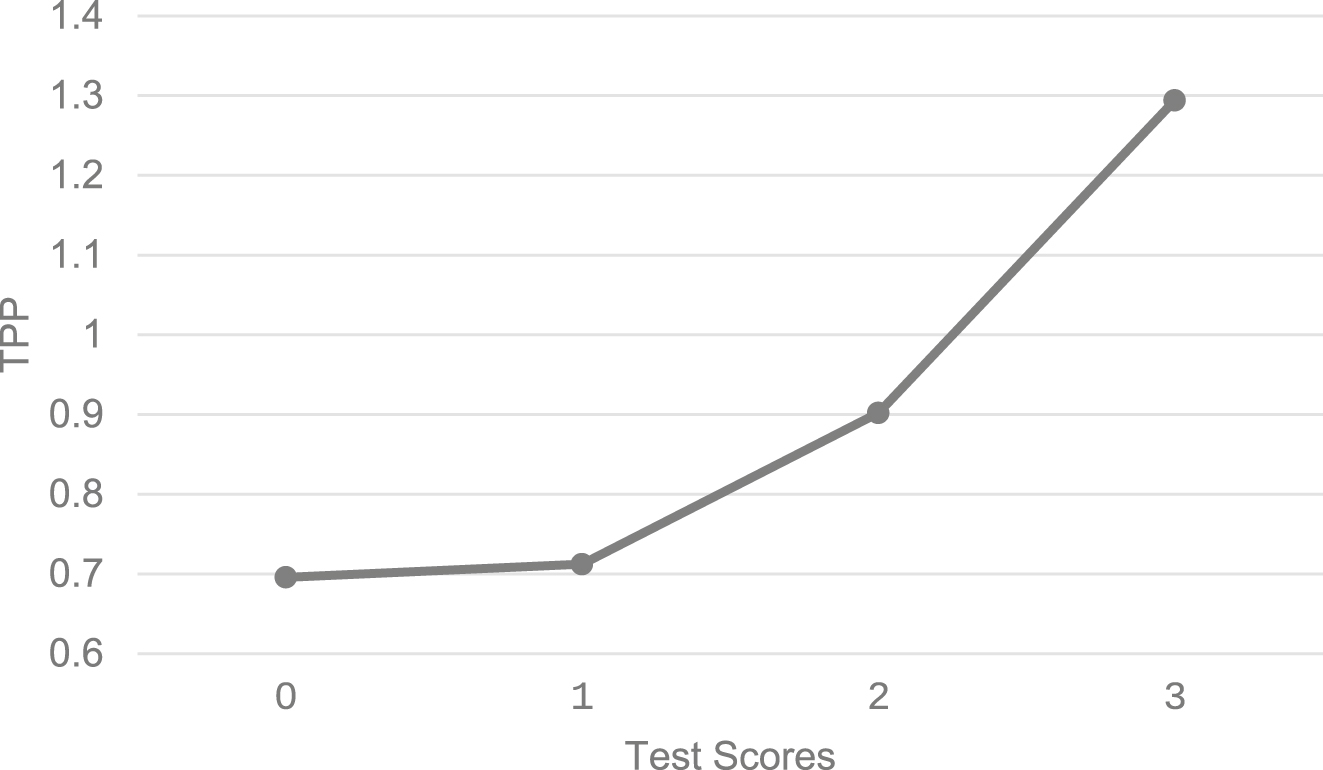
Mean TPP among individuals with different misinformation verification test scores.
Unlike the findings above, as the test score increases, the mean value of the perceived frequency of misinformation sharing behavior by others also rises. However, as shown in Figure 8, the evaluation of their own frequency of sharing uncertain information remains relatively stable. In other words, individuals with higher test scores, which indicates have higher misinformation verification ability in this study, tend to believe that there is a higher possibility of others to share misinformation on WeChat, while their self-evaluation remains consistent across different levels of misinformation verification ability. Therefore, this perception gap may primarily result from their evaluation of others rather than from both sides.
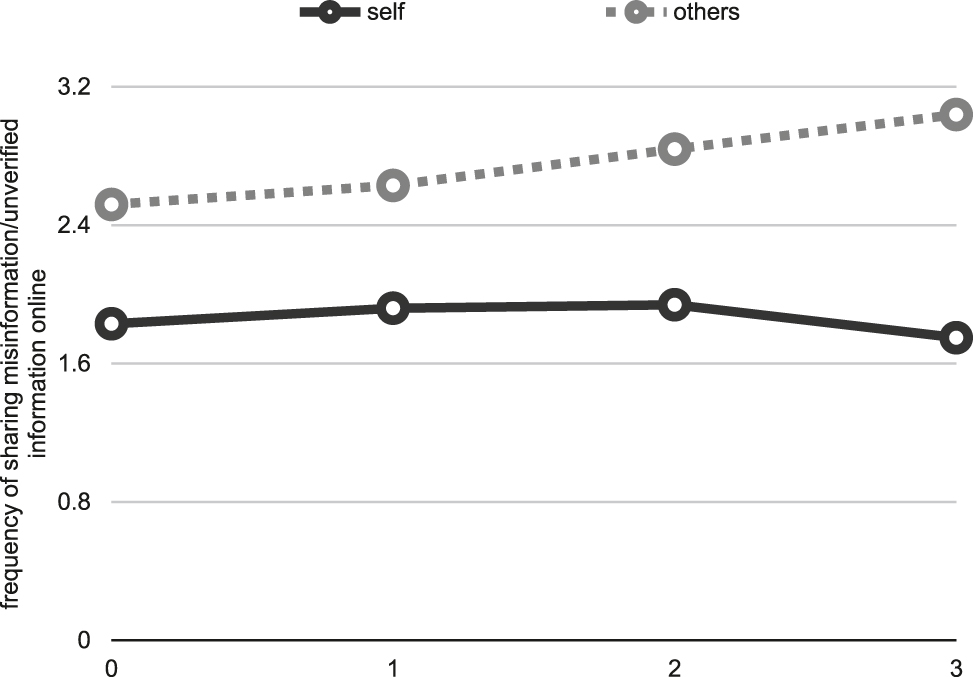
Misinformation verification ability and mean estimates of misinformation sharing behavior for self and others.
Mean TPP among individuals with different misinformation verification test scores.
| Test scores | F | Sig. | ||||
|---|---|---|---|---|---|---|
| 0 | 1 | 2 | 3 | |||
| Self | 1.83 | 1.92 | 1.94 | 1.75 | 0.695 | 0.555 |
| Others | 2.52 | 2.63 | 2.84 | 3.04 | 3.436 | 0.017 |
| TPP | 0.70 | 0.71 | 0.90 | 1.29 | 8.189 | 0.004 |
Gender and mean estimates of misinformation sharing behavior.
| Male | Female | t | Sig. | |
|---|---|---|---|---|
| Self | 1.74 | 2.04 | −2.802 | 0.005 |
| Others | 2.76 | 2.87 | −1.059 | 0.291 |
| TPP | 1.02 | 0.83 | 1.388 | 0.170 |
4.5 TPP and Gender
H5 proposed that the TPP effect would be stronger among females than males. To investigate whether any gender differences exist, a t-test analysis was conducted. Results show no significant gender differences in TPP related to misinformation-sharing behavior (p = 0.17), with the mean TPP value for males (M = 1.02, SD = 1.15) slightly higher than that for females (M = 0.83, SD = 1.26) (Table 4). Thus, H5 was rejected.
Since TPP consists of two components, we further explored whether any gender differences exist in self-reported frequency of sharing information without verification or in the perceived frequency of misinformation-sharing by peers.
Firstly, we tested for gender differences in the perceived frequency of sharing misinformation behavior from peers by running a t-test. Results show no significant differences in mean values between males (M = 2.76, SD = 0.87) and females (M = 2.87, SD = 0.93) on this item (p > .05). Then we conducted another t-test to examine gender differences in self-reported misinformation-sharing behavior on WeChat. A significant gender difference was observed in this item: females’ self-reported frequency of sharing information without verification (M = 2.04, SD = 1.01) is higher than that of males (M = 1.74, SD = 0.87, p < .01).
4.6 Gender and Misinformation Verification Ability
H6a examines the relationship between gender and self-reported information verification ability, while H6b focuses on gender and information verification ability based on a set of tests.
Firstly, we compared the mean values of self-reported verification ability between genders using a t-test. Results show that males rated their self-reported verification ability slightly higher (M = 3.56, SD = 0.82) than females (M = 3.46, SD = 0.71), but the difference is not significant (p = 0.24). Therefore, this result cannot fully support H6a.
Next, from the crosstabulation of gender and tests-based misinformation verification ability, we found that 22.6 % of male participants answered all the test questions correctly, which is higher than the rate of females (20.3 %). Additionally, 50.6 % of male participants answered 2/3 of the test questions correctly, and this rate is much higher than that of females, too (45.8 %). Thus, H6b can be supported.
5 Discussion
This research presents an exploratory examination of third-person perception within the Chinese cultural context in the post-truth era. Focusing on behavior of sharing misinformation on WeChat, from the perspective of Chinese older adults, third-person perception and factors of fact-checking habits, trust degrees, verification ability, and gender were investigated. Unlike many prior studies that focus on younger populations or rely on student samples (Lo et al. 2016), this research focuses on Chinese older adults, a demographic that is often overlooked but highly active on platforms like WeChat.
Consistent with Davison’s (1983) third-person perception hypothesis, which has been supported in numerous previous studies (Lev-On 2017; Schweisberger, Billinson, and Chock 2014; Tewksbury et al. 2004), the data from this study provide initial empirical evidence for third-person perception in misinformation sharing behavior within the context of social media, Chinese society, and older adults. This study shows that third-person perception exists in misinformation sharing behavior, where individuals perceive others as engaging in this undesirable behavior more frequently than themselves on WeChat. Furthermore, the third-person perception is found to vary following different levels of fact-checking habits, trust degrees, and verification ability. Firstly, the TPP effect is stronger among individuals with more active fact-checking habits, as they tend to be more critical of information. Similarly, individuals with lower trust in WeChat information exhibit a stronger TPP effect than those with higher trust. Additionally, people with higher tested misinformation verification abilities also tend to exhibit a stronger TPP effect. However, no clear relationship was observed between self-reported misinformation verification ability and the strength of the TPP effect. These results are consistent because people with lower trust in the information on WeChat are more likely to check information from other more trusted sources, and people with better fact-checking habits are more likely to be more critical towards information and have better misinformation verification ability. Findings are also consistent with previous studies that media content credibility mitigated the third-person effect.
As previously discussed, the possible explanations for third-person perception are varied, and no single explanation has been universally accepted. In prior studies, this phenomenon is often attributed to a self-other perception bias. However, within the Chinese context, this might be better explained through cultural factors. First, the structure of social networks in Chinese society influences how elderly adults receive and disseminate information. In Chinese culture, maintaining strong interpersonal relationships is considered as an important behavioral norm. As a result, for elderly adults, the act of social interaction often takes precedence over the accuracy or content of the information itself. This behavior is particularly common within close-knit groups, such as friends or family members. Therefore, elderly adults may share information primarily to maintain relationships and express care, rather than focusing on the information. This behavior may contrast with patterns in individualistic cultures, where social network structures differ and guided by different cultures. Second, considering the characteristics of WeChat, it operates as a closed social network primarily based on strong interpersonal connections. In such environment, interpersonal trust often takes precedence over fact-checking. Older adults are more likely to trust information shared by family members, friends, or individuals within their social circles. This trust mechanism makes them more susceptible to believing and unintentionally disseminating misinformation originating from these familiar networks. Third, a prominent feature of Chinese culture is the concept of “Face,” which is especially valued in Eastern societies with strong hierarchical structures, such as China. Consequently, the “Face” concept may lead to a reluctance to feel that they spread misinformation. Additionally, as Hofstede pointed out in his s cultural dimensions theory, China, as a typical collectivist country, emphasizes the interests of the group or the society. Therefore, Chinese older people tend to strongly resist the act of spreading misinformation (which was also supported in our follow-up studies). Based on this psychological tendency, people are more likely to believe that they would not be the one in spreading misinformation and attribute the existence of such misinformation to others.
However, why this effect is stronger among critical individuals remains unclear. There have been few empirical studies discussing the third-person perception and critical awareness. One of the possible explanations might be the self-other perception bias and self-confidence, which lead to an increase in the gap of third-person perception. As we have discussed previously, people with better fact-checking habits or lower trust in WeChat information, tend to rate their own susceptibility lower and others’ susceptibility higher. In terms of misinformation verification ability, the results show that individuals with higher objective verification skills rate others’ susceptibility lower, while their own susceptibility remains relatively constant.
Although no clear relationship between self-reported misinformation verification ability and the strength of the TPP effect was observed in this research, however, further analysis indicates that individuals who rate themselves higher in misinformation verification ability tend to believe that they are less likely to share unverified information. Those initial findings may support the idea of self-other perception bias and Chinese traditional culture. However, from another perspective, another possible explanation might be that people who are more critical towards information would always question information and would be more cautious in sharing information online. A further empirical investigation of the explanations is needed in future studies.
In addition, the role of gender in TPP and misinformation verification ability has been demonstrated in this study. No significant gender differences in third-person perception for misinformation-sharing behavior were observed. Although the mean TPP score for males was slightly higher than that for females, the difference was not statistically significant. Although this finding contrasts with previous findings, it is understandable. Previous studies are mainly focused on games and pornography (Lo and Wei 2002; Zhang 2013), which are stereotypically considered to be more appealing to males, while misinformation-sharing behavior does not have such “radical” gender bias.
Furthermore, given that TPP has two main aspects, we conducted additional analysis. No significant gender differences observed in the presumed frequency of sharing rumors from peers, but female’s self-reported frequency of sharing information without verification is observed significantly higher than that of males. This result is accordant with findings from some previous research that females are more likely to have less confidence in themselves (Beyer 1990). However, no significant difference was observed in self-reported misinformation verification ability between males and females, as it is hypothesized that males might exhibit higher self-confidence. Interestingly, when assessing misinformation verification ability, males scored higher than females. This finding could reflect a combination of factors, which may contribute to disparities in critical thinking skills between genders among Chinese older adults.
6 Limitations and Future Research
Despite the essential findings, this study has limitations. First, while the sample size of 317 is sufficient for analysis, the sampling process was not entirely random, which may affect the representativeness of the results. Due to the potential differences across regions and socioeconomic groups, this study could not comprehensively cover all variations. Future studies could strive for broader geographic and socioeconomic representation to enhance generalizability. Second, because there might be significant differences between rural area and urban area in China, this research limited the scope to urban area in China only. Therefore, findings from this research cannot be generalized to the whole population of Chinese elderly adults. Further studies could include people from rural China. Third, the current study assessed overall trust in information on WeChat. However, future research could benefit from subdividing trust into more specific categories, such as trust in official news, information shared in community groups, or personal messages. Besides, in this research, relationships between each factor were tested. However, we have not done further investigation on why it happens. Further studies may provide more empirical evidence and incorporate theories from different academic fields to offer more general views and more exact explanations.
7 Conclusions
In general, this study provides several unique insights for research on third-person perception.
First, this research expanded TPP into the Chinese context and Chinese social media. While some studies have examined TPP in the Chinses context, such as Wei Ran’s research on the third-person effect of tainted food product recall news, there is a lack of studies focusing on TPP and misinformation sharing behavior on Chinese social media. The findings from this research confirmed that TPP exists in misinformation sharing behavior within Chinese social media, highlighting cultural specificities unique to the Chinese context. In addition, findings are interpreted from the perspective of Chinese culture and the collectivist values of the Chinese elderly generation.
Second, this study focuses on Chinese elderly adults. Previous studies on TPP usually focus on young people or college students, as elderly adults are becoming an increasingly active cohort of digital media users in China, there is a urgent need to understand their behaviors and perceptions. Besides, instead of measuring the general effect strength of TPP, this research measures TPP by misinformation-sharing behavior. This research connected TPP, a classic theory, to the contemporary issue of misinformation-sharing behavior within the “post-truth” era.
Third, the current study investigated third-person perception and critical awareness. The results show that the effectiveness of the TPP effect varies with different levels of fact-checking habits, trust in information, and verification ability. It is indicated that the TPP effect is stronger among individuals who exhibit greater critical thinking skills regarding information. Additionally, males were found to have stronger misinformation verification skills than females.
Besides, findings in this research highlight the potential perception that people might think “I am not the person who shares misinformation.” This self-other separation could be dangerous as it may reduce personal accountability and hinder efforts to prevent the spread of misinformation. It is interesting to find that the TPP effect is stronger on people with higher critical awareness in this research. Does critical awareness, or bias widen this gap? This should be investigated in future studies.
In general, the spread of misinformation on WeChat is not only a social problem in the post-truth era, but also a manifestation of the interaction between culture and technology. Social media platforms like WeChat are not only technological tools but also cultural artifacts deeply embedded in Chinese society. This interaction between technology and culture offers deep insights into transcultural communication. This study expands the analysis of how these interactions contribute to transcultural communication theory by demonstrating how cultural norms, such as interpersonal trust and relational dynamics within WeChat networks, influence the ways misinformation is perceived and disseminated among older adults.
Thus, this study goes beyond addressing the problem of misinformation dissemination in the use of social media among Chinese elderly users. It attempts to bridge the classic third-person effect hypothesis with cultural specificity and provide empirical insights into this often-overlooked group, contributing to a deeper understanding of how cultural contexts shape information trust and sharing behaviors in transcultural communication.
References
Bardwick, Judith M., and Elizabeth Douvan. 1971. “Ambivalence: The Socialization of Women.” In Women in Sexist Society, 225–241. New York: Basic Books.Suche in Google Scholar
Beyer, Sylvia. 1990. “Gender Differences in the Accuracy of Self-Evaluations of Performance.” Journal of Personality and Social Psychology 59 (5): 960–970. https://doi.org/10.1037/0022-3514.59.5.960.Suche in Google Scholar
Caron, Jessica Gosnell, and Janice Light. 2016. “‘Social Media Has Opened a World of “Open Communication:’ Experiences of Adults with Cerebral Palsy Who Use Augmentative and Alternative Communication and Social Media.” International Society for Augmentative and Alternative Communication 32 (1): 25–40. https://doi.org/10.3109/17549507.2016.1143970.Suche in Google Scholar
Chen, Gina Masullo, and Yee Man Margaret Ng. 2017. “Nasty Online Comments Anger You More than Me, but Nice Ones Make Me as Happy as You.” Computers in Human Behavior 71 (6): 181–188. https://doi.org/10.1016/j.chb.2017.02.010.Suche in Google Scholar
Chung, Myojung. 2019. “The Message Influences Me More than Others: How and Why Social Media Metrics Affect First Person Perception and Behavioral Intentions.” Computers in Human Behavior 91: 271–8. https://doi.org/10.1016/j.chb.2018.10.011.Suche in Google Scholar
Conners, Joan L. 2005. “Understanding the Third-Person Effect.” Communication Research Trends 24 (2): 3–22.Suche in Google Scholar
Corbu, Nicoleta, Oana Ştefǎnițǎ, and Raluca Buturoiu. 2017. “Facebook Influences You More than Me: The Perceived Impact of Social Media Effects among Young Facebook Users.” Central European Journal of Communication 10 (2): 239–253. https://doi.org/10.19195/1899-5101.10.2(19).6.Suche in Google Scholar
Davison, W. Phillips. 1983. “The Third-Person Effect in Communication.” Public Opinion Quarterly 47 (1): 1–15. https://doi.org/10.1086/268763.Suche in Google Scholar
Fishbein, Martin, and Icek Ajzen. 1975. Belief, Attitude, Intention, and Behavior: An Introduction to Theory and Research. Reading, Mass: Addison-Wesley. https://www.researchgate.net/publication/233897090_Belief_attitude_intention_and_behaviour_An_introduction_to_theory_and_research.Suche in Google Scholar
Fu, Jia 付佳, Xiaolin Chen 陈晓琳, and Guoming Yu 喻国明. 2020. “‘Disanren xiaoguo’ yanjiu de fanshi ditai: Xianxiang, yingxiang yinsu ji lilun jizhi” “第三人效果” 研究的范式迭代: 现象、影响因素及理论机制 [The Chang of Paradigm in “the Third-Person Effect”: Phenomena, Influencing Factors, and Theoretical Mechanisms]. China Journalism and Communication Journal 中国新闻传播研究 2020(3): 107–130.Suche in Google Scholar
Golan, Guy J., and Stephen A. Banning. 2008. “Exploring a Link Between the Third-Person Effect and the Theory of Reasoned Action.” American Behavioral Scientist 52 (2): 208–224. https://doi.org/10.1177/0002764208321352.Suche in Google Scholar
Gunther, Albert C. 1995. “Overrating the X-Rating: The Third-Person Perception and Support for Censorship of Pornography.” Journal of Communication 45 (1): 27–38. https://doi.org/10.1111/j.1460-2466.1995.tb00712.x.Suche in Google Scholar
Ham, Chang Dae, and Michelle R. Nelson. 2016. “The Role of Persuasion Knowledge, Assessment of Benefit and Harm, and Third-Person Perception in Coping with Online Behavioral Advertising.” Computers in Human Behavior 62: 689–702. https://doi.org/10.1016/j.chb.2016.03.076.Suche in Google Scholar
He, Hongyan 何鸿雁, and Hong Han 韩鸿. 2021. ““Tufa gonggong weisheng shijian zhong de WeChat yaoyan chuanbo yu disanren xiaoguo yingxiang yanjiu” 突发公共卫生事件中的微信谣言传播与第三人效果影响研究 [On the Spread of WeChat Rumors and the Influence of Third-Person Effect in Public Health Emergencies].” Media Observer 传媒观察 2021 (4): 83–92. https://doi.org/10.19480/j.cnki.cmgc.2021.04.012.Suche in Google Scholar
Henriksen, Lisa, and June A. Flora. 1999. “Third-Person Perception and Children: Perceived Impact of pro- and Anti-Smoking Ads.” Communication Research 26 (6): 643–665. https://doi.org/10.1177/009365099026006001.Suche in Google Scholar
Hoffner, Cynthia, and Martha Buchanan. 2002. “Parents’ Responses to Television Violence: The Third-Person Perception, Parental Mediation, and Support for Censorship.” Media Psychology 4 (3): 231–252. https://doi.org/10.1207/S1532785XMEP0403_02.Suche in Google Scholar
Jang, S. Mo, and Joon K. Kim. 2018. “Third Person Effects of Fake News: Fake News Regulation and Media Literacy Interventions.” Computers in Human Behavior 80: 295–302. https://doi.org/10.1016/j.chb.2017.11.034.Suche in Google Scholar
Lev-On, Azi. 2017. “The Third-Person Effect on Facebook: The Significance of Perceived Proficiency.” Telematics and Informatics 34 (4): 252–260. https://doi.org/10.1016/j.tele.2016.07.002.Suche in Google Scholar
Li, Ying 李莹, Ping Lin 林萍, Ying Wang 王颖, Yitong Wang 王一同, and Siyi Huangfu 皇甫思逸. 2021. “Shejiao meiti pingtai de disanren xiaoguo ji qi yingxiang jizhi” 社交媒体平台的第三人效果及其影响机制 [The Third-Person Effect and Its Influence Mechanism on Social Media Platforms].” Journalism & Communication Review 新闻与传播评论 74 (2): 36–48, https://doi.org/10.14086/j.cnki.xwycbpl.2021.02.004.Suche in Google Scholar
Lo, Ven Hwei, Wei Ran, Xiao Zhang, and Lei Guo. 2016. “Theoretical and Methodological Patterns of Third-Person Effect Research: A Comparative Thematic Analysis of Asia and the World.” Asian Journal of Communication 26 (6): 583–604. https://doi.org/10.1080/01292986.2016.1218902.Suche in Google Scholar
Lo, Ven-hwei, and Ran Wei. 2002. “Third-Person Effect, Gender, and Pornography on the Lnternet.” Journal of Broadcasting & Electronic Media 46 (1): 13–33. https://doi.org/10.1207/s15506878jobem4601_2.Suche in Google Scholar
Lyu, Shangbin 吕尚彬, and Xingman Wu 吴星漫. 2021. “Ganzhi baolu, ganzhi qingxiang he ganzhi xiangsi xing dui disanren xiaoguo de yingxiang yanjiu – Yi qingnian ren dui xiangyan lei guanggao de ganzhi xiaoguo wei li” 感知暴露、感知倾向和感知相似性对第三人效果的影响研究 – 以青年人对香烟类广告的感知效果为例 [The Influence of Perceived Exposure, Perceived Tendency, and Perceived Similarity on the Third-Person Effect: A Study on Young People’s Perception of Cigarette Advertisements].” Journalism & Communication Review 新闻与传播评论 74 (4): 97–109. https://doi.org/10.14086/j.cnki.xwycbpl.2021.04.008.Suche in Google Scholar
Maccoby, Eleanor E., and Carol N. Jacklin. 1974. “Myth, Reality and Shades of Gray-What We Know and Don’t Know about Sex Differences.” Psychology Today 8 (7): 109–112.10.1037/e400662009-008Suche in Google Scholar
Pham, Giang V., Shancer Matthew, and Michelle R. Nelson. 2019. “Only Other People Post Food Photos on Facebook: Third-Person Perception of Social Media Behavior and Effects.” Computers in Human Behavior 93: 129–140. https://doi.org/10.1016/j.chb.2018.11.026.Suche in Google Scholar
Ștefăniță, Oana, Nicoleta Corbu, and Raluca Buturoiu. 2018. “Fake News and the Third-Person Effect: They Are More Influenced than Me and You.” Journal of Media Research 11 (3(32)): 5–23. https://doi.org/10.24193/jmr.32.1.Suche in Google Scholar
Schweisberger, Valarie, Jennifer Billinson, and T. Makana Chock. 2014. “Facebook, the Third-Person Effect, and the Differential Impact Hypothesis.” Journal of Computer-Mediated Communication 19 (3): 403–413. https://doi.org/10.1111/jcc4.12061.Suche in Google Scholar
Stavrositu, Carmen D., and Jinhee Kim. 2014. “Social Media Metrics: Third-Person Perceptions of Health Information.” Computers in Human Behavior 35 (6): 61–67. https://doi.org/10.1016/j.chb.2014.02.025.Suche in Google Scholar
Sun, Ye, Lijiang Shen, and Zhongdang Pan. 2008. “On the Behavioral Component of the Third-Person Effect.” Communication Research 35 (2): 257–278. https://doi.org/10.1177/0093650207313167.Suche in Google Scholar
Tewksbury, David, Patricia Moy, and Deborah S. Weis. 2004. “Preparations for Y2K: Revisiting the Behavioral Component of the Third-Person Effect.” Journal of Communication 54 (1): 138–155. https://doi.org/10.1111/j.1460-2466.2004.tb02618.x.Suche in Google Scholar
Tsay-Vogel, Mina. 2016. “Me versus Them: Third-Person Effects among Facebook Users.” New Media and Society 18 (9): 1956–1972. https://doi.org/10.1177/1461444815573476.Suche in Google Scholar
Wei, Ran, Ven-Hwei Lo, and Hung-Yi Lu. 2008. “Third-Person Effects of Health News.” American Behavioral Scientist 52 (2): 261–277. https://doi.org/10.1177/0002764208321355.Suche in Google Scholar
Zhang, Lin. 2013. “Third-Person Effect and Gender in Online Gaming.” First Monday 18 (1): 1–13. https://doi.org/10.5210/fm.v18i1.4157.Suche in Google Scholar
© 2025 the author(s), published by De Gruyter and FLTRP on behalf of BFSU
This work is licensed under the Creative Commons Attribution 4.0 International License.
Artikel in diesem Heft
- Frontmatter
- Research Articles
- Determining the Transcultural Value of Free Flow in Digital Communication Platforms
- Social Media Use and Its Impacts on Body Image Perception Among Female Students in Southwest Nigeria Universities
- “Others Are Misled, Not Me”: Third-Person Perception and Misinformation Sharing Among Chinese Elderly on WeChat
- Organizational Communication and Workplace Dynamics: The Impact of Paid Family Leave Policies During the COVID-19 Pandemic
- Transcending Boundaries Through Xianxia: Chinese TV Drama Consumption by Global Audiences in a Cross-cultural Context
- Book Review
- Zhao, Tingyang: The Whirlpool that Produced China: Stag Hunting on the Central Plain
Artikel in diesem Heft
- Frontmatter
- Research Articles
- Determining the Transcultural Value of Free Flow in Digital Communication Platforms
- Social Media Use and Its Impacts on Body Image Perception Among Female Students in Southwest Nigeria Universities
- “Others Are Misled, Not Me”: Third-Person Perception and Misinformation Sharing Among Chinese Elderly on WeChat
- Organizational Communication and Workplace Dynamics: The Impact of Paid Family Leave Policies During the COVID-19 Pandemic
- Transcending Boundaries Through Xianxia: Chinese TV Drama Consumption by Global Audiences in a Cross-cultural Context
- Book Review
- Zhao, Tingyang: The Whirlpool that Produced China: Stag Hunting on the Central Plain
