Determining the root cause of failure – calling a spade a spade – overload failures of tack strips for instrumentation wiring
-
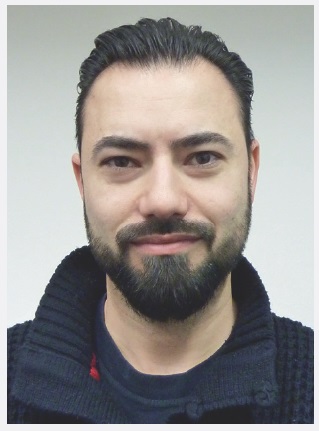
Madeleine Giller Apprenticeship as a materials testing technician at the welding institute SLV Berlin-Brandenburg. After that, she studied materials science at the Berlin Institute of Technology. She graduated with a masters degree in materials science in 2012. Since November 2012 employment as engineer at the Metallography Laboratory of the Siemens Gas Turbine Works in Berlin. She has been appointed laboratory manager within the Berlin Testing Center of the Large Gas Turbine Engineering Group in 2014. Her main fields of expertise comprise failure analysis and micro-structural investigations using the field emission scanning electron microscope.Erhan Cagliyan trained as a state-certified technical assistant for metallography and physical material analysis at the Lette-Verein in Berlin. He has been working in the laboratory of the Siemens gas turbine plant in Berlin for 6 years, where his work focuses on fibre analysis, quantitative image analysis, microstructure characterisation with the field emission scanning electron microscope and X-ray fluorescence analysis.

Abstract
Clamp strips, a.k.a. fixation bands or tack strips (Schellenbänder) are used to fix instrumentation wires in turbomachinery to components where sensors are installed for instrumentation and control (I&C). Some of said tack strips fractured in a test engine installation. They were received at the authors’ laboratory for a metallurgical root cause failure investigation. For comparison, wide and narrow new, unused clamp strips were also received. All fractured tack strips were metallographically sectioned. They all exhibited an unfavorable banded micro-structure with cerium carbide, and/or cerium oxide, and/or titanium carbonitride inclusions. Even though these inclusions may have contributed to the premature overload failures of the tack strips due to their lowering the fracture ductility, they were not causative for the failures. The root cause of the overload failures was abusive use in the installation process. Too many instrumentation wires were fixed with the subject tack strips at the same time, causing mechanical overload of the very thin, non-high strength strips made of nickel-base, solid solution strengthened heat conductor alloys. It is important to note that the spot welds used to fix the tack strips were unrelated to the failures, even though some of the overload cracks propagated through spot weld nuggets.
Kurzfassung
Schellenbänder werden zur Befestigung von Instrumentierungsleitungen in Turbinen an Bauteilen verwendet, in denen Sensoren für die Leittechnik installiert sind. Einige dieser Schellenbänder sind bei einer Testinstallation in einem Triebwerk gebrochen. Sie wurden im Labor der Autoren zur Untersuchung der metallurgischen Ursachen des Bruchs entgegengenommen. Zum Vergleich wurden auch breite und schmale, neue, ungebrauchte Schellenbänder erhalten. Alle gebrochenen Schellenbänder wurden metallographisch getrennt. Sie wiesen alle ein ungünstiges, zeiliges Gefüge mit Einschlüssen von Cerkarbid und/oder Ceroxid und/oder Titankarbonitrid auf. Obwohl diese Einschlüsse, die die Bruchduktilität herabsetzen, zum vorzeitigen Überlastversagen der Schellenbänder beigetragen haben könnten, waren sie nicht ursächlich für das Versagen. Die Hauptursache für das Versagen unter Überlast war die missbräuchliche Verwendung bei der Installation. Es wurden zu viele Messleitungen gleichzeitig mit den betreffenden Schellenbändern befestigt, was zu einer mechanischen Überlastung der sehr dünnen, nicht hochfesten Streifen aus einer mischkristallverfestigten Nickelbasislegierung führte. Es ist wichtig zu erwähnen, dass die zur Befestigung der Schellenbänder verwendeten Schweißpunkte in keinem Zusammenhang mit den Ausfällen standen, obwohl sich einige der Überlastungsbrüche durch Schweißpunkte ausbreiteten.
About the authors
Madeleine Giller Apprenticeship as a materials testing technician at the welding institute SLV Berlin-Brandenburg. After that, she studied materials science at the Berlin Institute of Technology. She graduated with a masters degree in materials science in 2012. Since November 2012 employment as engineer at the Metallography Laboratory of the Siemens Gas Turbine Works in Berlin. She has been appointed laboratory manager within the Berlin Testing Center of the Large Gas Turbine Engineering Group in 2014. Her main fields of expertise comprise failure analysis and micro-structural investigations using the field emission scanning electron microscope.

Erhan Cagliyan trained as a state-certified technical assistant for metallography and physical material analysis at the Lette-Verein in Berlin. He has been working in the laboratory of the Siemens gas turbine plant in Berlin for 6 years, where his work focuses on fibre analysis, quantitative image analysis, microstructure characterisation with the field emission scanning electron microscope and X-ray fluorescence analysis.
References / Literatur
[1] ASTM B344 – 20. Standard Specification for Drawn or Rolled Nickel-Chromium and Nickel-Chromium-Iron Alloys for Electrical Heating Elements. Current Edition, October 1, 2020. B344–14. DOI: 10.1520/B0344-20.10.1520/B0344-20Search in Google Scholar
[2] DIN 17470 : October 1984. Electrical heating alloys. Technical delivery requirements for round and flat wireSearch in Google Scholar
[3] DIN 17742 : December 2020. Wrought nickel alloys with chromium – Chemical compositionSearch in Google Scholar
© 2025 Walter de Gruyter GmbH, Berlin/Boston, Germany
Articles in the same Issue
- Inhalt
- Editorial
- Editorial
- Heat treatment of copper-beryllium alloy C17000 to form microstructure with high mechanical properties
- Microstructure and properties of Mg-Zn-Y-Nd-Zr alloy optimized by hot extrusion and solid solution
- Effects of modes of metal transfer on microstructure of welded duplex stainless steel samples
- Failure Analysis
- Determining the root cause of failure – calling a spade a spade – overload failures of tack strips for instrumentation wiring
- Picture of the Month
- Picture of the Month
- News
- News
- Meeting Diary
- Meeting Diary
Articles in the same Issue
- Inhalt
- Editorial
- Editorial
- Heat treatment of copper-beryllium alloy C17000 to form microstructure with high mechanical properties
- Microstructure and properties of Mg-Zn-Y-Nd-Zr alloy optimized by hot extrusion and solid solution
- Effects of modes of metal transfer on microstructure of welded duplex stainless steel samples
- Failure Analysis
- Determining the root cause of failure – calling a spade a spade – overload failures of tack strips for instrumentation wiring
- Picture of the Month
- Picture of the Month
- News
- News
- Meeting Diary
- Meeting Diary
