Review of EAP Talk
-
Chenghao Wang
Chenghao Wang received his MA degree in Teaching English to Speakers of Other Languages (TESOL) from Xi’an Jiaotong-Liverpool University, China. His research interests include Computer-Assisted Language Learning (CALL), AI-assisted language learning and teaching, EAP and WTC.
 and
Bin Zou
and
Bin Zou
Bin Zou received his PhD degree in TESOL and Computer Technology from the University of Bristol, UK. He is an Associate Professor and PhD supervisor at the Department of Applied Linguistics, Xi’an Jiaotong-Liverpool University. His research interests include Computer-Assisted Language Learning (CALL), AI, EAP and ELT. He is the Founding Editor and Co-Editor-in-Chief of two international journals: the
International Journal of Computer-Assisted Language Learning and Teaching and theInternational Journal of EAP: Research and Practice .


Abstract
This technological tool review aims to provide a brief overview of EAP Talk, an artificial intelligence (AI) English speech assessment platform, outlining its various evaluation features, highlighting the advantages of each function, illustrating its potential for academic English teaching and proposing critical evaluations and suggestions for its upgradeable components. More importantly, this review strives to offer a user guide of experimental tools for related empirical research and explores its feasibility for lessening teacher workload and promoting independent learning among students in the age of AI.
1 Introduction
EAP Talk is a novel website-based artificial intelligence (AI) English-speaking assessment system, with a focus on English for academic purposes (EAP) speaking skills. The system is based on statistical modelling, natural language processing, big data analysis and speech recognition technology and its purpose is to enable intelligent speech assessment and promote a self-directed learning. The system comprises several key components for enhancing academic spoken language proficiency, namely, Reading Aloud, Presentation, Discussion Expressions, Word and AI Chatting. EAP Talk is categorised by diverse majors (such as architecture, business, social science, information technology, etc.) so that users can easily focus on specific English materials related to their profession. In addition, a user-friendly teacher management system allows teachers to effortlessly observe and track students’ speaking performance on EAP Talk, calculate grade variations and conclude strengths and weaknesses related to English speaking generally and individually. More information regarding EAP Talk is as follows:
Product type: A web-based English-speaking assessment platform
Requirements: A mobile phone, tablet or computer
Access: Via website (https://www.eaptalk.com), mobile applications (iOS and Android) and WeChat-mini programme
Cost: Free for all kinds of users
2 Main functions of EAP Talk
2.1 Reading aloud
The Reading Aloud section provides users with a range of academic texts of varying levels, from A1 single-sentence reading to C2 paragraph reading, which allows students to progress gradually. Meanwhile, users can also select exercises relevant to the specialisation under the secondary heading (see Figure 1).
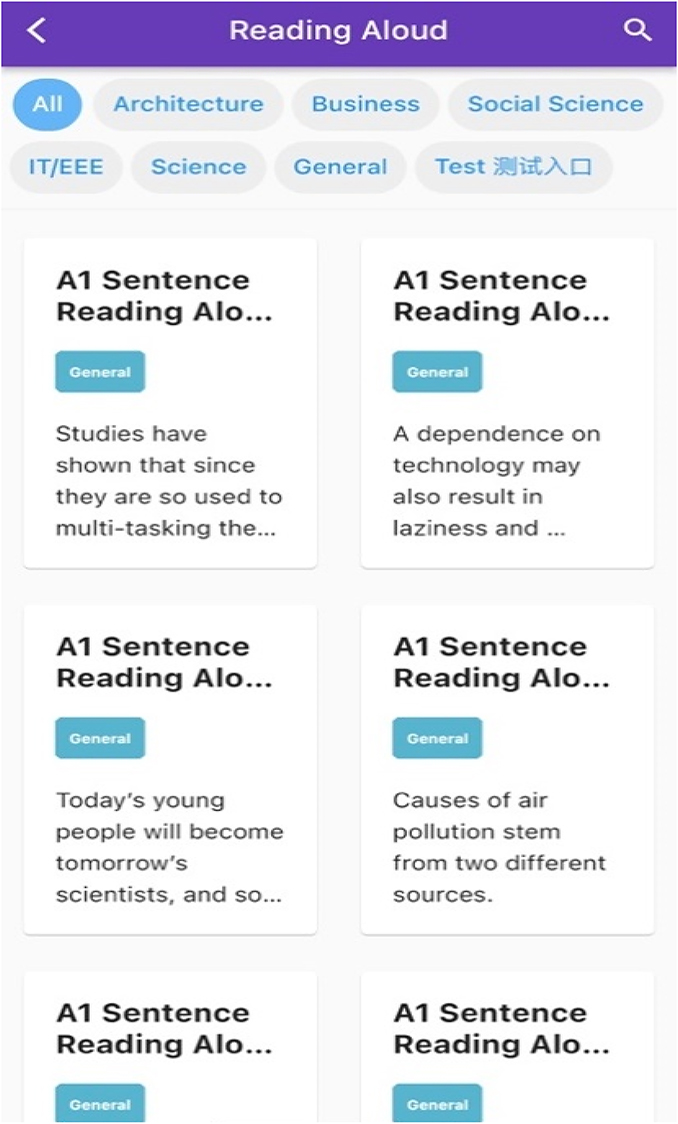
EAP Talk – Reading aloud overview.
As seen in Figure 2, users can select a question, click the “Example” button to listen to the standard recording of native English speakers, imitate and practice and then click “Start” to work on the exercises.
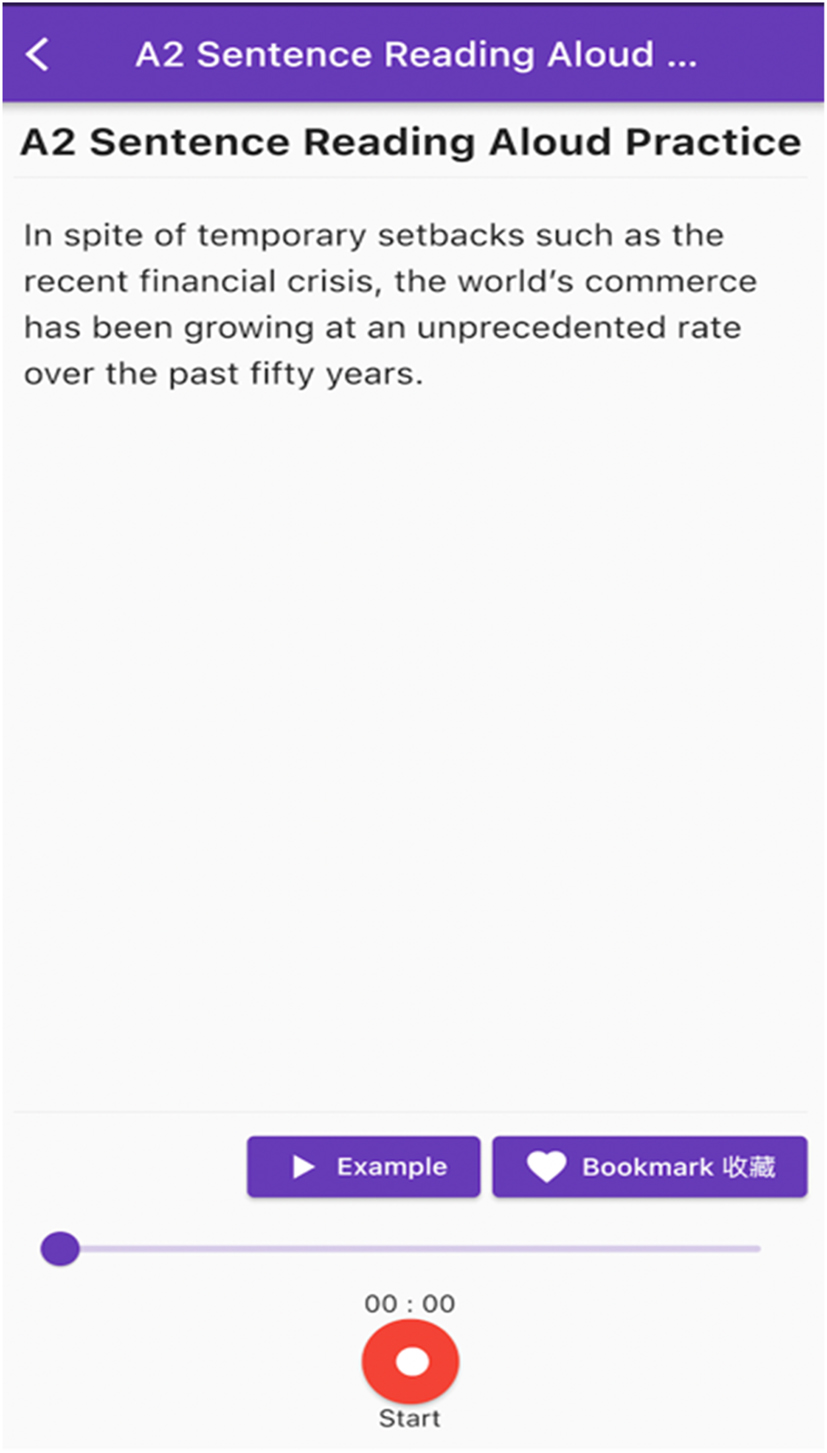
EAP Talk – Reading aloud question.
EAP Talk performs well in providing timely feedback (see Figure 3). The Reading Aloud assessment scores out of 100 points depending on one’s fluency, pronunciation and integrity. Based on the user’s performance, distinct colours of the text are set, with “yellow” sections representing “fully proficient” “grey” ones as “distinction” “green” as “merit” “blue” as “pass” and “purple” as “fail”. Students can adjust their pronunciation based on feedback and click on the red button “Try again” to re-record for a higher score.
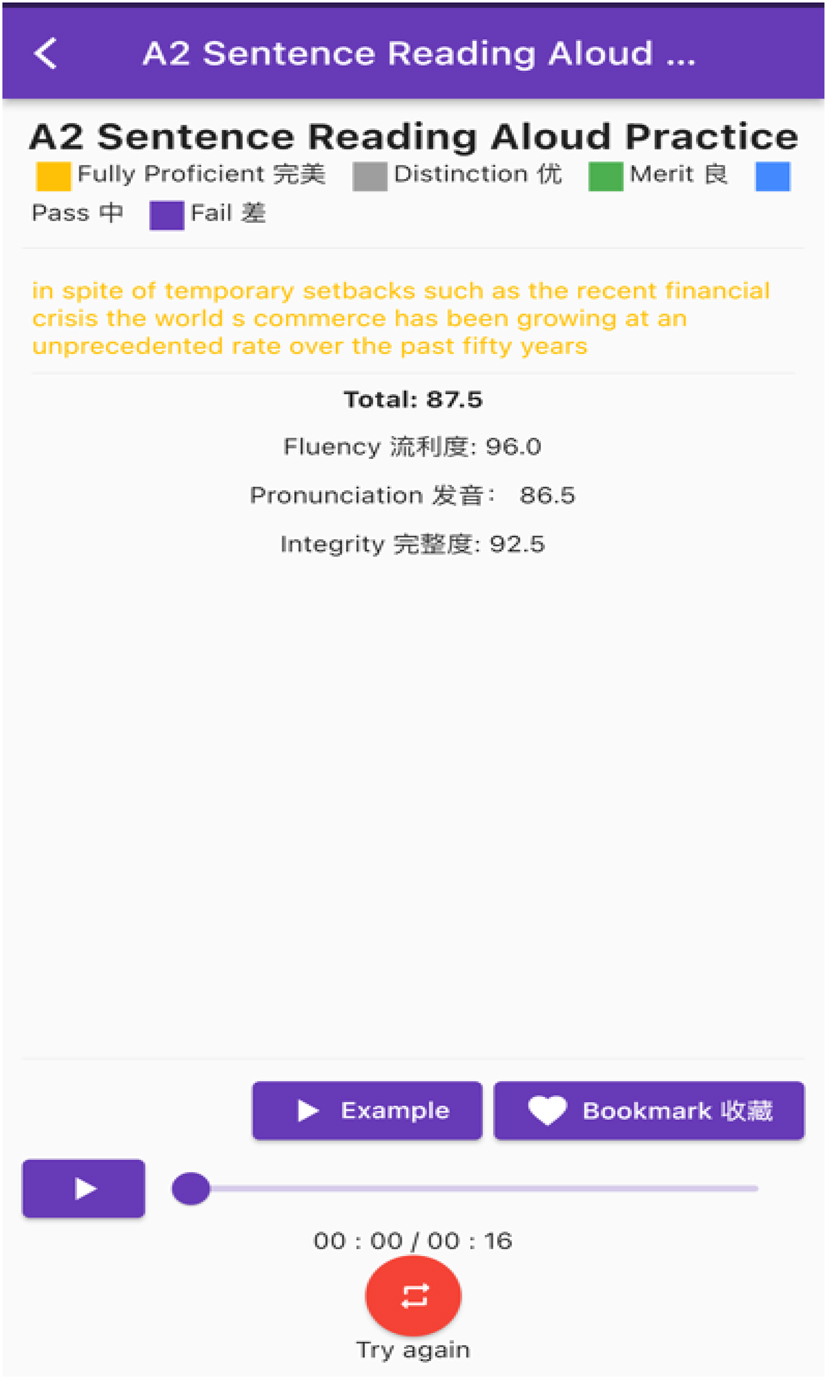
EAP Talk – Reading aloud feedback.
2.2 Presentation
The Presentation section of the EAP Talk is particularly captivating. Initially, the content is categorized into three levels, including life topics (Level A1), societal issues (Level B1) and academic questions (Level C1). Questions are also marked as Explain, Argue, Suggest, Describe, etc. (see Figure 4).
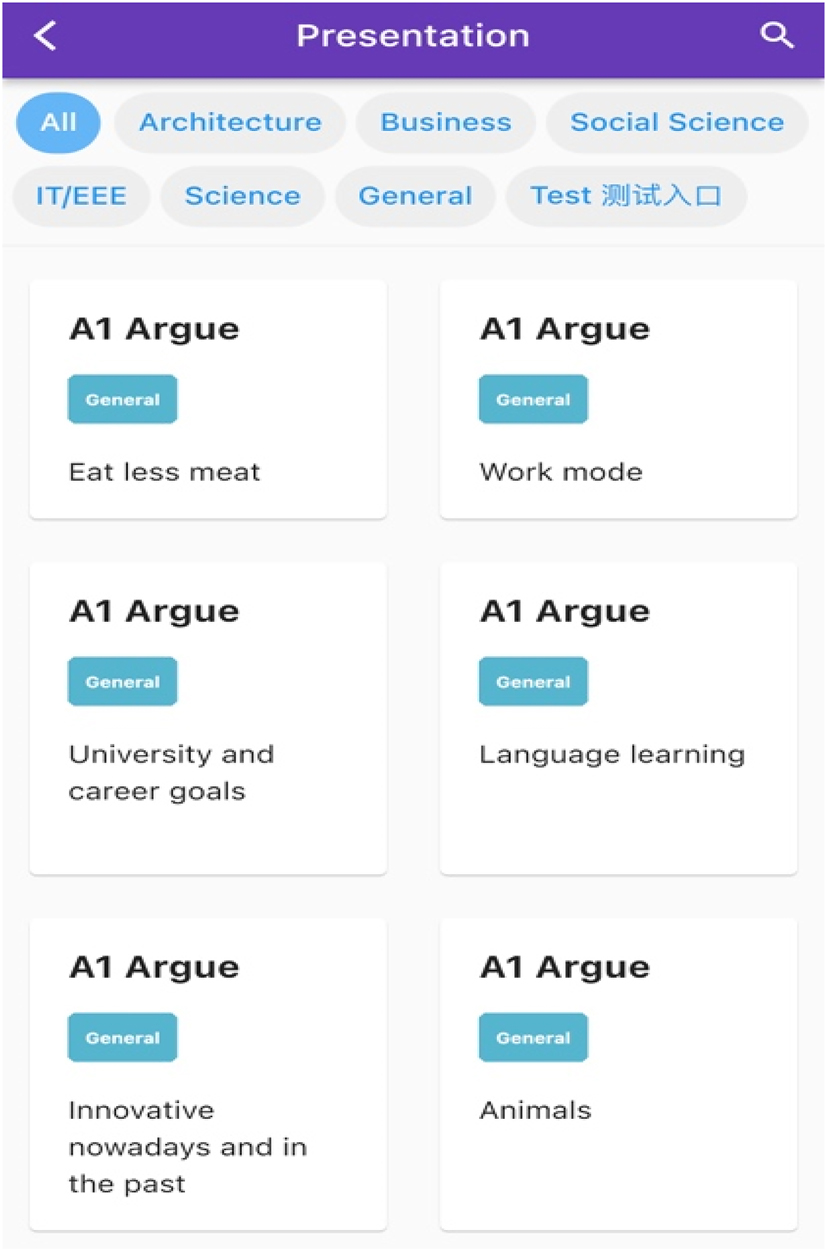
EAP Talk – Presentation overview.
Furthermore, presentation questions are mostly asked by various avatar teachers with the appearance of Western native English speakers, enabling simulation of a real-time speaking examination for students. It is noteworthy that in addition to those of native English-speaking countries such as the UK, US, Australia and New Zealand, the avatars’ accents are also diverse, with Spanish, Indian and Chinese English accents. The pattern of questioning also differs between the different levels of questions; for instance, the level A1 and B1 questions have subtitles, whereas the level C1 questions do not have. After recording, detailed and comprehensive speech-to-text results and score feedback is provided promptly.
Figure 5 shows EAP Talk’s multi-dimensional feedback with corresponding International English Language Testing System (IELTS) scoring criteria, including fluency and coherence, grammar, pronunciation and vocabulary range. The IELTS speaking score is also automatically converted to the corresponding speaking score on other comparable English examinations, including the Test of English as a Foreign Language (TOEFL), Pearson Test of English Academic (PTE), etc. Similar to Reading Aloud, the system conducts a comprehensive analysis of the speech-to-text results in which the words in the presentation transcript are ranked based on their complexity, with advanced words highlighted in yellow and ordinary words in black. Meanwhile, words with the wrong pronunciation and grammatical mistakes are marked in red. In addition, the system is capable of calculating the student’s speech rate, expressed in terms of the number of words per minute.
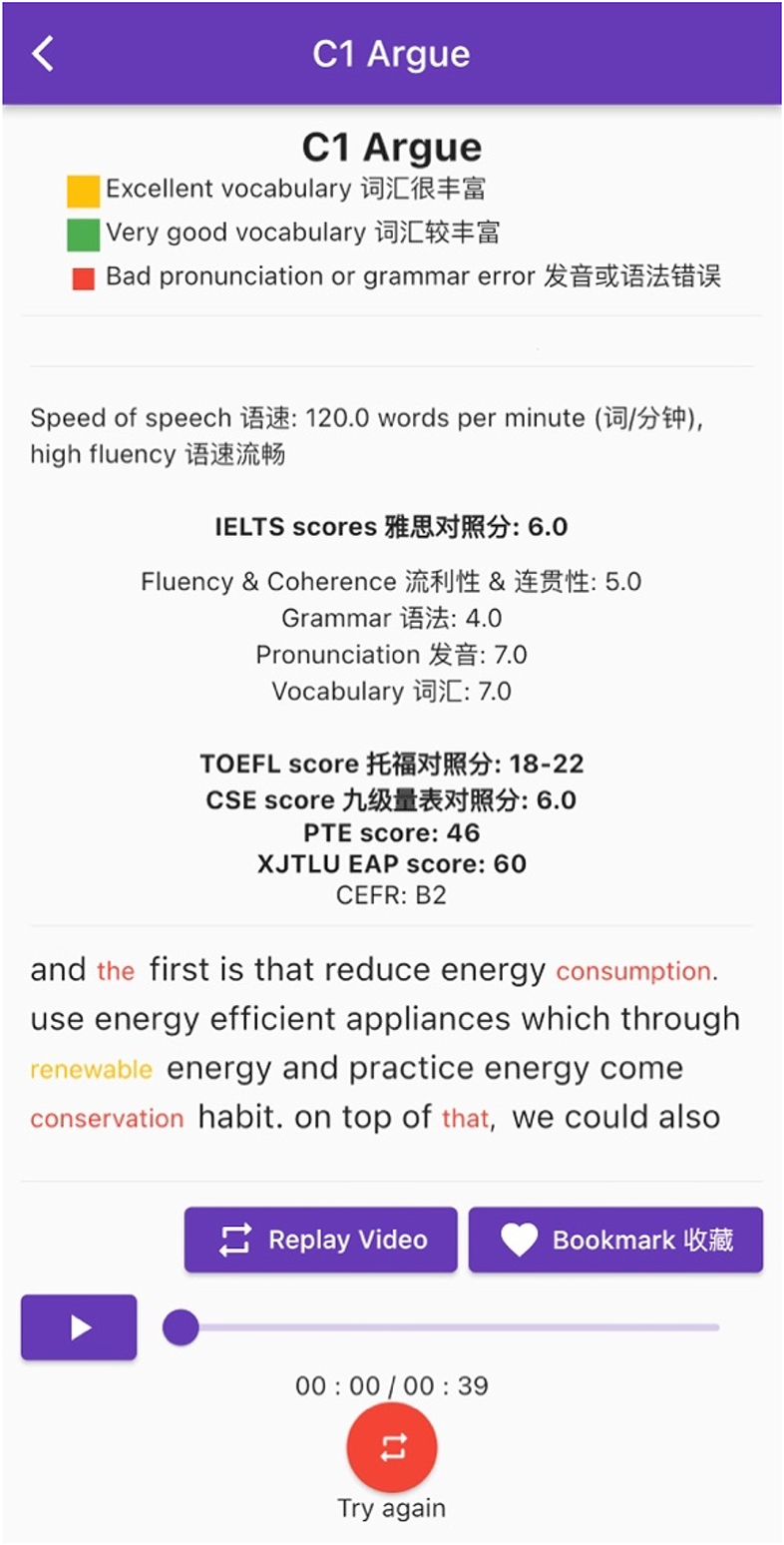
EAP Talk – Presentation feedback.
2.3 Word
The vocabulary pages contain around 8,400 words, including a large number of specialist and academic words. Users can click on the target word to check the pronunciation, Chinese meaning and phonetic symbols. They can also check the “Example” to listen to a standard recording and then make a recording.
In terms of feedback, EAP Talk can provide a score and different coloured phonetic symbols representing various performances in terms of pronunciation. The stressed phonetic symbols of the recording are set in bold so that a student’s pronunciation can be assessed against the standard one (see Figure 6). Hence, students can visually discern the accuracy of their stress by this comparison.
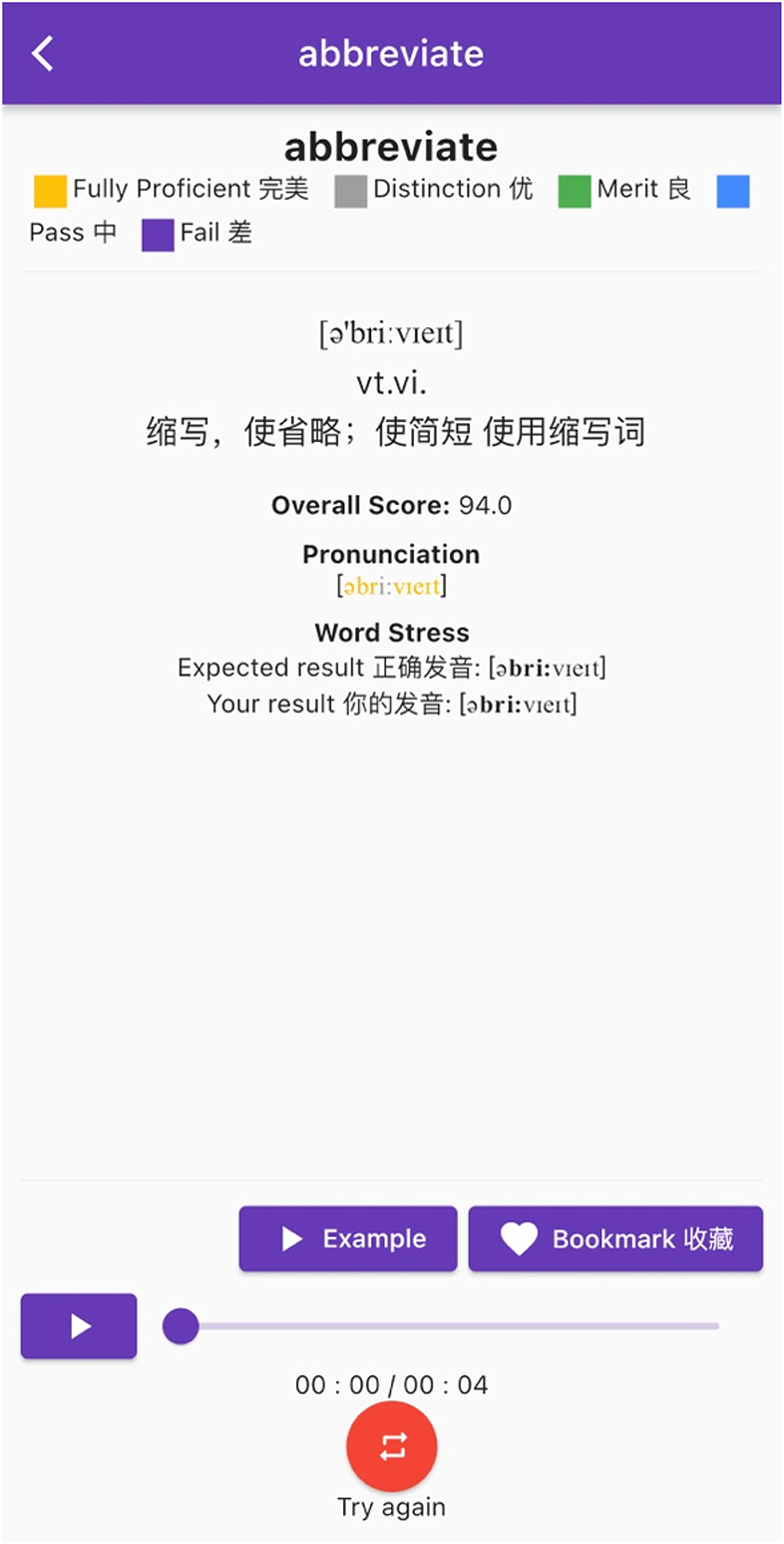
EAP Talk – Word feedback.
2.4 Test mode
EAP Talk offers the Test module in the Reading Aloud and Presentation parts (see Figures 1 and 4). Under this module, no example recordings or answers to the questions are provided, allowing teachers to choose appropriate questions in the classroom for students to complete speaking tests and receive feedback on time. Teachers can also use the teacher’s management system to download students’ scores on this online test as a record or pre- and post-test results.
2.5 Teaching management system
In addition to assessing speaking ability, the system furnishes a user-friendly teaching management system. Teachers who desire to utilise the system as an administrator for AI-assisted instruction and class monitoring may do so by submitting a request email to the EAP Talk administrator, which is currently free of charge. After creating a class, teachers can add students to the class and see individual information within the management system. Upon selecting the relevant student, teachers have the option to access further information by clicking on the ‘Details’ button that provides students’ detailed scores for each question they have completed as well as the time of the test. The “Export Marks” function can obtain grades of whole class in Excel spreadsheets which can be imported into quantitative data coding software for further processing, for example analysing students’ pre- and post-test scores in Statistical Product and Service Solutions (SPSS) software. The individual dimensions of the score can be utilised as research subjects, which is highly advantageous for empirical investigation and research on computer-assisted language learning (CALL).
3 Evaluation
EAP Talk provides a valuable platform for EAP and EFL learners in China to access AI technology and enrich their learning process with AI to identify speaking problems and provide directions for further learning. For example, Reading Aloud practice can support students in enhancing the fluency and pronunciation accuracy of their spoken English (Burns & Siegel, 2018). The implementation of virtual teachers in Presentation can foster a less intimidating and comparatively secluded environment (Wang et al., 2022), thereby promoting a greater propensity amongst learners to engage in English communication with reduced nervousness (Belda-Medina & Calvo-Ferrer, 2022). The stress recognition function in “Word” is also effective in helping users get the correct placement of word stress.
Nonetheless, in the context of enhancing EAP speaking abilities and self-directed learning, it remains crucial to incorporate more detailed and diverse feedback. Hence, it would be reasonable for developers to provide more textual feedback and practical suggestions based on users’ performance. Specific suggestions can be made in the same tone as that of a real teacher, for example, “Pay more attention to synonymous substitutions of vocabulary, you used ‘I like’ many times, you may replace it with ‘I’m into’ next time.” As Zou et al. (2023a) indicated, text-based feedback can augment the development of speaking skills, point out vulnerabilities, and cater to personalised learning. In CALL empirical research, EAP Talk can be a useful experimental tool for intervention. Researchers can quantify speech fluency and conduct quantitative analyses of student performance with the help of the teaching management system. Developers can also add a function to record the time and frequency of use by students to provide more variable options for research design.
Furthermore, the system can be utilised by EFL students for English proficiency test preparation. The provided questions are commonly practised in the speaking sections of international English examinations, such as the Reading Aloud in PTE and the question-and-answer sessions in Parts 1 and 3 of the IELTS. Timely feedback provided by EAP Talk can effectively assist students in identifying their weaknesses and preparing for language tests in a more focussed manner.
Moreover, EAP Talk can reduce teachers’ workloads by conducting speaking exams and offering personalised feedback. Teachers can utilize the software to create an AI-powered classroom, for example, allowing students to use EAP Talk for in-class speaking activities and increasing learning engagement and participation through human–computer interaction. This approach will afford every student the chance to respond to questions in large-scale classes and EAP Talk can also be a speaking practice partner after class. Furthermore, teachers can adopt social networking sites, such as Facebook and WeChat, to enhance students’ learning outcomes, because students can perform in a better way when they interact in the learning community (Zou et al., 2023b). In conclusion, as a pioneering system with a focus on EAP speaking assessment, the integration of the various functions of EAP Talk provides a reliable and efficient tool for teachers and students to develop speaking skills during this time when AI is blossoming.
About the authors
Chenghao Wang received his MA degree in Teaching English to Speakers of Other Languages (TESOL) from Xi’an Jiaotong-Liverpool University, China. His research interests include Computer-Assisted Language Learning (CALL), AI-assisted language learning and teaching, EAP and WTC.
Bin Zou received his PhD degree in TESOL and Computer Technology from the University of Bristol, UK. He is an Associate Professor and PhD supervisor at the Department of Applied Linguistics, Xi’an Jiaotong-Liverpool University. His research interests include Computer-Assisted Language Learning (CALL), AI, EAP and ELT. He is the Founding Editor and Co-Editor-in-Chief of two international journals: the International Journal of Computer-Assisted Language Learning and Teaching and the International Journal of EAP: Research and Practice.
-
Research funding: This study was funded by Xi’an Jiaotong-Liverpool University (XJTLU) REF-21-02-004.
References
Belda-Medina, J., & Calvo-Ferrer, J. R. (2022). Using chatbots as AI conversational partners in language learning. Applied Sciences, 12(17), 8427. https://doi.org/10.3390/app12178427Search in Google Scholar
Burns, A., & Siegel, J. (Eds.). (2018). International perspectives on teaching the four skills in ELT: Listening, speaking, reading, writing. Springer International Publishing.10.1007/978-3-319-63444-9Search in Google Scholar
Wang, X., Pang, H., Wallace, M. P., Wang, Q., & Chen, W. (2022). Learners’ perceived AI presences in AI-supported language learning: A study of AI as a humanized agent from the community of inquiry. Computer Assisted Language Learning, 1–27. https://doi.org/10.1080/09588221.2022.2056203Search in Google Scholar
Zou, B., Du, Y., Wang, Z., Chen, J., & Zhang, W. (2023a). An investigation into artificial intelligence speech evaluation programmes with automatic feedback for developing EFL learners’ speaking skills. Sage Open, 13(3), 21582440231193816. https://doi.org/10.1177/21582440231193818Search in Google Scholar
Zou, B., Guan, X., Shao, Y., & Chen, P. (2023b). Supporting speaking practice by social network-based interaction in artificial intelligence (AI)-assisted language learning. Sustainability, 15(4), 2872. https://doi.org/10.3390/su15042872Search in Google Scholar
© 2023 the author(s), published by De Gruyter and FLTRP on behalf of BFSU
This work is licensed under the Creative Commons Attribution 4.0 International License.
Articles in the same Issue
- Frontmatter
- Research Articles
- Examining the effects of two cognitive styles (field dependence vs. field independence) on learners’ mobile-assisted vocabulary acquisition
- Exploring English newspaper reading of Chinese college English majors in mobile-assisted language learning
- Investigating EFL oral production in a technology mediated TBLT context
- Review Articles
- Conversational agents in language learning
- Ethical issues in online interpreting training
- A review of theories, pedagogies and vocabulary learning tasks of English vocabulary learning apps for Chinese EFL learners
- Technological Tool Review
- Review of EAP Talk
- Book Review
- Book Review on The Routledge Guide to Teaching Translation and Interpreting Online
Articles in the same Issue
- Frontmatter
- Research Articles
- Examining the effects of two cognitive styles (field dependence vs. field independence) on learners’ mobile-assisted vocabulary acquisition
- Exploring English newspaper reading of Chinese college English majors in mobile-assisted language learning
- Investigating EFL oral production in a technology mediated TBLT context
- Review Articles
- Conversational agents in language learning
- Ethical issues in online interpreting training
- A review of theories, pedagogies and vocabulary learning tasks of English vocabulary learning apps for Chinese EFL learners
- Technological Tool Review
- Review of EAP Talk
- Book Review
- Book Review on The Routledge Guide to Teaching Translation and Interpreting Online
