Authorization and illegitimation among biomedical doctors and indigenous healers in Tanzania


Abstract
This paper analyzes interactions that took place during a set of workshops involving biomedical doctors and indigenous healers in northern Tanzania which promoted the use of indigenous knowledge in public health education and training. Such workshops are needed since, despite their success in treating patients for a number of health problems, healers are still misrepresented in the media and in wider society and are often confused with witchdoctors. In the context of inequality, then, the purpose of the workshops was to encourage the participants to learn from one another and to find ways to collaborate so that they could better treat patients in their area. The analysis assesses the efforts of the non-governmental organization that organized the workshops to create a culture of inclusion and equality among the doctors. The analysis shows how both parties are first legitimated through narratives of equality in the official discourse of the workshops. Subsequently, however, the healers are delegitimized in their interactions with the biomedical doctors through unequal forms of address and through the conflation of indigenous healing with witchcraft. The analysis shows how inequality in discursive practices is a key site for enduring struggles over symbolic power, even in contexts where equality is explicitly on the agenda.
1 Introduction
This paper explores symbolic (in)equality in the context of public health by exploring how a group of biomedical doctors and waganga (‘indigenous healers’) [1] in northern Tanzania navigated their professional identities in the context of a health initiative that aimed to encourage greater collaboration. Good working relations between biomedical doctors and healers are important to cultivate since, according to the World Health Organization (WHO) the ratio of biomedically-trained doctors and nurses to patients in Tanzania is 1:20,000 people, while the ratio of waganga to patients is approximately 1:350 people. In Tanga, the site of this study, Tanzanians rely on waganga even more, as the ratio of biomedical doctors and nurses to patients is even higher at an estimated 1:33,000 (Kasilo et al. 2005; Mwakitwange and Bashemererwa 2008). Because of their faith in healers, and due to long distances to biomedical clinics, poor roads, and the prohibitive costs of transportation, an estimated 60 % of all Tanzanians visit healers as their first course of action when seeking out medical care (Mhame 2004). In the 1990s, a non-governmental organization (NGO) was formed in Tanga after a German doctor working there noted that many patients visited healers prior to visiting him. This doctor initiated a referral network with local healers and hospital workers who later established the Tanga AIDS Working Group (TAWG), an NGO dedicated to the prevention and treatment of HIV/AIDS. The nature of the communication among TAWG-associated healers and biomedical doctors and nurses who work at clinics and hospitals is the focus of this study.
Researching communication practices in public health contexts has the potential to shed light on the successes and failures of public health initiatives as they unfold in discourse. It can also unveil the more subtle ways that certain health professionals are accorded with institutional legitimacy while others are not. In studying the potential of collaboration between biomedical doctors and healers, power differences play a central role, not only in the genesis of health initiatives, but also in the potential of these efforts to succeed. Biomedical doctors enjoy a privileged status in terms of their relative wealth, educational background, and social status. Their medical training and methods for treating patients are not questioned for their legitimacy. On the other hand, though healers have treated patients for centuries and harvest and dispense proven cures for malaria and other chronic health afflictions, their legitimacy has regularly been questioned since the colonial era, when the British criminalized their activities and conflated healers with wachawi (‘witchdoctors’) (Langwick 2011; Mesaki 2009).
The analysis I pursue in this paper is based on the idea that global public health initiatives (GHIs) are largely discursive in nature, both in policy and practice, and that more discourse-based work is needed to help uncover the workings of these initiatives in order to critique and transform both policy and practice. In reviewing the social science literature on NGOs and GHIs, Doyle and Patel (2008) describe the research that does exist as superficial, concentrating on variables that are easy to measure, such as attendance at meetings, number of condoms distributed, or number of workshops organized. Doyle and Patel (2008: 1936) call for more studies on “the content, mode-of-delivery, and effectiveness” of interventions as a way forward. Hence, through a case study, the key goal of this article is to assess how health education efforts that seek to redress inequality and improve the contexts for providing healthcare are faring.
2 Discourses and knowledge systems about HIV in the global south
Despite the high prevalence of HIV in the Global South, language-related research in contexts such as sub-Saharan Africa is a recent development. Applied linguists have only recently turned their attention to HIV/AIDS in these contexts, focusing specifically on the creation of knowledge as it is constructed in language and multimodal semiotic systems (Higgins and Norton 2010), and on tensions and conflicts that can be traced to divergent epistemologies and different modes of sharing knowledge. For example, in both Burkina Faso (Drescher 2007) and Tanzania (Higgins 2010a), it was found that local norms and cultural beliefs about HIV were often disparaged by peer educators at the expense of promoting WHO-sanctioned life skills, thus causing target audiences to take on a skeptical attitude toward the prevention messages. On the other hand, in Uganda, Norton and Mutonyi (2007) found that performances about sex, risk, and disease in school-based HIV/AIDS youth clubs gave students a platform for discussing stigmatized and taboo topics more openly. In South Africa, Black (2012, 2013) examined how an all HIV-positive Zulu choir used different types of joking mechanisms, scientific terminology, and English-infused isiZulu to confront stigma and assert a positive attitude toward living with the disease in the context of stigma.
While healers are not necessarily stigmatized for their professions, they are clearly second-class citizens with respect to biomedical doctors in terms of their education and forms of treatment for HIV. Higgins (2014) found that in NGO-sponsored educational events that included healers, biomedicine was consistently privileged, and indigenous and homeopathic perspectives were downgraded and even ignored. Though opportunities arose multiple times for workshop facilitators at an HIV/AIDS education seminar to draw on the knowledge of healers and relate it to the official curriculum, these opportunities were either bypassed or allowed to fizzle out. This study raises the question of what can happen in a context where knowledge sharing and equality are explicit institutional goals, and where differing worldviews on health are not just acknowledged but also valued in official ways.
3 Analytical framework
The analysis I present here is inspired by Laclau and Mouffe’s (1985) discourse theory, which allows me to examine the struggles to fix meanings in the world of public health workshops about HIV/AIDS prevention. Following Laclau and Mouffe, I examine the meanings produced as a web of processes in which meaning is created. I am interested in the validation and potential restructuring of different types of knowledge, and particularly, in the inclusion of what the NGO refers to as indigenous knowledge about health and healing. The aim of this analysis is to map out the processes by which the NGO facilitators and the participating medical professionals grapple with an intercultural meeting space and the process of struggling over meanings as they seek to be inclusive and respectful of each other’s different professional identities.
Four of Laclau and Mouffe’s (1985) central concepts help to establish the larger goals of the paper and are illustrated in Figure 1. First, a discourse is the fixation of meanings within a particular domain – in this case, the discourse is biomedicine and the domain is public health. For them, “Any discourse is constituted as an attempt to dominate the field of discursivity, to arrest the flow of differences, to construct a centre” (1985: 112). The hegemony of a biomedical discourse linked to HIV/AIDS prevention and treatment is precisely the reason for the series of workshops, as the healers have largely been left out of institutionalized efforts to provide care for Tanzanians. Within the discourse of biomedicine are what Laclau and Mouffe call moments, or signs that become more or less fixed through hegemonic processes, but which are always capable of being contested (these appear as ‘m’ in Figure 1). Some of the moments that are relevant in the discourse of biomedicine could be ‘white blood cell count’ or ‘viral load’. The NGO context examined here attempted to create moments in discourse that would be inclusive of healers, including the Swahili term waganga wa kisasa (‘modern healers’, to refer to biomedical doctors), a retronym coined by the facilitators to point out the existence of Tanzanian healers (waganga) long before the development of western biomedicine. Following Laclau and Mouffe, a discourse is formed by the fixation of meaning around nodal points, which are privileged signs that in turn produce a hierarchy of relations with other signs. As Phillips and Jorgenson (2001) explain, in the field of biomedicine, the discursive construction of ‘the body’ is a nodal point to which signs such as ‘symptom,’ ‘tissue’ and ‘scalpel’ acquire their meaning and become moments, or meanings which are closely attached to the semantic fields of the nodal points. Other signs are elements (‘e’ in Figure 1) if they are polysemic or unfixed within a discourse.
In accord with post-structuralist theory, then, discourses about HIV are produced through a net of signs, and other forms of knowledge (such as spirit world-based understandings of health and healing) are excluded from this net. Discourses, nodal points, and moments in the world of indigenous healing are left in the field of discursivity, where they remain excluded, but where they can also be extracted from as a resource for later possible articulations. In Tanga, the NGO facilitators made remarkable efforts to establish more equality for indigenous knowledge by bringing in semiotic resources from the field of discursivity, where indigenous perspectives on health and healing were circulating, and highlighting the very contingent and constructed nature of the meanings in already privileged signs in the discourse of public health.
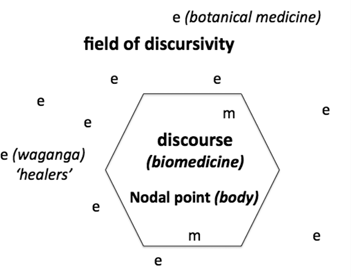
An illustration of Laclau and Mouffe’s theory of discourse (“e”=element; “m”=moment).
Laclau and Mouffe were interested in analyzing how the structure of society is constituted and changed by looking carefully at the nature of discourse. In a parallel manner, I am interested in examining how the structure of public health systems in Tanzania are constituted, challenged, and also potentially changed for the better. Of course, bottom-up change is arduous within a system that receives millions of dollars of funding from biomedically-oriented donor agencies such as the World Health Organization, Oxfam, and UNICEF – but as the examples in the data presented here show, there does appear to be room to maneuver within these frameworks for including other discourses and meanings. To examine these processes in discourse, I turn to Bucholtz and Hall’s (2005) framework for sociocultural linguistics and two tactics of intersubjectivity that they relate to institutional aspects of identity. First is their concept of authorization, which involves the affirmation or imposition of an identity through structures of institutionalized power and ideology, which I apply to the ways the NGO facilitators legitimate indigenous knowledge and the traditional healers. I examine authorization by studying how the NGO workers represented the knowledge base of the traditional doctors through ‘demythologizing narratives’ about medicine and healing practices. These narratives were set up to present indigenous forms of healing as not only equivalents, but as precursors, to contemporary biomedical approaches to healing. I then explore the other side of the coin by illustrating how illegitimation works in the workshop discourse to dismiss, ignore, and perpetuate hegemonic structures. Here, I demonstrate that discursive practices such as the vocative use of ‘doctor’ to refer only to the biomedical doctors ran counter to the egalitarian ideology previously espoused by the NGO workers. Moreover, the occasions of authorization that took place were characterized by the biomedical doctors’ acts of legitimating the healers’ practices, rather than vice versa.
4 The context of the study
The data analyzed in this paper come from a series of workshops that took place in 2010 at a health clinic in Maramba, a small town in the Tanga region of Tanzania. Tanga borders Kenya to the north and the Indian Ocean to the east. Most residents are Muslim, and while Swahili is a dominant (and the national) language, the main language of many residents is either Digo or Sambaa, names which also refer to two of the predominant ethnic groups in the area. The facilitators were Swahili dominant, and so the workshop was carried out in Swahili, with some codemixing in English. English is officially the medium of instruction for secondary and tertiary schooling, but many Tanzanians who have graduated from high school have very low proficiency in the language (Brock-Utne 2005). While the biomedical practitioners who participated in the workshop were highly proficient in English, the healers were not. The doctors and healers were fluent in Swahili and possessed some degree of proficiency in local Tanzanian languages, with healers being more proficient than biomedical doctors and nurses. The nurses typically aligned with the biomedical doctors in terms of their knowledge base and worldview, and though they were treated fairly by the male and female biomedical doctors, it is fair to say that nurses experience less prestige and lower economic benefits than people who are identified as biomedical doctors. The participants who had received biomedical training had been trained in a variety of contexts, including medical schools, colleges of nursing, and certificate programs. Except for two women who worked as biomedical nurses, all of these biomedically-trained participants were referred to as “doctor” even if they did not have an advanced medical degree, likely an effect of a society in which MDs are few and far between. The healers had by and large inherited their body of knowledge regarding care and treatment for patients from family members.
The workshops were sponsored by the Tanga AIDS Working Group (TAWG), the only NGO in Tanzania that explicitly promotes the use of indigenous knowledge in public health education and training, and which works to advocate for traditional healers. The purpose of the workshops was to encourage the biomedical doctors and the healers to learn from one another and to find ways to collaborate so that they could better treat patients in their area. Approximately 25 people participated over the week long workshop that I attended, with slightly more healers than doctors in attendance. The workshops that I attended took place as TAWG’s program was in its third year, heading toward the stage of ‘capacity building’ – NGO-speak for the expectation that participants in any training or educational event will ultimately take on the work that the NGO has been organizing as their own and will find the resources they need, rather than relying on the NGO (or donor agencies) in the future. Over the three year period, TAWG had conducted workshops and seminars separately with each group, and over time, they brought them together to build collaborative relationships.
The workshop was held in a conference room at Maramba’s governmental health clinic. Two facilitators who worked for TAWG shared the task of teacher-centered instruction at the front of the classroom and used powerpoints to lecture about the history of indigenous medicine in Africa, the differences between healing and witchcraft, the methods by which healers harvest their medicines from plants and trees, and the referral system that had been set up by TAWG so that healers could officially send their patients to clinics. The health professionals sat close together at long tables and seemingly chose to sit in self-segregated groups of healers and biomedical personnel. Each person had their name affixed to the table in front of them, which was noteworthy because the biomedical doctors included the title “Dr.” on these name cards. The workshops ran from mid-morning to late afternoon with several scheduled tea breaks. The facilitators included group work each day in the workshop which encouraged the doctors and healers to brainstorm and problem solve, and the last day of the workshop ended with group work dedicated to collaborations for the future.
A brief historical context of the workshop is of course also essential for interpreting the way that the events unfolded, particularly because the colonial history of Tanzania has left a long legacy on the legitimacy of healers. Upon taking over Tanzania from the Germans after World War I, the British instituted an ordinance in 1928 [2] against witchcraft that prohibited anyone from distributing medicine to communities. This legislation was crafted to prevent organized uprisings against the colonial government and had the effect of re-categorizing many healers as wachawi (‘witchdoctors’), which in turn impacted how Tanzanians themselves came to understand the two vocations (Langwick 2011: 47). While waganga are understood as healers who diagnose sick patients and treat them with plant and tree-based medicines, it is generally agreed that witchdoctors deliberately strive to cause harm to others through sorcery, curses, and other forms of magic (Mesaki 1993). The lines between healers and witchdoctors were not so clear to the colonial officials, however, as some healers have also been known to treat people who have been cursed by witches (McMillen 2004: 891) while others use biomedically invalid treatments such as kombe, a medicinal practice brought to Tanzania from the Arab world in which the healer acts as a medium for spirits and writes in red saffron ink on a plate to diagnose a patient. The ink is added to water and is then treated as medicine (Langwick 2008: 434). As the data below will reveal, healers’ continued adherence to practices once mis-identified as witchcraft have made it difficult for those who are trained in biomedicine to fully trust their colleagues. [3]
Despite the damage done to healers by the colonial governments, the Tanzanian government has taken many steps to validate indigenous medicine. After independence, the country rejected the colonial prohibition on healing practices, established a professional association of healers, and created research institutes that served to (re)legitimize the healing powers of indigenous medicines. In the 1970s, as part of the socialist policies of the new government, a traditional medicine research unit was established at Muhimbili Hospital in Dar es Salaam. Researchers and government medical officers primarily collected samples of natural remedies and interviewed healers in order to catalogue their knowledge in the hopes of using it widely across the country. In the 1980s, the socialist economy crumbled and the government succumbed to structural adjustment programs in order to receive financial bailouts from the IMF and World Bank. These programs required shifting from a government-sponsored healthcare system to a fee-for-service system, which had a positive ripple effect on healers. Because the World Bank and United Nations expected Tanzania to liberalize its economy while also striving for improved public health as a marker of development, these institutions promoted the use of healing as a means to that end (Langwick 2011; Sindiga 1995), and the collaborations facilitated by TAWG are one such example of that development.
3.1 Data collection
TAWG’s institutional identity as supportive of indigenous knowledge led me to pay special attention to any social identities marked as ‘indigenous’ that might be afforded to the participants at the workshops. To study these identities, I took field notes and audio recorded the events, paying attention to the ways that the workshop positioned the biomedical and traditional doctors. I already had a solid familiarity with public health education and workshops among educated, urban populations from my previous research (Higgins 2010a, 2010b, 2014), and I adapted these to the new context. Though I am fluent in Swahili, I hired a Tanzanian research assistant to accompany me and to help me capture the details of the interactions, to take photographs, to fill in cultural gaps, and to act as an additional pair of eyes and ears. Later, my research assistant graciously helped me to transcribe excerpts of data and to occasionally shed light on contextual aspects of the activities that we were examining. I was also able to discuss my analysis with the facilitators of the workshops and to the director of TAWG in the spirit of participatory research which is designed and carried out in order to give back to the people and the institutions that are at the center of the research.
4 Analysis
4.1 Authorization
I first examine authorization, or the institution-based discursive construction of legitimacy, by studying how the NGO workers represented the knowledge base of the healers through ‘demythologizing narratives’ about medicine and healing practices. These narratives were set up to present indigenous forms of healing as not only equivalents, but as precursors, to contemporary biomedical approaches to healing. One of the strategies used here by the facilitators was to show the participants a powerpoint of images of plants and trees that have been acknowledged by biomedical science to treat diseases and ailments, including malaria and high blood pressure. The facilitators showed images of a herbal clinic in Ghana to illustrate how one herbal clinic there operates within a biomedical hospital, much in the same way that TAWG’s own clinic operates in the city of Tanga at a government-funded hospital. All around TAWG’s clinic are trees, bushes and plants that are known remedies for a variety of medical problems. This led to several additional examples, which I discuss below.
4.1.1 Authorization: Establishing commonalities in the biomedical and spiritual worlds
In the facilitators’ presentation on the first day, the first session was limited to the biomedical doctors and was led by Dr. Saba (all names are pseudonyms). He mentioned the Hippocratic Oath as a way of pointing to an example that blended biomedical practices with historically religious and/or spiritual origins as a way of inviting the doctors to consider the field of medicine’s rather multifaceted foundations. This led him to raise the example of the Eye of Horus, which, in his telling (and in tellings by many others, albeit not without controversy), is the historical basis of the Rx symbol underlying modern medicine that is used in prescriptions (see Figure 2). The Eye of Horus is an ancient Egyptian symbol associated with healing powers. [4] Another reading of ‘Rx’ is based on the Latin word recipe or ‘to take.’ The point of providing this example was to underscore the links between biomedical healing, religion, and the natural world – and to challenge their separation in the usual discourse of biomedicine.

The Eye of Horus compared to the Rx symbol in biomedicine.
4.1.2 Alignments with the authorial discourse
Unfortunately, the talk about the Eye of Horus was not recorded, but the conversation immediately following this example demonstrated how the doctors took up Dr. Saba’s points about the common ground he was building – or authorizing, as an NGO facilitator with an internationally funded project. After Dr. Saba told the group about how to prepare one type of indigenous root, Kingazi exclaimed in Swahili (which is translated here), [5] ‘We see that you have already become an mganga [an indigenous healer]. After an agreement by another doctor, Kingazi offered the timely use of “Allahu Akbar,” (‘God is great’), an expression that is widely used in the Islamic world to express appreciation, among other more religious meanings. Here, its use was in appreciation of Dr. Saba’s many talents, including his deep knowledge of indigenous medicine including ways of preparing botanical medicines. In all of the transcripts that follow, biomedically trained participants are indicated with (MD) after their names, and healers are indicated with (H).
| 1 | Dr. Saba: | Ili kuepusha kuchemsha sana dawa za asili wengine wanasema |
| 2 | msitumie less than fifteen to twenty minutes. Kwa sababu | |
| 3 | ukichemsha overheating pia material yanapotea. (pause) | |
| 4 | Tunaelewana jamani? Mmelewa. Au (m)nasema tu? Maanake | |
| 5 | mnaendelea na mambo yenu. | |
| 6 | Many: | Tunakuelewa. |
| 7 | KingMD: | Tunaona umeshakuwa kama mganga. |
| 8 | Dr. Saba: | Eti eh? |
| 9 | IssaMD: | Kabisa. ((emphatic)) |
| 10 | KingMD: | Allahu Akbar. |
| 11 | All: | ((congenial laughter)) |
| 1 | Dr. Saba: | To avoid overboiling the medicine some people say that |
| 2 | you should boil it less than fifteen to twenty minutes. Because if | |
| 3 | you boil, you are overheating, and the (healing) material | |
| 4 | gets depleted. Do we understand each other? Do you understand | |
| 5 | or are you just saying so? I mean, are you not really listening? | |
| 6 | Many: | We follow you. |
| 7 | KingMD: | We see that you’ve already become like an mganga [‘healer’] |
| 8 | Dr. Saba: | That’s right, huh? |
| 9 | Issa(MD): | Completely. ((emphatic)) |
| 10 | King(MD): | God is great. |
| 11 | All: | ((congenial laughter)) |
Like most of the participants at the workshop, Dr. Saba is Muslim. Nonetheless, the expression of “Allahu Akbar” here is not so much a serious comment, but more of an intertextual alignment with his points about the difficulty in distinguishing between beliefs and biomedicine in many contexts.
4.1.3 Local languages and address forms as authorization practices
As an act of affixing signs to meanings in the discourse, Dr. Saba regularly invoked the healers’ knowledge base as he facilitated workshop sessions by asking them about ethnobotany, medicinal plant preparation, and treatment of patients. He also asked the healers for the names of treatments in local languages such as Kisambaa, which in turn authorized these languages as pathways of local knowledge. He found ways to emphasize that healing predated biomedical forms of knowledge, and he used several examples in which biomedical practitioners had simply built off of indigenous medicine’s accomplishments. In the example below, which comes from one of the sessions involving both kinds of health professionals, he compares the idea of refrigeration with the practices of healers, and he uses the address term “Dakta Sulab,” (line 5) to call on a healer, in line 5 to provide the term. Dr. Saba’s use of this address term was transgressive since the healers do not normally refer to themselves as ‘doctors,’ and because this term is generally reserved for biomedically trained health professionals in wider Tanzanian society.
| 1 | Dr. Saba: | Mfumo wa msingi wa taalamu ni msingi wa taalamu ni msingi wa |
| 2 | utengenezaji eh? Kuna ma-friji hapa. Friji. Unajua friji ni lugha | |
| 3 | ya asili. Ni magunia tu tunatumia. Ni magunia. Endapo | |
| 4 | tunaonyesha moja lakini hapa kumefutika bahati mbaya. Hii ni | |
| 5 | jinsi ya kutengeneza friji kule kwa itwaje kwa Dakta Sulab— | |
| 6 | sijui inaitwaje? | |
| 7 | Many: | Silambo. [Kisambaa term] |
| [lines omitted] | ||
| 18 | Dr. Saba: | Kumbe inaweza ikatengenezwa baada ya walivyoona ile |
| 19 | walivyotengeza friji. |
| 1 | Dr. Saba: | The system of the foundation for preparing medicine, right? There |
| 2 | is refrigeration here. Refrigeration. You know ‘refrigeration’ is | |
| 3 | indigenous language. We say ‘burlap sacks.’ Burlap sacks. We had | |
| 4 | one (word) for it but unfortunately it was lost. This is the way of | |
| 5 | making refrigeration (in Maramba), what’s it called in – Doctor Sulab, | |
| 6 | what is it called (in Kisambaa)? | |
| 7 | Many: | ‘Burlap sacks’ |
| [lines omitted] | ||
| 18 | Dr. Saba: | Wow, so it’s possible (modern refrigeration) was made after |
| 19 | (foreigners) saw the way the Sambaa created refrigeration. | |
While many of the participants actually answered Dr. Saba’s question, including biomedical doctors who also know the Kisambaa language, Dr. Saba’s framing of the knowledge positioned the healers as knowing the answer. Moreover, his question authorized Dr. Sulab, the Kisambaa language and the practice of silambo (‘refrigeration by way of burlap sacks’) as relevant and worthwhile for the workshop and did so by treating Dr. Sulab as an equal among his peers.
It is important to note that while the borrowed form of the word also appears as daktari in Swahili, the pronunciation of the address term at the meetings was consistently dakta [dakta], which is a variation of the word used widely in Tanzania. While this form is arguably closer to English morphology, dakta is an arguably bivalent (Woolard 1998) word that is equally Swahili and (r-less) English, and which refers to a biomedically trained health professional in both languages. Throughout the facilitator-driven sessions, Dr. Saba and his co-facilitator consciously used this address term for everyone, and interviews with Dr. Saba confirmed that the use of this address term for all was intentional and was meant to treat the healers similarly to the biomedical professionals.
Dr. Saba and his fellow facilitators also used the innovative address term waganga wa kisasa to refer to the biomedical doctors, which translates as ‘(indigenous) healer of modern times,’ and is a rather novel re-affixing of a meaning to a sign. By using the address form waganga as the default term, the facilitators can be seen as moving the term into a central role as a “nodal point” in Laclau and Mouffe’s terms, rather than leaving it as an element that can take on a (usually) pejorative or marginal connotation within the discourse of medicine.
Of course, this effort to articulate equality through vocatives was a challenge even from the beginning. The workshop participants had all been asked to write their names on name cards for the sessions, and several biomedically trained doctors had included “Dr.” in front of their names, while the traditional doctors had not, thereby establishing a division by virtue of education and training. Several biomedical doctors had written “Dr.” plus their first name – and notably the women – perhaps in an effort to present themselves in a more accessible or informal manner to the healers. The male healers either wrote their full names or just their surnames on the name cards, and the female healers either wrote their full names or their first names. Over the course of the workshop, these name cards were corrected by adding “Dr.” to healers’ names, but this example does illustrate the challenge in reshaping structures and power relations that continued to be ‘common sense’ outside of the workshop setting.
4.2 Illegitimation
Next, I turn to an analysis of illegitimation practices that took place when the doctors interacted during the workshops. First, I demonstrate that discursive practices such as the vocative use of ‘doctor’ that I just discussed was used, despite their best efforts, only for the biomedical doctors, which ran counter to the egalitarian ideology previously espoused. I also present an example of conversational inquality in terms of how the traditional doctors responded to being accorded knowledge they identified as uchawi (‘witchcraft’) rather than their field of expertise, uganga (‘healing’).
Vocatives are an interesting site for the study of conversational inequality, as they are an ideologically relevant discourse structure that creates meaning in interaction (Van Dijk 1998). Other researchers have demonstrated how vocatives contribute to controlling who starts and ends an exchange, who interrupts, and who gets to raise a new topic. Power and solidarity are contextualized with vocative use, as speakers can adjust their social distance and deference or relative authority through their vocatives, in addition to other linguistic forms (Axelson 2007; Jaworski and Galasinkski 2000). Because the workshop facilitators had established a new norm through their demytholozing narratives and their insistence on treating the participants with mutual respect, this new context (or discourse) becomes the point from which to analyze the vocative use.
4.2.1 Vocatives and illegitimated identities
One example of the use of dakta for the biomedical doctors came in groupwork, when the participants were asked to write answers to the following questions on a poster-sized sheet of paper. This was a common practice at this workshop (and in many others I have observed), and was a form of demonstrating understanding of the ideas presented thus far. In one group I observed, the group was working together to answer a question about what they had collaborated on successfully so far, and they were negotiating what to include. One biomedical doctor, Veronica (who had identified herself as “Dr. Veronica” on her name card), was the person writing on the paper, and she was taking input from everyone. The other participants were all healers. Veronica was reading aloud as she wrote (line 1). In search of more items to add to their list of accomplishments, Omary and Fatima then repeated the answer, and then Amina, another healer, used a vocative (line 4) to draw attention to the fact that Veronica had been involved in the collaborations and had firsthand experience witnessing the success of their educational outreach. In using the address term in line 4, Amina simultaneously praises her biomedical colleague for her participation in the collaborative work while also highlighting the inequality between healers and doctors by remarking on the fact that ‘even a doctor’ has taken the time to be there to see such activities take place.
| 1 | Vic(MD): | Kutoa elimu na, |
| 2 | Omar(H): | Na kutoa elimu na, |
| 3 | Fati(H): | Elimu tumetoa. |
| 4 | Amin(H): | Tumezitoa. Si hata Dakta unajua. |
| 1 | Vic(MD): | To offer education and, |
| 2 | Omar(H): | And to offer education and, |
| 3 | Fati(H): | We’ve offered education. |
| 4 | Amin(H): | We have offered it. Doctor, even you know (as you’ve seen it yourself). |
The next example arose in a discussion about how healers should do a referral to a medical clinic. The system of referrals by healers was in itself an innovative practice that TAWG had embarked upon that made it possible for them to send patients to clinics operated by biomedical doctors. Though this referral system had been in place for many years, it was still new to many of the participants, which of course pointed to the need for the workshop. Referrals are not possible the other way around; there is no system for biomedical doctors to refer patients to healers. Shedenko, a healer, wanted to know how to ensure that any patients he referred to a clinic or hospital would be treated as if they had already seen a doctor, rather than as brand new patients who would then be placed at the end of a long queue. Dr. Saba asked the others to respond to his question, and though he was apparently unaware of it at the time, he used “dakta” only to address the biomedical doctors in the room in spite of his own stance as the facilitator towards establishing egalitarian address forms. See below for examples with address forms bolded. In (4), Dr. Saba calls on a biomedical doctor using “dakta” and his surname, a typical address form for biomedical doctors, to assuage Shedenko’s concerns.
| 1 | Dr. Saba: | Huyu alimtoa mganga wa jadi hebu tumpeleka kwa daktari |
| 2 | wanasemaje? (pause) | |
| 3 | Dakta Daffa unasemaje? | |
| 4 | Daf(MD): | Mimi kwanza nashukuru kwamba... |
| 1 | Dr. Saba: | Anyone who taken someone from a healer to a doctor, what do |
| 2 | you say? (pause) | |
| 3 | Doctor Daffa, what do you say? | |
| 4 | Daf(MD): | First let me say I’m thankful that... |
After explaining at some length that he had not yet received a referral from a healer himself, Daffa asserted that he did not think it would be a problem to handle referrals from healers such as Shedenko. Dr. Saba then called on one of his colleagues by referring her to as “Dakta Tunu,” which made use of her first name. Like Veronica, Tunu also had self-identified as “Dr. Tunu” on her name card and was generally referred to as such by the group.
| 1 | Daf(MD): | Mi nadhani hilo halina akazungumzia zaidi. |
| 2 | Dr. Saba: | Dakta Tunu unasemaje? |
| 1 | Daf(MD): | I think there’s nothing more to say about this issue |
| 2 | Dr. Saba: | Doctor Tunu, what do you think? |
In the same session, Dr. Saba then called on a healer, Hamisi Omary, using his first name, which is a fairly casual/informal choice. Omary had self-identified on his name card with his first and last names, and he was generally referred to as “Omary” in the group, so the use of “Hamisi” was somewhat unusual. Dr. Saba was slightly older than Omary, which may have justified his use of Omary’s first name.
| 1 | Dr. Saba: | Ehe. Hebu tufafanulie Hamisi. |
| 1 | Dr. Saba: | Yes. Then let’s follow with Hamisi. |
The final example of vocatives in (7) illustrates the endearing use of babu (lit. ‘grandfather’) as a vocative, which is a common way to respectfully (and affectionately) address someone who is significantly younger than oneself. Age-conscious address forms are common in Tanzania, where generational difference generally merits distinctions in greeting forms and other aspects of politeness, including whether one sits or stands and who serves whom a cup of tea. Here, Dr. Saba (who is in his mid 40s) asks Shedenko, who is in his late twenties, what he has to say about doing referrals as a healer.
| 1 | Dr. Saba: | Ehe, babu unasemaje? |
| 2 | Shed(H): | Labda mimi nimsaidie daktari wenzangu hapa kwamba bahati mbaya hajawahi kutoa rufaa, |
| 3 |
| 1 | Dr. Saba: | Yes, grandfather, what do you say? |
| 2 | Shed(H): | Maybe I can help my fellow doctors here who unfortunately haven’t done a referral, |
| 3 |
Shedenko refers to the other healers at the workshop as daktari (‘fellow doctors’) (line 2), thereby authorizing them, and himself, as on par with the biomedical doctors. However, it is questionable to what degree this authorization can come from a healer, rather than from someone already in a position of power, such as Dr. Saba. Moreover, the fact that the biomedical doctors regularly distinguished themselves from their healer colleagues by exclusionary use of the address term “Dr.” indicates that all of the efforts of TAWG to level the playing field had little impact.
4.2.2 Conflation of waganga (‘healers’) with wachawi (‘witchdoctors’)
The final set of examples examines how participants were seen as having specific sets of knowledge and how they responded to being positioned accordingly. The example came during a discussion of the differences between wachawi (‘witchdoctors’) and waganga (‘indigenous healers’) that the facilitators had raised in an effort to guide the participants to see more common ground between waganga and biomedical doctors. The logic seemed to be that through distinguishing both kinds of doctors as “not witchdoctors,” an equivalency would be established. Nevertheless, as the conversation revealed, the biomedical doctors, and even the facilitator, engaged in discursive actions that portrayed the traditional doctors as equivalent to witchdoctors.
The first example comes from a conversation that began when a question was posed by Ngereza, a biomedical nurse, who was asking about the rather unusual idea of kuruka ungo, a type of magic often attributed to the Tanga region that allows people to travel through the air without using any devices other than their own bodies (McMillen 2008). Kuruka ungo is not a practice that healers would generally ascribe to, particularly the set of healers at the workshop who were all dedicated to creating stronger bonds with their biomedical colleagues. Ngereza expressed curiosity about the practice, and many of the traditional healers in the room responded that it does exist, merely stating “kipo” (‘it exists’).
| 1 | Nge(MD): | Katika mazungumzo kwamba mtu akitumia ungo kwa kusafiria |
| 2 | ni kosa la jinai. Je kweli kitu unakisikia kweli kipo? | |
| 3 | Many(H): | Kipo. |
| 4 | Dr. Saba: | Mimi siwezi kulijibu hilo. |
| 5 | Tunu(MD): | Maana hapa tunao waganga sasa. |
| 1 | Nge(MD): | I’ve heard that if a person travels by witchcraft magic, then it’s a |
| 2 | mortal crime. Is it true that this kind of travel is exists? | |
| 3 | Many(H): | It exists. |
| 4 | Dr. Saba: | I can’t answer that. |
| 5 | Tunu(MD): | This means we have waganga in here. |
Dr. Saba remained neutral toward the topic, leaving the discussion up to the participants entirely to take stances on. However, Tunu, a biomedical doctor, responded by exclaiming ‘we have waganga in here,’ a statement in which she erroneously associated knowledge of kuruka ungo with waganga instead of wachawi. Though the healers attested to the existence of the practice, they did not claim personal knowledge of it, nor did they go into detail about it. However, Tunu’s statement clearly framed the healers as people with knowledge of this practice. As waganga, the healers were strongly identified as people who worked to treat the sick, and their very presence at the workshop and over the three-year period of collaboration meant that they wanted to be taken seriously. Though she may have meant it in a friendly way, Tunu’s mention of waganga after a question about witchcraft challenged all of the authorization that TAWG and Dr. Saba had engaged in, and many efforts by healers to participate in acts of authorization themselves.
After some joking around, the conversation continued, and one of the biomedical doctors, Kingazi, nominated Omary (a healer) to contribute to the conversation about kuruka ungo, calling him “Bwana Omary” (‘Mr. Omary’) rather than “dakta.” Dr. Saba used the vocative Sheikh in reference to Omary’s Muslim affiliation (which Dr. Saba shared), and as a whimsical reference to Omary’s nomination by others as someone who would be in a position of knowledge. Omary was probably also chosen because he liked to talk. The humor did not get taken up, however, as Omary expressed disdain for the question and for the way his nomination to answer it positioned him as a witchdoctor (mchawi) or as someone who practices magic rather than healing. Though a tension had been building because the healers were not getting the respect they deserved for some time, this was the first moment when a healer vocalized the inequity that many had been experiencing.
| 1 | King(MD): | Bwana Omary. |
| 2 | Dr. Saba: | Sheikh Omary, eti teknolojia hii ipo? |
| 3 | Omar(H): | Sitaweza kulijibu. |
| 4 | Dr. Saba: | Eh? |
| 5 | Omar(H): | Hapo tumechanganya vitu viwili. Uganga na uchawi. |
| 6 | Dr. Saba: | Ah. |
| 7 | Omar(H): | Sasa sisi hapa wote ni hapa sidhani kama kuna barua iliyoitwa |
| 8 | mchawi. Imeitwa mganga. | |
| 9 | Dr. Saba: | Ehe. |
| 1 | King(MD): | Mr. Omary. |
| 2 | Dr. Saba: | Sheikh Omary. Does the technology (to magically travel by air) exist? |
| 3 | Omar(H): | I can’t answer that. |
| 4 | Dr. Saba: | What? |
| 5 | Omar(H): | Here we have confused two things. Healing and witchcraft. |
| 6 | Dr. Saba: | Oh. |
| 7 | Omar(H): | Now of all of us here, I don’t think there was a letter that invited |
| 8 | a witchdoctor. Each letter invited an indigenous doctor. | |
| 9 | Dr Saba: | Uh huh. |
After being nominated by biomedical doctor Kingazi, Omary responded similarly to Dr. Saba (in Extract 8) by explaining that he too did not have knowledge about such topics. Dr. Saba pushed him on it a bit, assuming that he must know about the practice of magical flying even if he himself did not believe in it or practice it. Nevertheless, in line 5, Omary attempts to authorize healing by distinguishing it from witchcraft, and by labeling all of the previous actions as “confusing” the two. In lines 7–8, he then underscores his legitimacy as a healer and as someone who has a rightful place amongst other doctors, biomedical and otherwise. Once again, however, it is doubtful that a healer can authorize his own legitimacy, even in a context where a rhetoric of equality has been put into place. Dr. Saba followed this point by taking a minimalist and neutral stance toward Omary’s point, and then changed the topic after a moment of awkward silence.
5 Discussion
Through these few examples, I hope to have provided a glimpse of the efforts by an NGO that espoused a strong interest and which aimed to implement policies that embraced traditional medicine as a crucial part of the Tanzanian health system. It was clear from the beginning that the healers did not enter the relationship in the workshop from an equal starting point. Of course, this was the context that TAWG was seeking to change through bringing the two sets of doctors together and creating collaborative partnerships. Much needs to be praised about what TAWG is doing, as they are an NGO that is at the cutting edge of public health education and professional training. They are the only Tanzanian NGO to overtly embrace indigenous knowledge and to promote the value of traditional doctors alongside biomedical doctors. In fact, as the doctors’ groupwork revealed, the biomedical doctors were quite interested in developing more mutually beneficial, and mutually respectful healthcare practices. For example, in response to the question of “What is the government’s responsibility in the delivery of health services to the public?”, one of the answers written by an intercultural teams of doctors was that they wanted the government to recognize the value of healing, to register healers, and to create a referral system that not only allowed healers to send their patients to clinics and hospitals, but also for biomedical staff to send their patients to healers.
In official moments in the workshop such as these, biomedical doctors shared the view that healers deserved more respect and inclusion, and that they recognized their key role in helping them to earn more legitimacy in the eyes of the public and the government. The discussions often centered on raising awareness and working together as a means of enhancing their legitimacy. Nevertheless, through my close examination of the conversational and interactional practices in the workshop sponsored by TAWG, it seems clear that more reflective practices are still needed if meaningful inclusion is going to be achieved within workshops such as the ones studied here. In Laclau and Mouffe’s terms, though official ideologies about equality are increasingly present in discourses of health and healing, these discourses remain resistant to indigenous healers in actual practice, placing them outside the official discourse of legitimacy.
6 Conclusion
Discursive approaches to policy and practice offer a promising framework for identifying ideologies and practices, and for comparing the two. This idea is useful for a range of applied linguistics projects, from the worlds of public health to formal education. Just as researchers in educational linguistics have found troubling policy/practice gaps related to the equitable treatment of girls (AAUW 1992; Jule 2004), minorities (Cazden 2001; Michaels 1981), and second language learners (Kanno and Harklau 2012; Lau v. Nichols 1974), this study has shown that despite their best intentions to produce more equality, educators and participants alike are complicit in perpetuating inequality through discourse.
As institutions such as NGOs attempt to find ways to redress inequalitites and to put policies of mutual respect and inclusion into practice, it is important to examine whether and to what degree their goals are being met. We can also think of the gap as one between rhetoric and reality. Oftentimes, rhetoric and policy is egalitarian but discursive practices in real world contexts demonstrate illegitimation. As in many applied linguistics contexts, it is essential to recurrently assess and reflect upon professional practice with regard to the rhetoric of policy, and to look at practice as a source of evidence of success— or failure – with regard to that policy.
References
American Association of University Women (AAUW). 1992. How schools shortchange girls: Executive summary. Washington, DC: The American Association of University Women Educational Foundation.Search in Google Scholar
Axelson, Elizabeth. 2007. Vocatives: A double-edged strategy in intercultural discourse among graduate students. Pragmatics 17. 95–122.10.1075/prag.17.1.04axeSearch in Google Scholar
Black, Steven. 2012. Laughing to death: Joking as support amid stigma for Zulu‐speaking South Africans living with HIV. Journal of Linguistic Anthropology 22(1). 87–108.10.1111/j.1548-1395.2012.01140.xSearch in Google Scholar
Black, Steven. 2013. Stigma and ideological constructions of the foreign: Facing HIV/AIDS in South Africa. Language in Society 42(5). 481–502.10.1017/S0047404513000638Search in Google Scholar
Brock-Utne, B. 2005. Language-in-education policies and practices in Africa with a special focus on Tanzania and South Africa – insights from research in progress. In A. Lin & P. Martin (eds.), Decolonisation, Globalisation: Language-in-education Policy and Practice, 173–193. Clevedon: Multilingual Matters.10.21832/9781853598265-012Search in Google Scholar
Bucholtz, Mary & Kira Hall. 2005. Identity and interaction: A sociocultural linguistic approach. Discourse Studies 7. 585–614.10.1177/1461445605054407Search in Google Scholar
Cazden, Courtney. 2001. Classroom discourse: The language of teaching and learning, 2nd edn. Portsmouth, NH: Heinemann.Search in Google Scholar
Drescher, Martina. 2007. Global and local alignments in HIV/AIDS prevention trainings: A case study from Burkina Faso. Communication and Medicine 4(1). 3–14.10.1515/CAM.2007.002Search in Google Scholar
Doyle, Cathal & Preeti Patel, P. 2008. Civil society organisations and global health initiatives: Problems of legitimacy. Social Science & Medicine 66(9). 1928–1938.10.1016/j.socscimed.2007.12.029Search in Google Scholar
Higgins, Christina. 2010a. Discursive enactments of the World Health Organization’s policies: Competing worldviews in Tanzanian HIV/AIDS prevention. Language Policy 9(1). 65–85.10.1007/s10993-009-9151-xSearch in Google Scholar
Higgins, Christina. 2010b. Discursive constructions of responsibility in HIV/AIDS prevention: Re-entextualization practices in Tanzania. In Christina Higgins & Bonny Norton (eds.), Language and HIV/AIDS, 133–154. Bristol: Multilingual Matters.10.21832/9781847692214-010Search in Google Scholar
Higgins, Christina. 2014. Constructing identities through literacy events in HIV/AIDS education. Journal of Multilingual and Multicultural Development 35(7). 709–723.10.1080/01434632.2014.908892Search in Google Scholar
Higgins, Christina & Bonny Norton (eds.). 2010. Language and HIV/AIDS. Bristol: Multilingual Matters.10.21832/9781847692214Search in Google Scholar
Jaworski, Adam & Dariusz Galasinkski. 2000. Vocative address forms and ideological legitimization in political debates. Discourse Studies 2(1). 35–53.10.1177/1461445600002001002Search in Google Scholar
Jule, Allyson. 2004. Gender, participation and silence in the language classroom: Sh-shushing the girls. New York: Palgrave Macmillan.10.1057/9780230596627Search in Google Scholar
Kanno, Yasuko & Linda Harklau (eds.). 2012. Linguistic minority students go to college: Preparation, access, and persistence. New York: Routledge.10.4324/9780203829387Search in Google Scholar
Kasilo, Ossy, Edoh Soumbeh-Alley, Charles Wambebe, & Rufaro Chatoro. 2005. Regional overview: African region. In Gerard Bodecker, Chi-Keong Ong, Chris Grundy, Gemma Burford, & Kin Shein (eds.), WHO global atlas of traditional, complementary and alternative medicine, 3–12. Kobe: World Health Organization.Search in Google Scholar
Laclau Ernesto & Chantal Mouffe. 1985 [2001]. Hegemony and socialist strategy: Towards a radical democratic politics. London: Verso.Search in Google Scholar
Langwick, Stacey A. 2008. Articulate (d) bodies: Traditional medicine in a Tanzanian hospital. American Ethnologist 35(3). 428–439.10.1111/j.1548-1425.2008.00044.xSearch in Google Scholar
Langwick, Stacey A. 2011. Bodies, politics, and African healing: The matter of maladies in Tanzania. Bloomington, IN: Indiana University Press.10.2979/5787.0Search in Google Scholar
McMillen, Heather. 2004. The adapting healer: Pioneering through shifting epidemiological and sociocultural landscapes. Social Science and Medicine 59, 889–902.10.1016/j.socscimed.2003.12.008Search in Google Scholar
McMillen, Heather. 2008. Conserving the roots of trade: Local ecological knowledge of ethnomedicines from Tanga, Tanzania markets. Honolulu: University of Hawai‘i at Manoa dissertation.Search in Google Scholar
Mesaki, Simeon. 1993. Witchcraft and witch-killings in Tanzania: Paradox and dilemma. Unpublished doctoral dissertation, University of Minnesota.Search in Google Scholar
Mesaki, Simeon. 2009. Witchcraft and the law in Tanzania. International Journal of Sociology and Anthropology 1(8). 132–138.Search in Google Scholar
Mhame, Paul. 2004. The role of traditional knowledge in the national economy: Traditional medicine in Tanzania. In Sophia Twarog & Promila Kapoor (eds.) Protecting and promoting traditional knowledge: Systems, national experiences and international dimensions, 17–19. New York & Geneva: United Nations.Search in Google Scholar
Michaels, S. 1981. “Sharing time”: Children’s narrative styles and differential access to literacy. Language in Society, 10(3), 423–442.10.1017/S0047404500008861Search in Google Scholar
Mwakitwange, Rosemary & Vivian Bashemererwa. 2008. Establishing linkages between HIV/AIDS and the environment in Tanzania. Making the linkages–conservation as a core asset for livelihood security in Eastern Africa. Tanzania: International Union for Conservation of Nature.Search in Google Scholar
Norton, Bonny & Harriet Mutonyi, 2007. ‘Talk what others think you can’t talk’: HIV/AIDS clubs as peer education in Ugandan schools. Compare 37(4). 479–492.10.1080/03057920701366218Search in Google Scholar
Phillips, Louise. & Jorgensen, Marianne. 2001. Discourse analysis as theory and method. London: Sage.10.4135/9781849208871Search in Google Scholar
Sindiga, Isaac. 1995. Traditional medicine in Africa: An introduction. In Isaac Sindiga, Chacha Nyaigotti-Chacha, & Mary P. Kanunah (eds.), Traditional medicine in Africa, 1–15. Nairobi: East African Educational Publishers Ltd.Search in Google Scholar
Van Dijk, Teun. 1998. Ideology. London: Sage.Search in Google Scholar
Woolard, K. A. (1998). Simultaneity and bivalency as strategies in bilingualism. Journal of Linguistic Anthropology 8(1). 3–29.10.1525/jlin.1998.8.1.3Search in Google Scholar
©2016 by De Gruyter Mouton
Articles in the same Issue
- Frontmatter
- Symbolic power and conversational inequality in intercultural communication: An Introduction
- Authorization and illegitimation among biomedical doctors and indigenous healers in Tanzania
- Native and non-native speaker identities in interaction: Trajectories of power
- Symbolic power and the native/non-native dichotomy: Towards a new professional legitimacy
- “Where are you really from?”: Nationality and Ethnicity Talk (NET) in everyday interactions
- “Misunderstanding” and (mis)interpretation as strategic tools in intercultural interactions between preschool children
- Language choices and symbolic power in intercultural communication: A case study of a multilingual, immigrant Filipino woman in South Korea
- The multiple faces of symbolic power
Articles in the same Issue
- Frontmatter
- Symbolic power and conversational inequality in intercultural communication: An Introduction
- Authorization and illegitimation among biomedical doctors and indigenous healers in Tanzania
- Native and non-native speaker identities in interaction: Trajectories of power
- Symbolic power and the native/non-native dichotomy: Towards a new professional legitimacy
- “Where are you really from?”: Nationality and Ethnicity Talk (NET) in everyday interactions
- “Misunderstanding” and (mis)interpretation as strategic tools in intercultural interactions between preschool children
- Language choices and symbolic power in intercultural communication: A case study of a multilingual, immigrant Filipino woman in South Korea
- The multiple faces of symbolic power
