
Activating sustainability in the design process
-
Andrea Miquel


Abstract
Design decisions have an impact on societies and the environment. Making the impact of design tangible facilitates the mitigation of its negative consequences. The purpose of this paper is to outline what methods and actions a User Experience (UX) practitioner could use in order to support sustainable development. At Ergosign GmbH, an agency creating digital experiences, we conducted a review of existing guidelines and principles to determine the relevance and usefulness of those frameworks in the User Experience Design (UXD) context. The analysis resulted in the creation of six guiding principles to introduce sustainability concerns into the design process. Additionally, we mapped related UX methods and heuristics to each principle. Each of the six principles, as well as an exemplary method, are described in detail in this article. A first practical evaluation of the principles suggests that assessing impact and identifying preventive actions is possible at all stages of the design process. Furthermore, there is no strict correlation of a principle with a particular project phase. While an early analysis generates a more holistic action plan, a later assessment provides more concrete advice. Both approaches can deliver notable improvements in the reduction of resource usage.
1 Introduction
Several indicators expose that the way most businesses on this planet operate cannot be sustained in the long term without causing alarming environmental degradation and threatening humanity’s existence. For instance, the UN Stats reports that the global material footprint is increasing at a faster rate than both population and economic output. 1 The global e-waste monitor states that the electronic waste generated worldwide in 2019 weighs almost as much as 5.000 Eiffel Towers. 2 In terms of environmental limits, the planetary boundaries framework update from September 2023 3 found that six out of the nine boundaries have been crossed and we are edging closer to the remaining three.
All of the factors above have contributed not only to an increase in social awareness in recent years, but also to a wider acceptance of sustainability as a core element in business imperatives. Consultants at McKinsey expressed back in 2011 that companies with positive environmental and social impacts are often more innovative and efficient than their counterparts and face fewer regulatory costs and obstacles. 4 Furthermore, the 2023 report from the Capgemini Research Institute indicates that the percentage of executives understanding the business case for sustainability has tripled between 2022 and 2023 from 21 % to 63 %. In addition, the number of executives stating that the benefits of sustainability outweigh the costs and that it extends far beyond a financial obligation has doubled. 5 From a consumer perspective, 68 % of Europeans agree that their consumption habits adversely affect the environment in Europe and globally. 6 It seems that generally speaking, corporations and consumers are aware of the importance of shifting to more sustainable practices and business models.
Despite this growing positive sentiment on sustainability and a clearer understanding of the competitive advantage it provides, investment in sustainability did not boost in 2023. Findings from Capgemini research indicate that organisations still fall behind in reporting environmental sustainability initiatives. Similarly, progress in sustainable product design has been underwhelming compared to the previous year’s findings. 5
As UX designers working for Ergosign GmbH, a digital experience agency, we were confronted with this challenge. The sense of urgency to address sustainable development goals seems clear. However, both trend reports and our own market experience reveal a lack of awareness in ongoing projects. Following the question, ‘How can Ergosign, as a collective of designers and developers support our customers to incorporate sustainability in the design process?’ this paper presents an outline on methods and actions a UX practitioner could use in order to support sustainable development.
In the following, we describe the approach we took to derive six guiding principles for sustainable innovation, accompanying heuristics and related methods. The core of the document offers an explanation of the concept behind each principle, as well as an exemplary method. The selected methodologies are explained in detail to foment practical application among other UX practitioners. Finally, we discuss the limitations of the framework and opportunities for future actions.
2 Methodology
For this assignment, we conducted external secondary research. 7 The process consisted of: (1) defining the research question and scope, (2) identifying external and internal resources, (3) collecting and analysing data, (4) reporting results and consulting stakeholders.
2.1 Setting the scope
Borrowing from the design thinking framework, we used the How Might We (HMW) questions 8 to cross-examine the challenge and reformulate the problem statement in a way that would enable a productive ideation phase. The resulting question was the following: ‘How might we create sustainable digital experiences that contribute to a more resilient future for both people and the planet?’
After a few ideation sessions, it became apparent that our ideas were a great starting point, but needed a desk research phase to determine if they were viable, if they could fit the company strategy and which resources and processes would be required to materialise them. To accomplish this, we first searched for sources on the topic.
2.2 Building knowledge
Lacking expertise in-house, we opted for reviewing only external resources. These included legal frameworks as well as specialised reports on sustainability and market trends. In parallel, we conducted a literature review of manifestos, 9 principles, 10 , 11 , 12 strategies, 13 , 14 checklists, patterns and any other source of information 15 setting a direction for responsible, ethical and sustainable design and business practices.
2.3 Making sense of the data
Presented with an ever-growing landscape of sticky notes, we started synthesising our compiled data. We dissected design principles and tagged them based on underlying themes. After clustering those themes, categories started to emerge in a way that was resembling best practices and recommendations (Figure 1).
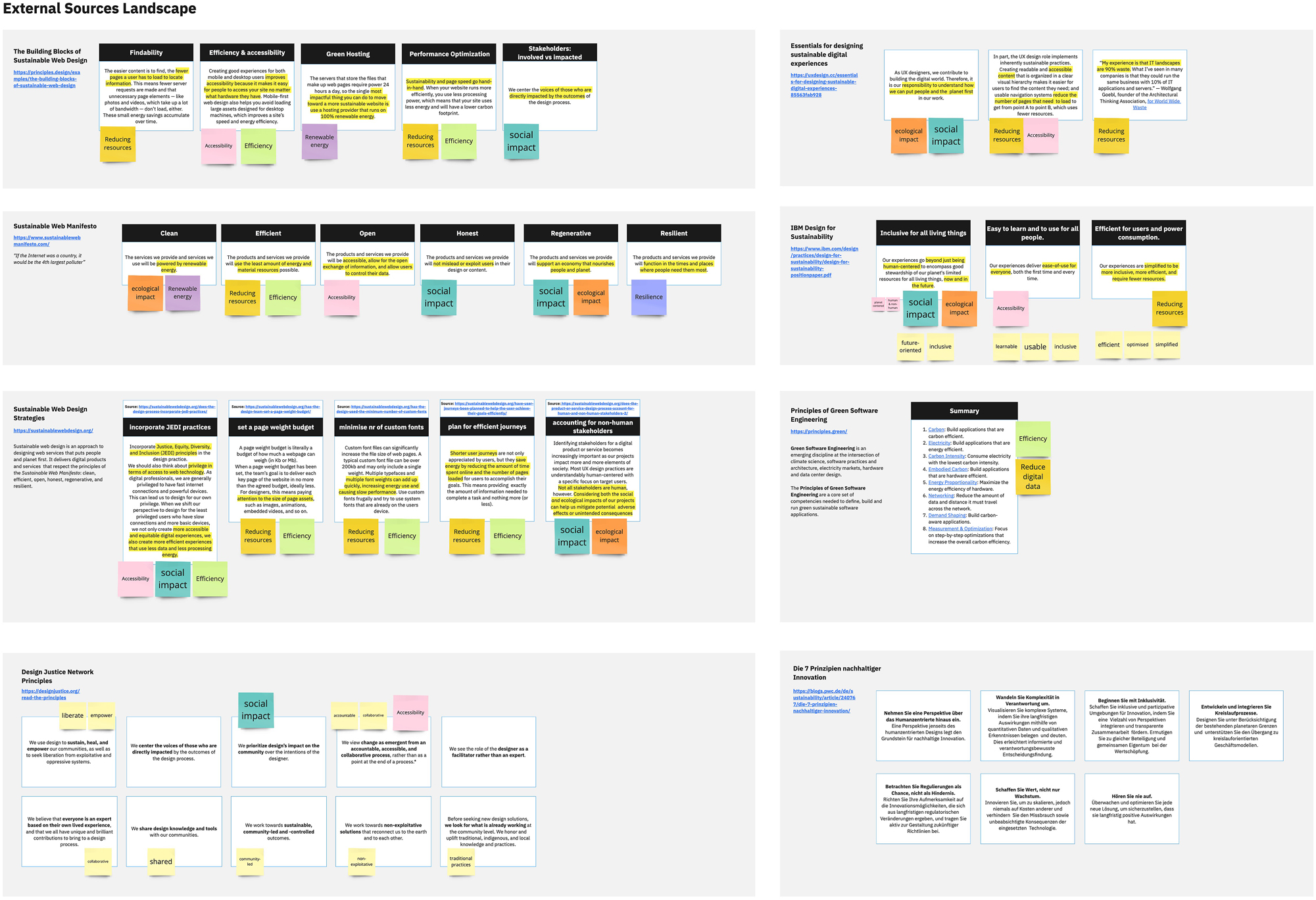
Excerpt of the analysed external sources, tagged with identified themes.
2.4 Refining guidelines & tools
Amongst the identified themes, we selected the ones relevant to our context of operations and subsequently formulated a description for each. After a few iterations with the project team and other stakeholders, we came up with a total of five design principles. Our approach was a coarse to granular one. We understood the principles as a high-level directive that facilitated the sketching of more concrete actionable items further in the process.
Following that logic, we started aligning heuristics observed during the data extraction to principles. Later, we also listed concrete methods and tools that relate to each heuristic. Those methods and heuristics were added to help put the principles into effect.
2.5 Performing tests
After finishing the first iteration of the principles, an occasion to validate them presented itself: The Munich Creative Business Week (MCBW) in May 2023. The event was planned in collaboration with MOVEN, a research group with researchers of the University of Siegen as well as the LMU Munich, whose focus lies on behaviour change in human-computer interaction. Under the yearly motto ‘Why disruption unleashes creativity’, Ergosign Munich hosted the event ‘Research for more sustainability in the product development process’. 16 Five parallel workshops were organised, during which each principle was then used as a framework to approach the same challenge. The evening culminated with a moderated panel discussion.
After a very insightful session, we came together the day after to debrief the feedback from the participants. We learnt that the five principles we came up with already covered a large part of what we consider to be a necessary mindset for sustainable innovation. However, an exchange with MOVEN revealed that the behavioural aspects had not yet been sufficiently taken into account. For sustainable transformation to succeed, behavioural changes must take place. 17 Thus an additional principle, Enable sustainable behaviours was subsequently introduced after the event.
3 Design principles for sustainable innovation
Ergosign’s six principles for sustainable innovation aim to guide the design strategy and to initiate conversations about sustainability. These resources can be used by product teams to integrate sustainability seamlessly into the design processes. For instance, they can be used in workshops to reframe problems and ideate through a sustainability lens (Appendix Table A1).
The principles are to be seen as overarching standards that can give direction to our actions. They can and should be interpreted at different levels and put to use depending on the context of a project. Therefore, the provided examples do not cover all facets of possible applications.
In the upcoming sections, we will offer a definition of each principle, as well as a list of the associated heuristics. Some supporting methods are enumerated, followed by concrete instructions and figures that illustrate how a specific method was put into practice.
3.1 Principle #1: Shift to systems-centricity
Description: The first principle challenges us to recognise the multidimensional impact that digital products and experiences have on societies and their environments. We encourage designers to understand the interdependencies of the systems in which a product comes into play and the cascading impact of their decision-making.
Associated Heuristics: Accountable, Clean, Harmless.
Supporting Methods: Non-human Personas, System Centred Design Canvas, Value Proposition Canvas.
Exemplary Method: System Centred Design Canvas.
Just as Human Centred Design (HCD) accounts for fictional representative groups of human users, the same can be done by creating non-human personas to make their needs and pain points visible. Research data on human and non-human personas can then be used to map the negative impact of a service or product at an individual, societal and ecosystem level on a System Centred Design Canvas.
How to use it: The System Centred Design Canvas derives from combining the Actant Mapping Canvas by Monica Sznel & Marta Lewan 18 and the Life Centred Purpose Tool from Damien Lutz. 19 The first step is to brainstorm the impact that a product or service idea can have on individuals. Afterwards, all systemic and non-human problems that result from this product, service or idea are listed. If research is available, human and non-personas can be considered at this point by including their pain-points in the canvas. To make sure all different dimensions of sustainability are covered, the six Ergosign principles on the bottom can be used as a lens to ideate from different perspectives. Finally, a voting exercise should be planned to determine the most pressing issues given the risks they pose at environmental, societal and economic levels (Figure 2).
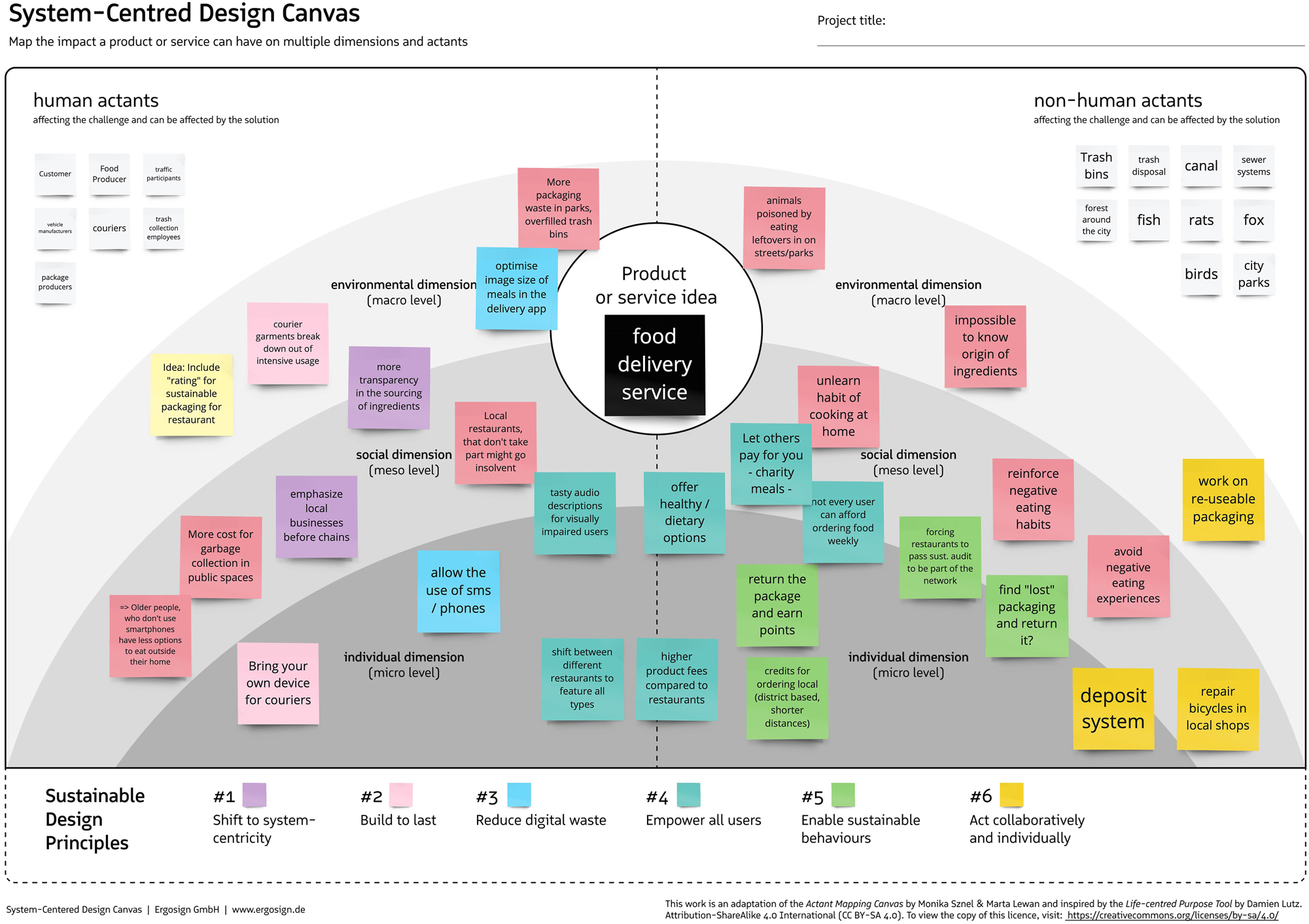
Exemplary usage of the system-centred design canvas.
3.2 Principle #2: Build to last
Description: The second principle emphasises the importance of designing products that will remain relevant and useful over time. When digital experiences are devised with longevity in mind, they contribute to reducing electronic waste, since accounting for repairability and reuse mitigates the need for device replacement.
Associated Heuristics: Resilient, Durable, Regenerative.
Supporting Methods: Holistic Futures Wheels, Janus Cones.
Exemplary Method: Holistic Futures Wheels.
Methodologies from the speculative design discipline 20 allow us to time travel and visit alternate futures, both utopian and dystopian. Once possible scenarios have been unveiled, dystopian ideas can be related to our present to – hopefully – prevent them from ever existing.
How to use it: Using the Holistic Futures Wheel Template from Damien Lutz, 21 that is based on the Futures Wheel by Jerome C. Glenn, 22 we propose mapping the consequences of a challenge and identifying whether the results are of neutral, positive or negative nature. The starting point is the challenge at the centre of the wheel. Then, the surrounding shapes can be filled with possible direct consequences of this scenario if it were true. From there, indirect consequences can be identified and mapped in the outer ring. The number of levels of indirect consequences is not limited and can be expanded accordingly. For easier processing, results can be colour-coded into neutral (grey), positive (green) or negative (red) (Figure 3).
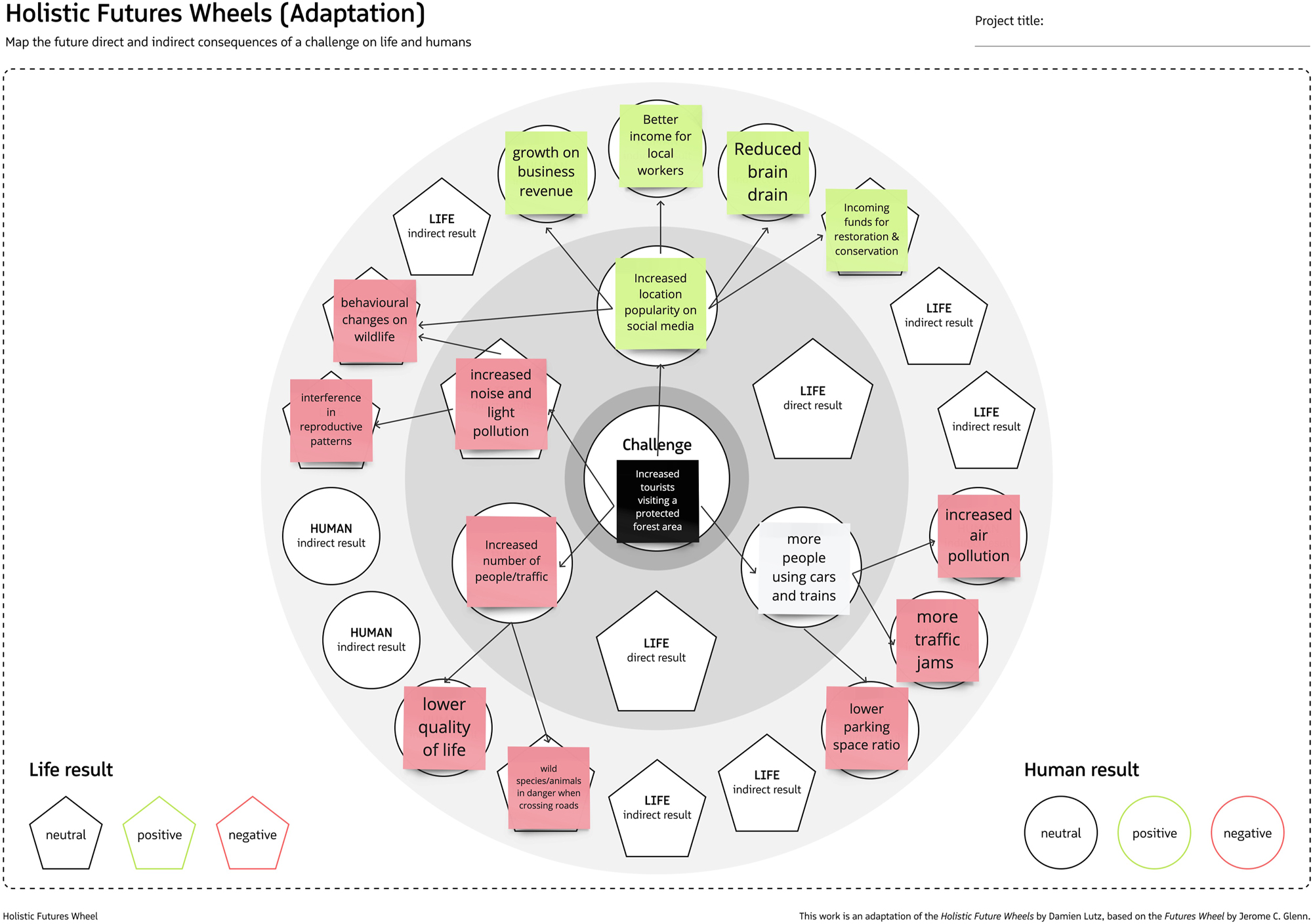
An adaptation of the holistic futures wheel.
3.3 Principle #3: Reduce digital waste
Description: The third principle highlights the need to minimise unnecessary resource usage in digital products and experiences, just as we would for physical products. In an era marked by mass data creation, it is key to understand the tangible aftermath digital waste has on the material world.
Associated Heuristics: Optimised, Efficient, Findable.
Supporting Methods: Sustainable Web Design Practices, Green Web Guidelines.
Exemplary Method: Green Web Guidelines.
Danny van Kooten, 23 a software developer at Radboud University, came up with a very helpful calculation that depicts how much of an impact an adjustment in his work can have. For instance, he estimates that trimming even 1 kB in a Wordpress plugin that runs on over 2 million different websites can have significant implications in terms of environmental sustainability compared to choices in other areas of his life. Assuming each of those websites receives 10.000 unique visitors per month, 1 kB less would reduce CO2 emissions by an estimated 2,950 kg per month. 24 This provides a compelling example of how small improvements on websites can contribute to a significant carbon footprint reduction.
There is no universal method that will make every website or application more resource efficient. However, there are multiple publications listing sustainable web design practices that provide actionable recommendations. They come in different formats: guidelines, checklists, kits, etc. We have evaluated some resources and prioritised the actions that can provide the biggest impact in the majority of use cases.
How to use it: Green Web Guidelines - Improving web sustainability for developers and designers is a document listing various factors that make websites and related technologies more environmentally friendly. Those factors are categorised into 16 topics. To maximise effectiveness, it is fundamental that design and development work closely together. This document is therefore intended as a basis for discussion for the project team. To kick off, a workshop with developers, designers and other stakeholders involved in the project can be scheduled. Using the cards from a template in Miro, 25 topics are discussed one by one as a group. During the conversation, the boxes found on each card should be filled out. The boxes contain key aspects like defining the status quo, effort of implementation, priority rating, actionable items and their ownership. At the end of the session, the team should come up with a working agreement on how to collaborate in the future (Figure 4).
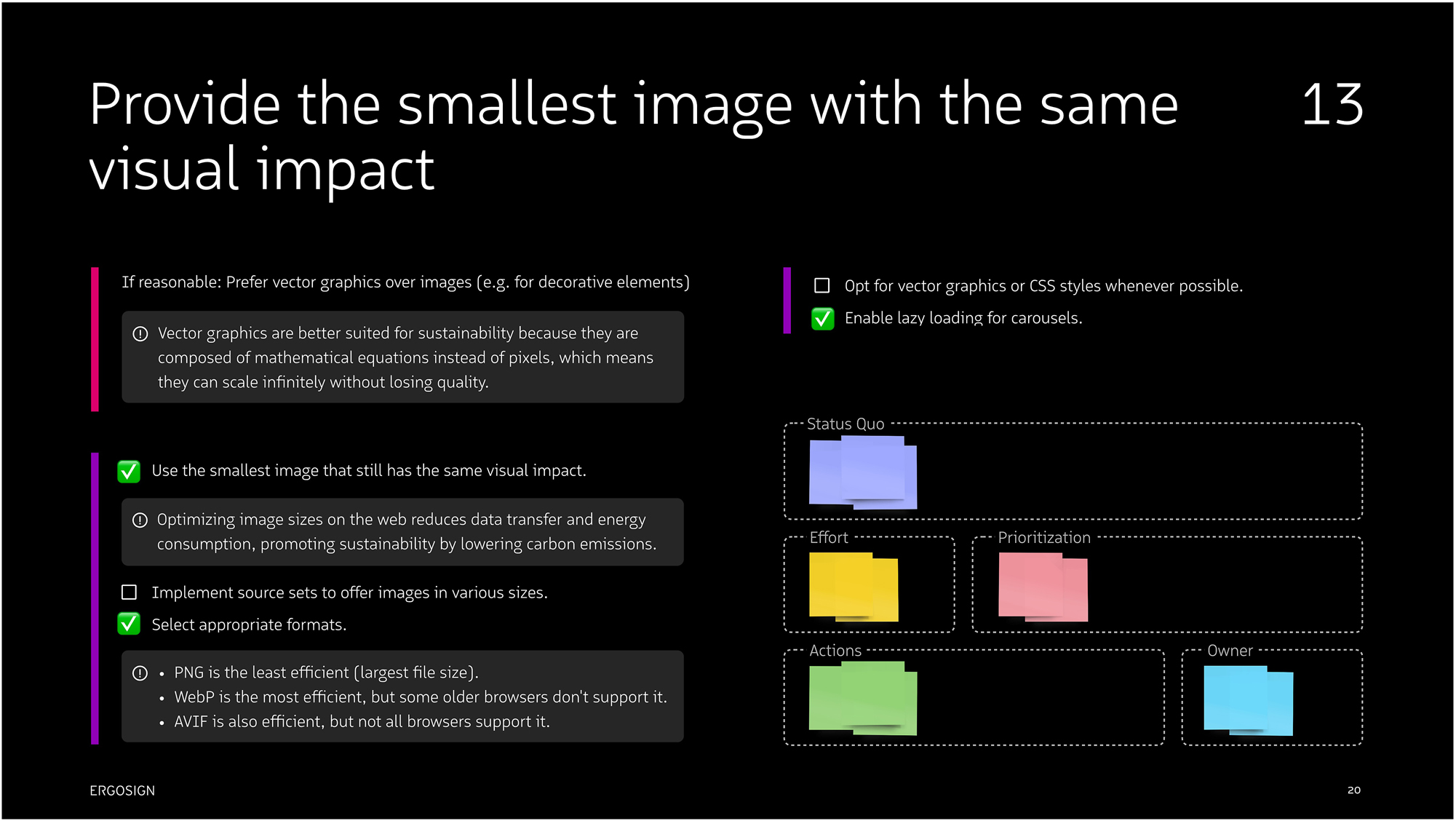
A selection of Ergosign’s Green Web guidelines as a Miro canvas.
3.4 Principle #4: Empower all users
Description: The fourth principle underscores the importance of assessing the impact of technology on populations in order to avoid perpetuating existing inequalities. It calls for tackling injustice by recognising the diverse needs and abilities of all users. By designing with equity and accessibility in mind we can reduce biases and empower marginalised communities.
Associated Heuristics: Accessible, Fair, Inclusive.
Supporting Methods: WCAG Guidelines, JEDI Practices, Web Sustainability Guidelines.
Exemplary Method: Why A11y.
Accessibility cannot simply be worked through like a checklist. 26 It is rather a mindset, a way of thinking that needs to include not only our own reality, but also the perspective of a myriad of other actors. Online tools like Web Perspectives, 27 based on the Web Content Accessibility Guidelines (WCAG), 28 provide condensed information on each accessibility heuristic. Moreover, criteria can be filtered by user role, conformance level, project phase, device, etc. Another method to build awareness and empathy within a project is by playing Why A11y, a memory game including important terms for digital accessibility. A11y is an abbreviation for Accessibility. It stands for the first and last letters and the 11 characters in between and is pronounced ‘Ally’.
How to use it: With Why A11y, you can playfully learn the most important terms related to accessibility. In this special game, pairs of cards do not show the same picture, but instead opposite pairs of terms and their explanations. The setup requires a table, at which 2–4 players are placed. Next, all cards are shuffled and laid face down on the table in a square grid. Taking turns, each player reveals any two cards. If a match is made, the player reads the definition and keeps the cards. The game is over when all pairs of cards have been found and revealed (Figure 5).
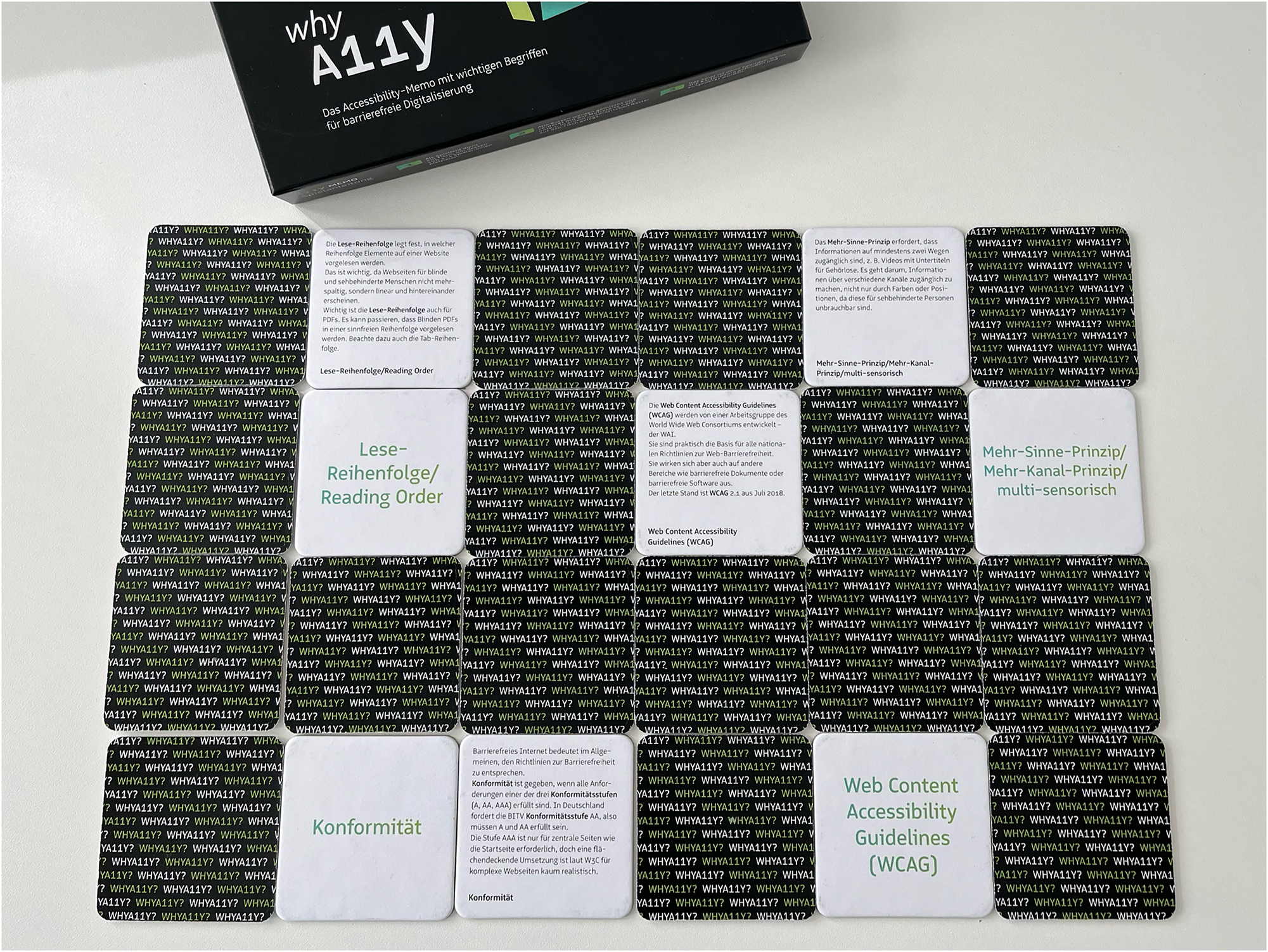
Why A11y, a memory game that helps people understand concepts associated with accessibility.
3.5 Principle #5: Enable sustainable behaviours
Description: The fifth principle advocates for the intentional use of design strategies to influence specific behaviours in individuals or groups. Cultural change cannot be initiated by technological and organisational innovations alone and must additionally be accompanied by fundamental changes in the behaviour of citizens and consumers. By employing insights from behavioural psychology, cognitive science, and human-centred design, designers can create interventions that make it easier and more appealing for people to make positive choices.
Associated Heuristics: Situated, Persuasive, Frictional.
Supporting Methods: Nudging, Implementation Intentions, Pleasurable Troublemakers, Social Comparison, Goal Setting.
Exemplary Method: Persuasive and situational factsheets.
The persuasive and situational behavioural principles represent two different approaches. On the one hand, they assume that the reason for people not performing the target behaviour is due to a lack information. If they receive said piece of information, they will likely behave accordingly. On the other hand, people only reflect on their behaviour to a limited extent. It therefore makes sense in some situations to change the context in such a way that a desired behaviour becomes significantly more likely.
How to use it: A way to activate these principles is to bring the persuasive and situational factsheets from MOVEN into an ideation session. The factsheets can be visible during the brainstorming task and aid in explaining to participants the strategies that influence behaviour beforehand (such as such as changing the context or providing information about a behaviour). For instance, in our collaborative workshop during the Munich Creative Business Week in 2023, we printed the sheets and hung them on the wall near the ideation canvas.
The challenge at hand in the session was to design a smart heating system that would encourage neighbours in a building to behave sustainably. We started off by mapping out the past, present and possible futures of heating systems by using the Janus Cones 29 method. Afterwards, we opted for a reverse brainstorming method – given that bad ideas tend to come easier than ideal solutions – and used dot voting to select the most ‘evil’ one. Later, using the MOVEN factsheets as references, we turned those bad ideas upside down by applying behavioural design techniques. Since we were building up on principle Build to last, the goal was to come up with solutions to avoid possible negative events unfolding in 30 years’ time (Figures 6–8).
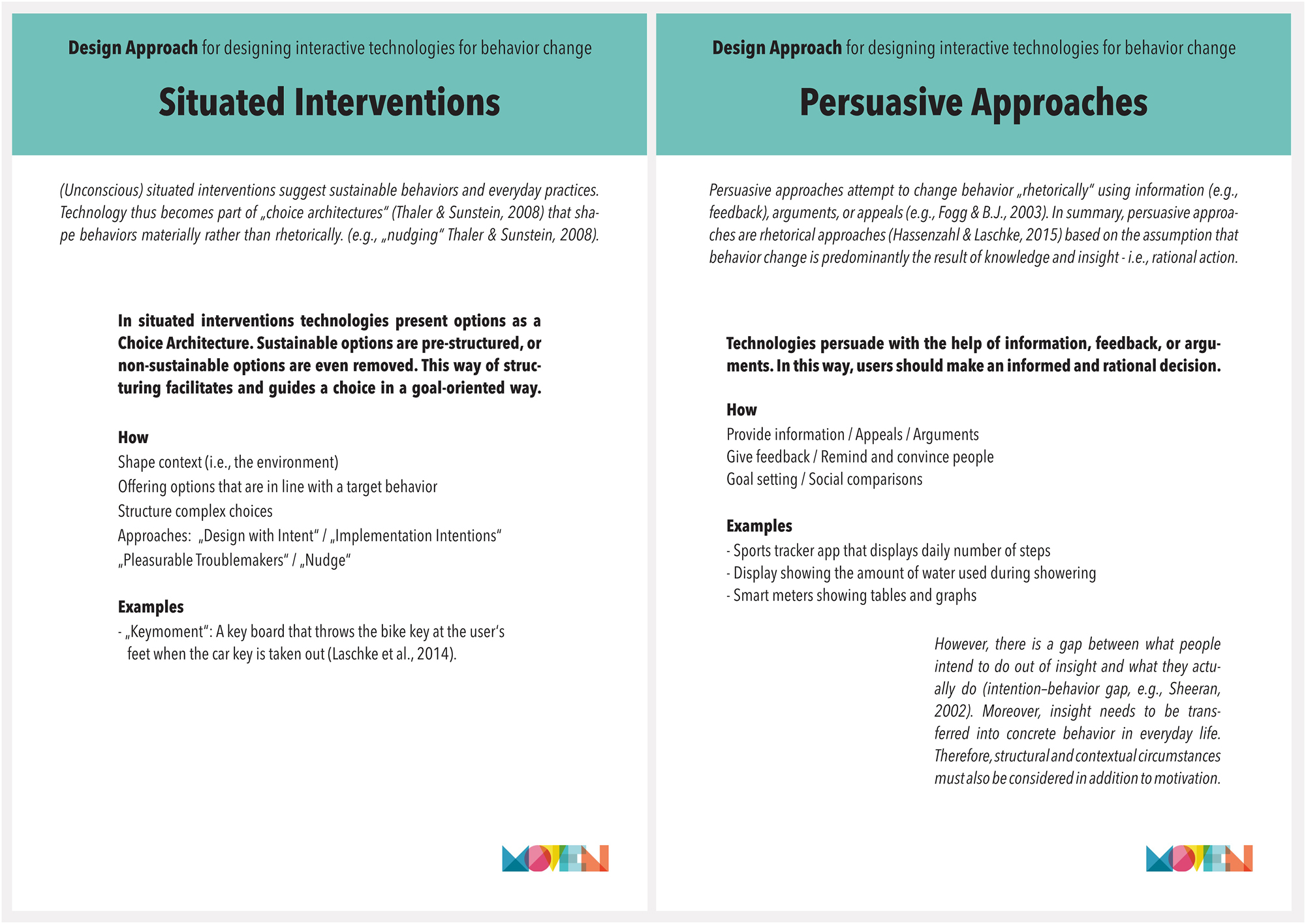
MOVEN persuasive and situational factsheets.
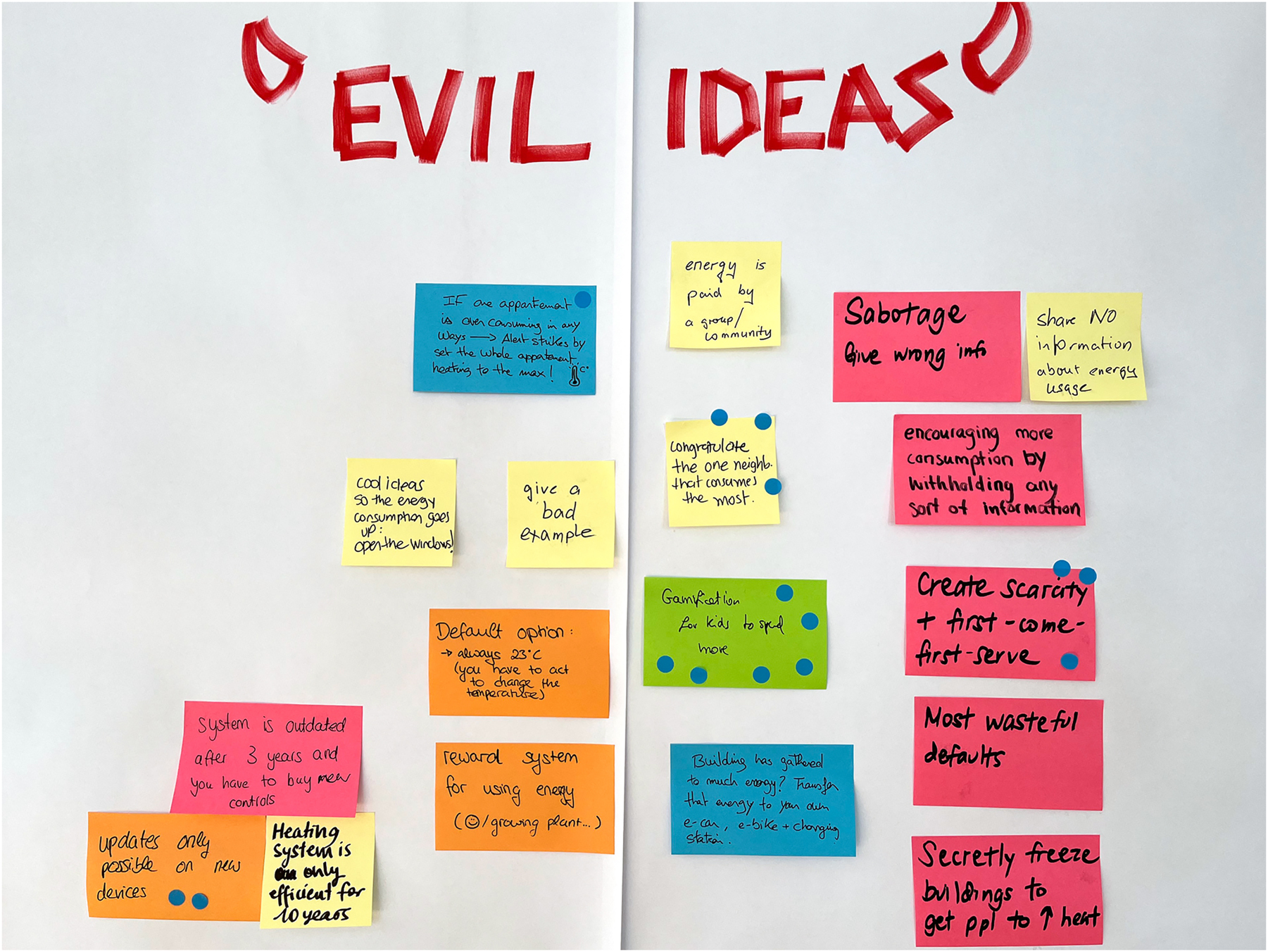
Documentation of the ideas generated during a reverse brainstorming session.
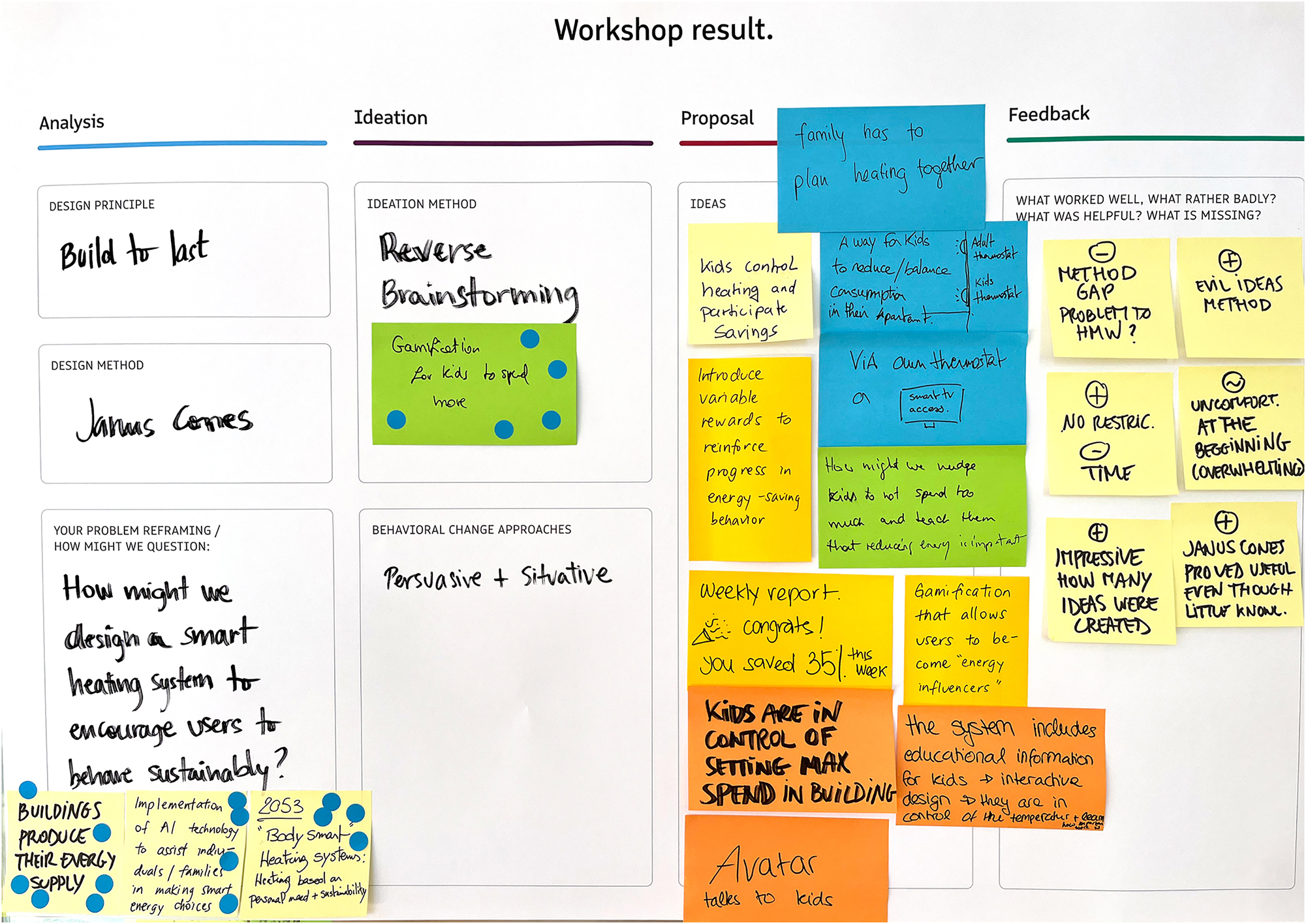
Workshop result canvas showcasing proposals after applying behavioural design principles.
3.6 Principle #6: Act collaboratively and individually
Description: The sixth and final principle calls for collective problem tackling as an indisputable key to effective systemic transformation. Simultaneously, it recognises the need for individuals to take ownership in their practice and become catalysts for change at a human scale.
Associated Heuristics: Collaborative, Adaptable, Pioneering.
Supporting Methods: Circularity Matrix, Ecosystem Partner Identification, Capability Assessment.
Exemplary Method: Circularity Matrix.
The most influential companies in the world play a big part in paving the way for innovation and setting new standards in their sectors. However, there is only so much a single corporation can do in isolation. Organisations are better off supporting collaboration within their industry if they are to solve problems in their supply chain or address issues like climate change. 30 This is especially relevant for organisations wanting to transition from linear to circular business models.
How to use it: The three basic circularity strategies are retaining product ownership (RPO), product life extension (PLE), and design for recycling (DFR). A tool like the Circularity Matrix from the Harvard Business Review (HBR) aids in selecting which strategies are most appropriate for a company in order to transition into a circular business model. 31
To perform this assessment, two questions must be answered: (1) How easy is it to get the product back?, (2) How easy is it to recover value from the product? The answers can be mapped in a 2 × 2 matrix, wherein difficulty of material processing and material access are mapped along the X and Y axis. This results in four possible quadrants: (1) hard to access and hard to process; (2) hard to access but easy to process; (3) easy to access but hard to process; (4) easy to access and easy to process. If material access or processing is difficult (quadrant 2 and 3), finding partnerships is of high relevance if the chosen business strategy is DFR. In the fashion industry, we find many cases of retailers teaming up with specialised companies with more advanced technologies in order to extract, recycle or produce certain fabrics that manufacturers use as raw materials for garment production. Tools like the Sustainability Map 32 can help companies find partners in specific sectors that are committed to sustainability (Figure 9).
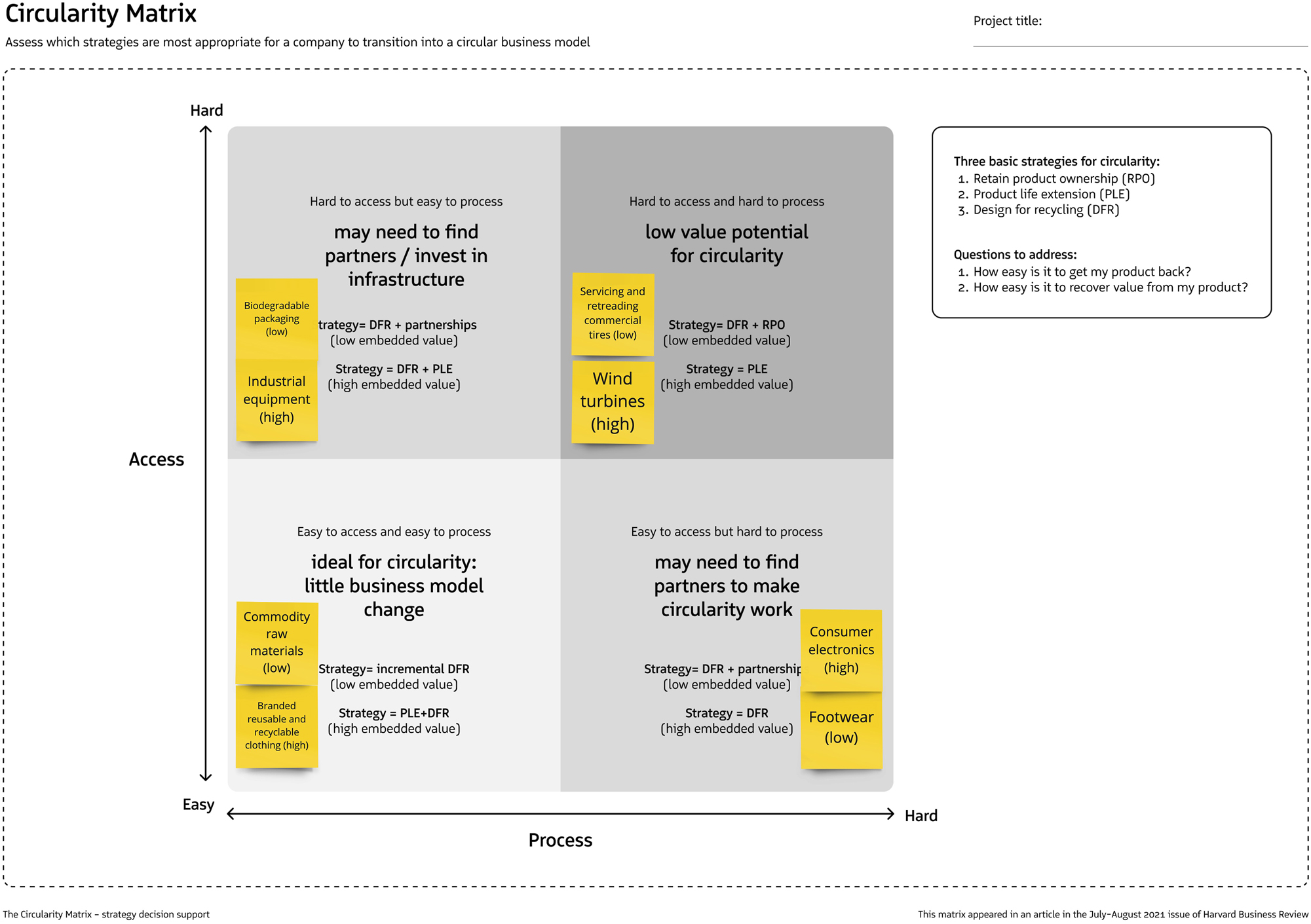
Circularity matrix by HBR, enhanced with decision aid on sticky notes.
3.7 Embedding the principles in the design process
Principles are difficult to assign to a particular design phase. However, there are some heuristics and methodologies that can work better depending on the particular objectives of a project phase.
For example, the principle Shift to systems centricity can be integrated in earlier phases with ease. That is, because it is calling for assessing the environmental and social impact of a service or product upfront. This fits perfectly in the research and strategy phase of a project. The same goes for the principle Build to last. It serves to forecast direct and indirect consequences that a service can have in the long run. Although the future cannot be predicted with certainty, this conceptual exercise allows us to plan steps in order to manage or reduce negative consequences. The generated outcome can in turn inform a synthesis phase, for example when defining the user journey and its opportunities. Other principles such as Reduce digital waste and Enable sustainable behaviours encompass actionable advice that is relevant for every phase.
4 Conclusions
With environmental degradation and an increasing global material footprint due to human consumption habits, the role of UX design in promoting sustainability goals becomes more critical.
After conducting external secondary research, we developed six guiding principles to integrate sustainability concerns into the design process. The provided resources offer a structured approach tailored to the UX workflow. Most of the methods described in this paper aim to make the environmental and societal impacts of design decisions tangible. By making visible multidimensional implications of product use, UX practitioners are better equipped to raise awareness for human and non-human needs amongst project team members.
Our findings suggest that an early assessment facilitates a holistic approach to planning sustainability actions, while later assessments provide smaller actionable items. Both approaches contribute to measurable reductions in emissions and resource usage. Moreover, our empirical evaluation highlighted the absence of a strict one-to-one correlation between principles and design phases, offering flexibility to apply sustainability principles throughout the design lifecycle.
Due to the time constraints of this analysis and the nature of the chosen sources, the resulting principles and methods might not be applicable in every context. We intend to iterate on, improve and refine the principles, heuristics and methods and are open to feedback that would help us do so. Future research should explore the practical application of these principles across diverse projects and contexts to further validate their effectiveness and reduce potential biases.
Ultimately, this article contributes to the growing recognition of sustainable design as a vital component of responsible UX practice, paving the way for responsible digital experiences.
About the author

Andrea Miquel is a Lead UX Designer with over 10 years of experience in the creative and product design fields. At Ergosign Berlin, she currently leads projects in the logistics and consumer sectors with a focus on requirements analysis and concept development. Prior to that, Andrea worked as a usability consultant in the digitalisation of services in dialysis and medical care centres. Since the beginning of 2023 she is part of a task force striving to increase awareness of sustainable practices in the design phase.
Acknowledgments
There are several people that made the creation of the principles and this article possible. First off, a big thank you to my colleagues Katrin Federspiel, Jan Grönefeld, Marven Johansson, Christian Lenz and Juliane Zirke for their individual contribution as part of the sustainability task force at Ergosign. Their insights and feedback were absolutely crucial when creating the principles. Moreover, they are the minds behind some of the methods described in this article. I also would like to thank Lara Christoforakos, Madlen Kneile and Matthias Laschke from MOVEN (01UU2204A) for their collaboration in the MCBW event, our enriching knowledge exchange and their recommendation in the creation of a principle dedicated to behavioural design. I’m grateful for their encouragement to write this article and the helpful advice provided during the process too. Finally, a huge shout-out to my colleagues Valentina Borodina and Francisco Nogueira for their thorough editing and recommendations, which made the reading experience of this publication a far better one.
-
Research ethics: Not applicable.
-
Informed consent: Not applicable.
-
Employment or leadership: The author is employed at Ergosign GmbH. The work described on this article was conducted in the framework of an investment project for the company.
-
Author contributions: For double-anonymized journals: please use initials – The author has accepted responsibility for the entire content of this manuscript and approved its submission. For use of Large Language Models, AI and Machine Learning Tools – None declared.
-
Conflict of interest: The author states no conflict of interest.
-
Research funding: None declared.
-
Data availability: Not applicable.
Overview of six design principles for sustainable innovation, associated heuristics and supporting methods.
| # | Principle | Heuristics | Recommended actions | Methods |
|---|---|---|---|---|
| 1 |
Shift to systems-centricity Recognise the multidimensional impact that digital products and experiences have on societies and their environments. We encourage designers to understand the interdependencies of the systems in which a product comes into play and the cascading impact of their decision-making. |
Accountable |
|
|
| Clean |
|
|
||
| Harmless |
|
|
||
| 2 |
Build to last Design products that will remain relevant and useful over time. When digital experiences are devised with longevity in mind, they contribute to reducing electronic waste, since accounting for repairability and reuse mitigates the need for device replacement. |
Resilient |
|
|
| Durable |
|
|
||
| Regenerative |
|
|
||
| 3 |
Reduce digital waste Minimise unnecessary digital resource usage – just as you would for physical products. In an era marked by mass data creation, it is key to understand the tangible aftermath digital waste has on the material world. |
Optimised |
|
|
| Efficient |
|
|||
| Findable |
|
|
||
| 4 |
Empower all users Assess the impact of technology on populations in order to avoid perpetuating existing inequalities. It calls for tackling injustice by recognising the diverse needs and abilities of all users. By designing with equity and accessibility in mind we can reduce biases and empower marginalised communities. |
Accessible |
|
|
| Fair |
|
|
||
| Inclusive |
|
|
||
| 5 |
Enable sustainable behaviours Use design strategies intentionally to influence specific behaviours in individuals or groups. Cultural change cannot be initiated by technological and organisational innovations alone and must additionally be accompanied by fundamental behaviour change of citizens and consumers. By employing insights from behavioural psychology, cognitive science, and human-centred design, designers can create interventions that make it easier and more appealing for people to make positive choices. |
Situated |
|
|
| Persuasive |
|
|
||
| Frictional |
|
|
||
| 6 |
Act collaboratively and individually Promote collective problem tackling as an indisputable key to effective systemic transformation. Simultaneously, recognise the need for individuals to take ownership in their practice and become catalysts for change at a human scale. |
Collaborative |
|
|
| Adaptable |
|
|
||
| Pioneering |
|
|
References
1. United Nations Statistics Division (UNSD) SDG Indicators, 2019. https://unstats.un.org/sdgs/report/2019/goal-12/.Search in Google Scholar
2. Forti, V.; Balde, C. P.; Kuehr, R.; Bel, G. The Global E-Waste Monitor 2020: Quantities, Flows and the Circular Economy Potential, 2020. https://collections.unu.edu/view/UNU:7737.Search in Google Scholar
3. Richardson, K.; Steffen, W.; Lucht, W.; Bendtsen, J.; Cornell, S. E.; Donges, J. F.; Drüke, M.; Fetzer, I.; Bala, G.; Bloh, W.; Feulner, G.; Fiedler, S.; Gerten, D.; Gleeson, T.; Hofmann, M.; Huiskamp, W.; Kummu, M.; Mohan, C.; Nogués-Bravo, D.; Petri, S.; Porkka, M.; Rahmstorf, S.; Schaphoff, S.; Thonicke, K.; Tobian, A.; Virkki, V.; Wang-Erlandsson, L.; Weber, L.; Rockström, J. Earth beyond Six of Nine Planetary Boundaries. Sci. Adv. 2023, 9, 37; https://doi.org/10.1126/sciadv.adh2458.Search in Google Scholar PubMed PubMed Central
4. Bonini, S.; Görner, S. The Business of Sustainability: Putting it into Practice, 2011. https://www.mckinsey.com/~/media/mckinsey/dotcom/client_service/Sustainability/PDFs/Putting_it_into_practice.ashx.Search in Google Scholar
5. Capgemini Research Institute A World in Balance 2023: Heightened Sustainability Awareness yet Lagging Actions, 2023. https://www.capgemini.com/insights/research-library/sustainability-trends-2023/.Search in Google Scholar
6. Publications Office of the European Union Attitudes of Europeans towards the Environment, 2020. https://op.europa.eu/en/publication-detail/-/publication/9a97b30e-15cb-11ec-b4fe-01aa75ed71a1.Search in Google Scholar
7. Azarova, M. Secondary Research in UX, 2022. https://www.nngroup.com/articles/secondary-research-in-ux/.Search in Google Scholar
8. Rosala, M. Using “How Might We” Questions to Ideate on the Right Problems, 2021. https://www.nngroup.com/articles/how-might-we-questions/.Search in Google Scholar
9. Greenwood, T.; Frick, T.; Gifford, M.; Boardman, A.; Amend, J.; Hocking, M.; Lenox, J.; Post, R.; Adams, C.; Christie, J.; Toole, J.; Butterworth, C.; Stopper, J.; Hughes, A.; Markiewicz, P. Sustainable Web Manifesto. https://www.sustainablewebmanifesto.com/.Search in Google Scholar
10. Mightybytes The Building Blocks of Sustainable Web Design. https://principles.design/examples/the-building-blocks-of-sustainable-web-design.Search in Google Scholar
11. Green Software Foundation Principles of Green Software Engineering, 2024. https://learn.greensoftware.foundation/introduction.Search in Google Scholar
12. Friedman, J.; Romano, R. Digital = Physical (Microsoft’s Green Design Principles), 2022. https://medium.com/microsoft-design/digital-physical-4df9eceb63b2.Search in Google Scholar
13. Sustainable Web Design Web Sustainability Guidelines (WSGs), 2024. https://sustainablewebdesign.org/guidelines/.Search in Google Scholar
14. Acaroglu, L. Quick Guide to Sustainable Design Strategies, 2020. https://www.leylaacaroglu.com/blog//quick-guide-to-sustainable-design-strategies.Search in Google Scholar
15. Greenwood, T. Sustainable Web Design. A Book Apart, 2021. https://abookapart.com/products/sustainable-web-design.Search in Google Scholar
16. Munich Creative Business Week Research for More Sustainability in the Product Development Process, 2023. https://2023.mcbw.de/en/program/detail/event/forschung-fuer-mehr-nachhaltigkeit-im-produktentwicklungsprozess.Search in Google Scholar
17. Kneile, M.; Jürgens, T. M.; Christoforakos, L.; Laschke, M. The Thing that Made Me Think: Navigating Challenges and Embracing Opportunities of (Pro-) Active Technology for Behavior Change in the Context of Sustainability. i-com 2023, 22 (2), 161–171. https://doi.org/10.1515/icom-2023-0019.Search in Google Scholar
18. Sznel, M. Tools for Environment-Centered Designers: Actant Mapping Canvas, 2020. https://medium.com/user-experience-design-1/tools-for-environment-centered-designers-actant-mapping-canvas-a495df19750e.Search in Google Scholar
19. Lutz, D. The Life-Centred Purpose Tool—Setting Global Goals for Your Project, 2022. https://uxdesign.cc/setting-global-goals-for-your-project-ce8d31260e07.Search in Google Scholar
20. Dunne, A.; Raby, F. Speculative Everything: Design, Fiction, and Social Dreaming; The MIT Press, 2013. https://dunneandraby.co.uk/content/projects/756/0.Search in Google Scholar
21. Lutz, D. Holistic Design Toolkit: Experimental Tools to Include the Environment and Non-users in Design-Thinking for More Life-Centred Design, 2020. http://www.damienlutz.com.au/wp-content/uploads/2020/12/Holistic-Design-Toolkit.pdf.Search in Google Scholar
22. Glenn, J. The Futures Wheel. In Futures Research Methodology 3.0. The Millennium Project, 2021. Chapter 6 https://www.researchgate.net/publication/349335014_THE_FUTURES_WHEEL.Search in Google Scholar
23. van Kooten, D. Interdisciplinary Research Hub on Digitalization and Society. https://ihub.ru.nl/people/2024-04-01-danny-van-kooten/ (accessed 2024).Search in Google Scholar
24. van Kooten, D. CO2 Emissions on the Web, 2020. https://www.dannyvankooten.com/blog/2020/website-carbon-emissions/.Search in Google Scholar
25. Ergosign GmbH Green Web Guidelines: Improving Web Sustainability for Developers and Designers, 2024. https://miro.com/app/board/uXjVK8odqco=/.Search in Google Scholar
26. Wegener, A. Auf der Reise zu mehr digitaler Barrierefreiheit, 2022. https://www.ergosign.de/de/insights/blog/digitale-barrierefreiheit.Search in Google Scholar
27. Rackl, J.; Rein, A.; Rogg, V.; Jafarian, S. Perspectives; University of Applied Sciences Augsburg, 2022. https://web-perspectives.com/en.Search in Google Scholar
28. Web Accessibility Initiative Web Content Accessibility Guidelines: WCAG 2, 2023. https://www.w3.org/WAI/standards-guidelines/wcag/.Search in Google Scholar
29. Carleton, T.; Cockayne, W.; Tahvanainen, A. The Playbook for Strategic Foresight and Innovation, 2013. https://foresight.stanford.edu/.Search in Google Scholar
30. Nelson, J. Partnerships for Sustainable Development: Collective Action by Business, Governments and Civil Society to Achieve Scale and Transform Markets. In: Business and Sustainable Development Commission 2017. http://s3.amazonaws.com/aws-bsdc/PartnershipsforSD.pdf.Search in Google Scholar
31. Atasu, A.; Dumas, C.; Van Wassenhove, L. N. The Circular Business Model. Harvard Business Review, 2021. July–August Issue https://hbr.org/2021/07/the-circular-business-model.Search in Google Scholar
32. International Trade Centre Sustainability Map: Giving Transparency to Businesses Committed to Sustainability (Copyright 2023). https://www.sustainabilitymap.org/home.Search in Google Scholar
© 2024 the author(s), published by De Gruyter, Berlin/Boston
This work is licensed under the Creative Commons Attribution 4.0 International License.
Articles in the same Issue
- Frontmatter
- Editorial
- Editorial
- Research Articles
- Digitalization of administrative work at home
- Consideration of people’s design preferences for the development of adaptive user interfaces
- UX Professional Forum
- Activating sustainability in the design process
- Discussion
- People and practices must be at the center of IT research and development in a digitized world
Articles in the same Issue
- Frontmatter
- Editorial
- Editorial
- Research Articles
- Digitalization of administrative work at home
- Consideration of people’s design preferences for the development of adaptive user interfaces
- UX Professional Forum
- Activating sustainability in the design process
- Discussion
- People and practices must be at the center of IT research and development in a digitized world
