Porphyria Cutanea Tarda
-
Eric M. Neverman

Keywords: porphyria cutanea tarda, hydroxychloroquine, dermatology
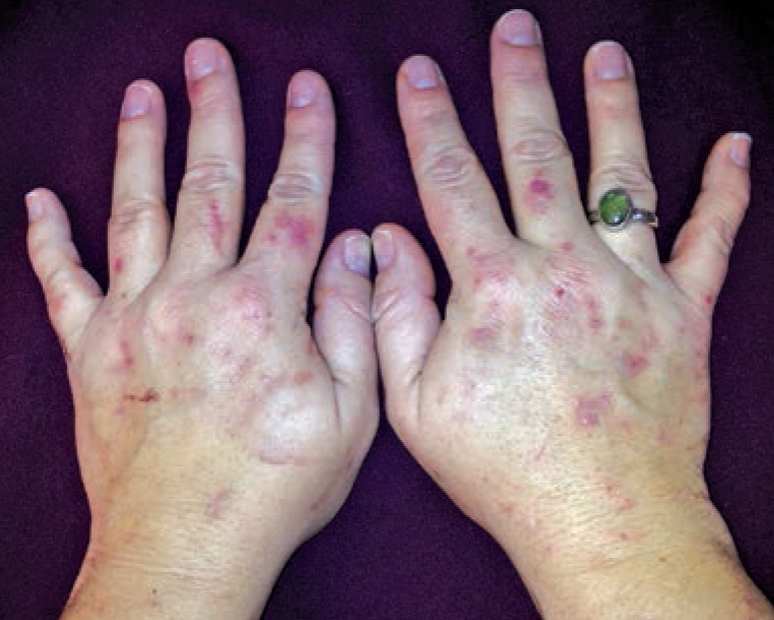
A 39-year-old woman presented to the clinic with recurring blistering lesions on the dorsum of both hands. Over the course of 6 months, the patient’s skin became fragile and bumps that arose during everyday activities resolved to form pigmented scars (image). She took no regular medications and consumed alcohol socially. Results of a complete blood cell count and comprehensive metabolic panel were normal, except for mild elevation of alanine aminotransferase and aspartate aminotransferase. Additional laboratory test results revealed elevated urine uroporphyrin and heptacarboxyl porphyrin levels, which led to the diagnosis of porphyria cutanea tarda. The patient was prescribed low-dose hydroxychloroquine and the lesions resolved. She continues to have regular follow-up appointments.
Porphyria cutanea tarda is caused by an inherited or acquired deficiency of uroporphyrin decarboxylase and may be a harbinger of underlying disease. Predisposing factors include exposure to estrogen and alcohol, as well as underlying hepatitis C virus infection, hemochromatosis,1 or diabetes mellitus.2 Accordingly, physicians must maintain a high index of suspicion for comorbidities. Treatment options include removal of offending agents, repeated phlebotomy, and chloroquine administration.3
References
1. Sarkany RP . The management of porphyria cutanea tarda. Clin Exp Dermatol. 2001;26(3):225-232.10.1046/j.1365-2230.2001.00825.xSearch in Google Scholar PubMed
2. Mũnoz-Santos C , GuilabertA, MorenoN, et al. The association between porphyria cutanea tarda and diabetes mellitus: analysis of a long-term follow-up cohort. Br J Dermatol. 2011;165(3):486-491. doi:10.1111/j.1365-2133.2011.10401.x.10.1111/j.1365-2133.2011.10401.xSearch in Google Scholar PubMed
3. Balwani M , DesnickRJ. The porphyrias: advances in diagnosis and treatment. Blood. 2012;120(23):4496-4504. doi:10.1182/blood-2012-05-423186.10.1182/blood-2012-05-423186Search in Google Scholar PubMed PubMed Central
© 2016 American Osteopathic Association
This work is licensed under the Creative Commons Attribution-NonCommercial-NoDerivatives 4.0 International License.
Articles in the same Issue
- EDITORIAL
- Empathy: A Vital Sign for the Osteopathic Medical Profession
- IN MY VIEW
- Preventing Chronic Nonmalignant Pain: A Family Physician’s Response to the Opioid Abuse Crisis
- ORIGINAL CONTRIBUTION
- Correlation Between Standardize Patients’ Perceptions of Osteopathic Medical Students and Students’ Self-Rated Empathy
- Validation of a Functional Pyelocalyceal Renal Model for the Evaluation of Renal Calculi Passage While Riding a Roller Coaster
- REVIEW
- A.T. Still’s Osteopathic Lesion Theory and Evidence-Based Models Supporting the Emerged Concept of Somatic Dysfunction
- MEDICAL EDUCATION
- Using Patient Perspective Sessions to Increase Empathy and Recall in Preclinical Medical Students
- Effect of Medical Education on Empathy in Osteopathic Medical Students
- Requirements for Certification in Surgery: A Comparison of the American Board of Surgery and the American Osteopathic Board of Surgery
- THE SOMATIC CONNECTION
- Japanese Massage Improves Shoulder Range of Motion in Elderly Patients With Late-Stage Parkinson Disease
- Manual Therapy and OMT May Be of Benefit in the Management of Somatosensory Tinnitus
- Manual Therapy Shown To Improve Diabetic Foot Ulcer Healing
- Ineffectiveness of Spinal Manipulation for Acute Musculoskeletal Thoracic or Chest Wall Pain
- Transcendence From Patient-Centered Care to Person-Centered Care: A Study of the Biopsychosocial Impact of Personality on Health
- CLINICAL IMAGE
- Porphyria Cutanea Tarda
Articles in the same Issue
- EDITORIAL
- Empathy: A Vital Sign for the Osteopathic Medical Profession
- IN MY VIEW
- Preventing Chronic Nonmalignant Pain: A Family Physician’s Response to the Opioid Abuse Crisis
- ORIGINAL CONTRIBUTION
- Correlation Between Standardize Patients’ Perceptions of Osteopathic Medical Students and Students’ Self-Rated Empathy
- Validation of a Functional Pyelocalyceal Renal Model for the Evaluation of Renal Calculi Passage While Riding a Roller Coaster
- REVIEW
- A.T. Still’s Osteopathic Lesion Theory and Evidence-Based Models Supporting the Emerged Concept of Somatic Dysfunction
- MEDICAL EDUCATION
- Using Patient Perspective Sessions to Increase Empathy and Recall in Preclinical Medical Students
- Effect of Medical Education on Empathy in Osteopathic Medical Students
- Requirements for Certification in Surgery: A Comparison of the American Board of Surgery and the American Osteopathic Board of Surgery
- THE SOMATIC CONNECTION
- Japanese Massage Improves Shoulder Range of Motion in Elderly Patients With Late-Stage Parkinson Disease
- Manual Therapy and OMT May Be of Benefit in the Management of Somatosensory Tinnitus
- Manual Therapy Shown To Improve Diabetic Foot Ulcer Healing
- Ineffectiveness of Spinal Manipulation for Acute Musculoskeletal Thoracic or Chest Wall Pain
- Transcendence From Patient-Centered Care to Person-Centered Care: A Study of the Biopsychosocial Impact of Personality on Health
- CLINICAL IMAGE
- Porphyria Cutanea Tarda
