Chronotopic identities in contemporary Chinese poetry calligraphy
-
Wenhua Li


Abstract
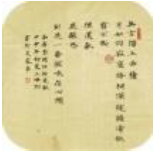
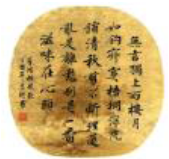
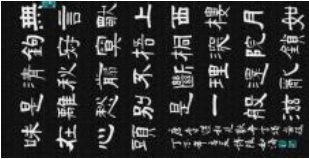
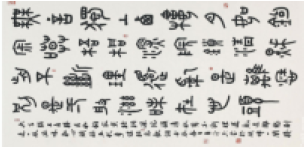
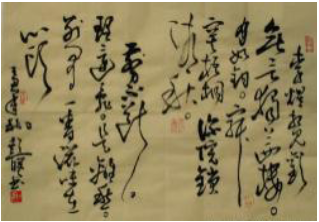
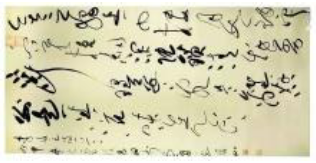
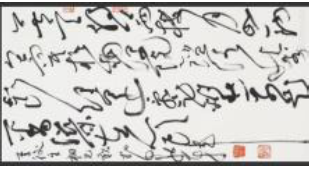
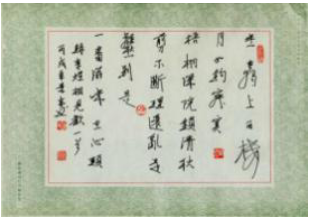
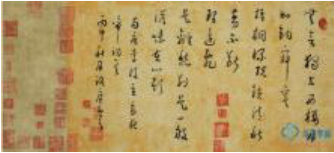
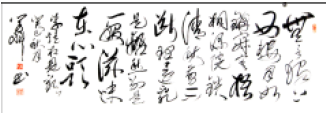
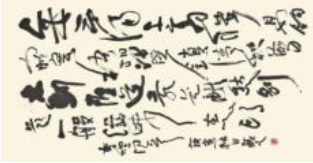
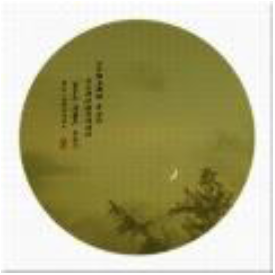
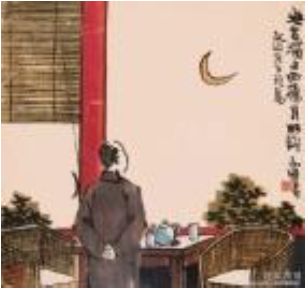
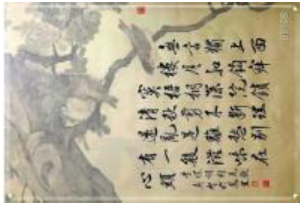
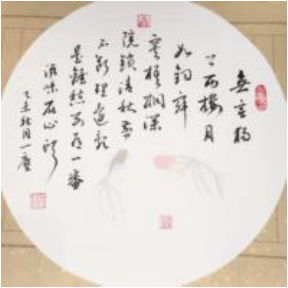
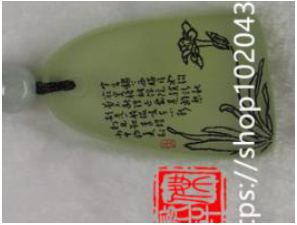
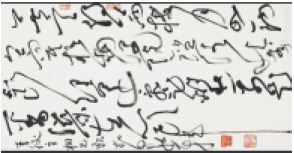
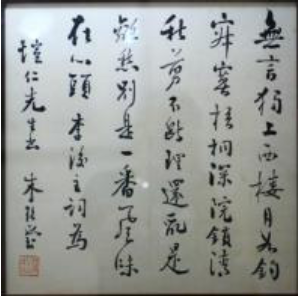
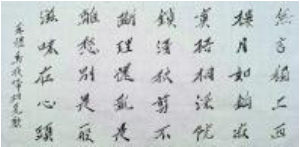
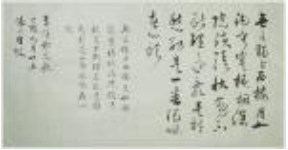
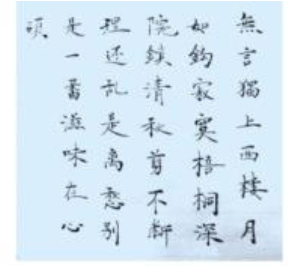
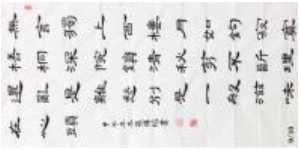
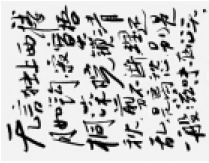
This study investigates the sociolinguistics of contemporary Chinese calligraphic works of an ancient poem titled “Xiangjianhuan”. It probes how multiple voices, with various degrees of agency of creativity (that is, the freedom and space allowed for the creative actions), coexist, conflate and contest with each other in the poem itself and the textual-artistic representations of the poem. It relates these multiple voices with different kinds of contesting and conflicting identities manifested through the multimodal resources of the text art. Through the analysis, this study is hoped to shed light on the (socio)linguistic study of Chinese poetry calligraphy as a form of text art in relation to literary creativity and identity work.
Funding statement: This work is supported by the National Social Science Foundation of China (Project NO.: 18CYY050) National Social Science Foundation of China (Project NO.: 21AYY013), and the Self-Determined Research Funds of CCNU from MOE for basic research and operation (Project No.: CCNU20TD008).
References
Bakhtin, M.M. 1981. The dialogic imagination: Four essays. Austin: University of Texas Press.Search in Google Scholar
Bell, A. and A. Gibson. 2011. “Staging language: An introduction to the sociolinguistics of performance”. Journal of Sociolinguistics 15(5). 555–572.10.1111/j.1467-9841.2011.00517.xSearch in Google Scholar
Blommaert, J. 2015. “Chronotopic identities”. Working Papers in Urban Language and Literacies, Paper 170. <https://www.academia.edu/15494602/WP170_Blommaert_2015._Chronotopic_identities>Search in Google Scholar
Blommaert, J. 2017. “Commentary: Mobility, contexts, and the chronotope”. Language in Society 46. 95–99.10.1017/S0047404516000841Search in Google Scholar
Blommaert, J. and A. De Fina. 2017. “Chronotopic identities: On the timespace organization of who we are”. In: De Fina, A., D. Ikizoglu and J. Wegner (eds.), Diversity and super-diversity: Sociocultural linguistic perspectives. Washington, DC: Georgetown University Press. 1–14.Search in Google Scholar
Blommaert, J. Westinen, E. Leppänen, S. 2015. Further Notes on Sociolinguistic Scales. Intercultural Pragmatics, 12(1),119–27.10.1515/ip-2015-0005Search in Google Scholar
Boden, A.M. 2004. The creative mind (2nd edition). London: Wiedenfeld & Nicolson. Chen, T. 2003. Chinese calligraphy. Beijing: China International Press.10.4324/9780203508527Search in Google Scholar
Chen, Y. and S. Li. 2012. “Differences of narrative perspective caused by regionalized aesthetics between Huajian Ci and Nantang Ci”. Journal of Guangzhou University (Social Science Edition) 10(4). 50–56.Search in Google Scholar
Chen, F. 2009. “The significance and value of calligraphic techniques (in Chinese)”. Chinese Calligraphy 8. 111–113.Search in Google Scholar
Chiang, Y. 1973. Chinese calligraphy: An introduction to its aesthetic and technique (Vol. 60). Harvard University Press.Search in Google Scholar
Coupland, N. 2010. “Welsh linguistic landscapes ‘from above’ and ‘from below’”. In Jaworski, A. and C. Thurlow (eds.), Semiotic landscapes: Language, image, space. London: Continuum. 77–101.10.1007/s10993-010-9177-0Search in Google Scholar
Deumert, A. 2018. “Mimesis and mimicry in language – Creativity and aesthetics as the performance of (dis-)semblances”. Language Sciences 65(1). 9–17.10.1016/j.langsci.2017.03.009Search in Google Scholar
Kádár, D.Z. 2011. “A graphic-semiotic analysis of the Chinese multimodal elevation and denigration phenomenon”. US-China Foreign Language 9(2). 77–88.Search in Google Scholar
Dovchin, S., A. Pennycook and S. Sultan. 2017. Popular culture, voice and linguistic diversity: Young adults on-and offline. Berlin: Springer.10.1007/978-3-319-61955-2Search in Google Scholar
Feng, Y. 1983. A history of Chinese philosophy. Princeton: Princeton University Press.Search in Google Scholar
Gavins, J. 2007. Text world theory: An introduction. Edinburgh: Edinburgh University Press.10.1515/9780748629909Search in Google Scholar
Hochschild, A. R. 1979. “Emotion work, feeling rules and social structure”. American Journal of Sociology 85. 551–575.10.1086/227049Search in Google Scholar
Jaworski, A. 2016. “Silence and creativity: Re-mediation, transduction, and performance”. In Rodney, H. J. (ed.), Routledge handbook of language and creativity.. London: Routledge. 322–335.Search in Google Scholar
Jaworski, A. 2014. Discourse and creativity. London: Routledge.Search in Google Scholar
Jones, R.H. 2015. “Creativity and discourse analysis”. In Rodney, H. J. (ed.), Routledge handbook of language and creativity. London: Routledge. 83–99.10.4324/9781315694566Search in Google Scholar
Latour, B. 2005. Reassembling the social: An introduction to actor-network theory. Oxford: Oxford University Press.10.1093/oso/9780199256044.001.0001Search in Google Scholar
Ledin, P. and D. Machin. 2019. “Doing critical discourse studies with multimodality: from metafunctions to materiality”. Critical Discourse Studies 16(5). 497–513.10.1080/17405904.2018.1468789Search in Google Scholar
Lezzi, A. 2013. “Contemporary Chinese calligraphy between tradition and innovation”. Journal of Literature and Art Studies 3(3). 158–179.10.17265/2159-5836/2013.03.003Search in Google Scholar
Long, J. 2001. The art of Chinese calligraphy. Courier Corporation.Search in Google Scholar
Ni, P. 1999. “Moral and philosophical implications of Chinese calligraphy”. Grand Valley Review 20(1). 8.Search in Google Scholar
Ouyang, Z., Y. Wang et al. 2008. Chinese calligraphy. Edited and translated by Y. Wang. New Haven, CT: Yale University Press.Search in Google Scholar
Pennycook, A. 2010. Language as a local practice. London: Routledge.10.4324/9780203846223Search in Google Scholar
Pennycook, A. 2017. “Translanguaging and semiotic assemblages”. International Journal of Multilingualism 14(3). 269–282.10.1080/14790718.2017.1315810Search in Google Scholar
Scollon, R. 1998. Mediated discourse as social interaction. London: Longman.Search in Google Scholar
Scollon, R. 2001. Mediated discourse analysis: The nexus of practice. London: Routledge.10.4324/9780203420065Search in Google Scholar
Sun, S. 2000. “Shaozhen Sun’s interpretation of the childlike innocence and poetics in Feng Zikai’s works”. Guangming Daily. Published on November 27, 2020.Search in Google Scholar
Tsui, C. H. 2020. Chinese calligraphy and early Buddhist manuscripts. Indica et Buddhica.Search in Google Scholar
Wang, K. W. 1977. Jen chien tz’u hua [Poetic remarks in the human world]. (Translated by Ching-I Tu.). Taipei, Taiwan, China: Chung Hwa.Search in Google Scholar
Wee, L. 2016. “Situating affect in linguistic landscapes”. Linguistic Landscape 2(2). 105–126.10.1075/ll.2.2.01weeSearch in Google Scholar
Wilf, E. 2014. “Semiotic dimensions of creativity”. Annual Review of Anthropology, 43. 397–412.10.1146/annurev-anthro-102313-030020Search in Google Scholar
Xue, L. 2021. “The literati and their calligraphy in the south of the Yangtze River (in Chinese)”. Chinese Calligraphy 6. 41–69.Search in Google Scholar
Yen, Y. 2004. Calligraphy and power in contemporary Chinese society. London: Routledge.10.4324/9780203590607Search in Google Scholar
Zhang, J., W. Tang, C. Shi, Z. Liu and X. Wang. 2008. “Chinese calligraphy and tourism: from cultural heritage to landscape symbol and media of the tourism industry”. Current Issues in Tourism 11(6). 529–548.10.1080/13683500802475836Search in Google Scholar
Zhou, J. 2013. “Thoughts on calligraphy of Huang Daozhou (in Chinese)”. 18. 103–107.Search in Google Scholar
© 2022 Faculty of English, Adam Mickiewicz University, Poznań, Poland
Articles in the same Issue
- Table of Contents
- EMCAT-POL: A catalogue of 817 basic emotion terms in Polish
- English and Chinese existential constructions in contrast: A corpus-based semantic study
- Discourse function of personal pronouns in a slavic pro-drop language: Evidence from Croatian L1 argumentative writing
- The intervention effect in suzhounese polar questions
- Imperfective aspect underspecified for number: Evidence from an eye-tracking during reading experiment
- Chronotopic identities in contemporary Chinese poetry calligraphy
- Final tensing and opacity in Podhale Goralian
- The diachronic evolution of posture verbs in Chinese
- Fragment questions in Chinese: At the syntax-pragmatics interface
- Book Review
Articles in the same Issue
- Table of Contents
- EMCAT-POL: A catalogue of 817 basic emotion terms in Polish
- English and Chinese existential constructions in contrast: A corpus-based semantic study
- Discourse function of personal pronouns in a slavic pro-drop language: Evidence from Croatian L1 argumentative writing
- The intervention effect in suzhounese polar questions
- Imperfective aspect underspecified for number: Evidence from an eye-tracking during reading experiment
- Chronotopic identities in contemporary Chinese poetry calligraphy
- Final tensing and opacity in Podhale Goralian
- The diachronic evolution of posture verbs in Chinese
- Fragment questions in Chinese: At the syntax-pragmatics interface
- Book Review
