Preliminary investigations on the control of yam (Dioscorea rotundata Poir) tuber rot through nanoscience
-
Simon C. Eze
Simon C. Eze is a senior lecturer at the Department of Crop Science, University of Nigeria, Nsukka. His research interests include the areas of crop agronomy, post-harvest development technology, and crop products storage. He is also a supervisor of postgraduate students. He has worked as a research fellow with the International Institute of Tropical Agriculture (IITA), Ibadan. He has participated as a research scientist in INCO-YAM and IFAD-PA projects sponsored by the European Union and International Fund for Agricultural Development (IFAD) executed by the National Root Crops Research Institute (NRCRI) Umudike and the IITA, respectively. He also participated in the cassava baseline survey for the CMD pre-emptive management project implemented by the IITA Onne Station.
 ,
Simon I. Umeh
,
Simon I. Umeh
Simon I. Umeh, a chief technologist at the Department of Crop Science, University of Nigeria, Nsukka. He obtained MSc and PhD degrees in crop science (agronomy) from the University of Nigeria, Nsukka. He is a fellow of the Nigerian Institute of Science Laboratory Technology (FNIST); was a supervisor and head of Department of Science Laboratory Technology, University of Nigeria, Nsukka (2005–2011); and was member in council and national vice president of Nigerian Institute of Science Laboratory Technology (2004–2011). Dr. Umeh has developed, defended, and published many laboratory analytical standards and guides used in tropical reputable journals. In nanotechnology, he has developed acceptable methods for the synthesis of green nanoparticles for anticancer, antioxidant, and antibacterial activities.
Christopher C. Onyeke is a graduate of the University of Nigeria, Nsukka, where he obtained a BSc degree in botany/zoology, MSc degree in plant pathology, and a post-graduate diploma in education (PGDE). He also has a doctorate degree (PhD) in plant pathology from the University of Jos, Nigeria. He is a lecturer at the Department of Plant Science and Biotechnology, University of Nigeria, Nsukka.
Godwin I. Ameh is a professor of Applied Biology and Biotechnology and lecturer at the Enugu State University of Science and Technology, Enugu, Enugu State, Nigeria. He is a graduate of the University of Nigeria, Nsukka, where he obtained all his degrees. He has supervised many undergraduate and graduate students in his area of specialization. He is the current head of the department of Applied Biology and Biotechnology.
Kevin I. Ugwuoke carries out research and teaching duties at the Department of Crop Science of the University of Nigeria, Nsukka, Nigeria. He specialises in plant pathology with particular interest in virology, mycology, and nematology. He has worked on the development of protection techniques for crops such as soybean, cocoyam, or yam, and the identification of causal agents in crop disease affecting, e.g. eggplant.

Abstract
In vitro and in vivo experiments were conducted to evaluate the bioactivity of nanoparticles of silver and neem (AgNeemnano) solution on some organisms that cause yam rot. In the in vitro study, organisms were isolated from a decaying yam tuber and identified as Fusarium moniliforme and Lasiodiplodia theobromae. The organisms were cultured in Sabouraud dextrose agar. With a cork borer of diameter 8 mm, cups were made at the centre of each of the agar plates, and then 0.05 ml AgNeemnano solution in varying concentrations (28.40, 56.81, 113.63, and 227.27 mg/ml) was aseptically introduced into the cups starting from the lowest to the highest concentration. The plates were incubated at 35°C for 48 h, and the zones of inhibition were determined. In the in vivo study, sterile yam slices, each weighing approximately 12.6 g, were dipped into each level of AgNeemnano solution for 3 min and thereafter inserted into the Petri dishes containing each of the organisms. The minimum inhibition concentration (MIC) of the AgNeemnano that inhibited the mycelial growth of F. moniliforme was 0.8 mg/ml, while the MIC of the AgNeemnano for L. theobromae was 0.5 mg/ml. The sterile yam slices dipped in the AgNeemnano solution and later inserted into cultured organisms were not attacked by the rot-causing organisms.
1 Introduction
Yam, a starchy tuber of the genus Dioscorea, is a staple food in the tropics and some parts of Europe and America. The southern part of Nigeria is known for high-volume production of yam where a high premium is attached to yam-based foods [1]. Over the last decade, yam became an export crop in most parts of the yam belt of West Africa, following high demand from other countries of the world. The post-harvest losses of yam, which occur shortly after harvest, have been a major challenge to the production and marketing of yams [2]. These losses are usually associated with microbial attack by rot-causing micro-organisms whose activities were exacerbated by mechanical injuries inflicted on yam tubers, which probably occurred during harvesting [3]. Research has shown that most of the post-harvest losses in yams result majorly from microbial attacks [4]. In south-eastern Nigeria, yams are stored in bans, carefully separated from each other under the shade until the next planting season. Storage or preservation of fresh yam tuber in low-temperature facilities such as refrigerators has been shown to keep the yam but causes dehydration, which induces deterioration when the yam is returned to room temperature [4]. Application of other preservation methods such as irradiation [4] has been reported to influence the physiological activities such as dormancy extension and slow rate of sprouting, which causes serious weight loss of stored yam tubers. Losses through microbial attack or pathogenic organisms are not readily controlled by the aforementioned technologies.
Besides, a number of micro-organisms, such as Botryodiplodia theobromae, Fusarium moniliforme, Penicillim sclerotigenum, Rosellina bunnode, Aspergillus niger, Hendersonula forulvidae, Macrophomina phaseoli, and Rhizopus nodosus, have been implicated as the major causes of yam rot in storage [5]. The use of synthetic chemicals of fungicide and bactericide in the control of microbial attacks of crops and crop products has been reported; however, these chemicals have been shown to have toxic effects on humans and the environment, in addition to declining potency of the chemicals following resistance by the target organisms [5]. Recently, botanical extracts (organic chemicals) with anti-fungal and anti-bacterial properties were reported to be effective in the control of some pathogenic organisms especially in the post-harvest management of crop and crop products [6]. These organic chemicals are non-toxic, readily available, cost-effective, and highly degradable [6]. The notable plants from where the organic chemicals are extracted include but are not limited to Azadirachta indica, Elaeis guineensis, Cassia alata, and Moringa oleifera [7]. Application of chemical treatments such as gibberellic acid, thiabendazole, and deltamethine on stored yam has been reported to be effective; however, they are imported products and may not even be affordable for the rural farmers that produce the yam [8]. There is, therefore, the need to develop a technology that is non-toxic to the environment, cost-effective, and could easily be adopted by rural farmers.
The application of low-cost nanobiotechnology – a combination of silver nitrate and neem Azadirachta indica leaf extract, otherwise termed AgNeemnano – might provide a viable solution to the post-harvest problems of yam. Each of the constituent elements has variously been shown to have anti-bacterial and anti-fungal properties [9, 10]. Nanobiotechnology is a combination of organic and metallic nanoparticles whose chemical property is far different from each constituent element [11]. Nanoparticles hold great potentials in various contexts. This study, therefore, sets to investigate the potential of nanobiotechnology (AgNeemnano) in the control of rots of fresh yam tubers in storage.
The objectives of this study were as follows:
To test the bioactivities of neem (Azadirachta indica) leaf extracts and silver nitrate (AgNeemnano) solution on rot-causing organisms of yam (Dioscorea spp.); and
To ascertain the minimum inhibitory concentration (MIC) of the AgNeemnano solution that inhibits the growth of rot-causing organisms in stored yam.
2 Materials and methods
Two experiments were conducted in the Department of Crop Science, University of Nigeria, Nsukka. Nsukka is located on a plateau by latitude 6°52′N and longitude 7°23′E on an altitude of 400 m above sea level. The experiments involved in vitro and in vivo trials conducted with a decaying yam tuber suspected to have been infested with rot-causing micro-organisms. The tuber had soft rot that covered about 25% of the entire yam tuber. Prior to the trials, the yam was kept in a humid environment so as to create a conducive ground for micro-organism infestation. Other materials were silver nitrate salt and neem (Azadirachta indica) leaf extracts. The fresh leaves of neem (A. indica) were harvested from the botanical garden of the Department of Plant Science and Biotechnology, University of Nigeria, Nsukka.
2.1 Nanoparticle preparation and size characterisation
2.1.1 Neem particle preparation
The neem (Azadirachta indica) leaves were air dried on the laboratory bench for 4 days. The air-dried leaves were ground to powder with the aid of a hammer mill, model 4 (Thomas Miller, USA). The ground leaves weighing 50 g were added to 1 l deionised water in a conical flask. The solution was boiled on an electric heater for 25 min. After boiling, it was stirred with a stirrer continuously at 28–48°C for 15 min. The solution in the conical flask was put on a magnetic stirrer for another 5 min to ensure that all the sediment nutrients were extracted and contained in the clear liquid. This solution was subjected to particle size characterisation and distribution using a transmission electron microscope (TEM) and viewed in the Moticam machine (Motic Image, China). The particle size was determined by dropping 1 ml aliquot of the solution on a slide and then viewing under a TEM. Four different particle sizes of the neem broth were read from the Moticam machine for four consecutive times, and the mean of the values (58 μm) was taken as the particle size.
2.1.2 Silver nanoparticle preparation
Silver nano was prepared by adding 1.7 g of silver nitrate (AgNO3) to 1 l deionised water. The particle size was determined using the same procedure as described above. The particle size obtained was constantly 10 μm for the four times the value was read.
2.1.3 AgNeemnano preparation and particle size characterisation
The silver nitrate solution was added to 500 ml neem solution, and the setup was allowed to stay for 24 h. The resultant solution was termed silverneem nanoparticle (AgNeemnano). Particle size characterisation for the AgNeemnano solution was done three times using the same procedure as described above. The particle sizes obtained were summed up, and the mean value (20 μm) was taken as the particle size of AgNeemnano.
The AgNeemnano with particle size of 20 μm was used as the treatment at different levels of concentration for the in vitro and in vivo studies of yam tuber in storage.
2.2 In vitro experiment
This was done in May 2015 when yam tubers had stayed up to 5 months in storage and evidences of yam rot were very prominent. The rot-causing organisms were isolated, identified, and characterised following the procedure outlined by Pitt and Hocking [12]. The morphological structures of the organisms in lactophenol blue stain were captured and filmed with Moticam machine for ease of identification.
2.3 Determination of the inhibition zone diameter (IZD) of AgNeemnano
With the aid of a flame-sterilised wire loop, the soft/wet part of the tuber was scooped into a prepared growth medium, Sabouraud dextrose agar, and allowed to stay for 48 h to enable the rot-causing organisms to grow. The agar plates were divided into four sections (tubes) using a marker and labelled 1, 2, 3, and 4 for the different concentrations of 227.27, 113.63, 56.81, and 28.40 mg/ml of AgNeemnano, respectively. Using a cork borer of diameter 8 mm, cups were made at the centre of each of the four sections. Then, 0.05 ml each of the dilution of the AgNeemnano solution was aseptically introduced into the cups starting from the lowest to the highest concentration. The plates were labelled and incubated for 48 h at the temperature of 35°C, and the IZDs were determined using a metre rule. The concentration use efficiency (CUE) was calculated as the additional increase in IZD following an upward change in concentration of AgNeemnano.
2.4 In vivo experiment
A healthy yam tuber was washed clean with 75% dilution of sodium hypochlorite and rinsed with sterile water. Sterile Petri dishes were aseptically seeded with 0.1 ml of freshly prepared suspension of Fusarium moniliforme and the same procedure was done for Lasiodiplodia theobromae using a sterile pipette. Three pieces of yam each weighing 12.6 g were cut from the tuber and dipped in the prepared AgNeemnano solution and then placed in sterile Petri dishes containing the test micro-organisms. Other pieces of yams were cut from the same source but were not treated with AgNeemnano solution. Each of the cut piece of yam was placed in the prepared suspension of F. moniliforme as well as in the suspension of L. theobromae and allowed to stay for 24 h.
3 Results
The particle size distributions of the neem broth, silver nitrate, and the combination of neem and silver nitrate are shown in Figures 1–3, respectively. Neem has variable particle sizes, which were larger than the silver nitrate particles. A combination of the two substances (AgNeemnano) resulted in a colour change different from either the neem or silver nitrate, and the particle sizes were in between the sizes of neem and silver nitrate.
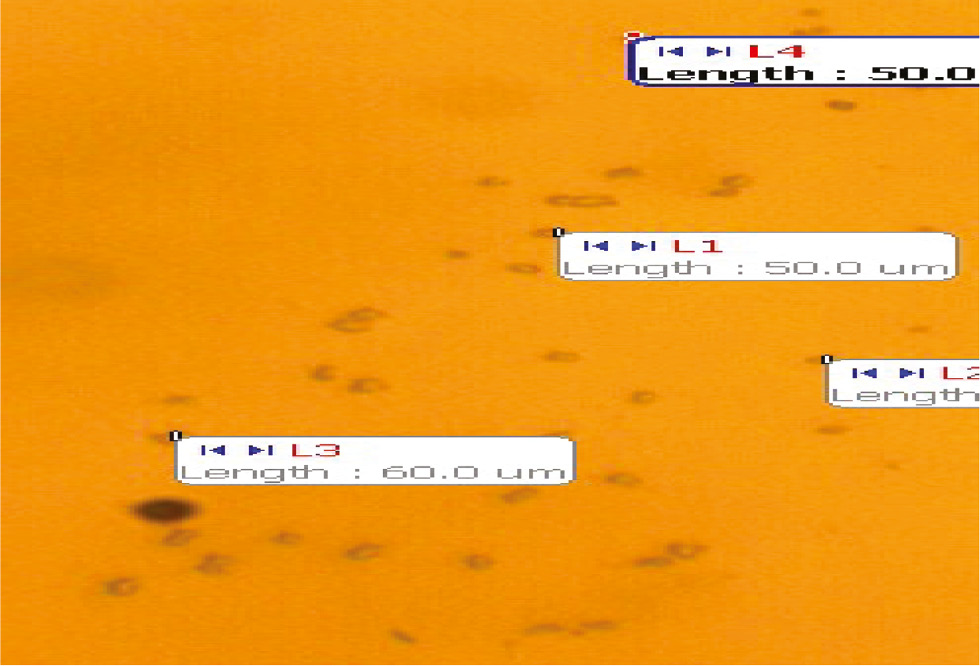
Particle size distribution of neem broth.

Particle size distribution of silver nitrate.
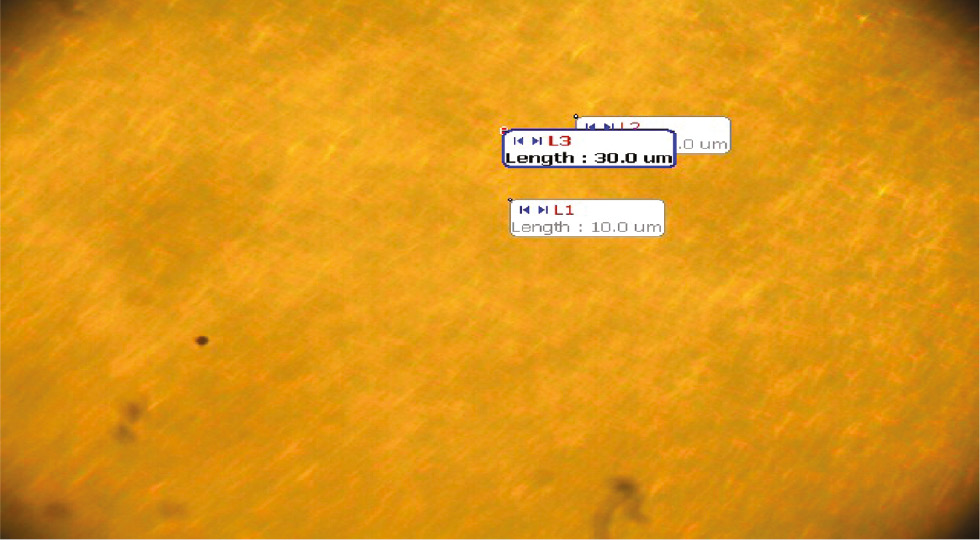
Particle size distribution of AgNeemnano.
The rot-causing organisms found in yam tuber in the study area at the time of this study were Fusarium moniliforme and Lasiodiplodia theobromae. The bioactivities of AgNeemnano on F. moniliforme varied with the varying concentration of the solution (Table 1). At the concentration of 28.40 mg/ml, the IZD was 13.0 mm but increasing the concentration to 227.27 mg/ml resulted in an IZD of 20.0 mm. Similarly, varying the concentration of AgNeemnano affected its activities on L. theobromae (Table 2). The MIC of the AgNeemnano that inhibited the mycelial growth of F. moniliforme was about 0.9 mg/ml as shown in Figure 4, while the MIC of AgNeemnano for L. theobromae was <0.5 mg/ml (Figure 5). Doubling the concentration did not show a corresponding increase in the IZD. When the concentration was increased from 56.81 to 113.63 mg/ml for Fusarium moniliforme, the CUE was only 3 mm. When this concentration was doubled or increased to 227.27 mg/ml, the IZD increased in a decreasing trend with reduction in CUE. The cut surfaces of the untreated yam tuber appeared white or colourless, while the cut surface of tuber treated with AgNeemnano appeared dark brown (Figure 6). The isolated micro-organisms that were found in the yam tubers as captured by the Moticam camera had large particle sizes (Figure 7).
Effects of varying concentrations and log concentration on IZD, CUE, and IZD2 of silverneem on Fusarium moniliforme.
| Concentration (mg/ml) | Log. of conc. | IZD (mm) | CUE (mm) | IZD2 (mm) |
|---|---|---|---|---|
| 227.27 | 2.36 | 20.0 | 2 | 400 |
| 113.63 | 2.06 | 18.0 | 3 | 324 |
| 56.81 | 1.75 | 15.0 | 2 | 225 |
| 28.40 | 1.45 | 13.0 | – | 169 |
Effects of varying concentrations and log concentration on IZD, CUE, and IZD2 of silverneem on Lasiodiplodia theobromae.
| Silverneem conc. (mg/ml) | Log. of conc. | IZD (mm) | CUE (mm) | IZD2 (mm) |
|---|---|---|---|---|
| 227.27 | 2.36 | 18.0 | 2.0 | 324.0 |
| 113.63 | 2.06 | 16.0 | 1.0 | 256.0 |
| 56.81 | 1.75 | 15.0 | 2.0 | 225.0 |
| 28.40 | 1.45 | 13.0 | – | 169.0 |
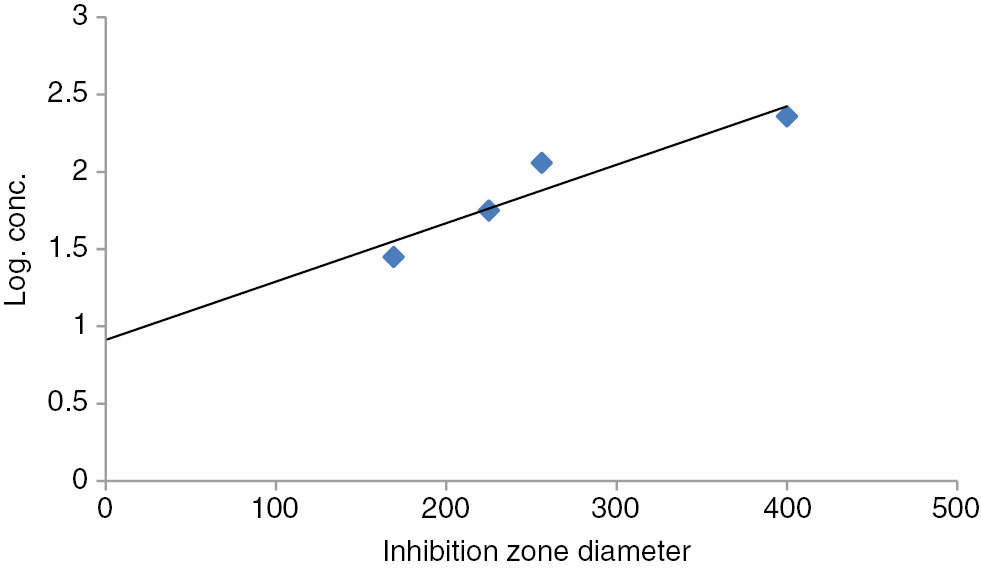
Graph of the log concentration and IZD showing the point of MIC (in mg/ml) of AgNeemnano solution against Fusarium moniliforme.
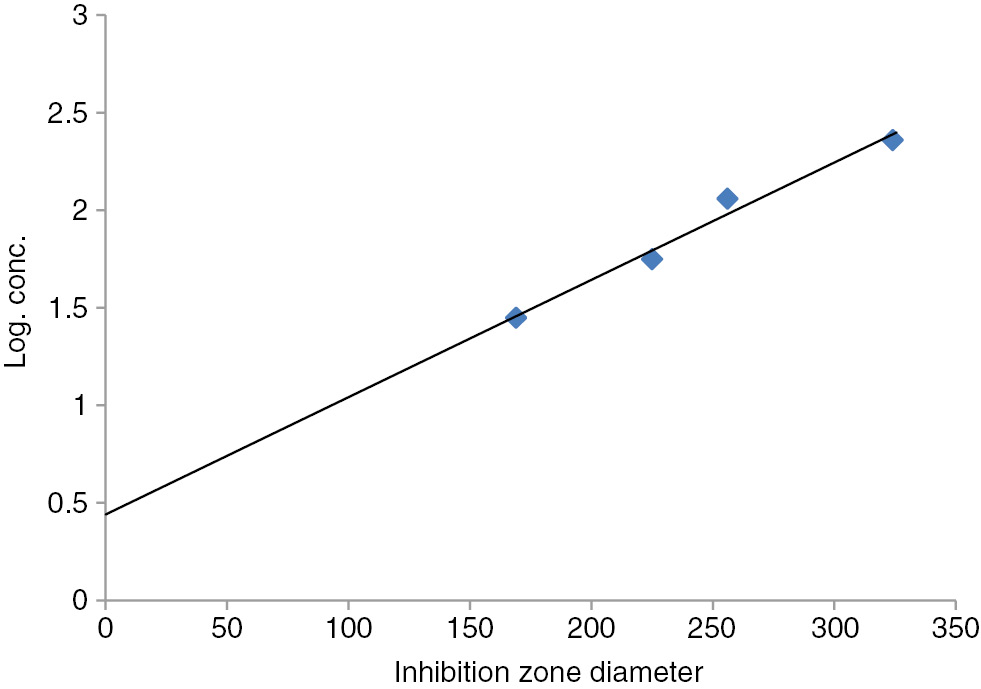
Graph of the log concentration and IZD showing the point of MIC (in mg/ml) of AgNeemnano solution against Lasiodiplodia theobromae.
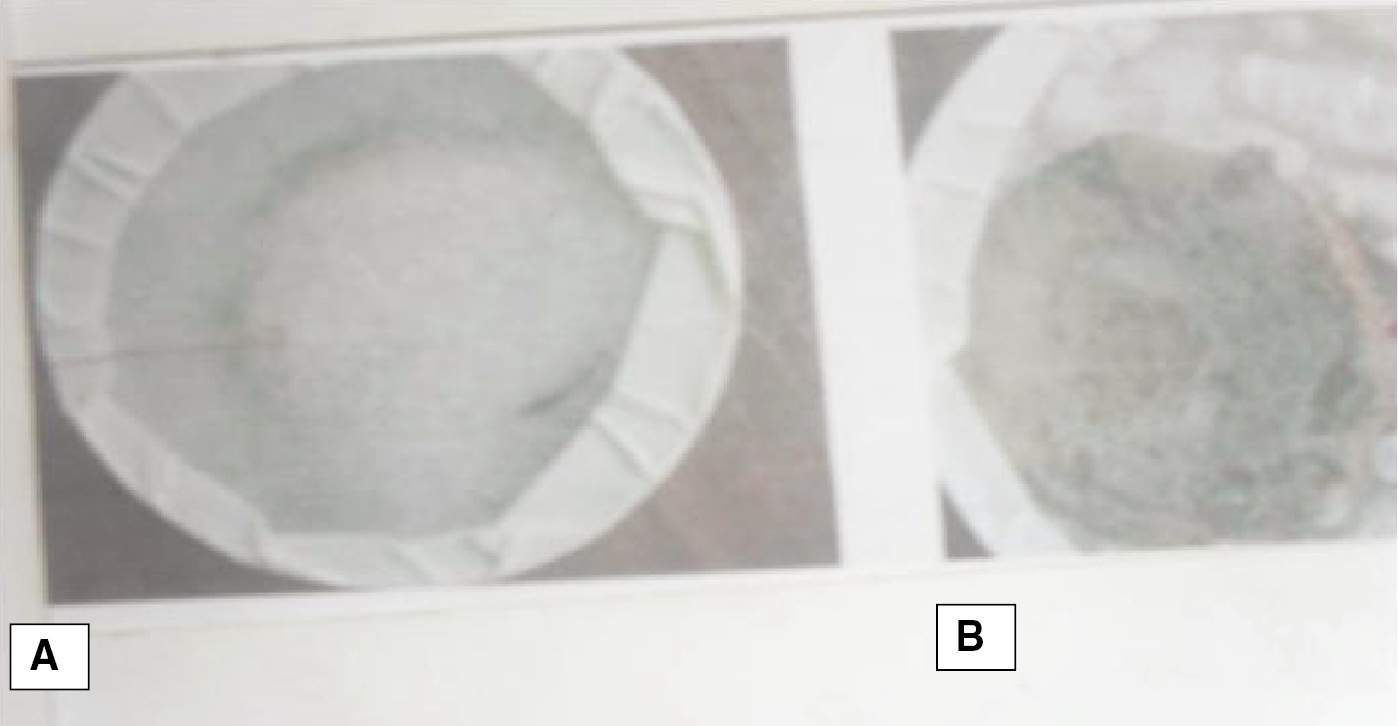
Photograph of untreated tuber (A) and tuber treated with AgNeemnano solution (B) against Fusarium moniliforme and Lasiodiplodia theobromae.
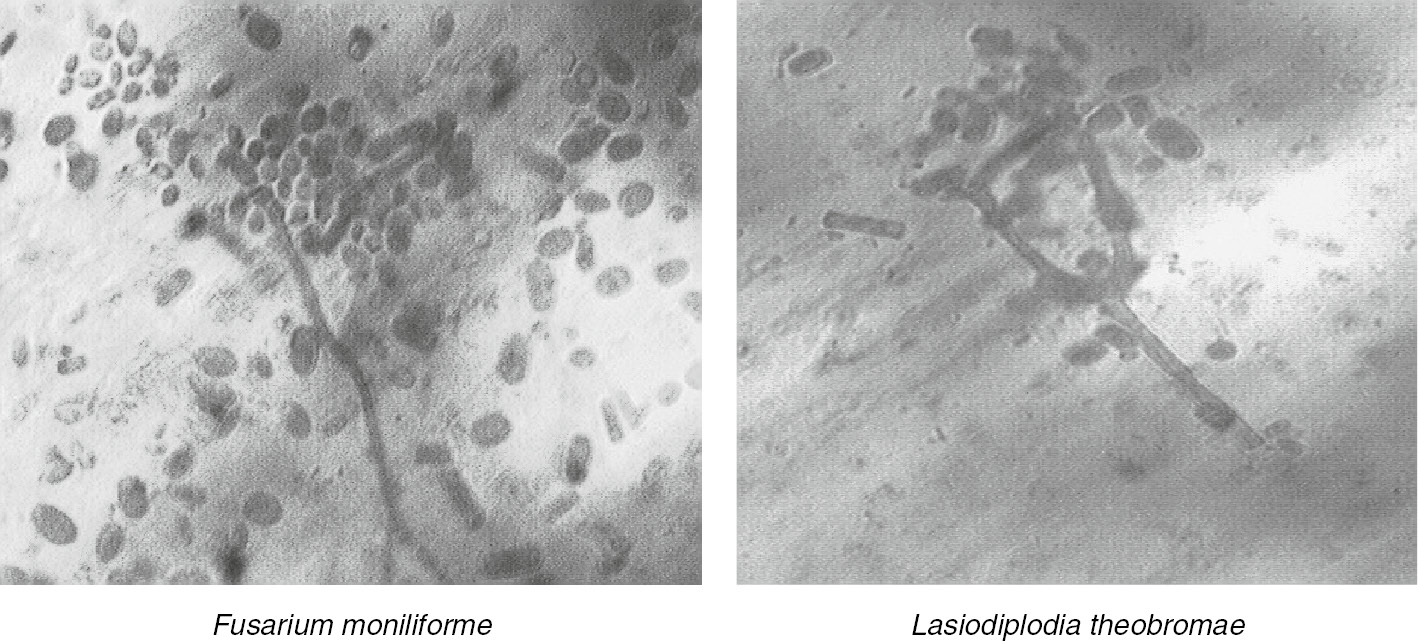
Microphotographs of the organisms associated with soft rot in yam tuber (Dioscorea rotundata).
4 Discussion
The individual substances (neem broth and silver nitrate) used in this study had a peculiar colour and different particle sizes; however, when they were mixed together to generate AgNeemnano, a different colour and a different particle size were obtained. This is evidently a complete chemical reaction with a new product that has properties different from the individual component reactants.
This preliminary investigation of nanobiotechnology for its effectiveness as an anti-fungal agent of soft rot in yam gave encouraging and interesting results. The MIC of AgNeemnano that inhibited the mycelial growth of Fusarium moniliforme was about 0.9 mg/ml, while the MIC of AgNeemnano for Lasiodiplodia theobromae was <0.45 mg/ml. These micro-organisms were sensitive to the AgNeemnano solutions at very low concentrations compared to the MIC of Cassia alata leaf extracts (48.78 and 87.50 mg/ml) on Rhodotorula mucilaginosa and Scopulariopsis brevicaulis, respectively, as reported by Eze and Eze [8].
The MIC of any chemical is as important as the optimum inhibition concentration (OIC) for social, environmental, and economic reasons. It is evident in this study that while the MIC of AgNeemnano for Fusarium moniliforme is 24.40 mg/ml, the OIC is 113.63 mg/ml, beyond which the IZD decreased. Given that silver is non-toxic to humans and the environment, it is not economical to increase the concentration beyond this point as additional increases in concentration resulted in a very low increase in IZD, and therefore, poor CUE of the silverneem. The MIC of AgNeemnano for Lasiodiplodia theobromae was also the same with that of F. moniliforme but the OIC varied. The CUE of AgNeemnano decreased at the concentration of 113.63 mg/ml and increased again at the concentration of 227.27 mg/ml. Although it is not clear what caused the fall and rise in the value of the CUE of the silverneem on the L. theobromae, it is likely that the organism resisted the bioactivity of this chemical at that concentration but became susceptible when the concentration was further increased. The optimum inhibition concentration of silverneem for L. theobromae was not attained in this study; therefore, further research is recommended.
Interestingly, silver is metallic in nature; therefore, the combination of silver and neem (AgNeemnano) solution in this study is not likely to be degradable as in the case of Cassia alata leaf extracts or neem leaf extracts alone. This means that AgNeemnano could represent a lead source of novel antimicrobial agents capable of controlling rots of yam in storage if properly utilised. In rational drug therapy, the concurrent administration of two or more antimicrobial agents is often essential and sometimes mandatory in order to achieve the desired therapeutic effects [13].
The mycelial growth of the pathogenic organisms was noticeable even with unaided eyes. The dark brown colour of the treated tuber could be due to the drying up of yam exudates that sealed the cut surface and changed in colour, while the colourless or white surface of the untreated tuber suggests well-covered mycelial growth of the pathogenic organisms. The morphological features of the micro-organisms as captured by the Moticam camera suggest that these two organisms that cause yam rot in the study area have big particle sizes and might be virulent to other micro-organisms. Again, few numbers of pathogenic organisms of yam identified in this study could be attributed to the prevalent weather conditions, which probably were not conducive to other organisms. It has been reported that micro-organisms thrive better in a high-humidity environment with relative humidity of 70–90% than in low-humidity regions [14].
In this study, the sensitivity of the micro-organisms to AgNeemnano varied with the concentration, suggesting that this new metallic nanoparticle has multiple anti-microbial properties that could be applied to other fields of study, and not only in food crop preservation. This result also corroborates the report by Furno et al. [10] who had stated earlier that nanoparticles hold great potential in various contexts. A combination of silver nitrate and neem leaf extracts is a reaction of metal and a non-metallic substance resulting in a product that could maintain the durable property of metal with antimicrobial (antibacterial and antifungal) spectrum that deals with two or more organisms with different sensitivity patterns [14]. The most interesting aspect of this study is that the green metallic nanoparticles have no toxic chemicals and no effects on food [10].
5 Conclusion
This new method of biosynthesis of green metallic nanoparticles has different levels of bioactivities on the rot causing micro-organisms. Again, many micro-organisms were not found in this study. It is likely that location, type of yam, and time of storage could be responsible for the non-abundance of the micro-organisms in the study area. However, it is evident in this study that the use of metallic nanoparticles for storage of yam has the potential to keep yam free from all manners of microbial attack, and will enable yam to be stored for a period longer than the traditional 2–4 months after harvest. Further research is recommended to substantiate our findings, especially on the optimum concentration of the solution and different application methods. The technology is cheap, easy to apply, and with non-toxic effects on humans and the environment, and can be applied correctly in the farm field.
About the authors

Simon C. Eze is a senior lecturer at the Department of Crop Science, University of Nigeria, Nsukka. His research interests include the areas of crop agronomy, post-harvest development technology, and crop products storage. He is also a supervisor of postgraduate students. He has worked as a research fellow with the International Institute of Tropical Agriculture (IITA), Ibadan. He has participated as a research scientist in INCO-YAM and IFAD-PA projects sponsored by the European Union and International Fund for Agricultural Development (IFAD) executed by the National Root Crops Research Institute (NRCRI) Umudike and the IITA, respectively. He also participated in the cassava baseline survey for the CMD pre-emptive management project implemented by the IITA Onne Station.

Simon I. Umeh, a chief technologist at the Department of Crop Science, University of Nigeria, Nsukka. He obtained MSc and PhD degrees in crop science (agronomy) from the University of Nigeria, Nsukka. He is a fellow of the Nigerian Institute of Science Laboratory Technology (FNIST); was a supervisor and head of Department of Science Laboratory Technology, University of Nigeria, Nsukka (2005–2011); and was member in council and national vice president of Nigerian Institute of Science Laboratory Technology (2004–2011). Dr. Umeh has developed, defended, and published many laboratory analytical standards and guides used in tropical reputable journals. In nanotechnology, he has developed acceptable methods for the synthesis of green nanoparticles for anticancer, antioxidant, and antibacterial activities.

Christopher C. Onyeke is a graduate of the University of Nigeria, Nsukka, where he obtained a BSc degree in botany/zoology, MSc degree in plant pathology, and a post-graduate diploma in education (PGDE). He also has a doctorate degree (PhD) in plant pathology from the University of Jos, Nigeria. He is a lecturer at the Department of Plant Science and Biotechnology, University of Nigeria, Nsukka.

Godwin I. Ameh is a professor of Applied Biology and Biotechnology and lecturer at the Enugu State University of Science and Technology, Enugu, Enugu State, Nigeria. He is a graduate of the University of Nigeria, Nsukka, where he obtained all his degrees. He has supervised many undergraduate and graduate students in his area of specialization. He is the current head of the department of Applied Biology and Biotechnology.

Kevin I. Ugwuoke carries out research and teaching duties at the Department of Crop Science of the University of Nigeria, Nsukka, Nigeria. He specialises in plant pathology with particular interest in virology, mycology, and nematology. He has worked on the development of protection techniques for crops such as soybean, cocoyam, or yam, and the identification of causal agents in crop disease affecting, e.g. eggplant.
Acknowledgments
This research was sponsored by the authors; however, the materials and technical support were provided by the chief technologist, Dr. Simon Umeh. The authors are highly indebted to the head of department, Prof. B.C. Echezona. We also express our sincere thanks to other laboratory technologists, E.I. Eze, Earnest Onu, and Lilian O., for their time advice. Special thanks are also due to the anonymous reviewers for their suggestions and constructive criticisms that helped us a lot.
References
[1] Orkwor GC, Asiedu R, Ekanayanke IJ. Importance of yam in West Africa. In Food Yam, Advances in Research, IITA and NRCRI: Nigeria, 1998.Search in Google Scholar
[2] Eze SC, Ugwuoke KI. Effect of spices of yam (Doscorea spp) and fungal pathogens on the post harvest behaviours of yam tuber in Nsukka area of South Eastern Nigeria. Res. J. Agric. Biol. Sci. 2010, 6, 942–945.Search in Google Scholar
[3] Ray RC, Neunzhiyan M, Balagopalan C. Microorganisms associated with rots. Ann. Trop. Paediatr. 2000, 22, 31–40.Search in Google Scholar
[4] Osagie AU. The Yam Tuber in Storage, Postharvest Research Unit Department of Biochemistry, University of Benin: Nigeria, 1992.Search in Google Scholar
[5] Ikediugwu FE. Studies on biological control of post harvest rot of yam (Dioscorea spp.) with Trichoderma viride. J. Phytopathol. 2000, 148, 351–355.10.1111/j.1439-0434.2000.tb04786.xSearch in Google Scholar
[6] Ogbeni PA. The comparative efficacy of plant ash for the control of yam minisett and cassava ministem rot 1995. African Resource Project, Department of Crop Science, University of Calabar, pp. 9–18.Search in Google Scholar
[7] Girardin OC, Nindjin Z, Farah F, Escher PS, Otokore D. Use of gibberellic acid to prolong traditional storage of yams. J. Sci. Food Agric. 1998, 77, 172–178.10.1002/(SICI)1097-0010(199806)77:2<172::AID-JSFA21>3.0.CO;2-RSearch in Google Scholar
[8] Eze SC, Eze EI. In vitro study of biofungicidal effects of Cassiaalata leaf extracts on some pathogenic organisms of white yam (Dioscorarotundata) tuber in storage. Bioresearch 2010, 8, 703–706.10.4314/br.v8i2.66895Search in Google Scholar
[9] Kong H, Jang J. Antibacterial properties of novel of poly (methyl) methacrylate nanofiber containing silver nanoparticles. Langmuir 2008, 24, 2051–2056.10.1021/la703085eSearch in Google Scholar
[10] Furno F, Morley KS, Wong G, Sharp BI, Howedle SM. Silver nanoparticles and polymeric medical devices: a new approach to prevention of infection. J. Antimicrob. Chemother. 2004, 54, 1019–1024.10.1093/jac/dkh478Search in Google Scholar
[11] Eze SC, Eze EI, Ameh GI, Dansi A. Effect of some botanical extracts on post-harvest losses of yam (Dioscorea rotundata) in improved yam barn in Nigeria. Afr. J. Biotechnol. 2013, 12, 1962–1967.10.5897/AJB12.754Search in Google Scholar
[12] Pitt JI, Hocking AD. Fungi and Food Spoilage, Academic Press: Sydney, 1997, pp. 1–13.10.1007/978-1-4615-6391-4Search in Google Scholar
[13] Attama AA, Nnamani PO, Nwafor CN. In vitro study of the interaction between amoxicillin and norfloxacin with lansoprazole. J. Biores. 2005, 3, 52–55.10.4314/br.v3i2.28592Search in Google Scholar
[14] Agboke AA, Eze EI, Adikwu MU. Combined activities of colloidal silver concentrate and cephalexin on Staphylococcus aureus using the agar diffusion technique. J. Biores. 2005, 3, 7–10.Search in Google Scholar
©2016 Walter de Gruyter GmbH, Berlin/Boston
This article is distributed under the terms of the Creative Commons Attribution Non-Commercial License, which permits unrestricted non-commercial use, distribution, and reproduction in any medium, provided the original work is properly cited.
Articles in the same Issue
- Frontmatter
- In this issue
- Research highlights
- Preliminary investigations on the control of yam (Dioscorea rotundata Poir) tuber rot through nanoscience
- Phytosynthesis of silver nanoparticles (AgNPs) using miracle fruit plant (Synsepalum dulcificum) for antimicrobial, catalytic, anticoagulant, and thrombolytic applications
- Biosynthesis of silver nanoparticles using lavender leaf and their applications for catalytic, sensing, and antioxidant activities
- Antibacterial mechanism of biogenic copper nanoparticles synthesized using Heliconia psittacorum leaf extract
- Optimization of processing parameters in green synthesis of gold nanoparticles using microwave and edible mushroom (Agaricus bisporus) extract and evaluation of their antibacterial activity
- Reviews
- Integration of low-dimensional materials for energy-harvesting applications: current progress, scope, challenges, and opportunities
- A novel approach to the green synthesis of metallic nanoparticles: the use of agro-wastes, enzymes, and pigments
- Metal nanoparticles from marine seaweeds – a review
- The emerging roles of arthropods and their metabolites in the green synthesis of metallic nanoparticles
Articles in the same Issue
- Frontmatter
- In this issue
- Research highlights
- Preliminary investigations on the control of yam (Dioscorea rotundata Poir) tuber rot through nanoscience
- Phytosynthesis of silver nanoparticles (AgNPs) using miracle fruit plant (Synsepalum dulcificum) for antimicrobial, catalytic, anticoagulant, and thrombolytic applications
- Biosynthesis of silver nanoparticles using lavender leaf and their applications for catalytic, sensing, and antioxidant activities
- Antibacterial mechanism of biogenic copper nanoparticles synthesized using Heliconia psittacorum leaf extract
- Optimization of processing parameters in green synthesis of gold nanoparticles using microwave and edible mushroom (Agaricus bisporus) extract and evaluation of their antibacterial activity
- Reviews
- Integration of low-dimensional materials for energy-harvesting applications: current progress, scope, challenges, and opportunities
- A novel approach to the green synthesis of metallic nanoparticles: the use of agro-wastes, enzymes, and pigments
- Metal nanoparticles from marine seaweeds – a review
- The emerging roles of arthropods and their metabolites in the green synthesis of metallic nanoparticles
