Adaptive constrained control for automotive electronic throttle control system with experimental analysis
-
Youguo He was born in Hu Lu Dao, Liaoning, CHINA in 1977. He received his B. Sc. degree from Department of Electronic Engineering, Liaoning University of Technology, Jinzhou, China in 2000, and his M. Sc. and Ph. D. degrees from the School of Information Science and Engineering, Northeastern University, Shenyang, China in 2005 and 2008, respectively. In 2008, he joined the Faculty of Information Engineering, Shenyang University as a lecturer. In 2015, he joined the Automotive Engineering Research Institute in Jiangsu University as an associate professor. His research interests are in intelligent automotive and vehicle control system.
 ,
,
Xin Liu was born in Zheng Zhou, Henan, CHINA in 1996. He received his B. Sc. degree from North China University of Water Resources and Electric Power in 2019. In 2019, he entered the Automotive Engineering Research Institute in Jiangsu University to study for his master’s degree in vehicle engineering. His research interests are in vehicle dynamic system modeling and constrained control.
Dapeng Wang was born in Ping Ding Shan, Henan, CHINA in 1983.He received his B. Sc. degree from Department of Electrical Engineering, Zhengzhou University, Zhengzhou, China in 2008, and his M. Sc. degree from the school of information science and engineering, Northeastern University, Shenyang, China in 2010. In 2010, he joined 713th Research Institute of China Shipbuilding Industry Corporation. In 2015, he joined the School of Mechatronics Engineering, Harbin Engineering University, Harbin, China as a doctoral student while still working. His research interests are in intelligent automotive and automatic control system.
Chaochun Yuan was born in Xu Zhou, Jiangsu, CHINA in 1978. He received his B. Sc. degree from Department of Packaging Engineering, Jiangsu Polytechnic University, Zhenjiang, China in 2000, and Ph. D. degree from the School of Agricultural Mechanization Engineering, Jiangsu University, Zhenjiang, China in 2007. In 2008, he joined the Automotive Engineering Research Institute in Jiangsu University as an associate professor. His research interests are in intelligent automotive and vehicle active safety.
Jie Shen is the editor-in-chief of International Journal of Modelling and Simulation, which is an EI-indexed, peer-reviewed research journal in the field of modelling and simulation. He also served as aneditorial board member for two international journals; an organizer for 8 international conferences; an associate editor of 2 international conference proceedings; a program committee member for 20 international conferences; a session chair for 13 international or national conferences; a board member for 3 international- or national-level technical committees; and a member for various committees at department and campus levels within the University of Michigan - Dearborn.

Abstract
This article proposes an adaptive constrained control strategy with state constraints and uncertain parameters for an electronic throttle control (ETC) system. Compared with the current control strategies for an ETC system, state constraints and parameter uncertainties are adequately considered in the proposed control strategy. First, the nonlinear dynamic model for control of an ETC is described. Second, the asymmetric Barrier Lyapunov Function (BLF) and a backstepping control algorithm are used to ensure that the throttle opening does not exceed the constrained boundary. A parameter adaptive law is given to estimate the unknown parameter and external disturbances with an ETC system. Third, the proposed BLF controller is compared with the existing Quadratic Lyapunov Function (QLF) controller by simulation and experiment. The results show that the proposed control algorithm not only ensure fast transient performance in the control response, but also avoid the out of bounds of the throttle opening. The proposed constrained control strategy can provide excellent control performance for an ETC system.
Zusammenfassung
Dieser Beitrag schlägt für ein elektronisches Drosselklappensteuerungssystem (ETC) mit Zustandsbeschränkungen und Parameterunsicherheiten eine adaptive Regelungsstrategie vor. Im Vergleich zu etablierten Regelungsstrategien für ein ETC-System werden die Zustandsbeschränkungen und Parameterunsicherheiten adäquat berücksichtigt. Zunächst wird im Beitrag das nichtlineare dynamische Modell für die Regelung eines ETC beschrieben. Zweitens werden eine asymmetrische Barrier-Lyapunov Funktion (BLF) und ein Backstepping-Algorithmus genutzt, um sicherzustellen, dass die Drosselklappenöffnung die Beschränkung nicht überschreitet. Zur Schätzung der unbekannten Parameter und der externen Störungen wird für das ETC-Systeme ein parameteradaptives Regelungsgesetz angegeben. Drittens wird der vorgeschlagene BLF-Regler per Simulation und experimentell mit dem bestehenden Quadratic-Lyapunov-Funktion (QLF) Regler verglichen. Die Ergebnisse zeigen, dass der vorgeschlagene Regelalgorithmus nicht nur ein schnelles Einschwingverhalten gewährleistet, sondern auch das Überschreiten der Grenzen der Drosselklappenöffnung vermeidet. Die vorgeschlagene Regelungsstrategie kann für ein ETC-System eine hervorragende Güte gewährleisten.
Funding source: Six Talent Peaks Project in Jiangsu Province
Award Identifier / Grant number: 2015-XNYQC-004
Funding source: Jiangsu University
Award Identifier / Grant number: 15JDG125
Funding statement: This work is supported by Jiangsu province “Six Talent Peaks” project (2015-XNYQC-004), Jiangsu province road transport application Key Laboratory Fund (BM20082061506), Research start fund of Jiangsu University (15JDG125).
About the authors
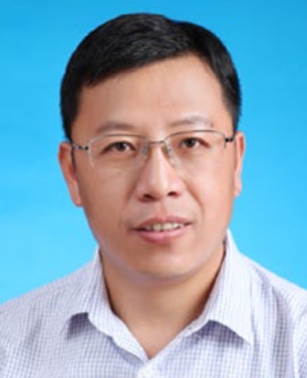
Youguo He was born in Hu Lu Dao, Liaoning, CHINA in 1977. He received his B. Sc. degree from Department of Electronic Engineering, Liaoning University of Technology, Jinzhou, China in 2000, and his M. Sc. and Ph. D. degrees from the School of Information Science and Engineering, Northeastern University, Shenyang, China in 2005 and 2008, respectively. In 2008, he joined the Faculty of Information Engineering, Shenyang University as a lecturer. In 2015, he joined the Automotive Engineering Research Institute in Jiangsu University as an associate professor. His research interests are in intelligent automotive and vehicle control system.

Xin Liu was born in Zheng Zhou, Henan, CHINA in 1996. He received his B. Sc. degree from North China University of Water Resources and Electric Power in 2019. In 2019, he entered the Automotive Engineering Research Institute in Jiangsu University to study for his master’s degree in vehicle engineering. His research interests are in vehicle dynamic system modeling and constrained control.

Dapeng Wang was born in Ping Ding Shan, Henan, CHINA in 1983.He received his B. Sc. degree from Department of Electrical Engineering, Zhengzhou University, Zhengzhou, China in 2008, and his M. Sc. degree from the school of information science and engineering, Northeastern University, Shenyang, China in 2010. In 2010, he joined 713th Research Institute of China Shipbuilding Industry Corporation. In 2015, he joined the School of Mechatronics Engineering, Harbin Engineering University, Harbin, China as a doctoral student while still working. His research interests are in intelligent automotive and automatic control system.
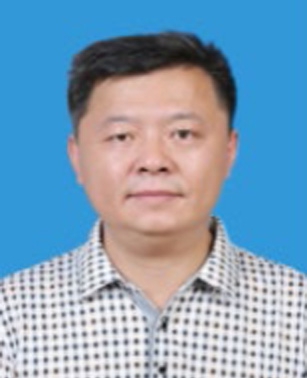
Chaochun Yuan was born in Xu Zhou, Jiangsu, CHINA in 1978. He received his B. Sc. degree from Department of Packaging Engineering, Jiangsu Polytechnic University, Zhenjiang, China in 2000, and Ph. D. degree from the School of Agricultural Mechanization Engineering, Jiangsu University, Zhenjiang, China in 2007. In 2008, he joined the Automotive Engineering Research Institute in Jiangsu University as an associate professor. His research interests are in intelligent automotive and vehicle active safety.

Jie Shen is the editor-in-chief of International Journal of Modelling and Simulation, which is an EI-indexed, peer-reviewed research journal in the field of modelling and simulation. He also served as aneditorial board member for two international journals; an organizer for 8 international conferences; an associate editor of 2 international conference proceedings; a program committee member for 20 international conferences; a session chair for 13 international or national conferences; a board member for 3 international- or national-level technical committees; and a member for various committees at department and campus levels within the University of Michigan - Dearborn.
References
1. Ashok B, Ashok SD and Kumar CR. Trends and future perspectives of electronic throttle control system in a spark ignition engine. Annual Review in Control, 44:97–115, 2017.10.1016/j.arcontrol.2017.05.002Search in Google Scholar
2. Gao J, Feng K, Wang Y, et al.Design, implementation and experimental verification of a compensator-based triple-step model reference controller for an automotive electronic throttle. Control Engineering Practice, 100:104447, 2020.10.1016/j.conengprac.2020.104447Search in Google Scholar
3. Corn M, et al.Design and validation of a gain-scheduled controller for the electronic throttle body in ride-by-wire racing motorcycles. IEEE Transactions on Control Systems Technology, 19(1):18–30, 2010.10.1109/TCST.2010.2066565Search in Google Scholar
4. Sheng W and Bao Y. Fruit fly optimization algorithm based fractional order fuzzy-PID controller for electronic throttle. Nonlinear Dynamics, 73(1-2):611–619, 2013.10.1007/s11071-013-0814-ySearch in Google Scholar
5. Yadav AK and Gaur P. Robust adaptive speed control of uncertain hybrid electric vehicle using electronic throttle control with varying road grade. Nonlinear Dynamics, 76:305–321, 2014.10.1007/s11071-013-1128-9Search in Google Scholar
6. Hao, Sun, et al.A fuzzy approach for optimal robust control design of an automotive electronic throttle system. IEEE Transactions on Fuzzy Systems, 26(2):694–704, 2017.10.1109/TFUZZ.2017.2688343Search in Google Scholar
7. Jiao X, et al.Adaptive finite time servo control for automotive electronic throttle with experimental analysis. Mechatronics the Science of Intelligent Machines, 53:192–201, 2018.10.1016/j.mechatronics.2018.06.010Search in Google Scholar
8. Vargas A, et al.Unscented Kalman filters for estimating the position of an automotive electronic throttle valve. IEEE Transactions on Vehicular Technology, 65(6):4627–4632, 2016.10.1109/TVT.2016.2518018Search in Google Scholar
9. Yang B, Liu M, Kim H, et al.Luenberger-sliding mode observer based fuzzy double loop integral sliding mode controller for electronic throttle valve. Journal of Process Control, 61:36–46, 2018.10.1016/j.jprocont.2017.11.004Search in Google Scholar
10. Rui B, Yang Y and Wei W. Nonlinear backstepping tracking control for a vehicular electronic throttle with input saturation and external disturbance. IEEE Access, 6:10878–10885, 2018.10.1109/ACCESS.2017.2783948Search in Google Scholar
11. Wang H, Liu L, He P, et al.Robust adaptive position control of automotive electronic throttle valve using PID-type sliding mode technique. Nonlinear Dynamics, 85(2):1331–1344, 2016.10.1109/ChiCC.2016.7553884Search in Google Scholar
12. Pavkovic D, Deur J, et al.Adaptive control of automotive electronic throttle. Control Engineering Practice, 14(2):121–136, 2006.10.1016/j.conengprac.2005.01.006Search in Google Scholar
13. Jiao X and Shen T. PID control with adaptive feedback compensation for electronic throttle. IFAC Proceedings Volumes, 45(30):221–226, 2012.10.3182/20121023-3-FR-4025.00010Search in Google Scholar
14. Di Bernardo M, Di Gaeta A, et al.Synthesis and experimental validation of the novel LQNEMCSI adaptive strategy on an electronic throttle valve. IEEE Transactions on Control Systems Technology, 8(6):1325–1337, 2010.10.1109/TCST.2009.2037610Search in Google Scholar
15. Chen M, Ge SS and Ren B. Adaptive tracking control of uncertain MIMO nonlinear systems with input constraints. Automatica, 47(3):452–465, 2011.10.1016/j.automatica.2011.01.025Search in Google Scholar
16. Ma G, Chen C, et al.Adaptive backstepping-based neural network control for hypersonic reentry vehicle with input constraints. IEEE Access, 6(99):1954–1966, 2018.10.1109/ACCESS.2017.2780994Search in Google Scholar
17. Sun LY, Wang X and Bai R. Nonlinear adaptive control for semi-active suspension with input constraints. Kongzhi yu Juece/Control and Decision, 33(11):2099–2103, 2018.Search in Google Scholar
18. Wu W, et al.Event-triggered control for discrete-time linear systems subject to bounded disturbance. International Journal of Robust and Nonlinear Control, 26(9):1902–1918, 2016.10.1002/rnc.3388Search in Google Scholar
19. Fu J, Wang L and Chen M. Invariant set based sliding mode control for near-space vehicles with attitude constraints. Proceedings of the Institution of Mechanical Engineers, 230(g5):793–804, 2016.10.1177/0954410015598171Search in Google Scholar
20. Liu C, Tahir F and Jaimoukha IM. Full-complexity polytopic robust control invariant sets for uncertain linear discrete-time systems. International Journal of Robust and Nonlinear Control, 29(11):3587–3605, 2019.10.1002/rnc.4573Search in Google Scholar
21. Grancharova A and Olaru S. Low complexity distributed model predictive control by using contractive sets. IFAC-PapersOnLine 50(1):13164–13169, 2017.10.1016/j.ifacol.2017.08.2171Search in Google Scholar
22. Wang Y, Pea D and Puig V, et al.Robust periodic economic predictive control based on probabilistic set invariance for descriptor systems. IFAC-PapersOnLine, 51(20):436–441, 2018.10.1016/j.ifacol.2018.11.054Search in Google Scholar
23. Tee KP, Ge SS and Tay EH. Barrier Lyapunov Functions for the control of output-constrained nonlinear systems. Automatica, 45(4):918–927, 2013.10.1016/j.automatica.2008.11.017Search in Google Scholar
24. Liu YJ, Li DJ and Tong S. Adaptive output feedback control for a class of nonlinear systems with full-state constraints. International Journal of Control, 87(2):281–290, 2014.10.1080/00207179.2013.828854Search in Google Scholar
25. Liu YJ and Tong S. Barrier Lyapunov Functions-based adaptive control for a class of nonlinear pure-feedback systems with full state constraints. Automatica, 64(C):70–75, 2016.10.1016/j.automatica.2015.10.034Search in Google Scholar
26. Bai R. Neural network control-based adaptive design for a class of DC motor systems with the full state constraints. Neurocomputing, 168:65–69, 2015.10.1016/j.neucom.2015.04.090Search in Google Scholar
27. Meng W, Yang Q and Sun Y. Adaptive neural control of nonlinear MIMO systems with Time-Varying Output Constraints. IEEE Transactions on Neural Networks and Learning Systems, 26(5):1074–1085, 2015.10.1109/TNNLS.2014.2333878Search in Google Scholar PubMed
28. Ding L, Li S, Liu Y J, et al.Adaptive neural network-based tracking control for Full-State constrained Wheeled Mobile Robotic System. IEEE Transactions on Systems, Man, and Cybernetics, 47(8):2410–2419, 2017.10.1109/TSMC.2017.2677472Search in Google Scholar
29. Wang C and Wu Y. Finite-time tracking control for strict-feedback nonlinear systems with full state constraints. International Journal of Control, 92(6):1426–1433, 2017.10.1080/00207179.2017.1397290Search in Google Scholar
30. Chen H, Hu Y, et al.Electronic throttle control based on backstepping method. Control Theory and Application, 028(004):491–496, 503, 2011.Search in Google Scholar
31. Tee KP, Ge SS and Tay EH. Barrier Lyapunov Functions for the control of output-constrained nonlinear systems. Automatica, 45(4):918–927, 2009.10.1016/j.automatica.2008.11.017Search in Google Scholar
32. Bemporad A, Borrelli F, Morari M. Model predictive control based on linear programming – the explicit solution. IEEE Transactions on Automatic Control, 47(12):1974-1985, 2003.10.1109/TAC.2002.805688Search in Google Scholar
33. Yang T, Sun N, Fang Y. Adaptive fuzzy control for a class of MIMO underactuated systems with plant uncertainties and actuator deadzones: design and experiments. IEEE Transactions on Cybernetics, 99:1–14, 2021.10.1109/TCYB.2021.3050475Search in Google Scholar PubMed
© 2022 Walter de Gruyter GmbH, Berlin/Boston
Articles in the same Issue
- Frontmatter
- Methoden
- Kooperative ereignisbasierte Steuerung von mobilen Objekten über ein unzuverlässiges Kommunikationsnetzwerk
- Zum strukturvorwissensbasierten Testsignalentwurf mittels Vorsteuerung für die Identifikation von Takagi-Sugeno-Modellen
- Entwurf eines Störgrößenbeobachters auf der Grundlage eines bereits existierenden Beobachters ohne Störmodell
- Learning Petri net models from sensor data of conveying systems based on the merging of prefix and postfix trees
- RaptorQ codes aided secure data delivery strategy for vehicular networks
- Anwendungen
- A model-driven engineering design process for the development of control software for Intralogistics Systems
- Towards automatic generation of functionality semantics to improve PLC software modularization
- Adaptive constrained control for automotive electronic throttle control system with experimental analysis
- Neuartiges wegbasiertes Modell zur Abbildung des Zeitverhaltens eines Kreuzstromwärmeübertragers
Articles in the same Issue
- Frontmatter
- Methoden
- Kooperative ereignisbasierte Steuerung von mobilen Objekten über ein unzuverlässiges Kommunikationsnetzwerk
- Zum strukturvorwissensbasierten Testsignalentwurf mittels Vorsteuerung für die Identifikation von Takagi-Sugeno-Modellen
- Entwurf eines Störgrößenbeobachters auf der Grundlage eines bereits existierenden Beobachters ohne Störmodell
- Learning Petri net models from sensor data of conveying systems based on the merging of prefix and postfix trees
- RaptorQ codes aided secure data delivery strategy for vehicular networks
- Anwendungen
- A model-driven engineering design process for the development of control software for Intralogistics Systems
- Towards automatic generation of functionality semantics to improve PLC software modularization
- Adaptive constrained control for automotive electronic throttle control system with experimental analysis
- Neuartiges wegbasiertes Modell zur Abbildung des Zeitverhaltens eines Kreuzstromwärmeübertragers
