
Effect of high-temperature titanium alloy ring forging microstructure on ultrasonic testing
-
Y. Ding
Yong Ding from Chaoyang City, Liaoning Province, China,is a master's student at the School of Materials Science and Engineering, Shenyang University of Technology. He was a holder of the IWE (International Welding Engineer) certification.Wentao Zheng from hunan Province, China,is an Associate Professor in the School of Materials Science and Engineering at Shenyang University of Technology. His research focuses on Materials Forming and Control Engineering, and he was proficient in various finite element simulation software.

Abstract
The relationship between the microstructure of the ring forging and the ultrasonic anomalies were studied in response to the localized anomaly observed during the non-destructive testing of TA15 titanium alloy ring forging. The distribution of internal defects was explored through water immersion ultrasonic testing of ring forging. The microstructure of the normal region and the abnormal zone were compared using scanning electron microscopy and electron backscatter diffraction techniques. And finite-element simulation was used to simulate the formation process of the abnormal ultrasound position. The results showed that the different layers of the ring-forged component exhibited varying degrees of bottom wave attenuation along the radial direction. The abnormal area corresponded to a higher number of primary α-phase and larger grain sizes. Under the combined effect of temperature and stress, the recrystallized grains began to grow abnormally, leading to significant bottom wave attenuation.
Kurzfassung
Als Reaktion auf lokale Anomalien, die bei der zerstörungsfreien Prüfung eines Ringschmiedestücks aus einer TA15-Titanlegierung beobachtet wurden, wurde die Beziehung zwischen der Mikrostruktur des Ringschmiedestücks und den Ultraschallanomalien untersucht. Zur Untersuchung der Verteilung der inneren Fehler wurde der geschmiedete Ring im Wassertauchverfahren mittels Ultraschall geprüft. Mithilfe der Rasterelektronenmikroskopie (REM) und der Rückstreuelektronenbeugung (EBSD) wurde die Mikrostruktur des normalen Bereichs und der anomalen Zone verglichen. Zudem wurde eine Finite-Elemente-Simulation durchgeführt, um den Entstehungsprozess der anormalen Ultraschallposition zu modellieren. Die Ergebnisse zeigten, dass die verschiedenen Schichten des ringgeschmiedeten Bauteils in radialer Richtung eine unterschiedlich starke Dämpfung der Ultraschallwellen aufwiesen. Der anormale Bereich entsprach einer höheren Anzahl von Körnen der primären α-Phase und größeren Korngrößen. Unter der kombinierten Wirkung von Temperatur und Spannung begannen die rekristallisierten Körner abnormal zu wachsen, was zu einer erheblichen Dämpfung der Ultraschallwelle führte.
About the authors
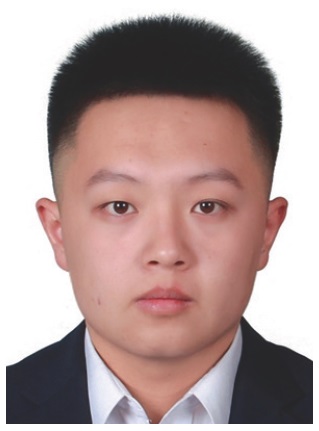
Yong Ding from Chaoyang City, Liaoning Province, China,is a master's student at the School of Materials Science and Engineering, Shenyang University of Technology. He was a holder of the IWE (International Welding Engineer) certification.
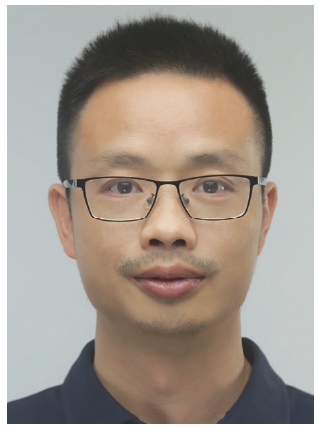
Wentao Zheng from hunan Province, China,is an Associate Professor in the School of Materials Science and Engineering at Shenyang University of Technology. His research focuses on Materials Forming and Control Engineering, and he was proficient in various finite element simulation software.
5 Acknowledgments
The authors are grateful for financial support from the National Key Research and Development Program of China under Grant No. 2021YFB3702601.
5 Danksagung
Die Autoren möchten sich für die finanzielle Unterstützung durch das National Key Research and Development Program of China unter dem Förderkennzeichen 2021YFB3702601 bedanken.
References / Literatur
[1] Bao, Q.; Zhao, C. Z.; Wang, K. H.; Zhao, J.; Cui, S. S.; Gao, B.; Liu, G.; A novel integrated hot forming with in-situ stress relaxation-aging for titanium alloy thin-walled components. Journal of Manufacturing Processes 131 (2024), pp. 1296–1308. DOI:10.1016/J.JMAPRO.2024.09.11310.1016/J.JMAPRO.2024.09.113Suche in Google Scholar
[2] Wang, W.; Jiang, Q. Y.; Liu, W. J.; Xing, F.; Yao, T. H.; Wang, W.; Effect of laser fluence on the cleaning quality and surface properties of TA15 titanium alloy surface paint layer. Optics and Laser Technology 181 (2025), pp. 112032–112032. DOI:10.1016/J.OPTLASTEC.2024.11203210.1016/J.OPTLASTEC.2024.112032Suche in Google Scholar
[3] Najafizadeh, M.; Yazdi, S.; Bozorg, M.; Classification and applications of titanium and its alloys: A review. Journal of Alloys and Compounds Communications (2024) ,p. 100019. DOI:10.1016/J.JACOMC.2024.10001910.1016/J.JACOMC.2024.100019Suche in Google Scholar
[4] Li, W. T.; Zhang, W. B.;Yang, G. P.; Research on ultrasonic phased array detection algorithm for TA15/Ti2AlNb multi-layer gradient material structure. Applied Acoustics 204 (2023). DOI:10.1016/J.APACOUST.2023.10924010.1016/J.APACOUST.2023.109240Suche in Google Scholar
[5] Yang, J.; Chen, C.; Cao, C. T.; An ultrasonic detection of disc disc defects.Trans.Nondestructive Testing Technology. China 45 (2021), pp. 20–23. DOI:10.13689/j.cnki.cn21-1230/th.2021.05.00410.13689/j.cnki.cn21-1230/th.2021.05.004Suche in Google Scholar
[6] Yang, J.; An ultrasonic detection of abnormal signal analysis of aluminum alloy forgings. Trans.Shanxi Metallurgy. China 44 (2021), pp. 212–214. DOI:10.16525/j.cnki.cn14-1167/tf.2021.03.8110.16525/j.cnki.cn14-1167/tf.2021.03.81Suche in Google Scholar
[7] Qian, G. L.; Song, X. Y.; Ye, W. J.; Chen, R.; Ma, T.; Hui, S. X.; Effects of Ultrasonic Impact Treatment on the Residual Stress and Microstructure of TA15 Welded Joint. Mater. Sci. Forum. 4502 (2017), pp. 1056–1062. DOI:10.4028/www.scientific.net/MSF.898.105610.4028/www.scientific.net/MSF.898.1056Suche in Google Scholar
[8] Hamidreza, B; Saeed, H.; In situ monitoring of defects in steel structures using a robot-assisted ultrasonic inspection technique. IET Science, Measurement & Technology 18 (2024), pp. 578–597. DOI:10.1049/SMT2.1222310.1049/SMT2.12223Suche in Google Scholar
[9] Li, Z. F.; Song,S.H; Liu, X. J.; Suo, H. D.; Liu, W,H.; Song, Y. Q.; A zero-shot quantitative evaluation model for subsurface defects size based on ultrasonic nondestructive testing. Measurement 241 (2025), pp. 115738–115738. DOI:10.1016/J.MEASUREMENT.2024.11573810.1016/J.MEASUREMENT.2024.115738Suche in Google Scholar
[10] Cao, J. X.; Fang, B.; Huang, X.; Li, Z. X.; Effect of microorganization on the mechanical properties of TA15 titanium alloy. Trans. Chinese Journal of Rare Metals. China (2004), pp. 362–364. DOI:10.13373/j.cnki.cjrm.2004.02.01810.13373/j.cnki.cjrm.2004.02.018Suche in Google Scholar
[11] Lu, Z.; Yuan, W. H. Qi, Z. F.; Xiong, Y. S.; Study on the evolution of residual stress during heat treatment of TA15 titanium alloy forgings. Trans.Hot Working Technology. China 48 (2019), pp. 227-230. DOI:10.14158/j.cnki.1001-3814.2019.10.05610.14158/j.cnki.1001-3814.2019.10.056Suche in Google Scholar
[12] Zhang, J. N.; Cho, Y.; Kim, J.; Malikov, A. K. U.; Kim, Y. H.; Yi, J. H.; Li, W. B.; Non-Destructive Evaluation of Coating Thickness Using Water Immersion Ultrasonic Testing.Coatings 11 (2021), pp. 1421–1421. DOI:10.3390/COATINGS1111142110.3390/COATINGS11111421Suche in Google Scholar
[13] Yang, L. X.;Wang, D. Y.; W, F.Q; Yuan, Z. J.; He, J.; Effect of TA15 titanium alloy flat tissue on ultrasonic detection and properties.Trans.Forging & Stamping Technology. China 46 (2021), pp. 228–235. DOI:10.13330/j.issn.1000-3940.2021.12.03610.13330/j.issn.1000-3940.2021.12.036Suche in Google Scholar
[14] Liu, S. Q.; Liu, F. F.; Yang, Y. S.; Li, L. G.; Li, Z. Y.; Nondestructive Evaluation 4.0: Ultrasonic Intelligent Nondestructive Testing and Evaluation for Composites.Research in Nondestructive Evaluation 31 (2020), pp. 370–388. DOI:10.1080/09349847.2020.182661310.1080/09349847.2020.1826613Suche in Google Scholar
[15] Li, L.; Ying, Y.; Zhou, M.; Cao, Z. H.; Guo, D. Z.; Yang, H. Y.; Ding, L.; Han, F. X.; Effect of microstructure and texture gradient on the backscattered ultrasound amplitude of Ti-6Al-4V bars for aeroengine blade.Trans.Journal of Alloys and Compounds. China (2024), pp. 177604. DOI:10.1016/J.JALLCOM.2024.17760410.1016/J.JALLCOM.2024.177604Suche in Google Scholar
[16] Song, W. W.; Li, B. J.; Song, Z. J.; Li, Z. L.; Zhang, H. J.; Effect of TA15 microtissue on bottom wave attenuation by ultrasonic detection.Trans.Titanium Industry Progress. China (38) 2021, pp. 35–40. DOI:10.13567/j.cnki.issn1009-9964.2021.03.00910.13567/j.cnki.issn1009-9964.2021.03.009Suche in Google Scholar
[17] Abraham Saju.T; Babu.M. N.; Venkatraman.B.; A novel ultrasonic non-destructive testing methodology to monitor fatigue crack growth in compact tension specimens. The Review of scientific instruments 94 (2023), pp. 035108–035108. DOI:10.1063/5.014217610.1063/5.0142176Suche in Google Scholar PubMed
[18] Cui, B. Z.;Cui,J.; Barnard.D. J.; Bond, L. J.; Internal defect detection and characterization of samarium-cobalt sintered magnets by ultrasonic testing technique. Journal of Magnetism and Magnetic Materials 570 (2023). DOI:10.1016/J.JMMM.2023.17052410.1016/J.JMMM.2023.170524Suche in Google Scholar
[19] Quan, G. Z.; Shi, Y.; Zhou, J.; Xiong, Y. S. A constitutive model of the rheological behavior of the TA15 titanium alloy.Trans.Hot Working Technology. China 24 (2011), pp. 33–35. DOI:10.14158/j.cnki.1001-3814.2011.24.03710.14158/j.cnki.1001-3814.2011.24.037Suche in Google Scholar
[20] Zhang, Q.; Chen, C.H; An Analysis of Excitation Pulse Adjustable Signal of Ultrasonic Flaw Detection. Russian Journal of Nondestructive Testing 54 (2018), pp. 510–518. DOI:10.1134/S106183091807010010.1134/S1061830918070100Suche in Google Scholar
[21] Min, X. H.; Jin, C.; Effect of Hot Processing on Mircrostructure and Properties of Flat Billets of TA15 Titanium Alloy.Materials Science Forum 5994 (2021), pp. 906–910. DOI:10.4028/WWW.SCIENTIFIC.NET/MSF.1016.90610.4028/WWW.SCIENTIFIC.NET/MSF.1016.906Suche in Google Scholar
© 2025 Walter de Gruyter GmbH, Berlin/Boston, Germany
Artikel in diesem Heft
- Inhalt
- Editorial
- Editorial
- Investigation of mechanical and metallographic properties of dissimilar aluminum alloy plates joined by friction stir welding method
- Effect of high-temperature titanium alloy ring forging microstructure on ultrasonic testing
- Effect of cold metal transfer (CMT) on the microstructure of as welded 2205 duplex stainless steel
- Failure Analysis
- Metallurgical analysis of creep failure in M16 fastening bolts made of N80A
- Picture of the Month
- Picture of the Month
- News
- News
- Meeting Diary
- Meeting Diary
Artikel in diesem Heft
- Inhalt
- Editorial
- Editorial
- Investigation of mechanical and metallographic properties of dissimilar aluminum alloy plates joined by friction stir welding method
- Effect of high-temperature titanium alloy ring forging microstructure on ultrasonic testing
- Effect of cold metal transfer (CMT) on the microstructure of as welded 2205 duplex stainless steel
- Failure Analysis
- Metallurgical analysis of creep failure in M16 fastening bolts made of N80A
- Picture of the Month
- Picture of the Month
- News
- News
- Meeting Diary
- Meeting Diary
