
Machine learning for the classification of macroscale fracture surfaces
-
A. Herges
has studied Materials Science at Saarland University. In 2021 he started his PhD after finishing his master thesis at the Institute for Functional Materials from Prof. F. Mücklich.
has studied Materials Science and Engineering at Saarland University. Until 2022 she has been a research assistant at the Chair of Functional Materials focusing on the classification of steels.

Abstract
The characterization of fractographic surfaces typically requires experts to evaluate the characteristics of fracture surfaces. However, these evaluations are influenced by human factors, such as subjectivity, and suffer from a lack of reproducibility. In this context, machine learning (ML), which has been established in various disciplines within materials science over the past few years, is a promising field enabling a more objective and reproducible evaluation. This study will evaluate the use of ML for the evaluation of fracture surfaces of notched Charpy specimens based on digital camera images. Image sections of the two reference regions “upper shelf” (ductile) and “lower shelf” (brittle) will serve as the database. In a first step, data visualization will be performed and data separability will be verified using unsupervised ML. On this basis, supervised ML will be used to train models to distinguish brittle and ductile fractures. These models will then be applied to determine ductile und brittle portions in mixed fracture modes, with the results being in good agreement with the expert consensus achieved in the round robin test.
Kurzfassung
Die klassische Charakterisierung von fraktographischen Oberflächen erfordert das Auswerten von Bruchflächenmerkmalen durch Experten. Die so erhaltenen Bewertungen unterliegen derweil menschlichen Einflussfaktoren, wie Subjektivität und mangelnder Reproduzierbarkeit. Machine Learning (ML), das sich in den letzten Jahren in der Materialwissenschaft in verschiedenen Bereichen etabliert hat, verspricht in diesem Zusammenhang hingegen eine objektivere und reproduzierbare Bewertung. In der vorliegenden Arbeit wird ML zur Bewertung von Bruchflächen von Kerbschlagproben anhand von Digitalkameraaufnahmen erprobt. Als Datenbasis dienen Bildausschnitte der zwei Referenzbereiche Hochlage (duktil) und Tieflage (spröde). Mittels unüberwachtem ML werden die Daten zunächst visualisiert und ihre Trennbarkeit nachgewiesen. Darauf aufbauend werden mittels überwachtem ML Modelle zur Unterscheidung spröder und duktiler Brüche trainiert. Diese Modelle finden anschließend Anwendung bei der Bestimmung der duktilen und spröden Anteile in Mischbrüchen. Dabei zeigt sich eine gute Übereinstimmung mit dem im Ringversuch ermittelten Expertenkonsens.
About the authors
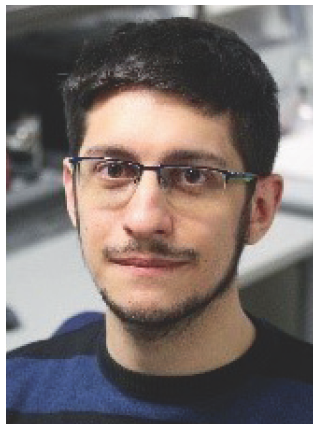
has studied Materials Science at Saarland University. In 2021 he started his PhD after finishing his master thesis at the Institute for Functional Materials from Prof. F. Mücklich.

has studied Materials Science and Engineering at Saarland University. Until 2022 she has been a research assistant at the Chair of Functional Materials focusing on the classification of steels.
5 Acknowledgements
The authors would like to thank the Federal Ministry for Economic Affairs and Climate Action (Bundesministerium für Wirtschaft und Klimaschutz, BMWK) for funding the BMWK project “Development of heavy plate for the high-performance welding of monopile foundations for the construction of offshore wind farms – High-performance plate”, in the context of which this study was conducted. The authors would also like to thank all fractography experts at AG der Dillinger Hütten-werke and the university staff for taking part in the survey into fracture surface analysis.
5 Danksagung
Die Autoren danken dem Bundesministerium für Wirtschaft und Klimaschutz für die Förde rung des BMWK-Projekts „Entwicklung von Grobblechen für das Hochleistungsschweißen von Monopiles zum Bau von Wind-Offshore-Energieanlagen – HL-Blech“, in dessen Rahmen die Untersuchungen stattfinden konnten. Des Weiteren gilt unser Dank allen fraktographischen Experten der AG der Dillinger Hüttenwerke und allen uniinternen Mitarbeitern, die an der Umfrage zur Bruchflächenanalyse teilgenommen haben.
References / Literatur
[1] George A. Pantazopoulos: A Short Review on Fracture Mechanisms of Mechanical Components Operated under Industrial Process Conditions: Fractographic Analysis and Selected Prevention Strategies (2019). DOI:10.3390/met902014810.3390/met9020148Suche in Google Scholar
[2] Bastidas-Rodriguez, M. X.; Polanía, L. F.; Gruson, A.; Prieto-Ortiz, F.: Deep Learning for Fractographic Classification in Metallic Materials, Engineering Failure Analysis (2020). DOI:10.1016/j.engfailanal.2020.10453210.1016/j.engfailanal.2020.104532Suche in Google Scholar
[3] S. P. Lynch and S. Moutsos: A Brief History of Fractography (2006). DOI:10.1361/154770206X15623110.1361/154770206X156231Suche in Google Scholar
[4] Carbonell J. G., Michalski R. S., Mitchell T. M.: An Overview of Machine Learning (1983). DOI:10.1007/978-3-662-12405-510.1007/978-3-662-12405-5Suche in Google Scholar
[5] Wu X. et al., Neural and Machine Learning to the Surface Defect Investigation in Sheet Metal Forming (1999)Suche in Google Scholar
[6] Kitahara A. R. and Holm E. A.: Microstructure Cluster Analysis with Transfer Learning and Unsupervised Learning (2018). DOI:10.1007/s40192-018-0116-910.1007/s40192-018-0116-9Suche in Google Scholar
[7] Simonyan K., Zisserman A.: Very Deep Convolutional Networks for Large-Scale Image Recognition (2014). arXiv:1409.1556Suche in Google Scholar
[8] Howard A. G., Zhu M., Chen B. Kalenichenko D. Wang W., Weyand T. Andreetto M., Adam Hartwig: MobileNets: Efficient Convolutional Neural Networks for Mobile Vision Applications (2017). DOI:10.48550/arXiv.1704.0486110.48550/arXiv.1704.04861Suche in Google Scholar
[9] Szegedy C., Vanhoucke V., et al.: Rethinking the Inception Architecture for Computer Vision (2015). arXiv: 1512.00567, DOI:10.1109/CVPR.2016.30810.1109/CVPR.2016.308Suche in Google Scholar
[10] He K., Zhang X., Ren S., Sun J., Microsoft Research: Deep Residual Learning for Image Recognition (2015). DOI:10.1109/CVPR.2016.9010.1109/CVPR.2016.90Suche in Google Scholar
[11] Abdi H., Williams L. J.: Principal component analysis. Wiley Interdisciplinary Reviews: Computational Statistics (2010) Vol. 2 Issue 4:, pp. 433–459. arXiv:1011.1669v3, DOI:10.1002/wics.10110.1002/wics.101Suche in Google Scholar
[12] Minka T.: Automatic choice of dimensionality for PCA. In: Advances in neural information processing systems (2000), pp. 598–604Suche in Google Scholar
[13] Van Der Maaten L., Hinton G.: Visualizing highdimensional data using t-SNE. Journal of Machine Learning Research 9 (2008), pp. 2579–2605. arXiv:1307.1662, DOI:10.1007/s10479-011-0841-310.1007/s10479-011-0841-3Suche in Google Scholar
[14] Breiman L., Random Forests. Machine Learning 45 (2001), pp. 5–32. DOI:10.1023/A:101093340432410.1023/A:1010933404324Suche in Google Scholar
© 2023 Walter de Gruyter GmbH, Berlin/Boston, Germany
Artikel in diesem Heft
- Contents
- Editorial
- Editorial
- Machine learning for the classification of macroscale fracture surfaces
- Vibratory polishing of multiphase CuZn30//CuZn80 diffusion pairs for electron backscatter diffraction (EBSD) characterization
- Failure Analysis
- Failure of Connecting Clamps in Electrical Terminal Blocks
- Picture of the Month
- Picture of the Month
- People
- People
- News
- News
- Meeting Dairy
- Meeting Diary
Artikel in diesem Heft
- Contents
- Editorial
- Editorial
- Machine learning for the classification of macroscale fracture surfaces
- Vibratory polishing of multiphase CuZn30//CuZn80 diffusion pairs for electron backscatter diffraction (EBSD) characterization
- Failure Analysis
- Failure of Connecting Clamps in Electrical Terminal Blocks
- Picture of the Month
- Picture of the Month
- People
- People
- News
- News
- Meeting Dairy
- Meeting Diary
