
SAGBO on Inner and Outer Surface of Large Alloy 800H Pipe
-
A. Neidel
Julia Rockel completed a training as State Certified Technical Assistant for Metallography and Physical Material Analysis at Lette-Verein in Berlin. After a few years at Siemens AG in the high voltage department, she is now an employee in the laboratory of the Siemens Gas Turbine Plant in Berlin. Her main areas of work are various preparation methods of metallic components, damage analysis, structure characterization, especially with regard to heat treatment, as well as assessments of welded joints and various coatings.
Boromir Fischer completed a training as State Certified Technical Assistant for Metallography and Physical Material Analysis at Lette-Verein in Berlin. He has worked in the metallographic laboratory of the Siemens Gas Turbine Plant (Siemens-Gasturbinenwerk) Berlin for more than a decade. The key areas of his work are failure analysis and microstructural examinations using the field emission scanning electron microscope.

Abstract
One of the objectives of this series of case studies presented in section Failure Analysis of Practical Metallography is to educate colleagues who are new in the field, to inform them about failure mechanisms, not least about the rarer, more exotic ones and about metallurgical causes of failure that were utterly unexpected to occur in the particular failure case studies presented here. The subject of this contribution is a failure mechanism called Strain-assisted Grain Boundary Oxidation (SAGBO). This failure mechanism is not rare at all in hot-going nickel-base components in the aerospace industries. However, SAGBO was certainly unexpected to occur in large pipes that remained well below 400 °C in service.
Kurzfassung
Die in der Rubrik Failure Analysis of Practical Metallography vorgestellte Serie von Fallbeispielen hat u. a. zum Ziel, Kollegen und Kolleginnen, die neu auf diesem Gebiet sind, über Schadensmechanismen zu informieren und nicht zuletzt, um über die selteneren, exotischeren Fälle werkstofftechnischer Schadensursachen aufzuklären, die in den jeweils hier vorgestellten Schadensfällen vollkommen unerwartet auftraten. Thema dieses Beitrags ist ein Schadensmechanismus, der als SAGBO-Effekt bzw. strain-assisted grain boundary oxidation oder spannungsunterstützte Korngrenzenoxidation bezeichnet wird. Dieser Schadensmechanismus ist keinesfalls selten in heißgehenden Bauteilen bestehend aus Nickel-Basis-Legierungen, wie sie in der Luftfahrtindustrie verwendet werden. Im vorliegenden Fallbeispiel trat der SAGBO-Effekt jedoch gänzlich unerwartet in großen Rohrleitungen auf, deren Betriebstemperaturen deutlich unter 400 °C lagen.
About the authors

Julia Rockel completed a training as State Certified Technical Assistant for Metallography and Physical Material Analysis at Lette-Verein in Berlin. After a few years at Siemens AG in the high voltage department, she is now an employee in the laboratory of the Siemens Gas Turbine Plant in Berlin. Her main areas of work are various preparation methods of metallic components, damage analysis, structure characterization, especially with regard to heat treatment, as well as assessments of welded joints and various coatings.
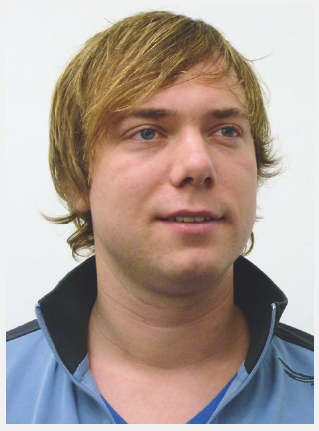
Boromir Fischer completed a training as State Certified Technical Assistant for Metallography and Physical Material Analysis at Lette-Verein in Berlin. He has worked in the metallographic laboratory of the Siemens Gas Turbine Plant (Siemens-Gasturbinenwerk) Berlin for more than a decade. The key areas of his work are failure analysis and microstructural examinations using the field emission scanning electron microscope.
References / Literatur
[1] Materials Testing Report 344 / 20. September 9, 2020, Werkstoffprüfung Beyer & Meseke, Eberswalde, Germany.Suche in Google Scholar
[2] Neidel, A., Fischer, B.: Internal Report BLN MT/2020/0586, Berlin, October 9, 2020.Suche in Google Scholar
[3] ISO FeNi32Cr21AlTi-HC.Suche in Google Scholar
[4] Neidel, A.; Cagliyan, E.; Fischer, B.; Giller, M.; Riesenbeck, S.: Intergranular Corrosion in Unserviced Austenitic Stainless Steel Pipes Made of Alloy 904L. Pract. Metallogr. 54 (2017) 8, pp. 552–561. DOI:10.3139/147.11028610.3139/147.110286Suche in Google Scholar
[5] Petráš, R.; Polák, J.: Damage mechanism in austenitic steel during high temperature cyclic loading with dwells. International Journal of Fatigue, Volume 113, August 2018, Pages 335344. DOI:10.1016/j.ijfatigue.2018.02.01710.1016/j.ijfatigue.2018.02.017Suche in Google Scholar
[6] ASM Handbook, Vol. 11: Failure Analysis and Prevention, Sixth printing, American Society for Metals, Handbook Committee, 1998.Suche in Google Scholar
[7] VDI-Richtlinie VDI 3822.Suche in Google Scholar
[8] Neidel, A. (Hrsg.): Handbuch Metallschäden. 2. Auflage, Carl Hanser Verlag München Wien 2012.Suche in Google Scholar
© 2023 Walter de Gruyter GmbH, Berlin/Boston, Germany
Artikel in diesem Heft
- Frontmatter
- Editorial
- Editorial
- Investigation of Friction Welding Properties of Steels with Different Chemical and Mechanical Properties Used in the Oil and Gas Industry
- Microstructure and Pitting Corrosion Characteristics of Tig Welded Joints of Super 304HCu Austenitic Stainless Steel
- Failure Analysis
- SAGBO on Inner and Outer Surface of Large Alloy 800H Pipe
- Picture of the Month
- Picture of the Month
- News
- News
- Meeting Diary
- Meeting Diary
Artikel in diesem Heft
- Frontmatter
- Editorial
- Editorial
- Investigation of Friction Welding Properties of Steels with Different Chemical and Mechanical Properties Used in the Oil and Gas Industry
- Microstructure and Pitting Corrosion Characteristics of Tig Welded Joints of Super 304HCu Austenitic Stainless Steel
- Failure Analysis
- SAGBO on Inner and Outer Surface of Large Alloy 800H Pipe
- Picture of the Month
- Picture of the Month
- News
- News
- Meeting Diary
- Meeting Diary
