
Impact of tool rotational speed on the microstructural transitions and tensile properties of the dissimilar AZ80A-Mg – AA6061-Al joints fabricated by friction stir welding
-
P. J. Lokesh Kumar
is currently pursuing his Ph.D. Degree in Mechanical Engineering, Anna University, India. He completed his M.Tech in CAD/CAM in 2014. He has a total of 8.5 years of teaching experience. He is currently serving as Assistant Professor, Mechanical Engineering Department, R.M.K. Engineering College, India.
obtained his PhD in Mechanical Engineering in 2016 and M.Tech Degree in Industrial Engineering in 2005. He has 17 years of experience. He is working as a Professor, in Mechanical Engineering Department in S.A. Engineering College. He has published 40 research papers in various SCI and Scopus indexed journals.

Abstract
Distinct AZ80A-Mg alloy with AA6061-Al alloy plates were joined using friction stir welding and investigation regarding the weld features of the fabricated joints, related to microstructural attributes and mechanical properties was carried out by employing distinctive tool rotational speeds (1600, 1400, 1200, 1000 and 800 rpm). Tool possessing cylindrical pin with tapered profile was employed at constant traverse speed of 30 mm/min and was inserted towards AA6061 alloy plate at 0.5 mm offset distance. Experimental observations revealed that employment of tool rotational speed of 1200 rpm have generated ideal amounts of frictional heat, which have softened the ingredients of both the parent metals and have contributed for the transition of the grains into dynamically recrystallized, finely refined structures being distributed evenly in nugget zone. Moreover, this joint exhibited a tensile strength of 224 MPa (nearly 77.78 % of the tensile strength of AZ80A and 72.26 % of AA6061 alloy). Presence of river like patterns, rifts, tear crinkles at the middle portions of fractured surfaces, announced the brittle category of fracture of the flaw free joint and exhibited fracture at the horizon of the thermomechanically influenced zone and the nugget zone on retreatment side, where the warped structures have fused together.
Kurzfassung
Platten aus einer AZ80A-Mg- und einer AA6061-Al-Legierung wurden mittels Rührreibschweißen (Friction Stir Welding, FSW) gefügt. Die bei unterschiedlichen Werkzeugdrehzahlen (1600, 1400, 1200, 1000 und 800 1/min) erzielten Gefügemerkmale und mechanischen Eigenschaften der Verbindungen wurden untersucht. Das Werkzeug mit einem zylindrischen Stift mit konischem Profil wurde mit einer konstanten Verfahrgeschwindigkeit von 30 mm/min eingesetzt und mit einem Versatz von 0,5 mm in die Platte aus der Legierung AA6061 eingeführt. Bei den bei 1200 1/min hergestellten Verbindungen entwickelte sich eine optimale Menge an Reibungswärme, bei der die Bestandteile beider Grundwerkstoffe erweicht wurden und die zur Umwandlung der Körner zu dynamisch rekristallisierten, einachsigen Strukturen beigetragen hat, die gleichmäßig über den gesamten Bereich der Schweißlinse verteilt sind. Die Verbindung hatte eine Zugfestigkeit von 224 MPa, nahezu 77,78 % der Zugfestigkeit von AZ80A- und 72,26 % der Zugfestigkeit der AA6061-Legierung. Das Vorhandensein flussartiger Muster, Spaltungen und Rissverwerfungen in den mittleren Bereichen der Bruchflächen weisen auf ein sprödes Bruchverhalten der fehlerfreien Verbindung hin und wies einen Bruch am Horizont der thermomechanisch beeinflussten Zone und der Nuggetzone auf der Rückzugsseite auf, wo die verzogenen Strukturen miteinander verschmolzen sind.
About the authors
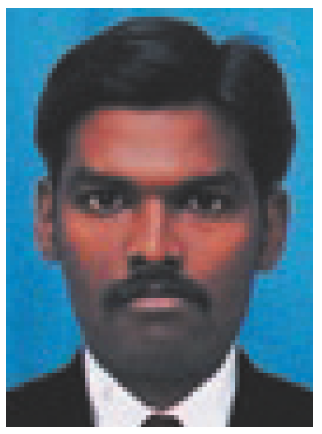
is currently pursuing his Ph.D. Degree in Mechanical Engineering, Anna University, India. He completed his M.Tech in CAD/CAM in 2014. He has a total of 8.5 years of teaching experience. He is currently serving as Assistant Professor, Mechanical Engineering Department, R.M.K. Engineering College, India.
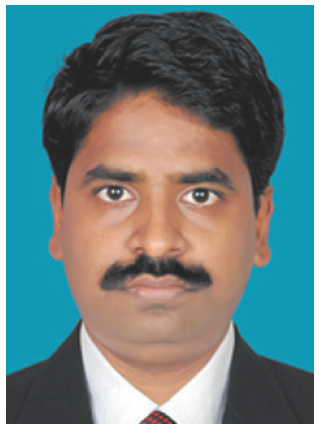
obtained his PhD in Mechanical Engineering in 2016 and M.Tech Degree in Industrial Engineering in 2005. He has 17 years of experience. He is working as a Professor, in Mechanical Engineering Department in S.A. Engineering College. He has published 40 research papers in various SCI and Scopus indexed journals.
References / Literatur
[1] Caiazzo, F.; Alfieri, V.; Sergi, V.; Schipani, A.; Cinque, S.: Dissimilar autogenous disk-laser welding of Haynes 188 and Inconel 718 superalloys for aerospace applications. J. Adv. Manuf. Technol. 68 (2013), pp. 1809–1820. DOI:10.1007/s00170-013-4979-910.1007/s00170-013-4979-9Search in Google Scholar
[2] Chinnadurai, T.; Arungalai Vendan, S.: Thermal and structural analysis of ultrasonic-welded PC/ABS blend for automobile applications. J. Therm. Anal. Calorim. 127 (2017), pp. 1995–2003. DOI:10.1007/s10973-016-5748-410.1007/s10973-016-5748-4Search in Google Scholar
[3] Subramani, P.; Manikandan, M.: Development of gas tungsten arc welding using current pulsing technique to preclude chromium carbide precipitation in aerospace-grade alloy 80A. Int. J. Miner. Metall. Mater. 26 (2019), pp. 210–221. DOI:10.1007/s12613-019-1726-810.1007/s12613-019-1726-8Search in Google Scholar
[4] Kwee, I.; De Waele, W.; Faes, K.: Weldability of high-strength aluminium alloy ENAW-7475-T761 sheets for aerospace applications, using refill friction stir spot welding. Weld World. 63 (2019), pp. 1001–1011. DOI:10.1007/s40194-019-00732-110.1007/s40194-019-00732-1Search in Google Scholar
[5] Kurzynowski, T.; Pawlak, A.; Smolina, I. :The potential of SLM technology for processing magnesium alloys in aerospace industry. Arch. Civ. Mech. Eng. A. 20 (2020), p. 23. DOI:10.1007/s43452-020-00033-110.1007/s43452-020-00033-1Search in Google Scholar
[6] Srinivasan, D.; Ananth, K.: Recent Advances in Alloy Development for Metal Additive Manufacturing in Gas Turbine/Aerospace Applications: A Review. J Indian Inst Sci. 102 (2022), pp. 311–349. DOI:10.1007/s41745-022-00290-410.1007/s41745-022-00290-4Search in Google Scholar
[7] Salvinder, S.; Shahrum, A.; Mohamed, N. A. N.: Discretized Markov chain in damage assessment using Rainflow cycle with effects of mean stress on an automobile crankshaft. J. Mech. Sci. Technol. 30 (2016), pp. 3539–3551. DOI:10.1007/s12206-016-0714-410.1007/s12206-016-0714-4Search in Google Scholar
[8] Rodionova, I. G.; Amezhnov, A. V.; D’yakonov, D. L.; Shaposhnikov, N. G.; Baklanova, O. N.; Gladchenkov, Y. S.: Study of the Effect of Microstructure Characteristics on Corrosion Resistance of Cold-Rolled Micro-Alloyed Sheet Steels (Hsla) of Strength Classes 340–420 for Automobile Building. Metallurgist. 63 (2020), pp. 1165–1177. DOI:10.1007/s11015-020-00939-410.1007/s11015-020-00939-4Search in Google Scholar
[9] Kasprzak, W.; Czerwinski, F.; Niewczas, M.; Chen, D. L.: Correlating hardness retention and phase transformations of Al and Mg cast alloys for aerospace applications. J. Mater. Eng. Perform. 24 (2015), pp. 1365–1378. DOI:10.1007/s11837-012-0340-210.1007/s11837-012-0340-2Search in Google Scholar
[10] Yuan, L. Y.; Han, P. W.; Asghar, G.; Liu, B. L.; Li, J. P.; Hu, B.; Fu, P. H.; Peng, L. M.: Development of High Strength and Toughness Non-Heated Al-Mg-Si Alloys for High-Pressure Die-Casting. Acta Metall Sin-Engl. 34 (2021), pp. 845–860. DOI:10.1007/s40195-020-01174-110.1007/s40195-020-01174-1Search in Google Scholar
[11] Liu, Z.; Xiong, B.; Li, X.; Yan, L.; Li, Z.; Zhang, Y.; Liu, H.: Effect of Friction Coefficient on Deep Drawing of 6A16 Aluminum Alloy for Automobile Body. J. Wuhan Univ. Technol. Mater. Sci. Ed. 35 (2020), pp. 208–214. DOI:10.1007/s11595-020-2245-110.1007/s11595-020-2245-1Search in Google Scholar
[12] Oladimeji, O. O.; Taban, E.: Trend and innovations in laser beam welding of wrought aluminum alloys. Weld World. 60 (2016), pp. 415–457. DOI:10.1007/s40194-016-0317-910.1007/s40194-016-0317-9Search in Google Scholar
[13] Dev, S.; Ramkumar, K. D.; Arivazhagan, N.; Rajendran, R.: Effect of Continuous and Pulsed Current GTA Welding on the Performance of Dissimilar Welds Involving Aerospace Grade Alloys. Trans. Indian Inst. Met. 70 (2017), pp. 729–739. DOI:10.1007/s12666-017-1085-y10.1007/s12666-017-1085-ySearch in Google Scholar
[14] Jiang, X.; Chen, S.: Texture evolution and plastic deformation mechanism in magnetic pulse welding of dissimilar Al and Mg alloys. Weld World. 62 (2018), pp. 1159–1171. DOI:10.1007/s40194-018-0607-510.1007/s40194-018-0607-5Search in Google Scholar
[15] Shin, H. S.; de Leon, M.: Analysis of interface solid-state reaction on dissimilar ultrasonic spot welding of Al-Mg alloys. Met. Mater. Int. 23 (2017), pp. 554–561. DOI:10.1007/s12540-017-6409-210.1007/s12540-017-6409-2Search in Google Scholar
[16] Islam, M. R.; Ishak, M.; Shah, L. H.; Idris, S. R. A.; Meric, C.: Dissimilar welding of A7075-T651 and AZ31B alloys by gas metal arc plug welding method. Int. J. Adv. Manuf. Technol. 88 (2017), pp. 2773–2783. DOI:10.1007/s00170-016-8993-610.1007/s00170-016-8993-6Search in Google Scholar
[17] Ghosh, M.; Gupta, R. K.; Husain, M. M.: Friction Stir Welding of Stainless Steel to Al Alloy: Effect of Thermal Condition on Weld Nugget Microstructure. Metall. Mater. Trans. A. 45 (2014), pp. 854–863. DOI:10.1007/s11661-013-2036-910.1007/s11661-013-2036-9Search in Google Scholar
[18] Lu, Y.; Xu, X.; Zhang, B.; Luo, F.; Qiang, W.; Wang, S.; Cao, J.; Li, W.: Microstructural analysis and mechanical behavior of TC4 titanium alloy and 304 stainless steel by friction stir lap welding. Weld World. 65 (2021), pp. 1915–1930. DOI:10.1007/s40194-021-01133-z10.1007/s40194-021-01133-zSearch in Google Scholar
[19] Giridharan, K.; Sevvel, P.; Stalin, B.; Ravichandran, M.; Sureshkumar, P.: Microstructural Analysis and Mechanical Behaviour of Copper CDA 101/AISI-SAE 1010 Dissimilar Metal Welds Processed by Friction Stir Welding. Mater Res-Ibero-Am J. 25 (2022), p. e20210430. DOI:10.1590/1980-5373-MR-2021-043010.1590/1980-5373-MR-2021-0430Search in Google Scholar
[20] Meng, X.; Hunag, Y.; Cao, J.; Shen, J.; Jorge F. dos Santos.: Recent progress on control strategies for inherent issues in friction stir welding. Prog. Mater. Sci. 115 (2021), p. 100706. DOI: 10.1016/j.pmatsci.2020.10070610.1016/j.pmatsci.2020.100706Search in Google Scholar
[21] Dhanesh Babu, S. D.; Sevvel, P.; Senthil Kumar, R.: Simulation of heat transfer and analysis of impact of tool pin geometry and tool speed during friction stir welding ofAZ80A Mg alloy plates. J. Mech. Sci. Technol. 34 (2020), pp. 4239– 4250. DOI:10.1007/s12206-020-0916-710.1007/s12206-020-0916-7Search in Google Scholar
[22] Kwon, Y. J.; Shigematsu, I.; Saito, N.: Dissimilar friction stir welding between magnesium and aluminum alloys. Mater. Lett. 62 (2008) 23, pp. 3827–3829. DOI:10.1016/j.matlet.2008.04.08010.1016/j.matlet.2008.04.080Search in Google Scholar
[23] Zhao, Y.; Jiang, S.; Yang, S.; Lu, Z.; Yan, K.: Influence of cooling conditions on joint properties and microstructures of aluminum and magnesium dissimilar alloys by friction stir welding. Int. J. Adv. Manuf. Technol. 83 (2016), pp. 673–679. DOI:10.1007/s00170-015-7624-y10.1007/s00170-015-7624-ySearch in Google Scholar
[24] Jayaraj, R. K.; Malarvizhi, S.; Balasubramanian, V.: Electrochemical corrosion behaviour of stir zone of friction stir welded dissimilar joints of AA6061 aluminium–AZ31B magnesium alloys. Trans. Nonferrous Met. Soc., 27 (2017) 10, pp. 2181–2192. DOI:10.1016/S1003-6326(17)60244-910.1016/S1003-6326(17)60244-9Search in Google Scholar
[25] McLean, A. A.; Powell, G. L. F.; Brown, I. H.; Linton, V. M.: Friction stir welding of magnesium alloy AZ31B to aluminium alloy 5083. Sci. Technol. Weld. Join. 8 (2013) 6, pp. 462–464. DOI:10.1179/13621710322500913410.1179/136217103225009134Search in Google Scholar
[26] Malarvizhi, S.; Balasubramanian, V.: Mater. Des. 40 (2012), pp. 453–460. DOI: 10.1016/j.matdes.2012.04.00810.1016/j.matdes.2012.04.008Search in Google Scholar
[27] Xie, Y., Meng, X., Wang, F., Jiang, Y., Ma, X., Wan, L., Huang, Y.: Corros. Sci. 192 (2021), p. 109800. DOI: 10.1016/j.corsci.2021.10980010.1016/j.corsci.2021.109800Search in Google Scholar
[28] Rafiei, R.; Shamanian, M.; Fathi, M.; Khodabakhshi, F.: Int. J. Adv. Manuf. Technol. 94 (2018), pp. 3713–3730. DOI: 10.1007/s00170-017-0964-z10.1007/s00170-017-0964-zSearch in Google Scholar
[29] Theodoro, M. C.; Pereira, V. F.; Mei, P. R.; Ramirez, A. J.: Metall. Mater. Trans. B. 46 (2015), pp. 1440–1447. DOI: 10.1007/s11663-015-0302-510.1007/s11663-015-0302-5Search in Google Scholar
[30] Bin Matlan, M. J.; Mohebbi, H.; Pedapati, S. R.; Awang, M. B.; Ismail, M. C.; Kakooei, S.; Dan, N. E.: Trans. Indian Inst. Met. 71 (2018), pp. 2553–2564. 10.1007/s12666-018-1385-x10.1007/s12666-018-1385-xSearch in Google Scholar
[31] Ahl Sarmadi, M.; Shamanian, M.; Edris, H.; Behjat, A.; Mohtadi-Bonab, M. A.; Szpunar, J.: Metallogr. Microstruct. Anal. 10 (2021), pp. 383–391. DOI: 10.1007/s13632-021-00754-610.1007/s13632-021-00754-6Search in Google Scholar
[32] Li, C.; Zhang, D.; Gao, X.; Gao, H.; Han, X.: J. Adhes. Sci. Technol. 35 (2021) 20, pp. 2230–2248. DOI: 10.1080/01694243.2021.188277810.1080/01694243.2021.1882778Search in Google Scholar
[33] Xie, Y.; Meng, X.; Li, Y.; Mao, D.; Wan, L.; Huang, Y.: Compos. Commun. 26 (2021), p. 100776. DOI: 10.1016/j.coco.2021.10077610.1016/j.coco.2021.100776Search in Google Scholar
[34] Xie., Y.; Meng, X.;, Chang, Y.; Mao, D.; Yang, Y.; Xu, Y.; Wna, L.; Hunag, Y.: Compos. Sci. Technol. 219 (2022), p. 109225. DOI: 10.1016/j.compscitech.2021.10922510.1016/j.compscitech.2021.109225Search in Google Scholar
[35] Khodadadi, A.; Shamanian, M.; Karimzadeh, F.: J. Mater. Eng. Perform. 26 (2017), pp. 2847–2858. DOI: 10.1007/s11665-017-2703-x10.1007/s11665-017-2703-xSearch in Google Scholar
[36] Yazdipour, A.; Heidarzadeh, A.: Int. J. Adv. Manuf. Technol. 87 (2016), pp. 3105–3112. DOI: 10.1007/s00170-016-8705-210.1007/s00170-016-8705-2Search in Google Scholar
[37] Khalilabad, M. M.; Zedan, Y.; Texier, D.; Jahazi, M.; Bocher, P.: J. Adhes. Sci. Technol. 36 (2022) 3, pp. 221–239. DOI: 10.1080/01694243.2021.191786810.1080/01694243.2021.1917868Search in Google Scholar
[38] Lakshminarayanan, A. K.; Balasubramanian, V.: Exp. Tech. 37 (2013), pp. 59–73. DOI: 10.1111/j.1747-1567.2011.00802.x10.1111/j.1747-1567.2011.00802.xSearch in Google Scholar
[39] Charandabi, F. K.; Jafarian, H. R.; Mahdavi, S.; Javaheri, V.; Heidarzadeh, A.: J. Adhes. Sci. Technol. 35 (2021) 23, pp. 2696–2709. DOI: 10.1080/01694243.2021.189885810.1080/01694243.2021.1898858Search in Google Scholar
[40] Rahimi, S.; Konkova, T. N.; Violatos, I.; Baker, T. N.: Metall. Mater. Trans. A. 50 (2019), pp. 664–687. DOI: 10.1007/s11661-018-5023-310.1007/s11661-018-5023-3Search in Google Scholar
[41] Emami, S.; Sadeghi-Kanani, S.; Saeid, T.; Khan, F.: Arch. Civ. Mech. Eng. A. 20 (2020), p. 131. DOI: 10.1007/s43452-020-00138-710.1007/s43452-020-00138-7Search in Google Scholar
[42] De, A.; Bhadeshia, H. K. D. H.; DebRoy, T.: Mater. Sci. Technol. 30 (2014) 9, pp. 1050–1056. DOI: 10.1179/1743284714Y.000000053410.1179/1743284714Y.0000000534Search in Google Scholar
[43] Mallieswaran, K.; Padmanabhan, R.; Balasubramanian, V.: Adv. Mater. Process. Technol. 4 (2018) 1, pp. 142–157. DOI: 10.1080/2374068X.2017.141069010.1080/2374068X.2017.1410690Search in Google Scholar
© 2023 Walter de Gruyter GmbH, Berlin/Boston, Germany
Articles in the same Issue
- Content
- Editorial
- Editorial
- Garment buttons from a Hallstatt period tumulus
- Impact of tool rotational speed on the microstructural transitions and tensile properties of the dissimilar AZ80A-Mg – AA6061-Al joints fabricated by friction stir welding
- Failure Analysis
- Liquation Cracking in Row 3 Twin Turbine Vane Segment Caused by Malfunctioning Plasma Coating Gun
- Picture of the Month
- Picture of the Month
- Kommentar
- For THEY do not know what THEY are doing
- News
- Neuer BAM Report 2022/23: Transformation gemeinsam gestalten
- Meeting Dairy
- Meeting Diary
Articles in the same Issue
- Content
- Editorial
- Editorial
- Garment buttons from a Hallstatt period tumulus
- Impact of tool rotational speed on the microstructural transitions and tensile properties of the dissimilar AZ80A-Mg – AA6061-Al joints fabricated by friction stir welding
- Failure Analysis
- Liquation Cracking in Row 3 Twin Turbine Vane Segment Caused by Malfunctioning Plasma Coating Gun
- Picture of the Month
- Picture of the Month
- Kommentar
- For THEY do not know what THEY are doing
- News
- Neuer BAM Report 2022/23: Transformation gemeinsam gestalten
- Meeting Dairy
- Meeting Diary
