
New possibilities for macroscopic imaging in test laboratories – Modern light field objective lenses serving as the basis for large-scale 3D topography reconstruction and quantification
-
M. Kasper
did a vocational training as a materials tester specializing in metal technology. He then completed technical school to become a statecertified materials technician. He has been metallographer of the Chair of Functional Materials at the UdS since 2020. As an SBB scholarship holder, Michael Kasper is studying materials science and materials engineering part-time at the UdS
studied Material Science at Saarland University. After getting his master’s degree, he worked 3.5 years at Brück GmbH as a Materials and Welding Engineer. Since 2018, doctoral student at the Chair of Functional Materials. Research in microstructure characterization, segmentation and classification using machine learning techniques.

Abstract
Representative macroscopic images of a sample are an integral part of many material testing methods. Usually, a digital camera attached to a macro stand is used. Recurring problems include reflections from the surface of the sample or the fact that regular 2D representations of fracture surfaces, for example, do not always permit a correct interpretation at a later point. In this study, a novel objective lens from K|Lens GmbH, capable of recording the depth information of the surface with a digital camera in a single shot and enabling three-dimensional reconstruction will be used to evaluate potential applications. Furthermore, application limits in macroscopic imaging and the analysis of typical metallographic samples, with the focus being on three-dimensional imaging and quantification, will be studied.
Kurzfassung
Repräsentative makroskopische Aufnahmen einer Probe sind fester Bestandteil vieler werkstofftechnischer Untersuchungen. In der Regel kommt dafür ein Makrostand mit einer Digitalkamera zum Einsatz. Regelmäßig auftretende Probleme dabei sind Reflexionen auf der Probe oder dass eine reguläre Abbildung in 2D-Formaten eine spätere zweifelsfreie Interpretation, bspw. von Bruchflächen, nicht immer zulässt. In dieser Arbeit wird ein neues Kameraobjektiv der K|Lens GmbH, mit dem mittels Digitalkamera mit nur einer Aufnahme Tiefeninformationen der Oberfläche erfasst und dreidimensional rekonstruiert werden können, eingesetzt, um Anwendungspotenziale sowie Anwendungsgrenzen bei der Makroaufnahme und Auswertung typischer metallographischer Proben zu evaluieren, mit einem Fokus auf eine dreidimensionale Abbildung und Quantifizierung.
About the authors

did a vocational training as a materials tester specializing in metal technology. He then completed technical school to become a statecertified materials technician. He has been metallographer of the Chair of Functional Materials at the UdS since 2020. As an SBB scholarship holder, Michael Kasper is studying materials science and materials engineering part-time at the UdS
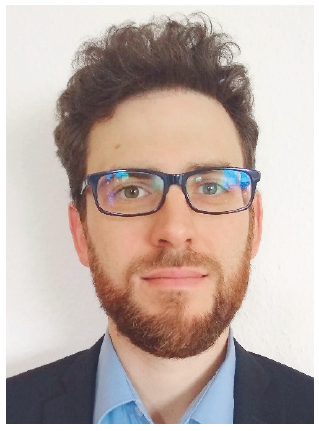
studied Material Science at Saarland University. After getting his master’s degree, he worked 3.5 years at Brück GmbH as a Materials and Welding Engineer. Since 2018, doctoral student at the Chair of Functional Materials. Research in microstructure characterization, segmentation and classification using machine learning techniques.
Acknowledgements
The authors would like to thank Aktien-Gesellschaft der Dillinger Hüttenwerke (Dillinger) for providing the sample material and the Institute of Production Engineering at Saarland University for using the Keyence VHX-7000 digital microscope.
Danksagung
Die Autoren bedanken sich bei der Aktien-Gesellschaft der Dillinger Hüttenwerke für das Bereitstellen des Probenmaterials und beim Lehrstuhl für Fertigungstechnik der Universität des Saarlandes für die Nutzung des Keyence VHX-7000 Digitalmikroskops.
-
Supplemental
For an optimal assessment of the K|Lens 3D reconstructions, the point clouds (Figure 7a, Figure 9a) can be downloaded as .txt files and accessed using the free open-source viewing software Cloudcompare [6].
-
Zusatzmaterial
Zur optimalen Beurteilung der K|Lens 3D Rekonstruktionen können die Punktewolken (Abbildung 7a, Abbildung 9a) als .txt heruntergeladen werden. Als Betrachtungsprogramm kann das kostenlose open-source Programm cloudcompare verwendet werden [6].
References / Literatur
[1] Wlodek, J.; Gofron, K. J.; Cai, Y. Q.: Achieving 3D imaging through focus stacking, AIP Conf. Proc. 2054 (2019). DOI: 10.1063/1.5084619.10.1063/1.5084619Suche in Google Scholar
[2] Paddock, S. W.: Confocal laser scanning microscopy, Biotechniques. 27 (1999), pp. 992–1004. DOI: 10.2144/99275ov01.10.2144/99275ov01Suche in Google Scholar PubMed
[3] Faugeras, O.; Keriven, R.: Variational principles, surface evolution, PDE’s, level set methods and the stereo problem, Biomed. Imaging V– Proc. 5th IEEE EMBS Int. Summer Sch. Biomed. Imaging, SSBI 2002. 83 (2002). DOI: 10.1109/SSBI.2002.1233990.10.1109/SSBI.2002.1233990Suche in Google Scholar
[4] Tran, V. L; Lin, H. Y.: A structured light RGB-D camera system for accurate depth measurement, Int. J. Opt. 2018 (2018). DOI: 10.1155/2018/8659847.10.1155/2018/8659847Suche in Google Scholar
[5] Horn, B.; Brooks, M.: Shape from shading, MIT Press, 1989.Suche in Google Scholar
[6] CloudCompare – home, (n.d.). https://www.cloudcompare.org/main.html (accessed June 15, 2022).Suche in Google Scholar
[7] Tata, B. V. R.; Raj, B.: Confocal laser scanning microscopy: Applications in material science and technology, Bull. Mater. Sci. 21 (1998), pp. 263–278. DOI: 10.1007/BF02744951.10.1007/BF02744951Suche in Google Scholar
[8] Seeland, M.; Mäder, P.: Multi-view classification with convolutional neural networks, PLoS One. 16 (2021), pp. 1–17. DOI: 10.1371/journal.pone.0245230.10.1371/journal.pone.0245230Suche in Google Scholar PubMed PubMed Central
[9] Zhou, S.; Chen, Y.; Zhang, D.; Xie, J.; Zhou, Y.: Classification of surface defects on steel sheet using convolutional neural networks, Mater. Tehnol. 51 (2017), pp. 123–131. DOI: 10.17222/mit.2015.335.10.17222/mit.2015.335Suche in Google Scholar
© 2022 Walter de Gruyter GmbH, Berlin/Boston, Germany
Artikel in diesem Heft
- Contents
- Editorial
- Dear readers
- Microstructural analysis as a requirement for sinter-based additive manufacturing of highly conductive copper
- A heavenly sword – forging a Campo del Cielo meteorite
- Automated color etching of aluminum alloys
- Cryo ion polishing and high-resolution electron microscopy on a layered PEM composite of an automotive fuel cell
- Comparison of preparation techniques used for the identification of microstructural constituents in the microcrystalline structure of the eutectoid cold-work steel 80CrV2 (1.2235) after austempering
- New possibilities for macroscopic imaging in test laboratories – Modern light field objective lenses serving as the basis for large-scale 3D topography reconstruction and quantification
- Characterization of laser-welded structures in glass using acoustic microscopy
- “Metallography to go”: Mobile metallographic examinations directly on components
- Metallographic characterization of a gold-steel composite
- Failure Analysis
- Failure analysis of stainless and heat resisting steels, documented on selected examples
- Picture of the Month
- Picture of the Month
- People
- People
- News
- News
- Meeting Diary
- Meeting diary
Artikel in diesem Heft
- Contents
- Editorial
- Dear readers
- Microstructural analysis as a requirement for sinter-based additive manufacturing of highly conductive copper
- A heavenly sword – forging a Campo del Cielo meteorite
- Automated color etching of aluminum alloys
- Cryo ion polishing and high-resolution electron microscopy on a layered PEM composite of an automotive fuel cell
- Comparison of preparation techniques used for the identification of microstructural constituents in the microcrystalline structure of the eutectoid cold-work steel 80CrV2 (1.2235) after austempering
- New possibilities for macroscopic imaging in test laboratories – Modern light field objective lenses serving as the basis for large-scale 3D topography reconstruction and quantification
- Characterization of laser-welded structures in glass using acoustic microscopy
- “Metallography to go”: Mobile metallographic examinations directly on components
- Metallographic characterization of a gold-steel composite
- Failure Analysis
- Failure analysis of stainless and heat resisting steels, documented on selected examples
- Picture of the Month
- Picture of the Month
- People
- People
- News
- News
- Meeting Diary
- Meeting diary
