
An Experimental Investigation of Martensitic Stainless Steel in Aircraft and Aerospace Industry for Thermal Wear Performance and Corrosion Potential
-
Sencer Sureyya Karabeyoglu
He is an assistant professor in mechanical engineering department at Kirklareli University. His research areas are wear mechanization of alloys and materials characterization.
He is a research assistant in mechanical engineering department at Kirklareli University and a PhD student in the field of materials science and manufacturing technologies.

Abstract
Martensitic stainless steels are commonly prefered in industries requiring high mechanical strength, corrosion resistance, and hardness. The dry sliding wear behavior of 15-5 precipitation-hardenable (PH) martensitic stainless steel was investigated in a heat chamber with ball-on-disc tribometer under room temperature (RT), 100 °C, 200 °C, and 300 °C. The wear tracks were characterized using SEM, EDS, WCM and XRD. The results showed that wear resistance improved proportionally with increasing temperature and increased surface hardness enabled coefficient of friction to decrease. Corrosion rate decreased with increasing temperature owing to natural passivation film on stainless steel specimens. In comparison with RT and 300 °C tests, hardness increased from 341 HV0.1 to 401 HV0.1 and wear rate lowered by 94 %. It was shown that application and operation of 15-5 PH stainless steels is eligible in aircraft and aerospace industry.
Kurzfassung
Rostfreie martensitische Stähle kommen bevorzugt in Branchen zum Einsatz, in denen eine hohe mechanische Festigkeit, Korrosionsbeständigkeit und Härte gefordert werden. Das Verhalten von rostfreiem ausscheidungshärtbarem martensitischem Stahl 15-5 PH bei trockenem Gleitverschleiß wurde in einer Wärmekammer mit Kugel/Scheibe-Tribometer bei Raumtemperatur (RT) sowie bei 100 °C, 200 °C und 300 °C untersucht. Die Verschleißspuren wurden mittels REM, EDX, Weitwinkel-Konfokalmikroskop (WKM) und XRD charakterisiert. Die Ergebnisse zeigten, dass sich die Verschleißfestigkeit proportional mit steigender Temperatur verbessert und eine erhöhte Oberflächenhärte zu einer Abnahme des Reibungskoeffizienten (RK) führt. Aufgrund einer natürlichen Passivierungsschicht auf Proben aus rostfreiem Stahl nahm die Korrosionsrate mit steigender Temperatur ab. In einem Vergleich der bei RT und 300 °C geprüften Proben stieg der Härtewert von 341 HV0,1 bei RT bis auf 401 HV0,1 bei 300 °C. Die Verschleißrate wurde um 94 % gesenkt. Es konnte gezeigt werden, dass sich rostfreie 15-5 PH-Stähle für einen Einsatz in der Luft- und Raumfahrtbranche eignen.
About the authors
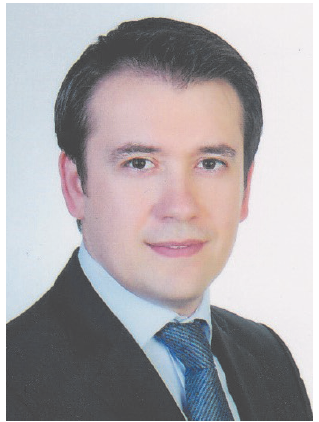
He is an assistant professor in mechanical engineering department at Kirklareli University. His research areas are wear mechanization of alloys and materials characterization.
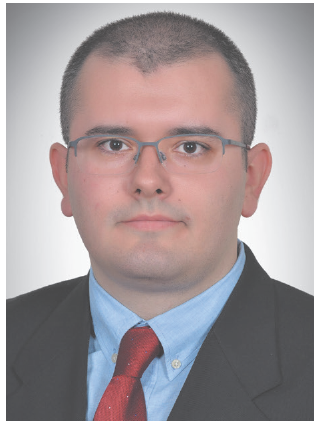
He is a research assistant in mechanical engineering department at Kirklareli University and a PhD student in the field of materials science and manufacturing technologies.
References / Literatur
[1] Braceras, I.; Ibanez, I.; Dominguez-Meister, S.; Urgebain, A.; Sanchez-Garcia, J. A.; Larranaga, A.; Garmendia, I.: Surf Coat Tech 355 (2018) January, pp. 174–180. DOI: 10.1016/j.surfcoat.2018.01.036.10.1016/j.surfcoat.2018.01.036Search in Google Scholar
[2] Khanna, N.; Shah, P; Chetan, H.: Trib. Int 146 (2020) January. DOI: 10.1016/j.triboint.2020.106196.10.1016/j.triboint.2020.106196Search in Google Scholar
[3] Peng, X.; Zhou, X.; Hua, X.; Wei, Z.; Liu, H.: J. Iron Steel Res. Int 22 (2015) 7, pp. 607–614. DOI: 10.1016/S1006-706X(15)30047-910.1016/S1006-706X(15)30047-9Search in Google Scholar
[4] Sarkar, S.; Mukherjee, S.; Kumar, C. S.; Nath, A. K.: J. Manuf. Process. 50 (2020) February, pp. 279–294. DOI: 10.1016/j.jmapro.2019.12.04810.1016/j.jmapro.2019.12.048Search in Google Scholar
[5] Aghaie-Khafri, M.; Adhami, F.: Mater. Sci. Eng. A 527 (2010) 4–5, pp. 1052–1057 DOI: 10.1016/j.msea.2009.09.03210.1016/j.msea.2009.09.032Search in Google Scholar
[6] Cohen, A.; Rosen, A.: Wear 108 (1986) 2, pp. 157–168 DOI: 10.1016/0043-1648(86)90094-310.1016/0043-1648(86)90094-3Search in Google Scholar
[7] Kumar, A.; Balaji, Y.; Prasad, N. E.; Gouda, G; Tamilmani, K.: Sadhana-Acad P Eng S 38 (2013) 1, pp. 3–23. DOI: 10.1007/s12046-013-0122-810.1007/s12046-013-0122-8Search in Google Scholar
[8] Palanisamy, D.; Senthil, P.: Arch. Mech. Eng.63 (2016) 3, pp. 397–412. DOI: 10.1515/meceng-2016-002310.1515/meceng-2016-0023Search in Google Scholar
[9] Zhou, T.; Babu, R. P.; Odqvist, J.; Yu, H.; Hedstrom, P.: Mater. Des. 143 (2018), pp. 141–149. DOI: 10.1016/j.matdes.2018.01.04910.1016/j.matdes.2018.01.049Search in Google Scholar
[10] Lo, K. H.; Shek, C. H.; Lai, J. K. L.: Mater. Sci. Eng. R Rep. 65 (2009) 4–6, pp. 39–104. DOI: 10.1016/j.mser.2009.03.00110.1016/j.mser.2009.03.001Search in Google Scholar
[11] Zhu, G.; Wang, S.; Cheng, W.; Ren, Y.; Wen, D.: Opt Laser Technol 132 (2020) December. DOI: 10.1016/j.optlastec.2020.10647510.1016/j.optlastec.2020.106475Search in Google Scholar
[12] Wu, W.; Wang, X.; Xie, D.; Zhang, Y.; Liu, J.: Eng Fail Anal. 111 (2020) April. DOI: 10.1016/j.engfailanal.2020.10449710.1016/j.engfailanal.2020.104497Search in Google Scholar
[13] Barroux, A.; Ducommun, N.; Nivet, E.; Laffont, L.; Blanc, C.: Corros. Sci. 169 (2020) June. DOI: 10.1016/j.corsci.2020.10859410.1016/j.corsci.2020.108594Search in Google Scholar
[14] Bonora, R., Cioffi M. O. H.; Voorwald, H. J. C.: J. Phys. Conf. Ser. 843 (2017) 1. DOI: 10.1088/1742-6596/843/1/01202310.1088/1742-6596/843/1/012023Search in Google Scholar
[15] Ramadas, H.; Sarkar, S.; Nath, A. K.: Wear 470–471 (2021) January. DOI: 10.1016/j.wear.2021.20362310.1016/j.wear.2021.203623Search in Google Scholar
[16] Smith, F.; Brownlie, F.; Hodgkiess, T.; Toumpis, A; Pearson, A.; Galloway, A. M.: Wear 462–463 (2020) October. DOI: 10.1016/j.wear.2020.20351510.1016/j.wear.2020.203515Search in Google Scholar
[17] Abad, A.; Hahn, M.; Es-Said, O. S.: Eng Fail Anal. 17 (2010) 1, pp. 208–212. DOI: 10.1016/j.engfailanal.2009.06.00410.1016/j.engfailanal.2009.06.004Search in Google Scholar
[18] Danoix, F.; Lacaze, J.; Gibert, A.; Mangelinck, D.; Hoummada, K.; Andrieu, E.: Ultramicroscopy 132 (2013), pp. 193–198. DOI: 10.1016/j.ultramic.2012.12.00410.1016/j.ultramic.2012.12.004Search in Google Scholar PubMed
[19] ASTM G99-17: Standard Test Method for Wear Testing with a Pin-on-Disk Apparatus (2017), West Conshohocken, PA.Search in Google Scholar
[20] Suzudo, T.; Takamizawa, H.; Nishiyama, Y.; Caro, A.; Toyama, T.; Nagai, Y.: J. Nucl. Mater. 540 (2020) November. DOI: 10.1016/j.jnucmat.2020.1523010.1016/j.jnucmat.2020.15230Search in Google Scholar
[21] Badyka, R.; Monnet, G.; Saillet, S.; Domain, C.; Pareige, C.; J. Nucl. Mater. 514, (2019) February, pp. 266–275. DOI: 10.1016/j.jnucmat.2018.12.00210.1016/j.jnucmat.2018.12.002Search in Google Scholar
© 2022 Walter de Gruyter GmbH, Berlin/Boston, Germany
Articles in the same Issue
- Contents
- Editorial
- Editorial
- Analysis of microstructure evolution during heat treatment of CoSm permanent magnets using high-resolution scanning electron microscopy
- An Experimental Investigation of Martensitic Stainless Steel in Aircraft and Aerospace Industry for Thermal Wear Performance and Corrosion Potential
- Failure analysis
- Non-destructive Metallurgical Failure Investigation of Erroneously Heat Treated Hot Gas Path Component Using Replica Technique
- Picture of the Month
- Picture of the Month
- News
- News
- Meeting diary
- Meeting diary
Articles in the same Issue
- Contents
- Editorial
- Editorial
- Analysis of microstructure evolution during heat treatment of CoSm permanent magnets using high-resolution scanning electron microscopy
- An Experimental Investigation of Martensitic Stainless Steel in Aircraft and Aerospace Industry for Thermal Wear Performance and Corrosion Potential
- Failure analysis
- Non-destructive Metallurgical Failure Investigation of Erroneously Heat Treated Hot Gas Path Component Using Replica Technique
- Picture of the Month
- Picture of the Month
- News
- News
- Meeting diary
- Meeting diary
