
Patience Alone is not Enough – A Guide for the Preparation of Low-Defect Sections from Pure Copper
-
S. M. Lößlein
Sarah Marie Lößlein finished her studies in Materials Science and Engineering at Saarland University in 2020. Since 2015 she has been working at the Chair of Functional Materials focusing on steel characterization and surface functionalization by Direct Laser Interference Patterning. Since November 2020 she is a scientific assistant working on the wetting behavior of metallic surfaces.
 ,
M. Kasper
,
M. Kasper
Michael Kasper completed an apprenticeship as a materials tester specialising in metal technology. Afterwards, he completed technical school to become a state-certified materials technician. He has been the metallographer of the Chair of Functional Materials at Saarland University since 2020. As an SBB scholarship holder, Michael Kasper is studying materials science and engineering at Saarland University part-time.

Abstract
The preparation of metallographic sections from soft metals such as pure copper constitutes a particular challenge: the high degree of ductility promotes the formation of preparation artifacts and complicates the preparation of homogeneous, low-deformation surfaces. A metallographic preparation routine is therefore presented which has proven effective for pure copper and which can also be applied to additionally soft annealed samples. The subsequent removal of fine crystalline deformation layers is discussed and different setups for electropolishing and its optimization are presented.
Kurzfassung
Weiche Metalle, wie Reinkupfer, stellen eine besondere Herausforderung in der metallographischen Schliffpräparation dar: Die hohe Duktilität fördert die Entstehung von Präparationsartefakten und erschwert die Anfertigung deformationsarmer homogener Oberflächen. Vorgestellt wird daher eine metallographische Präparationsroutine, die sich für Reinkupfer bewährt hat und auch auf zusätzlich weichgeglühte Proben übertragbar ist. Die anschließende Entfernung feinkristalliner Deformationsschichten wird diskutiert und verschiedene Aufbauten zur Elektropolitur und deren Optimierung werden vorgestellt.
About the authors
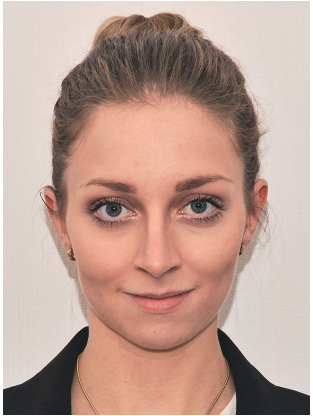
Sarah Marie Lößlein finished her studies in Materials Science and Engineering at Saarland University in 2020. Since 2015 she has been working at the Chair of Functional Materials focusing on steel characterization and surface functionalization by Direct Laser Interference Patterning. Since November 2020 she is a scientific assistant working on the wetting behavior of metallic surfaces.

Michael Kasper completed an apprenticeship as a materials tester specialising in metal technology. Afterwards, he completed technical school to become a state-certified materials technician. He has been the metallographer of the Chair of Functional Materials at Saarland University since 2020. As an SBB scholarship holder, Michael Kasper is studying materials science and engineering at Saarland University part-time.
Acknowledgement
The authors would like to thank for the financial support by the German Research Foundation (Deutsche Forschungsgemeinschaft, DFG) in the project “Einfluss von Oberflächentopograpie and -chemie auf das Benetzungsverhalten lasterstrukturierter, metallischer Oberflächen” (Impact of the surface topography and chemistry on the wetting behavior of laser structured metallic surfaces) (435334669) and for the finiancial support by the European Fund for Regional Development (EFRE) (Greater Region Interreg, project: “Pulsatec”). We would like to thank Mr. Yannik Steimer (OST, Eastern Switzerland University of Applied Sciences) for giving us numerous hints with regard to the preparation and Mr. Tobias Fox for proofreading the manuscript.
Danksagung
Die Autoren bedanken sich für die Förderung durch die Deutsche Forschungsgemeinschaft (DFG) in dem Projekt „Einfluss von Oberflächentopograpie und -chemie auf das Benetzungsverhalten lasterstrukturierter, metallischer Oberflächen“ (435334669) und für die Förderung aus Mitteln des Europäischen Fonds für regionale Entwicklung (EFRE, Interreg Großregion, Projekt: „Pulsatec“). Wir danken Herrn Yannik Steimer (OST – Ostschweizer Fachhochschhule) für die zahlreichen Hinweise zur Präparation und Herrn Tobias Fox für das Korrekturlesen des Manuskripts.
References / Literatur
[1] Cloeren, H.-H.: Materialographische Präparationstechniken: Leitfaden für den Praktiker und Einsteiger; Tipps & Tricks; Vermeidung von Artefakten; von der Probenentnahme bis zum fertigen Schliff; Materialographie, Bauteilmaterialographie, Dünnschlifftechnik, Archäo-Materialographie. CTV Heinz-Hubert Cloeren, 2014.Search in Google Scholar
[2] Maile, K.; Scheck, R.: Metallographie in Qualitätssicherung und Schadensanalyse: Anleitung zum metallographischen Arbeiten – Methodik und Vorgehensweise. Borntraeger, 2019.Search in Google Scholar
[3] Müller, D. W. et al.:, In-Depth Investigation of Copper Surface Chemistry Modification by Ultrashort Pulsed Direct Laser Interference Patterning, Langmuir, Bd. 36, Nr. 45, S. 13415–13425, Nov. 2020. DOI: 10.1021/acs.langmuir.0c0162510.1021/acs.langmuir.0c01625Search in Google Scholar
[4] Petzow, G.: Metallographisches, keramographisches, plastographisches Ätzen. Borntraeger, 2006.Search in Google Scholar
[5] Turley, D. M.; Doyle, E. D.: Factors affecting workpiece deformation during grinding’, Mater. Sci. Eng., Bd. 21, S. 261–271, Jan. 1975. DOI: 10.1016/0025-5416(75)90223-210.1016/0025-5416(75)90223-2Search in Google Scholar
[6] Davis, J. R.; A. S. M. I. H. Committee: Copper and Copper Alloys. ASM International, 2001.Search in Google Scholar
[7] Bolton, W.: Newnes Engineering Materials Pocket Book. Elsevier Science, 2016.Search in Google Scholar
[8] Müller, D. W. et al.: Increasing Antibacterial Efficiency of Cu Surfaces by targeted Surface Functionalization via Ultrashort Pulsed Direct Laser Interference Patterning, Adv. Mater. Interfaces, Bd. 8, Nr. 5, S. 2001656, März 2021, DOI: 10.1002/admi.20200165610.1002/admi.202001656Search in Google Scholar
[9] Raha, S.; Mallick, R.; Basak, S.; Duttaroy, A. K.: Is copper beneficial for COVID-19 patients?, Med. Hypotheses, Bd. 142, S. 109814, Sep. 2020. DOI: 10.1016/j.mehy.2020.10981410.1016/j.mehy.2020.109814Search in Google Scholar PubMed PubMed Central
[10] Grass, G.; Rensing, C.; Solioz, M.: Metallic Copper as an Antimicrobial Surface, Appl. Environ. Microbiol., Bd. 77, Nr. 5, S. 1541–1547, März 2011. DOI: 10.1128/AEM.02766-1010.1128/AEM.02766-10Search in Google Scholar PubMed PubMed Central
[11] Hahn. C. et al.: Pure and Oxidized Copper Materials as Potential Antimicrobial Surfaces for Spaceflight Activities, Astrobiology, Bd. 17, Nr. 12, S. 1183–1191, Dez. 2017. DOI: 10.1089/ast.2016.162010.1089/ast.2016.1620Search in Google Scholar PubMed
[12] Hofmann, U.; Bögel, A.; Hölzl, H.; Kuhn, H.-A.: The metallography of Copper and Copper alloys, Prakt. Metallogr., Bd. 42, S. 339–364, Juli 2005. DOI: 10.3139/147.10026810.3139/147.100268Search in Google Scholar
[13] Voort, G. F. V.: Metallographic Specimen Preparation for Electron Backscattered Diffraction Part I, Pract. Metallogr., Bd. 48, Nr. 9, S. 454–473, Sep. 2011. DOI: 10.3139/147.11015110.3139/147.110151Search in Google Scholar
[14] Struers: Application Note Copper.pdf Zugegriffen: Apr. 12, 2021 [Online]. Verfügbar unter: https://www.struers.com/en/Knowledge/Materials/CopperSearch in Google Scholar
[15] Buehler Sum-Met: the science behind materials preparation; a guide to materials preparation and analysis. Buehler, Lake Bluff, Il, 2004.Search in Google Scholar
[16] Powell, C. J.; Jablonski, A.: Surface Sensitivity of Auger-Electron Spectroscopy and X-ray Photoelectron Spectroscopy, S. 7, 2011. DOI: 10.1384/jsa.17.17010.1384/jsa.17.170Search in Google Scholar
[17] Biesinger, M. C.: Advanced analysis of copper X-ray photoelectron spectra: Advanced analysis of copper X-ray photoelectron spectra, Surf. Interface Anal., Bd. 49, Nr. 13, S. 1325–1334, Dez. 2017. DOI: 10.1002/sia.623910.1002/sia.6239Search in Google Scholar
[18] Higgins, D.L.; Pang, B.; Millett, J.C.F. et al: Contrasting the Microstructural and Mechanical Response to Shock Loading of Cold-Rolled Copper with Annealed Copper, Metall. Mater. Trans. A 46, 4518–4521 (2015). DOI: 10.1007/s11661-014-2398-710.1007/s11661-014-2398-7Search in Google Scholar
[19] Parmar, V. et al.:, Relationship between Dislocation Density and Antibacterial Activity of Cryo-Rolled and Cold-Rolled Copper, Materials, Bd. 12, Nr. 2, S. 200, Jan. 2019. DOI: 10.3390/ma1202020010.3390/ma12020200Search in Google Scholar
[20] Salbert, G.: Metallographie Grundlagen und Anwendung, 1. Gebrüder Bornträger Stuttgart, 2010.Search in Google Scholar
[21] Doeser, B. A.; Thomas, S. W.; Moon J. R.: Thermal etching of copper, Acta Metall., Bd. 24, Nr. 8, S. 773–778, Aug. 1976. DOI: 10.1016/0001-6160(76)90111-510.1016/0001-6160(76)90111-5Search in Google Scholar
[22] Watermeyer, P.: Vibratory Polishing of a Nickel-Based Superalloy (MAR 247) Using VibroMet 2, Pract. Metallogr., Bd. 49, Nr. 7, S. 412–427, Juli 2012. DOI: 10.3139/147.11017810.3139/147.110178Search in Google Scholar
[23] Padhi, D.; Yahalom, J.; Gandikota, S.; Dixit, G.: Planarization of Copper Thin Films by Electropolishing in Phosphoric Acid for ULSI Applications, J. Electrochem. Soc., Bd. 150, Nr. 1, S. G10, Nov. 2002. DOI: 10.1149/1.152341510.1149/1.1523415Search in Google Scholar
[24] Vidal, R.; West, A. C.: Copper Electropolishing in Concentrated Phosphoric Acid: I . Experimental Findings, J. Electrochem. Soc., Bd. 142, Nr. 8, S. 2682, Aug. 1995. DOI: 10.1149/1.205007410.1149/1.2050074Search in Google Scholar
[25] Edwards, J.: The Mechanism of Electropolishing of Copper in Phosphoric Acid Solutions: II. The Mechanism of Smoothing, J. Electrochem. Soc., Bd. 100, Nr. 8, S. 223C, Aug. 1953. DOI: 10.1149/1.278112910.1149/1.2781129Search in Google Scholar
[26] Platzman, I.; Brener, R.; Haick, H.; Tannenbaum, R.: Oxidation of Polycrystalline Copper Thin Films at Ambient Conditions, J. Phys. Chem. C, Bd. 112, Nr. 4, S. 1101–1108, Jan. 2008. DOI: 10.1021/jp076981k10.1021/jp076981kSearch in Google Scholar
[27] Han, W.; Fang, F.: Fundamental aspects and recent developments in electropolishing, Int. J. Mach. Tools Manuf., Bd. 139, S. 1–23, Apr. 2019. DOI: 10.1016/j.ijmachtools.2019.01.00110.1016/j.ijmachtools.2019.01.001Search in Google Scholar
[28] Gils, S. V. et al.: Electropolishing of Copper in H3PO4 : Ex Situ and In Situ Optical Characterization, J. Electrochem. Soc. Bd. 154, Nr. 3, C175 – C180, Jan. 2007. DOI: 10.1149/1.2429044Search in Google Scholar
© 2021 Walter de Gruyter GmbH, Berlin/Boston, Germany
Articles in the same Issue
- Contents
- Editorial
- Patience Alone is not Enough – A Guide for the Preparation of Low-Defect Sections from Pure Copper
- Scale-bridging Microstructural Analysis – A Correlative Approach to Microstructure Quantification Combining Microscopic Images and EBSD Data
- Pigment Analysis Using Techniques from the Field of Materials Science – a Contribution to the Restoration of the “Frankfurt Kitchen”
- Metallography and Biomimetics – Or New Surfaces Without Chemistry?
- What can Günter Petzow's tetrahedron mean now?
- Picture of the Month
- Picture of the Month
- People
- Congratulations, dear Petz: Herzlichen Glückwunsch, lieber Petz!
- Meeting Diary
- Meeting Diary
Articles in the same Issue
- Contents
- Editorial
- Patience Alone is not Enough – A Guide for the Preparation of Low-Defect Sections from Pure Copper
- Scale-bridging Microstructural Analysis – A Correlative Approach to Microstructure Quantification Combining Microscopic Images and EBSD Data
- Pigment Analysis Using Techniques from the Field of Materials Science – a Contribution to the Restoration of the “Frankfurt Kitchen”
- Metallography and Biomimetics – Or New Surfaces Without Chemistry?
- What can Günter Petzow's tetrahedron mean now?
- Picture of the Month
- Picture of the Month
- People
- Congratulations, dear Petz: Herzlichen Glückwunsch, lieber Petz!
- Meeting Diary
- Meeting Diary
