
A comprehensive systematic literature review of ML in nanotechnology for sustainable development
-
Inam Ur Rehman
 ,
Jakyoung Min
,
Jakyoung Min

Abstract
The rapid expansion of nanotechnology has transformed numerous sectors, with nanoproducts now ubiquitous in everyday life, electronics, healthcare, and pharmaceuticals. Despite their widespread adoption, concerns persist regarding potential adverse effects, necessitating vigilant risk management. This systematic literature review advocates for leveraging artificial intelligence (AI) and machine learning (ML) methodologies to enhance simulations and refine safety assessments for nanomaterials (NMs). Through a comprehensive examination of the existing literature, this study seeks to explain the pivotal role of AI in boosting NMs sustainability efforts across six key research themes. It explores their significance in advancing sustainability, hazard identification, and their diverse applications in this field. In addition, it evaluates the past sustainability strategies for NMs while proposing innovative avenues for future exploration. By conducting this comprehensive analysis, the research aims to illuminate the current landscape, identify challenges, and outline potential pathways for integrating AI and ML to promote sustainable practices within nanotechnology. Furthermore, it advocates for extending these technologies to monitor the real-world behaviour of NMs delivery. Through its thorough investigation, this systematic literature review endeavours to address current obstacles and pave the way for the safe and sustainable utilization of nanotechnology, thereby minimizing associated risks.
Graphical abstract

1 Introduction
Nanomaterials (NMs) are a significant breakthrough in global science and technology, typically ranging from 1 to 100 nm in size and exhibiting exceptional chemical, physical, and biological properties. These characteristics make NMs crucial across various fields [1]. According to MarketsandMarkets, the global market for NMs is expected to reach $75.64 billion by 2025, with a strong annual growth rate of 13.2% from 2020 to 2025 [2]. NMs are integrated into everyday products such as cosmetics, sunscreen, food packaging, medicines, water filtration systems, and energy production. The development of nanomedicines and nanotechnology has brought numerous benefits to humanity, a trend likely to continue. However, it is increasingly important to address the potential negative effects associated with their use. Currently, many diseases arise from regular exposure to harmful chemicals or materials, whose risks are often hidden by their perceived benefits [3]. NMs enter our lives through food additives, industrial processes, processed foods, packaging materials, cigarettes, cosmetics, medications, paints, and propellants. These substances can threaten human health, causing diseases like Parkinson’s, cancer, Alzheimer’s, asthma, bronchitis, emphysema, arrhythmia, urticaria, vasculitis, dermatitis, Crohn’s disease, podoconiosis, thrombosis, and hypertension [4].
To ensure safety and well-being, comprehensive nanotoxicological testing is crucial. The rapid growth of the nanoparticle (NP) market poses significant challenges for regulatory oversight and safety assessment using traditional in vitro and in vivo techniques. The increasing speed and volume of data make it difficult to evaluate chemicals with conventional methods, particularly given the numerous chemical toxicological endpoints [5]. Therefore, a shift towards computational modelling methods is needed to assess and predict the risks associated with these particles. Such approaches can expedite assessments, save resources, and help develop a framework for better health outcomes. The growing importance, complexity, and versatility of machine learning (ML)-based information techniques have brought them to the forefront of various fields [6–10]. However, acquiring substantial data for these techniques is increasingly challenging [7,10]. Typically, educational data devices are used to create broadly applicable patterns but often have lower predictive accuracy in specific scenarios [11]. This trend has significantly impacted nanotechnologies and NMs, and this influence is expected to continue [10]. High-throughput NM manufacturing and characterization have received relatively less attention despite their potential for thorough analysis using inspection methods [10]. Future advancements in high-throughput synthesis, characterization, and ML modelling are anticipated to significantly enhance the chemical industry workforce [12].
It is essential to monitor recent advancements in ML reported by scientists dedicated to developing safer NMs [10]. These advancements should be adopted by those following in their footsteps [10]. Furxhi et al. [13] demonstrate a growing preference for nonlinear modelling techniques, moving away from the prevalent use of linear regression [14]. While these methods often confirm quantitative relationships between shape and properties, there is a noticeable shift towards understanding nanospecific capabilities through physicochemical interpretations rather than purely theoretical descriptors [10].
Despite ongoing debates and the lack of widespread consensus on statistical preprocessing strategies, regulatory guidelines and validation strategies for modelling sets are underused, despite their common application in quantitative structure–activity relationship (QSAR) studies [10]. Templates for reporting versions in regulatory risk analyses of engineered NMs are suggested to provide well-defined and organized model descriptions [14]. These templates cover QSAR model reporting and are relevant to physiologically based kinetic (PBK) and environmental exposure models for NMs, offering a comprehensive overview of the computational model landscape for hazard assessment [10]. The absence of effective analytical methods complicates the verification of models and the assessment of their application and identity in risk evaluations [10]. Recent research from the EU has explored algorithms for measuring the residence times of engineered NMs, providing guidance in the REACH regulation [14].
Various sources have extensively discussed trends in partial and widespread automation relevant to nanotechnology, highlighting the automation of nanoscience, investigation of additives, and the development of self-contained experimental devices [10]. Techniques like pulsed laser deposition, chemical vapour deposition, biomolecular templating, and electrodeposition have been utilized for the automated or semi-automated synthesis of inorganic NMs [15]. Notably, the application of flow chemistry showcases the potential for automating the generation of assemblies for colloidal NP solutions, challenging previously held beliefs [16]. Interestingly, the article discussing NPs designed for medicinal purposes intentionally excludes references to automation, informatics, or ML modelling. The use of ML to assess potential negative consequences of NM datasets, following a “safe by design” approach, is gaining momentum, particularly with the collaboration of NM regulators [17]. Similarly, ML is used to model the toxicological properties of NMs by leveraging omics data. Recent reviews have highlighted the potential of combining integrative omics with ML to profile NMs and model their biological impacts for safety and risk assessments [18–20]. Over the past decade, various computational models and ML techniques have been developed to predict the toxicological properties and adverse effects of NPs [21]. Among these, QSARs and quantitative structure–property relationships (QSPRs) are the most commonly used methods [22]. Recently, the European Commission has launched several projects to explore the potential of modelling NP toxicity and properties [23,24].
The novelty of this article lies in its thorough systematic literature review (SLR) review of existing research on using ML and artificial intelligence (AI) to improve the sustainability and safety of NMs (NMs). Unlike other reviews, this study covers almost all relevant literature, showcasing the significant progress and potential of ML and AI in making NMs more sustainable. It also tackles interdisciplinary challenges and suggests new research directions, highlighting the role of these technologies in creating safer and more sustainable nanotechnology applications. In addition, the article offers detailed recommendations for future research at the intersection of nanotechnology and ML.
Up to the author’s knowledge, the present study possesses unique characteristics that distinguish it from earlier surveys:
Comprehensive SLR: Unlike previous studies, this article conducts an extensive SLR, covering nearly all existing literature on the use of AI and ML for evaluating the sustainability of NMs.
Rigorous methodology: It employs a predefined method for searching, selecting, and extracting data from articles, which reduces bias and ensures a thorough and systematic review process.
In-depth analysis: The article offers a detailed examination of the significance and application of AI and ML in enhancing the sustainability of NMs, highlighting key advancements and the potential benefits of these technologies.
Interdisciplinary challenges and future research: It addresses interdisciplinary challenges and suggests innovative future research directions, underscoring the essential role of AI and ML in fostering safer and more sustainable nanotechnology practices.
Detailed recommendations: The article provides specific recommendations for future research at the intersection of nanotechnology and ML, offering guidance for upcoming studies and progress in this field.
1.1 Research goals
This research aims to comprehensively investigate and analyze existing studies concerning the application of AI and ML in the realm of sustainability for NMs. This study is centred around six distinct research questions.
RQ1: What is the importance of AI and ML techniques in NM sustainability?
RQ2: What is the role of AI and ML tools in the identification of hazards associated with NMs?
RQ3: What are the applications of AI and ML in NM sustainability?
RQ4: What are the past NM sustainability roadmaps?
RQ5: What are the future NM sustainability roadmaps?
RQ6: What are the recommendations for future research in the intersection of nanotechnology and ML?
1.2 Contribution and design
In this SLR, we aimed to contribute to ongoing research on the sustainability of NMs and to enhance understanding of their applications across various scientific domains. Our key findings are as follows:
We conducted an SLR focusing on the sustainability of NMs, where we pinpointed 180 primary research articles from a pool of 395 pertinent studies.
We highlighted the significance of AI and ML techniques in NM sustainability.
We outlined the applications of AI and ML in enhancing NM sustainability.
We discussed both past and future roadmaps for NM sustainability.
We presented a detailed examination of the role of ML in assessment processes related to NM sustainability.
We provided specific recommendations for future research in the intersection of nanotechnology and ML.
Table 1 presents a comparison between our systematic literature review (SLR) and existing relevant surveys, considering four key criteria: methodology, number of database sources searched, time interval, and study focus. As shown in the table, our study is unique as it is the first to conduct a comprehensive SLR specifically focused on the integration of AI and ML in the sustainability and safety assessment of NMs. This highlights the novelty and thoroughness of our research approach, which stands out from previous surveys that either did not follow a systematic methodology, searched a limited number of databases, covered shorter time spans, or addressed broader, less specific topics.
Comparison of the proposed SLR with existing reviews
| Reference | Title | Year | Methodology | Databases searched | Time interval | Study focus |
|---|---|---|---|---|---|---|
| [25] | A ML examination of NM safety | 2020 | Ordinary review | ScienceDirect, Web of Science, Google Scholar and PubMed | 2010–2019 | ML methodologies used to predict toxicological outcomes |
| [22] | Practices and trends of ML application in nanotoxicology | 2020 | Ordinary review | Google Scholar, Elsevier (Scopus and ScienceDirect), Web of science and PubMed | 2013–2022 | ML application in nanotoxicology |
| [11] | Role of AI and ML in nanosafety | 2020 | Ordinary review | — | — | Roadblocks to the application of ML to predict potentially adverse effects of NMs |
| [26] | Nanotechnology for a sustainable future: addressing global challenges with the international network4sustainable nanotechnology | 2021 | Ordinary review | — | — | Global challenges to sustainable nanotechnology |
| [27] | Overcoming roadblocks in computational roadmaps to the future | 2021 | Ordinary review | — | 2000–2020 | Roadmaps for the future of safe nanotechnology |
| [19] | ML-integrated omics for the risk and safety assessment of NMs | 2021 | Ordinary review | — | — | ML in risk and safety assessment of NMs |
| [10] | ML algorithms are applied in NM properties for nanosecurity | 2022 | Ordinary review | — | — | Roadblocks to ML in nanosafety |
| [28] | Using ML to make NMs sustainable | 2023 | Ordinary review | — | 2001–2022 | ML techniques for environmental risk assessment to ensure sustainability |
| Our proposed SLR | A comprehensive systematic literature review of ML in nanotechnology for sustainable development | 2024 | Systematic literature review | Springer, IEEE Xplore, ACM, Science Direct, Wiley, and Google Scholar | 2013–2023 | Significance of ML in advancing sustainability, hazard identification, and their diverse applications in NMs, evaluates past sustainability strategies for NMs while proposing innovative avenues for future exploration, and recommendations for future research |
This research aims to aid scholars in expanding their knowledge of NM sustainability. Moreover, by exploring the use of advanced technologies like AI and ML in this context and thoroughly assessing their pros and cons, we hope to lay the groundwork for further advancements in the field.
The article is organized as follows: Section 2 describes the research methodology. Section 3.3 presents the results of the study, Section 4 discusses future research recommendations, and finally, Section 5 presents the conclusion.
2 Research methodology
The research methodology employed in this study is the SLR, which is a well-established and commonly used approach [29]. This method involves systematically analyzing existing literature by following a predetermined set of steps to identify, assess, and interpret relevant research related to the research questions [29,30]. Figure 1 illustrates the entire process of the SLR.

The entire process of selecting articles for the SLR.
2.1 Data analysis tools and methods
To ensure a robust and reproducible analysis of the collected data, a variety of statistical tools and methods were employed. The approach involved several key steps:
2.1.1 Software utilized
Microsoft access: This software was used for database management, enabling efficient storage, retrieval, and manipulation of large datasets. Custom queries were created to filter and aggregate data as needed.
draw.io: This tool was employed to create detailed diagrams and flowcharts, which helped visualize data relationships, processes, and analytical workflows. This enhanced the clarity and understanding of the analysis steps.
2.1.2 Visualization
Data visualizations were generated using draw.io, to highlight key findings and trends. draw.io was specifically utilized to design flowcharts and diagrams that mapped out the data analysis process, providing a clear visual representation of the steps and methodologies used.
By integrating these statistical tools and methods, the analysis aimed to extract meaningful insights from the data, ensuring the results were accurate, reliable, and reproducible. The use of Microsoft Access for effective data management and draw.io for clear visualization of processes further enhanced the transparency and replicability of the study.
2.2 Searching article
Conducting searches in online repositories stands as an essential phase in conducting an SLR. It involves the initial formulation of a search string, which was made based on the recommendations provided for the SLR process [29]. This procedure entailed generating a search query involving key terms and their appropriate alternatives, applying different Boolean operators. Below is the whole search query used to choose the article.
((NM sustainability OR NM safety OR nanosafety) AND (artificial intelligence OR AI) AND (machine learning OR ML))
To locate relevant articles based on the stated search criteria, we performed searches on six distinct online digital databases: Springer, IEEE Xplore, ACM, Science Direct, Wiley, and Google Scholar (Table 2). These widely recognized online repositories are expected to provide extensive literature coverage on the subject matter. In addition, we employed manual searching and the snowballing technique, as described by Alzoubi et al. [30], to uncover additional pertinent articles. By using this search approach, we located a sum of 840 articles within the stated online repositories.
Results of the articles search
| Databases | First filtration | Second filtration | Third filtration | Final selection | Selected articles (%) |
|---|---|---|---|---|---|
| IEEE Xplore | 28 | 21 | 5 | 1 | 0.56 |
| Google Scholar | 184 | 48 | 29 | 42 | 23.33 |
| Science Direct | 175 | 91 | 78 | 45 | 25.00 |
| ACM | 138 | 89 | 45 | 16 | 8.89 |
| Springer | 149 | 52 | 35 | 14 | 7.78 |
| Wiley | 166 | 94 | 72 | 27 | 15.00 |
| Snowballing | 0 | 25 | 13.89 | ||
| Manual search | 10 | 5.56 | |||
| Total | 840 | 395 | 264 | 180 | 100 |
2.3 Criteria for article selection
Various filters were used to select pertinent research articles (Table 3). Initially, a set of predetermined search terms was used to query particular online digital databases for research articles, leading to the discovery of 840 articles across six databases. Afterwards, during the second stage, an in-depth review of these articles took place focusing on the significance of the article title, abstract, and keywords. A total of 185 articles were picked in this stage, with others being excluded. Finally, in the third stage, complete articles were read, following the specific inclusion and exclusion conditions:
The research articles related to the sustainability of NMs.
The research articles were relevant to AI and ML techniques.
We included research articles that underwent peer review and were written in English.
We incorporated the latest editions of research studies.
Duplicate articles were excluded from the analysis.
Stages of article filtering
| Filtration | Technique | Criteria for evaluation |
|---|---|---|
| Filtration 1 | Finding pertinent research articles from an online database | Keywords |
| Filtration 2 | Excluding research solely relying on the title, abstract, and keywords | Title, abstract, and keywords |
| Filtration 3 | Including papers based on their complete content | Full paper |
| Final filtration | Final chosen articles | Final selected papers |
We selected 145 most relevant articles at the current stage. Subsequently, in the fourth stage, thirty-five articles were identified through manual and snowballing methods. In conclusion, a complete set of 180 relevant articles was finally selected for inclusion in this study (Figure 2). The search processes were performed on Oct 25, 2023, and all relevant research up to that date was incorporated.
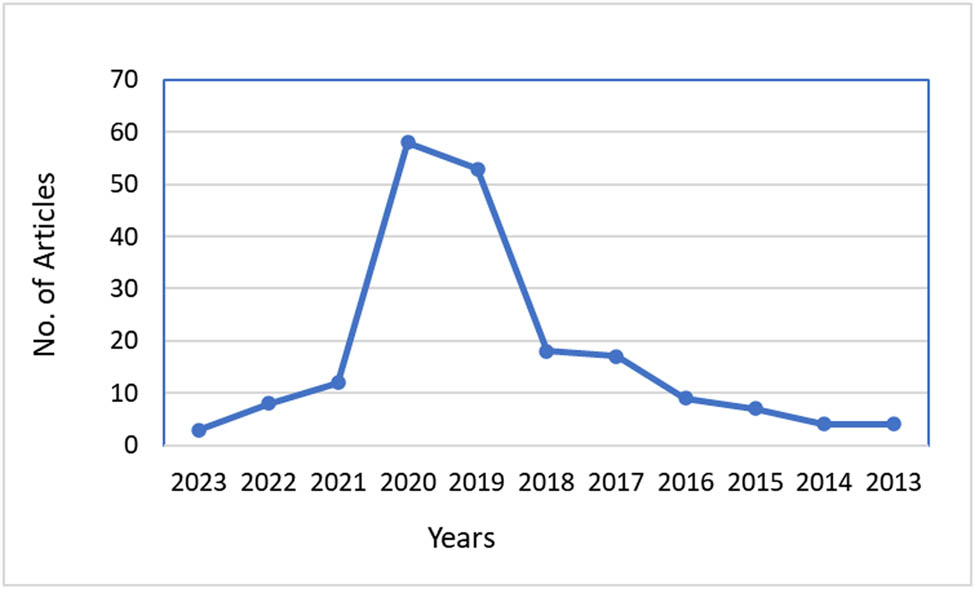
Number of articles reference to each year.
3 Results
3.1 RQ1: What is the importance of AI and ML techniques in NM sustainability?
The process of exploring the biological characteristics of NMs involves several steps. First, the materials are synthesized and then subjected to relevant biological assays, generating a dataset used to train ML models [11]. Physicochemical attributes of NMs are transformed into mathematical descriptors, which are selected features from a pool and used in ML methods to build predictive models for desired properties [31]. These models are validated by predicting results for separate materials not involved in the model-building process.
In the realm of AI, AI encompasses tasks demonstrating human intellectual characteristics, while ML, as a subset of AI, accesses data, identifies patterns, and generates insights [11,32,33]. ML’s appeal lies in its versatility and platform technology functionality. Unlike traditional software, ML methods offer a more flexible approach, where the same algorithm and software program can be applied in various modelling situations, covering different materials and outcomes [34,35]. ML algorithms learn patterns from data similarly to human learning but with faster speed and an enhanced capacity to manage data with higher dimensions [36].
3.1.1 Traditional ML methods
Traditional ML methods encompass a variety of techniques, including regression, Bayesian networks, artificial neural networks (ANNs), genetic algorithms, decision trees, and support vector machines (SVMs) [37,38]. These techniques have been crucial in generating valuable models elucidating the biological properties of NMs, as extensively documented in the literature. While specific examples are discussed below, detailed explanations of these methods are omitted here due to their widespread usage and familiarity. For a thorough understanding, recent reviews and references specific to each method are recommended. Most computational models in the literature, illuminating the correlation between NM properties and biological endpoints, have predominantly utilized traditional statistical techniques. Particularly, conventional ML techniques with simple architectures, have been prominently featured in these models [39]. However, ML models [35] often lack awareness of complex environmental factors that can limit their operational effectiveness. With the increasing prominence of ANNs in broader scientific and technological fields, there is renewed interest in their application across various domains, including nanosafety and drug discovery [40]. This resurgence underscores a heightened recognition of the potential and versatility of ANNs, representing a notable evolution in their application within specialized domains.
3.1.2 Deep learning (DL) techniques
DL methods involve neural networks with multiple hidden layers and complex architectures. They have significantly impacted various fields of science and technology, particularly excelling in recognizing features in speech, images, and decision-making processes [41]. Unlike earlier simplistic approaches, contemporary DL methods have the advantage of automatically producing valuable descriptors during modelling. Researchers suggested in DL studies that deep and attention-based DL networks can achieve excellent performances [42–44]. Common DL-driven approaches are based on convolutional neural networks (CNNs) [45,46], recurrent neural networks (RNNs) [47], transformer models [36], generative adversarial networks (GANs) [48], and autoencoders [49]. CNNs, a type of supervised ML, are adept at identifying image features based on spatial correlations, focusing on local relationships in data and exhibiting resilience to minor alterations [12] (Figure 3).

The traditional ML techniques need feature engineering (top). The DL techniques automatically perform feature extraction and analysis (bottom).
A cascade of deep neural networks (DNNs) comprises two distinct networks: the first matches each material with an outcome, while the second links the outcome to one or more materials. This configuration, often referred to as an autoencoder, serves to both reduce dataset dimensionality and predict materials with specific properties based on the trained ML model. Generative adversarial networks GANs address the inverse mapping problem in materials design. GANs consist of a generator that produces trial structure–property models and a discriminator that evaluates the quality of these models against available unlabelled data. Originally designed to generate structures autonomously, GANs have proven effective in this capacity [12]. Similarly, active learning employs ML to select experiments efficiently to achieve predetermined goals, akin to directed evolution processes involving sequential generations of contestant structures undergoing selection, modification, and testing [12].
3.2 RQ2: What is the role of AI and ML tools in the identification of hazards associated with NMs?
ML techniques have become increasingly important for identifying hazards linked to NMs, with a strong emphasis on methods enabling thorough analysis, especially for managing large datasets and detailed content. This includes studying coronas of the protein around NMs when they interact with bodily liquids. ML shows significant promise in addressing read-across challenges, particularly in swift in vitro studies related to material properties, as indicated by a notable increase in attention (Table 4). The growing emphasis on computationally intensive network analysis further underscores its importance [50–53].
Application of ML and AI in hazard identification
| Reference | Year | Key info | ML Tools | Applications |
|---|---|---|---|---|
| [50,52,53] | 2019, 2019, 2020 | Hazard identification | High-throughput, network analysis | NMs hazard identification, protein corona analysis |
| [89] | 2020 | Detecting malformations | ||
| [90] | 2019 | Prediction of toxicity | Random forest | Predicting NM toxicity in zebrafish embryos |
| [91] | 2021 | ML correlation of NM parameters with in vivo toxicity in soil organisms | ||
| [92] | 2020 | ML-based graph theory for acute ecotoxicity prediction | ML graph theory | Acute ecotoxicity prediction |
| [118] | 2020 | ML method for analyzing earthworm movements | ANN-type recurrent self-organizing maps | Analyzing earthworm movements |
| [94] | 2019 | ML models for bioaccumulation and trophic transfer in conventional chemicals | ML bioaccumulation models | Studying bioaccumulation in conventional chemicals |
| [95] | 2020 | Random forests | Predicting HC50 values for conventional chemicals | |
| [96] | 2019 | ML techniques improving environmental species distribution models | Evolutionary/genetic algorithms | Improving species distribution models |
| [97] | 2020 | ML understanding of media effects on nanotoxicity | ML media effects understanding | Understanding media effects on nanotoxicity |
| [140] | 2011 | ML methods for identifying contaminants in sewage sludge | ML contaminant identification | Identifying contaminants in sewage sludge |
3.2.1 In vitro approaches
In vitro systems have traditionally been employed primarily in human health studies, but there is a growing trend in their application in environmental research is also dominant [28]. ML can optimize the process of learning new concentration-response curves through the use of nonlinear methodologies, potentially enhancing efficiency and accuracy in this aspect of research. Moreover, in hazard assessment, test platforms are often selected with the aid of integrated approaches to testing and assessment (IATA) or intelligent testing strategies (ITS) [54]. However, one notable limitation of ITS and IATA is their independence from the surrounding system, overlooking potentially crucial additional factors. The continuous evolution of sophisticated models suggests that future approaches may involve integrative ML multitasking methods. These methods could predict multiple toxicities simultaneously, mitigating the overfitting and employing techniques such as network analysis or forest trees [55,56]. Understanding mechanisms of action is crucial for comprehending hazards and facilitating risk evaluation. Omics data, including transcriptomics, metabolomics, and proteomics, serve this purpose but pose challenges due to their extensive variables [57,58]. ML offers an attractive approach to address the complexity and difficulty in identifying causal relationships within omics datasets [59–62]. While ML techniques find extensive application in omics, their application to materials and environmental risk is limited. Clustering techniques in omics analysis, while effective in finding patterns, lack explanatory power for mechanisms. Refined techniques like model-based approaches, especially when structured with known classes, provide more information on potential mechanisms [59,63]. The challenge lies in identifying causal relationships between omics expression levels and phenotypic outcomes, which ML techniques, mechanism-based or employing logic networks, can address, led by training data for causality verification [64–68]. The use of ML should align either with a highly mechanistic approach for identifying mechanisms or as a means to verify consistency with existing mechanistic understanding. In another method, ML approaches are utilized as supplementary investigative instruments rather than definitive identifiers [69–73]. Special attention must be given to the input data in dealing with complex omics data, as biases in input data can propagate through automated algorithms, impacting the final output and posing challenges when employing ML methods. This challenge is not limited to ML techniques alone; rather, it is crucial to confront them to guarantee impartial and dependable outcomes. In addition to omics approaches dedicated to the inner workings of cells, various other omics methodologies play an important role in environmental research, such as genetic barcoding for species diversity analysis, provide ideal datasets for ML applications [74–76]. In summary, environmental omics generates extensive data necessitating automated analysis to consistently identify underlying mechanisms of action.
In environmental studies, particularly those involving (smart-)NMs, in vitro techniques are gaining prominence [77]. ML approaches effectively enhance the usefulness of in vitro techniques by swiftly producing large datasets using high-content and high-throughput methods. This capability allows for the concurrent investigation of multiple materials under comparable circumstances [78,79]. ML approaches such as NNs and RF algorithms can be used with the obtained datasets to find similarities between materials by detecting patterns [80–82].
ML techniques for image analysis are also applicable to these datasets, enabling the quantification of processes during experiments, such as agglomeration, which significantly influences exposure [83–86]. However, ML image evaluations require a large and well-labelled dataset for training. Furthermore, in vitro studies can be used to determine the makeup of NMs protein coronas (PCs) [87]. For instance, Findlay et al. [88] employed existing data on bacteria and yeast to assess the effectiveness of different ML methods in foreseeing the formation of PC on basic Ag NPs, and how it correlates with the NPs’ chemical and physical attributes. Their research revealed that ML approaches allow the prediction of PC composition through conventional experimental data and readily available details about the biophysical behaviours of proteins. In summary, ML plays a vital role in uncovering attributes in in vitro analysis, and automation can contribute to enhancing repeatability.
3.2.2 In vivo approaches
In environmental hazard identification, initial tests typically involve in vivo experiments, which are considered a key aspect in many testing guidelines [28]. While ML techniques have been widely used to assess the toxicity of traditional chemicals and address environmental concerns, their application to smart NMs has been limited. Notable studies in this area include Karatzas et al. [89], who used an ML approach to automatically detect abnormalities and classify affected Daphnia organisms after exposure to silver and titanium NMs. To et al. [90] developed an ML technique using RF for predicting the harmful effects of metal-containing NMs on zebrafish embryos based on their physical and chemical properties. Similarly, Gomes et al. [91] employed ML to establish a link between various parameters of NMs and the toxicity experienced by soil organisms when exposed to different types of titanium dioxide (TiO2) materials infused with iron (Fe).
A range of ML methods is used to forecast the potential toxicity of traditional chemicals within living organisms. For instance, ML-driven graph theory has been employed to anticipate severe ecotoxicity, drawing insights from datasets such as AIST-MeRAM and ECTOX for estimation and assessment purposes [92]. In a different context, Ji et al. [93] implemented an ANN-based recurrent self-organizing map to examine the locomotion patterns of earthworms after their exposure to copper sulphate (CuSO4). This method holds significance in assessing the behavioural responses of worms following exposure to various copper-based (smart-)NMs. Trophic transfer and bioaccumulation, essential endpoints in environmental risk assessment, have been studied using linear models and ML techniques for traditional chemicals in invertebrates and fish [94]. Although ML has not been extensively applied to these endpoints in NMs, its potential is evident. In addition, ML models like random forests have been successful in predicting hazard concentration levels (HC50) for traditional chemical materials, suggesting the possibility of extending these models to NMs [95].
Environmental species distribution models, crucial for identifying potential effects, can be enhanced using ML techniques, as demonstrated by studies using evolutionary/genetic algorithms [96]. ML can also aid in understanding the effects of nanotoxicity, drawing insights from studies on conventional chemicals [97]. A significant source of NM emissions called “Sewage sludge,” could benefit from ML applications in identifying important contaminants and understanding their impact on soil and crops [98]. While previous studies focused on conventional chemicals, similar ML methods could be applied to smart NMs. Beyond direct applications to current environmental risk assessment practices, ML shows promise in handling larger datasets and integrating more complex tests [28]. Examples include using ML in animal species classification, predicting avian field biodiversity, and using DL for continuous camera monitoring to identify invertebrate species [28]. It is widely applicable in real-time analysis like in surveillance applications [99]. They suggest that ML can facilitate the combination of diverse datasets and predict NM toxicity under various scenarios, highlighting its relevance in hazard assessment and risk management [28].
3.2.3 Exposure analysis
Critical components of analyzing the fate and exposure of substances include evaluating environmental releases, forecasting substance levels in the environment, and understanding accumulation in organisms, which can be done at various scales [28]. The soil compartment is highlighted as the main sink for (smart-)NMs [28]. Various statistical and logical models have been utilized for predicting environmental concentrations, often requiring intensive data calculations [28]. Studies like Wigger et al. [100] have shown that combining various modelling techniques with ML can significantly improve the effectiveness of these models. Wikle employed ML, particularly NNs and deep hierarchical models, to predict changes in soil moisture in large geographic areas [101].
Moreover, ML has been utilized to a restricted degree in simulating the destiny and potential exposure of NMs [28]. Notably, Goldberg et al. [102] pioneered the use of ML to develop advanced fate models for NMs. Their work demonstrated that decision trees, including RF regression and classification, proved effective in identifying previously concealed key descriptors crucial for huge models. The authors highlighted the advantage of ML approaches, emphasizing their relative lack of restrictions due to the absence of prior linearity assumptions. However, a significant hurdle reported by the authors was the scarcity of data, encompassing both quantity and quality concerns. Subsequent studies, such as that by Babakhani et al. [103], leveraged ANN to investigate the transport of NMs in porous media. The study revealed that the ANN-based correlation technique outperformed existing empirical approaches in forecasting continuum model attributes and breakthrough models. These approaches hold promise in supporting other NM-specific fate models like Simplebox. Developing ML-based models specific to NM species becomes crucial, particularly because (smart-)NMs deviate from the fate and exposure models applied to traditional chemicals. Unlike chemicals assuming a steady-state condition, NMs exhibit characteristics like agglomeration/aggregation influenced by surface properties [104].
Fazeli-Sangani et al. [105] examined the effect of various features of soil and experimental variables on the movement of TiO2 in actual soil environments using data analysis techniques. Several methods such as multiple linear regression, random forest, classification and regression trees, and ANN were utilized for this purpose. Their results showed that ANN outperformed RF in predicting TiO2 transport, despite RF needing less input data. MLR techniques generally performed poorly, and CART had good calibration but poor validation. In addition, various researchers have used ML to predict environmental parameters important for fate and exposure modelling, especially in studies on soil carbon and nitrogen distributions. Pinheiro et al. [106] utilized ML, specifically regression trees, to predict soil texture through digital soil mapping, with applications in remote sensing data. These environmental ML techniques are crucial for developing local and regional predicted environmental concentration models, essential for environmental risk assessment. In addition, ML has potential to predict exposure and toxicity throughout a material’s life cycle, though this application remains underexplored. Furthermore, since organisms in nature are mostly exposed to mixtures of chemicals and materials, mixture modelling is another vital area in risk assessment where computational methods, including ML, could provide valuable insights.
3.2.4 Risk classification
During the risk assessment phase of an environmental risk assessment, the primary objective is to systematically amalgamate data related to material features, exposure, and hazards to establish a robust environmental evaluation [28]. Traditionally, this process employs tools featuring decision points based on material description, exposure, utilizing fate, and hazard data, often incorporating IATA [28]. Consequently, decisions are required regarding data selection and integration, frequently employing simple decision trees with predefined structures and binary decisions. The risk measuring paradigm aligns with ML approaches; however, ML presents the possibility of employing more intricate decision tree structures to substitute traditional IATAs [28]. In other domains, ML-based methodologies have been explored for risk assessments, such as the evaluation of flooding risks [107] and soil quality based on polycyclic aromatic hydrocarbon (PAH) pollution [108].
As highlighted earlier, the pursuit of automation is a crucial objective in risk assessment, driven by the need for efficiency and cognitive relief for human risk assessors facing time constraints and cognitive overload due to numerous assignments requiring critical decisions without sufficient time for exhaustive data review [109–111]. In a real risk assessment where the combination of exposure, fate, and hazard data significantly influences the outcome, the choice of data and data treatment techniques, such as ranking, logical choice, ranking, or statistical techniques, play a crucial role [112]. Some ML-based methods opt for predictive approaches, sidestepping conventional explaining statistics [112]. The potential incorporation of various data and possibly new methods implies that upcoming risk assessment experts and scientists will need to navigate and select from diverse analytical frameworks, leading to varying approaches in evaluating statistical significance and importance [113–116]. This holds relevance in both the middle and ultimate phases of a risk assessment [117]. Considering the likelihood of future risk assessment methods incorporating network analysis [118], it becomes clear that risk assessors may face increasingly complex situations. In these cases, despite using advanced DL techniques, it may be not easy for anyone to fully understand the entire data processing and its outcomes, effectively making the assessment a black-box system. This challenge, familiar to those assessing conventional chemicals, is expected to intensify with the added complexity of smart-NMs [28]. This issue is particularly evident when data-intensive models, such as most ML/AI models, are applied to smaller datasets, even with validated background models [28].
However, by using appropriate data and a well-designed model-flow, new automated models are expected to deliver faster and more standardized calculations, enabling more comprehensive risk analyses than previously possible [119–121]. These models can, for example, connect exposure and toxicity parameters to global weather patterns, sea currents, soil–water flow models, and known biodiversity distributions using local/global models [122,123]. This advancement could enable the rapid integration of additional data, allowing chemometric, biometric, and risk data to be collaboratively processed with ML techniques [124]. Employing various ML techniques, such as symbolic regression, may also uncover additional biological or ecological “laws” [125].
Nonetheless, it is important to note that ML methods may encounter reproducibility challenges, especially when handling highly complex data and models [28]. A fundamental concern underlying environmental risk assessment involves the uncertainty and sensitivity associated with the outcome, represented as a value with related statistics [28]. Uncertainty arises from various sources, such as the lack of adequate input data or the selection of potentially “incorrect” input data, hindering the models from effectively addressing the risk [126]. Incorporating M does not alleviate this problem; in fact, it may further obscure the issue, particularly when using hidden layers, making it less certain which data influences the outcome. ML is generally acknowledged as data-hungry, emphasizing the heightened importance of acquiring sufficient data of high quality [28]. Sensitivity, a crucial aspect of ERA concerning how well it can capture a true effect, is also relevant to ML techniques, encompassing features like specificity and accuracy, integral to predictiveness training through training sets [28]. However, determining how an ML model is derived, especially when using deep or reinforcement learning methods involving temporary virtual nodes, can be challenging [28]. This issue can be partially addressed by employing robust adversarial controls [127]. It is also important to recognize that correlations are often misinterpreted as causality in traditional data analysis.
In the context of risk management, Hino et al. [128] presented that ML techniques can enhance the effectiveness of public agencies in meeting regulatory objectives. They trained a regression forest model to predict which facilities were at risk of failing inspections and used the model’s risk scores to propose alternative allocations of Clean Water Act inspections. These alternative strategies nearly doubled the detection rate of violations during inspections, with an increase of over 600% under the most aggressive reallocation scheme. In addition, Duan et al. [129] applied ML within a multimedia system to compare traditional environmental chemistry with ML methodologies. Forest et al. [130] highlighted the importance of selecting the appropriate endpoint in ML systems for assessing human health hazards. These studies underscore the potential for ML-based techniques from a regulatory perspective. A widely discussed topic in nano environmental health and safety (nano EHS) revolves around the potential of current ML techniques, such as read-across, classification, or ranking tools, to facilitate the grouping of materials that would otherwise be challenging to classify [111,131]. As previously mentioned, these techniques also hold promise for identifying new materials with specific properties [132,133].
ML tools must be designed to seamlessly interface with the Internet of Things (IoT) to be effectively applicable in various contexts [134]. The integration of IoT with ML applications in environmental settings [135] has the potential to facilitate comprehensive online risk management, such as precision agriculture and farming practices utilizing drone technologies [136]. This encompasses tasks like automatic regulation and enhancement of production sites, machinery, agricultural robots, and irrigation systems for the implementation of water quality measures, soil moisture control [137], and promotion of behavioural changes [138]. Nevertheless, the extensive capabilities afforded by such integration pose significant legal and ethical challenges [139] and carry the risk of potential large-scale misuse, such as through hacking. The integration of IoT remains a crucial consideration in contemporary ML implementations, enabling ML systems confined in virtual spaces to directly influence the physical world on a significant scale without human intervention [28].
3.3 RQ3: What are the applications of AI and ML in NM sustainability?
NMs are ubiquitous in modern life, present in food additives, industrial processes, cosmetics, medications, and more, with the potential to cause a range of health issues from Parkinson’s disease to cancer (Figure 4) [2,4,141]. However, evaluating their safety through conventional methods is challenging due to the rapid proliferation of NPs and the complexity of the data involved. To address this, a shift towards computational modelling methods is crucial, offering the promise of faster assessments, resource conservation, and the establishment of a unified framework for promoting better health outcomes.
![Figure 4
The potential origins (inner circle) and the resultant health effects (outer circle) stemming from exposure to NMs [2].](/document/doi/10.1515/ntrev-2024-0069/asset/graphic/j_ntrev-2024-0069_fig_004.jpg)
The potential origins (inner circle) and the resultant health effects (outer circle) stemming from exposure to NMs [2].
Numerous reviews on the use of ML techniques in nanotoxicology were conducted over the past decade, as evidenced by various sources [142]. We present key examples of published research to illustrate the diverse ML approaches utilized for modelling NM properties across various applications (Table 5). Our selection aims to showcase the breadth of ML applications in predicting NM hazards and outcomes in “safe-by-design” projects, emphasizing technologies that hold promise in achieving predefined milestones.
Application of ML and AI in nanosafety
| Reference | Year | NM type | ML techniques | Biological effects studied | Performance metrics | Key findings |
|---|---|---|---|---|---|---|
| Puzyn et al. [143] | 2011 | Metal oxide NPs | One-parameter linear regression | Cytotoxicity against Escherichia coli | Developed a linear regression model to predict cytotoxicity | |
| Epa et al. [144] | 2012 | Metal oxide NPs | Linear regression, Bayesian neural networks | Smooth muscle cell apoptosis, NP uptake | Standard error, Predictive accuracy | Created predictive models for accurate predictions for apoptosis and uptake |
| Liu et al. [146] | 2013 | Iron oxide core NPs | Self-organizing map, Bayesian classifier, logistic regression, linear discriminate analysis, nearest neighbor classifiers | Impact on four cell types, using various assays | Relatively high accuracies exceeding 78% | Effective classification models for assessing the impact of iron oxide core NPs on different cell types |
| Gernand et al. [149] | 2014 | Carbon nanotubes | Classification and regression trees, random forest | Pulmonary toxicity |
|
Demonstrated robust predictive capabilities for pulmonary toxicity, identifying key attributes contributing to toxicity |
| Mikolajczyk et al. [150] | 2015 | Metal oxide NPs | Linear regression | Zeta potential | RMSE error,
|
Predicted zeta potentials with RMSE error of 1.25 mV and
|
| Papa et al. [147] | 2015 | TiO2 and ZnO NPs | Multiple linear regression, neural networks, support vector machines | Cytotoxicity assessed through lactate dehydrogenase levels | Errors ranging from 8 to 17% relative to control cells | Nonlinear ML methods outperformed near-regression models, accurately predicted LDH levels |
| Chen et al. [148] | 2016 | NMs | Various tree algorithms (functional tree, decision tree, random tree) | Ecotoxicity classification for multiple species | Accuracies of 93 and 100% for predicting toxicity to Danio rerio in training and test sets. | Achieved accurate classifications for LC50 global models |
| Fourches et al. [39] | 2016 | Carbon nanotubes | k-Nearest neighbors, random forest, Support vector machines | Various biological endpoints including acute toxicity | Predictive accuracies of up to 77% | Predicting biological endpoints and screening potential surface ligands |
| Le et al. [152] | 2016 | ZnO NPs | Linear regression, Bayesian neural network | Biological responses in human cells (cell viability, membrane integrity, oxidative stress) | High
|
Nonlinear ML models outperformed linear ones, modelling entire NP dose–response curve |
| Oksel et al. [153] | 2016 | NMs Genetic programming-based decision tree (GPTree) | Nanostructure–activity relationship modelsv | Training accuracy = 98–100%, Test accuracy = 86–100% | GPTree provided accurate nanoSAR models | |
| Concu et al. [154] | 2017 | Metal, metal oxide, and silica NPs | Linear neural networks, radial basis functions, multilayer perceptrons, probabilistic neural networks | Ecotoxicity and cytotoxicity across various organisms | Area under ROC curve values of 0.999 for the training set and 0.998 for the test set. 98% two-class accuracy in the test set | Exceptional predictive accuracy for diverse NPs |
| Wang et al. [155] | 2017 | Gold NPs | k-Nearest neighbors | Cellular uptake, induction of oxidative stress, hydrophobicity | High cross-validated predictivity | Demonstrated efficacy in predicting various NP properties |
| Fourches et al. [142] | 2017 | Various NPs | Support vector machine, kNNs-based regression | Various toxicological properties | External prediction accuracy | 73% external prediction accuracy for classification models and
|
| Kovalishyn et al. [156] | 2018 | Inorganic NMs | k-nearest neighbours, random forest, neural networks | Toxicological or ecotoxicological properties and physicochemical properties |
|
Developed models for diverse endpoints, providing predictive power for toxicological/ecotoxicological properties |
| Hataminia et al. [157] | 2019 | Iron oxide NPs | Neural network | Toxicity on kidney cells | Specific statistical values not provided in the graphs | High predictability in modelling toxicity, detailed analysis of input parameters on kidney cell viability |
| Lazerovits et al. [67] | 2019 | NPs | Supervised DNN | Adsorption of blood proteins, blood clearance, organ accumulation | Accuracy
|
Complex protein pattern on NP surfaces predicts organ uptake |
Puzyn et al. [143] demonstrated the utilization of ML and statistical techniques to forecast the adverse characteristics of NMs. They developed a simple linear regression model with a single parameter to forecast the cytotoxicity of 17 distinct metal oxide NPs against Escherichia coli. The model used descriptors acquired from quantum chemical calculations. Similarly, Epa et al. [144] employed Bayesian regularized neural networks and linear regression for the prediction of biological effects associated with 51 metal oxide NPs including different 109 metal oxide NPs and metal cores having distinct cores but differing surface modifiers. These models assisted numerical forecasts concerning the apoptosis of flat muscle cells and the uptake of NP concentration by human pancreatic cancer cells and umbilical vein epithelial cells during in vitro experiments. They exhibited predictive accuracy in a separate test batch of NMs, with an error of
Papa et al. [147] analyzed the ZnO and TiO2 NPs’ cytotoxicity, utilizing experimental descriptors and testing different concentrations to assess their impact on disrupting lipid membranes in cells, measured through lactate dehydrogenase (LDH) levels. They developed models employing SVMs, linear regression, and neural networks. These models exhibited accurate predictions of LDH levels in the testing while errors ranged from 8 to 17% compared to control cells. Notably, the nonlinear ML techniques surpassed the performance of the near-regression models. To overcome the limitation of available toxicity data, Chen et al. [148] used ML techniques for the classification of NM ecotoxicity. They applied read-across attributes calculated from various sources of ecotoxicity data to develop models tailored to specific species and a joined model capable of predicting toxicity across various species. Employing various tree algorithms, including decision tree, functional tree, and random tree techniques, they achieved accurate classifications for LC50 global models, correctly identifying over 70% samples in training and testing. Remarkably, the functional tree demonstrated high accuracies of 93 and 100% for predicting the toxicity of metallic NPs to Danio rerio in training and testing, respectively.
Gernand et al. [149] conducted an investigation utilizing classification and regression techniques (regression trees and random forest) to forecast the pulmonary toxicity of 17 varieties of carbon nanotubes. The utilized model incorporated descriptors associated with the nanotubes’ categories and dimensions, coverage time and dose, concentrations of metallic impurities, and features of the visible rodents. The pulmonary toxicity measures consisted of assessing the levels of macrophages and neutrophils, as well as concentrations of LDH and the total number of proteins. The models exhibited strong predictive capabilities for the four pulmonary endpoints, achieving
A revolutionary study by Fourches et al. [39] implemented the principles of “safe-by-design” by employing ML techniques to assess biological outcomes. The investigation centred on an 83-member library of surface-modified carbon nanotubes having consistent dimensions. Various biological activities, including carbonic anhydrase, bovine serum albumin, chymotrypsin, hemoglobin activity, and in vitro analyses for immune toxicity and acute toxicity, were meticulously examined. By leveraging conventional ML models such as kNNs, SVM, and random forest, they achieved impressive predictive accuracies, reaching 75% for protein binding and 77% for acute toxicity outcomes. The study revealed chemical surface features associated with specific biological actions, leading to the virtual screening of a huge library having 240,000 impending carbon nanotubes’ surface ligands. Experimental validations of these predictions demonstrated remarkable accuracy. This systematic approach, involving the modification of physicochemical properties, comprehensive biological evaluation, and computational examination, aligns seamlessly to forecast nanotoxicology outcomes and the principle of designing safety into NMs. It significantly contributes to advancing the automated comprehension of nanobio interactions and aids the development of quantitatively predictive and vigorous models for NM characteristics within applicable domains [151].
In a similar context, Le et al. [152] investigated 45 ZnO NPs, systematically altering particle dimensions, doping type, shape proportions, dopant density, and surface finishing. The biological response data resulting from this experimentation was modelled using Bayesian regularized NN and linear regression ML techniques. The biological analyses encompassed evaluations of membrane integrity, cell viability, and oxidative stress, describing the damage caused to human liver carcinoma cells (HepG2) or human umbilical vein endothelial cells by ZnO NPs. The nonlinear ML models demonstrated superior performance compared to the linear counterparts, offering predictions for an external test set with remarkable
Oksel et al. [153] introduced a new strategy employing a genetic programming-based decision tree (GPTree) to depict NM properties. This method, known for its robustness and automation, excels in constructing precise nanostructure–activity relationship (nanoSAR) models, especially when confronted with limited datasets. GPTree autonomously identifies relevant descriptors, confirming model accuracy while improving interpretability. Indicating its adaptability, the approach effectively developed precise nanoSAR models for four different datasets. Particularly, these models showed parsimony by utilizing solely thirteen (13) predictors from a wide collection of descriptors, attaining high accuracies going from 98 to 100% during training and 86 to 100% during testing, correspondingly. The decision trees generated by GPTree provided visually intuitive representations of decision thresholds associated with each descriptor, considerably improving the interpretability of models predicting the structure–activity link of NPs.
Concu et al. [154] conducted an extensive study involving 260 silica, metal, and metal oxide NPs encompassing 31 chemical compositions from various literature sources. Their investigation included measurements of ecotoxicity and cytotoxicity across a spectrum of organisms, and bacteria, spanning algae, fungi, plants, fishes, crustaceans, and mammalian cell lines. Through random combinations, they generated 54,371 pairs of NPs, with training (40,804 pairs) and test sets (13,567 pairs) formed randomly. Employing linear NNs, radial basis functions, multilayer perceptrons, and probabilistic NNs, the models demonstrated outstanding predictive precision, achieving an area in the receiver operator characteristic (ROC) curve values of 0.99 and 0.998 for the training and testing, respectively. The two-class accuracy for the test set reached 98%. These models also provided insights into the descriptors influencing adverse biological responses. Despite employing Y-scrambling to assess overfitting, the authors noted the challenge posed by unrealistically improved accuracy and ROC values, raising concerns about potential chance correlation problems in the models.
Wang et al. [155] analyzed NPs of gold, exploring variations in size, surface modifications, and surface coverage. Their NP collection comprised 34 particles, and by employing 29 descriptors along with the kNN algorithm, they created predictive models for the absorption of substances by human kidney cells and lungs, the capacity to activate oxidative stress and hydrophobicity. Both models, incorporating 11 or fewer descriptors, demonstrated excellent predictability during cross-validation, with
Kovalishyn et al. [156] compiled a dataset from 128 literature sources, incorporating 964 data points for inorganic NMs. Their analysis encompassed toxicological/ecotoxicological properties (EC50, MIC, LC50, and mortality rate) as well as physicochemical characteristics for metal and metal oxide NPs within the size range of 1–90,000 nm. Utilizing random forest, kNN, and NN techniques, models were developed for these endpoints across various species. Evaluation of model predictive power through cross-validation and test sets yielded
Hataminia et al. [157] utilized an NN to simulate the nephrotoxicity induced by iron oxide NPs on kidney cells. The model, which underwent training based on NP size, concentration, incubation duration, and surface charge, demonstrated high predictability, although specific statistical values were not provided in the graphs. The study extensively analyzed the impact of these four input factors on the viability of kidney cells. While DL algorithms have made a substantial impact in various fields, including materials science, their application to modelling NM properties relevant to nanosafety has been limited [158]. The DNNs can automatically produce higher features for ML models. Surprisingly, this capability has not been widely explored in predictive nanotoxicology, likely due to the shortage of nanospecific descriptors hindering progress.
Most applications of DL algorithms involve utilizing their image recognition capabilities for extracting microscopy image data of NPs/cells. Similarly, Coquelin et al. [159] used CNNs to estimate particle size distribution from scanning electron microscopy (SEM) images of aggregated TiO2 particles, aiming to automate SEM measurements. Context encoding was introduced to forecast absent components of combined NPs. Rusk et al. [160] applied the CNNs techniques for the segmentation of transmission electron microscopy images for different reliable size distribution calculations. Ilet et al. [161] employed image analysis utilizing open-source software tools, CellProfiler, along with a CNN algorithm named ilastik, to study NP distributions.
Lazerovits et al. [67] presented a significant utilization of ML in the area of nanosafety. Their study examined how blood proteins adhere to NPs after intravenous injection. Through the employment of data from protein mass spectrometry as inputs and correlating them with blood clearance and organ accumulation as outputs, they effectively trained a supervised DNN. The results from the network accurately anticipated the accumulation of NPs in the liver and spleen, revealing the considerable impact of the intricate protein pattern on the NP surface on organ uptake. This valuable insight has delivered a basis for the advance of NPs with obviously reduced accumulation in the liver and spleen.
3.4 RQ4: What are the past NM sustainability roadmaps?
Over the past decade, several significant roadmaps for the safe utilization of NMs have been proposed. The primary comprehensive set of milestones was established at a workshop sponsored by COST (European Cooperation in Science and Technology) in 2011, focusing on Quantitative Nanostructure Toxicity Relationships held in Maastricht [162]. The milestones acknowledged in this roadmap and subsequent reviews emphasized crucial aspects for advancing NM research, including:
Improved material characterization for biological activity trials.
Creation of NM-oriented descriptors.
Development of high output in vitro methods.
Enhanced tracking techniques for NPs in the body.
Improved data storage/sharing.
Production of in vivo data.
Development of models for predicting NP behaviour.
These milestones, originally research-driven, have significantly influenced research agendas in Europe and the United States. The Maastricht roadmap, in particular, played a pivotal role in securing European Union funding and was used in governmental policies on NM safety, including the UK Parliamentary Office of Science and Technology [162]. The roadmap’s impact is further reflected in the funding of numerous associated COST Actions, as well as now Horizon projects (2020) focusing on nanosafety [52,86,109,163,164,165]. Despite the passage of time, many milestones from the initial Maastricht workshop remain pertinent due to slower-than-expected progress in achieving them. Factors contributing to this slower progress include the delayed adoption of high-throughput characterization and synthesis technologies, resulting in a scarcity of big and robust datasets for ML model training and a lack of interpretable and efficient NMs descriptors.
To address these challenges, Worth et al. [166] proposed a recent US and EU Roadmap of nanoinformatics up to 2030, with a specific emphasis on using computational methods to predict potential adverse effects of NMs. This roadmap aligns with the previously identified milestones and emphasizes the need for continued efforts in nanosafety research. Different milestones of 2-, 5-, and 10-year duration have not been fulfilled, emphasizing the importance of ongoing efforts. To tackle these challenges, significant initiatives financed by the EU Horizon 2020 program aim to establish joint networks of scientists dedicated to crafting computational solutions for predicting nanosafety. These projects focus on generating relevant data, implementing nanoinformatics-driven decision-support strategies, and developing methodologies for safe-by-design NMs.
Challenges faced by regulators include adapting to a fast-varying system of industrial NMs. The NanoReg2 initiative deals with this problem by linking structure-based design to the regulatory procedure, verifying new NMs through established grouping methods. NanoSolveIT employs a nanoinformatics-centred decision-support methodology, utilizing advanced in silico techniques to recognize key features of NMs accountable for unfavourable effects.
Horizon 2020 includes 67 toxicology-related projects, including 11 focused on NM toxicity, underscoring the commitment to advancing research in this field [www.fabiodisconzi.com/open-h2020/per-topic/toxicology/list/index.html]. Recent literature also emphasizes the need for sustainable nanotechnology system governance for European society [167], aligning with the efforts of regulatory and standardization communities, such as FDA, EPA, ECHA, ISO, and OECD, in developing approved techniques for measuring inherent and external attributes of NMs.
3.4.1 Data
ML techniques hold significant potential for modelling and predicting both advantageous and detrimental characteristics of NMs. Their appeal arises from their rapid processing, independence from intricate mechanistic models, utilization of open-source and accessible technologies, and demonstrated effectiveness in discerning patterns within intricate datasets across various domains [168]. As methods grounded in data-driven principles, their efficacy is inherently tied to the information employed in their creation. The abundance, quality, diversity, and scope of data play pivotal roles in crafting resilient and anticipatory ML models that can be widely applied across diverse domains.
3.4.2 Quantity of data
The progress of nanosafety research projects faces significant challenges due to the scarcity of substantial datasets, primarily attributed to the time, expenses, and ethical concerns related to collecting data involving animals and humans. Unlike the assessment of properties in isolated, well-defined organic pristine or molecules NMs unaffected by biological environments, evaluating the NMs features that exhibit variations with time or in diverse biological fluids lacks standardization and poses technical complexities [169]. To address these limitations, read-across techniques computational models and computational models are employed to bridge data gaps [167]. However, the optimal approach is unquestionably the expansion of available datasets. In the past, advancements have been made in the high-throughput synthesis of NMs [170], accelerated physicochemical features [171], and swift in vitro toxicity screening [172,173]. The ongoing development, widespread practice, and use of these high-throughput approaches hold great promise for substantially augmenting the volume of NMs in the upcoming years.
3.4.3 Quality of data
In addition to challenges associated with the scale of datasets, similar to other material types, issues frequently arise regarding the data reliability of experiments on the biological and physicochemical impacts of NMs. Constraints related to time, cost, and ethical considerations not only limit the quantity of available data but also impact the feasibility of conducting multiple experimental replicates. These constraints have repercussions on the quality of data, signal-to-noise ratio, and the identification and handling of outliers. The reproducibility of scientific findings has emerged as a critical concern in recent years, with specific attention directed towards NMs. Various research groups have contributed methodologies aimed at enhancing the reproducibility of NM synthesis [174–177]. Addressing the reproducibility of NM bioassays, Petersen et al. [178] have made significant contributions, while Baer et al. [179] have explored the influence of materials provenance on reproducibility.
Accompanying experiments on NMs offers greater challenges as compared to small organic molecules, mainly due to intrinsic differences in their shape and size, tendencies to agglomerate, and the creation of corona. Identifying the complexity of these features, researchers are actively striving to improve experimental duplicability. Baer et al. [179] and Petersen et al. [178] have explored different features of NM bioassays and the impact of material sources on reproducibility, respectively. Notably, Galmarini et al. [180] studied the sophisticated effects of corona formation on experimental reproducibility.
3.4.4 Diversity
In conclusion, it is imperative to develop broadly applicable models for predicting potential negative characteristics of NMs. These models should be trained using data obtained from a diverse array of NMs and encompass a comprehensive range of relevant biological endpoints. Recent papers have underscored the importance of conducting systematic studies that explore various NM morphologies, types, and endpoints [151,181].
3.4.5 Description
NPs exhibit various attributes, such as agglomeration, dissolution, photocatalytic properties, and the formation of persistent complexities with biological ions. These characteristics significantly impact the biological behaviour of NMs [126,182,183], although advancements have been achieved in discerning the location, timing, and methodology for characterizing NMs, it remains challenging due to the dynamic nature of NM characteristics, which can vary considerably under various circumstances and with time. Further, these varying characteristics are highly responsive to the environment, with interactions among properties adding complexity to the characterization process.
Ideally, it is preferable to evaluate the physicochemical features of NMs within comparable biological situations, as the original characteristics of NMs tend to vary when they come into connection with biological liquids [184]. NM surfaces rapidly develop a biological layer, making a bio-corona that modifies material properties like surface charge, particle dimensions, and aggregation status quickly [185]. The corona experiences dynamic changes over time, with primarily attached macromolecules being gradually replaced by those with stronger affinities. Additional investigation is essential to fully recognize how NMs’ physicochemical properties, including surface chemistry, size, aggregation, and dissolution, are adapted in different biological settings. It is crucial to determine whether these modifications make NMs more or less toxic compared to their original state. This information is crucial for regulators to more accurately measure the risks posed by NMs to human/environmental health.
Encouragingly, advancements are being achieved in the characterization of the NP corona based on the physicochemical properties of NMs and the surrounding environment. Recent research has presented a range of mass spectrometric, spectroscopic, and chromatographic techniques aimed at evaluating NP coronas. Among these methods are some that allow the analysis of the evolving properties of biocoronas over time (Figure 5) [186–194]. These results in the creation of descriptive and potentially predictive models for the conformation of NP corona [129,195–197] and its active behaviour. These models lay the basis for the rational design and progress of NMs aimed at reducing or fully avoiding corona formation [198].
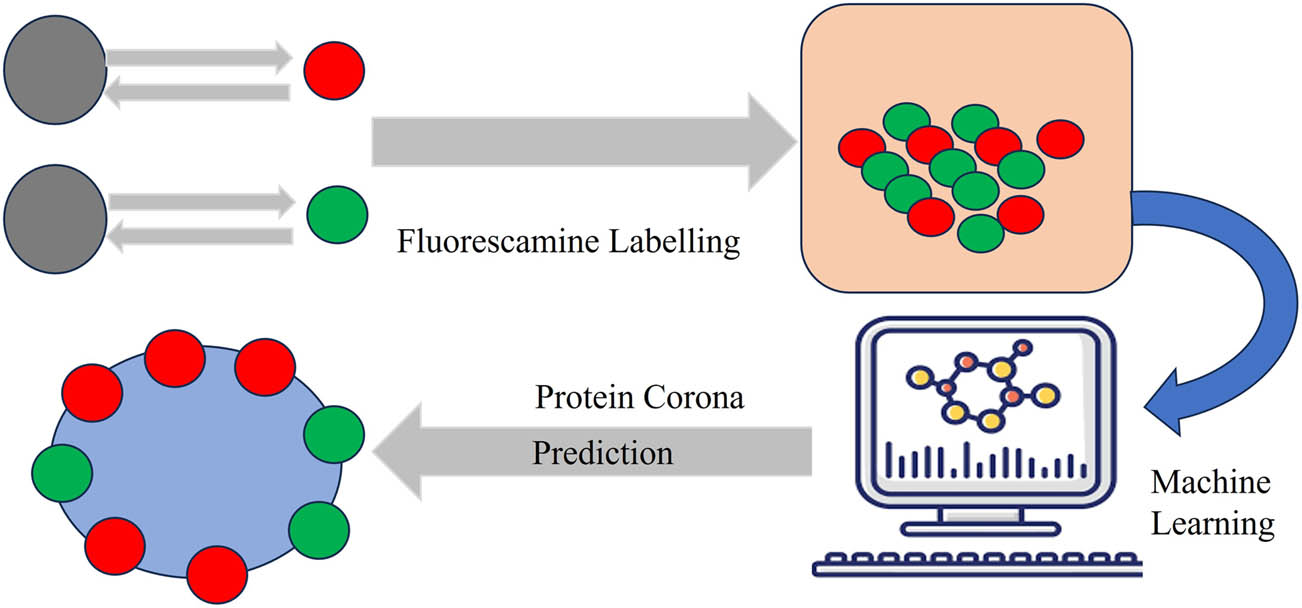
Fluorescence levels to correlate with the number of associated proteins in the corona of various NMs.
Considering solubility and biopersistence is paramount in the assessment of nanosafety, as these factors directly impact internal exposure to NMs. The main source of biological activity in soluble NMs may arise primarily from the liquefied substance rather than the NP itself, as exemplified by ZnO. The dissolution rate is subjective to various physical characteristics of NPs (size, particle shape, coating, shape, core doping), allowing potential opportunities for rationally controlling dissolution to reduce hostile biological effects [152]. Regardless of its critical significance, there remains uncertainty regarding which features of NMs impact solubility and, more specifically, biopersistence [199]. Further research is needed to comprehend how the dissolution of NMs in biological liquids or their perseverance in the body influences biodistribution and biological effects, and how these processes can be improved through formulations, coatings, or other approaches.
3.4.6 Descriptors
Molecular descriptors, capturing the necessary structural and physicochemical qualities of NMs, are pivotal components in computational modelling studies across various scientific domains, including environmental/medicinal chemistry, pharmacology, toxicology, genomics, and drug design [200,201]. These descriptors can be created either through theoretical techniques or standard experiments. Theoretical descriptors offer diverse chemical property sources and wide coverage of the chemical features space, providing an extensive representation of NMs. However, experimentally derived descriptors, such as shape, size, solubility, and agglomeration, have limited applicability in ML models for biological effects due to their resource-intensive nature and unavailability for hypothetical materials [202]. Numerous theoretically sound descriptors can be calculated directly from molecular structures using different software packages [203]. Nevertheless, existing molecular descriptors and fingerprints primarily result from pharmaceuticals specifically designed for organic small molecules, lacking specificity for NMs. The unique challenges posed by NMs, such as polydispersity, complex interactions, and incomplete characterization, necessitate the development of nanospecific descriptors. DL, coupled with imaging methods, offers a promising avenue for generating such descriptors. Russo et al. [204] utilized CNNs to digitize complex nanostructures, allowing the training of predictive models for NP biological properties.
The interpretability of NM descriptors is crucial for understanding the mechanisms behind biological responses and for the rational design of improved materials. Traditional descriptors often lack interpretability, prompting the need for descriptors that are easily related to chemically recognizable features. De et al. [205] and Sizochenko et al. [206] proposed efficient and interpretable methods for encoding NM properties. De et al. [205] utilized 23 descriptors derived from the periodic table, while Sizochenko employed a “liquid drop” model and a simple representation of molecular structure for NPs.
3.4.7 Domain
ML models are essential tools in predicting NM properties, yet their efficacy is constrained by the limited datasets available, covering only a limited range of biological and physicochemical attributes [207]. The scarcity of diverse and large datasets represents a major impediment to the widespread adoption of ML techniques for NMs’ biological characteristics [208]. Computational models determine greater efficacy when operating within the multidimensional space described by different descriptors and biological reactions contained in the training data, and their reliability diminishes as predictions move further from this domain [37].
Novel modelling techniques, such as nearest neighbor Gaussian processes [37], and current ML approaches leveraging Bayesian statistics [208], offer avenues to estimate the prediction reliability. As larger and more diverse datasets become available, coupled with the adoption of ML methods that better gauge prediction uncertainties, the challenges associated with “out of domain” predictions are expected to decrease [37]. The prediction associated with in vivo responses to NMs remains a persistent challenge, primarily due to ethical, time, and cost constraints limiting experimental in vivo data generation [209,210]. By employing effective design of experiment techniques to minimize in vivo experiments and leveraging ML models, predictions within the models’ domains of applicability can be made. However, constraints on experimental in vivo testing are likely to persist, prompting the exploration of surrogate bioassays like toxicogenomics or new phenotypic assays [209,210].
The rapid advancement of high-throughput “omics” techniques, encompassing proteomics, transcriptomics, and metabolomics, allows for the generation of extensive datasets on cellular or organism responses to NM exposure [209,210]. ML modelling methods can exploit these data by using expression profiles as descriptors to enhance predictions of in vivo responses and by employing measured nanodescriptors to model associations between NM omics signatures or pathways and physicochemical properties identified using expression profiling [211]. Furxhi et al. [211] employed physicochemical descriptors alongside experimental conditions to model biological results from genome-wide studies, demonstrating the potential of Bayesian networks. The integration of omics data with ML further contributes to modelling toxicological properties of NMs for risk assessment and safety [18–20]. Metabolomics, offering insights into metabolic dysregulation caused by NM exposure, is a valuable tool for risk assessment [212]. Metabolic and genomic fingerprints, coupled with sparse attribute selection and feature importance techniques, facilitate the training of predictive ML models for evaluating potential adverse biological characteristics of NMs.
Hybrid ML modelling techniques, combining in vitro analysis results and nanodescriptors to model limited in vivo data, hold promise [212]. Lee et al. [213] demonstrated the success of merging molecular descriptors for medications with basal cytotoxicity analyses in vitro to better predict human critical toxicity compared to relying only on descriptors or in vitro outcomes. Recent reviews by Collins et al. [172] comprehensively cover advancements in high-throughput alternative techniques for evaluating the toxicity of NMs.
3.5 RQ5: What are the future NM sustainability roadmaps?
The removal or reduction of the aforementioned challenges above in nontoxicity research would provide access to a substantial and diverse array of pertinent datasets, along with a set of efficient nanospecific descriptors. Numerous well-validated ML algorithms are available for training on such data and descriptors, enabling the development of robust models for critical toxicological endpoints. Recent assessments have underscored the significance of particular ML methodologies in the modelling of nanotoxicity information [5,11,13,40,214,215]. Brown et al. [12] conducted a review highlighting ML’s application in analyzing large nanoscience datasets, accelerating material discovery, and exploring the science behind memristive devices for ML hardware implementation. Ahmad et al. [19] reviewed the use of DL techniques in modelling NM properties relevant to nanosafety. However, there is a shortage of scientists with the necessary multidisciplinary knowledge to apply new technological advancements to computational nanotoxicology. The training of researchers in the skills required to create robust models for potential negative effects of NMs and probe mechanistic aspects of NM-biology interactions is still limited. The dominant paradigm in many scientific areas, including nanosafety, involves large multidisciplinary teams. Initiatives like the H2020 projects in the EU and similar efforts in the United States and Asia are working to build critical mass in this field [216].
Advancements in accurately detecting little particles in intricate samples have unveiled that several procedures and instruments produce NPs in the environment. Although certain NPs can traverse biological membranes, presenting novel opportunities in diagnostics and therapies, concerns regarding potential risks to human health from exposure to NMs have gained heightened importance. Experimental nanotoxicology, alongside its computational counterpart, contributes significantly to understanding NM interactions with biological systems, predicting potential adverse effects, developing safe-by-design techniques for industry, and delivering data and models for regulatory decisions.
Making predictions, particularly about the future, is challenging, especially considering the inability to achieve the milestones set almost a decade ago. Despite these challenges, it is plausible to develop a roadmap within the next ten years that effectively addresses the existing challenges in NMs research [27]. Notably, the advancements in ML methods, particularly in DL, hold promise in overcoming some of the obstacles outlined in the review. While these methods demand substantial data, they have the potential to simplify the creation of nanospecific descriptors and may introduce innovative ways of utilizing raw data. Critical to the progress is the transparent sharing of negative outcomes from toxicological studies, as this contributes significantly to the cumulative knowledge in nanoscience [27]. Recognizing that a lack of adverse effects is a positive outcome in nanosafety, models need to discern which NP features lead to adverse effects and which do not. This approach aligns with the vision of achieving rational “safe-by-design” NMs. The speed at which these promising solutions to computational nanotoxicology challenges are adopted remains speculative, raising the intriguing possibility of a forthcoming decade marked by a golden age of safe nanotechnology use that enhances the quality of life for all [27].
3.6 Latest findings and their novelty in AI and ML integration for NM sustainability
Table 6 presents a collection of the most recent discoveries and their importance in the integration of AI and ML for the sustainability of NMs.
Latest findings and their significance in AI and ML integration for NM sustainability
| Research theme | Latest findings | Significance |
|---|---|---|
| Toxicological modelling | Utilized ML to model the toxicological properties of NMs using omics data; reviewed potential of combining omics with ML for safety assessment | Enhanced predictive accuracy in safety evaluations of NMs, crucial for risk management and regulatory compliance |
| Predictive modelling techniques | Developed various computational models, including QSARs and QSPRs, to predict NP toxicity | Facilitates the early identification of potentially hazardous NMs, streamlining safety testing procedures |
| European commission initiatives | Launched several projects to explore modelling NP toxicity and properties | Demonstrates institutional support for advancing NM safety research using AI/ML methodologies |
| Integration with omics data | Explored integrative omics combined with ML to profile NMs for biological impact modelling | Provides comprehensive insights into the biological interactions and impacts of NMs, improving risk assessments |
| Advancements in ML techniques | Reviewed various advanced ML techniques for improving the prediction of NM behaviour and properties | Highlights the ongoing evolution and refinement of ML techniques to enhance the reliability of NM assessments |
| Safety and risk assessment | Emphasized the use of AI/ML to enhance simulations and safety checks for NMs | Promotes the development of more robust and accurate safety protocols for NM usage in various applications |
These findings underscore the pivotal role of AI and ML in advancing nanotechnology, particularly in enhancing the safety and sustainability of NMs. The integration of these technologies offers significant potential to improve predictive modelling, risk assessment, and the overall management of NMs, thereby addressing key concerns related to their use and impact.
4 Future research recommendations
4.1 RQ6: What are the recommendations for future research in the intersection of nanotechnology and ML?
Below are some specific suggestions for future research at the intersection of nanotechnology and ML:
4.1.1 Advanced predictive models development
Utilize ML algorithms to forecast properties and behaviours of novel NMs based on their atomic structure, composition, and synthesis methods.
Explore DL techniques to effectively handle complex datasets and nonlinear relationships.
4.1.2 Enhanced NM design
Investigate ML-driven approaches for crafting NMs with customized properties for specific applications like drug delivery, catalysis, and energy storage.
Integrate multi-objective optimization techniques to balance conflicting material properties.
4.1.3 Toxicity prediction and risk assessment
Create ML models for predicting NM toxicity and evaluating their environmental and biological impacts.
Explore integrative methods that merge experimental data with computational predictions to enhance accuracy and reliability.
4.1.4 Nanomedicine and therapeutics
Utilize ML algorithms to personalize medicine by analyzing patient data to design targeted nanotherapeutics and optimize drug delivery systems.
Investigate reinforcement learning for adaptive drug delivery and treatment optimization.
4.1.5 NM characterization and imaging
Develop ML-based techniques to interpret data from advanced imaging and characterization methods like electron microscopy and spectroscopy.
Explore unsupervised learning for automated feature extraction and classification.
4.1.6 Smart nanodevices and sensors
Investigate ML approaches to design intelligent nanodevices and sensors capable of real-time monitoring and feedback across various applications.
4.1.7 Materials discovery and exploration
Employ ML algorithms to expedite the discovery of novel NMs with desired properties such as high strength and conductivity.
Explore generative models for automated materials synthesis and virtual screening.
4.1.8 Interdisciplinary collaboration
Foster collaboration among nanotechnologists, materials scientists, chemists, biologists, and computer scientists to address complex challenges.
4.1.9 Ethical and societal implications
Consider ethical, societal, and regulatory implications including data privacy, security, environmental impact, and equitable access to technology.
5 Conclusion
The combination of nanotechnology and AI marks a crucial point in addressing safety and toxicity concerns associated with nanoproducts. As nanotechnology progresses across various industries, the need for strong safety assessments becomes increasingly clear. Although nanoproducts are widely used, worries about their potential harmful effects remain, necessitating careful risk management. This SLR advocates using AI and ML to enhance simulations and improve safety checks for NMs. By thoroughly examining existing research, the study highlights how AI and ML can promote sustainability in NMs in five key areas. It discusses how these technologies can help identify issues, innovate new applications for NMs, and improve their management. The review also assesses past efforts to ensure the safety of NMs and suggests new ideas for the future. By doing this detailed review, the study aims to show the current state of affairs, identify ongoing challenges, and propose ways to use AI and ML to make nanotechnology safer and more environmentally friendly. It also suggests using these technologies to monitor the real-world use of NMs. The study aims to address current problems and promote safer and more sustainable use of nanotechnology.
Facing the challenges identified in this review, the collaboration between nanotechnology and ML not only addresses current limitations but also sets a path for future advancements. The partnership between these innovative fields ensures the sustainable and responsible application of nanotechnology, fostering innovation while reducing potential risks. As we stand on the verge of an era marked by the merging of nanotechnology and AI, it is crucial to embrace these advancements thoughtfully, ushering in a new era of technological integration that prioritizes safety, effectiveness, and long-term sustainability.
While the SLR on the integration of AI and ML in the sustainability of NMs provides valuable insights, it has several limitations. Publication bias may skew results since studies with significant outcomes are more likely to be published, potentially overestimating AI and ML effectiveness. The scope of literature might be incomplete, excluding relevant studies in non-English languages or less accessible journals. The quality of included studies varies, with some having methodological weaknesses, affecting the overall conclusions. The heterogeneity of study designs, methodologies, and outcomes complicates unified conclusions and generalizable recommendations. As both AI/ML and nanotechnology are rapidly evolving fields, the review’s findings might quickly become outdated. There are also limited data on long-term effects and real-world applications, with a lack of longitudinal studies. Interdisciplinary challenges in integrating AI/ML with nanotechnology may have limited the depth of some studies. In addition, the findings may not be universally applicable across all NMs or industries due to the specific contexts of the studies. Future research should strive to include a diverse range of studies, improve methodological quality and consistency, conduct longitudinal studies, foster interdisciplinary collaborations, and regularly update reviews to reflect the latest advancements and trends.
Acknowledgments
This research was supported by the Basic Science Research Program through the National Research Foundation of Korea (NRF) funded by the Ministry of Education (No. 2021R1I1A1A01055652).
-
Funding information: This research was supported by Basic Science Research Program through the National Research Foundation of Korea (NRF) funded by the Ministry of Education (No. 2021R1I1A1A01055652).
-
Author contributions: Inam Ur Rehman: conceptualization, analysis, design, and writing original draft. Inam Ullah: visualization, synthesis, and analysis. Habib Khan: literature search, data collection, visualization, and analysis. Mohammed Seghir Guellil: investigation, literature search, and reviewing. Shabana Habib: investigation, formal analysis, and reviewing. Muhammad Islam: data validation, reviewing, and visualization. Jakyoung Min: writing, funding, and review. Mi Young Lee: study design, conceptualization, and visualization. JaKeoung Koo: reviewing, editing, and supervision.
-
Conflict of interest: The authors state no conflict of interest.
-
Data availability statement: All data generated or analysed during this study are included in this published article.
References
[1] Bayda S, Adeel M, Tuccinardi T, Cordani M, Rizzolio F. The history of nanoscience and nanotechnology: from chemical-physical applications to nanomedicine. Molecules. 2019;25(1):112. 10.3390/molecules25010112Search in Google Scholar PubMed PubMed Central
[2] Singh AV, Varma M, Laux P, Choudhary S, Datusalia AK, Gupta N, et al. Artificial intelligence and machine learning disciplines with the potential to improve the nanotoxicology and nanomedicine fields: a comprehensive review. Archives Toxicol. 2023;97(4):963–79. 10.1007/s00204-023-03471-xSearch in Google Scholar PubMed PubMed Central
[3] Domingues C, Santos A, Alvarez-Lorenzo C, Concheiro A, Jarak I, Veiga F, et al. Where is nano today and where is it headed? A review of nanomedicine and the dilemma of nanotoxicology. ACS Nano. 2022;16(7):9994–10041. 10.1021/acsnano.2c00128Search in Google Scholar PubMed
[4] Asati S, Sahu A, Jain A. Nanotoxicity: the dark side of nanoformulations. Curr Nanotoxicity Prev. 2021;1:6–25. 10.2174/2665980801999201230095324Search in Google Scholar
[5] Singh AV, Ansari MHD, Rosenkranz D, Maharjan RS, Kriegel FL, Gandhi K, et al. Artificial intelligence and machine learning in computational nanotoxicology: unlocking and empowering nanomedicine. Adv Healthc Mater. 2020;9(17):1901862. 10.1002/adhm.201901862Search in Google Scholar PubMed
[6] Amiri Z, Heidari A, Navimipour NJ, Unal M, Mousavi A. Adventures in data analysis: a systematic review of Deep Learning techniques for pattern recognition in cyber-physical-social systems. Multimedia Tools Appl. 2024;83(8):22909–73. 10.1007/s11042-023-16382-xSearch in Google Scholar
[7] Parashar A, Parashar A, Ding W, Shabaz M, Rida I. Data preprocessing and feature selection techniques in gait recognition: A comparative study of machine learning and deep learning approaches. Pattern Recognit Lett. 2023;172:65–73. 10.1016/j.patrec.2023.05.021Search in Google Scholar
[8] Norozpour S, Darbandi M. Proposing new method for clustering and optimizing energy consumption in WSN. Talent Development Excellence. 2020;29:12. Search in Google Scholar
[9] Darbandi M, Haghgoo S, Hajiali M, Khabir A. Prediction and estimation of next demands of cloud users based on their comments in CRM and previous usages. In: 2018 International Conference on Communication, Computing and Internet of Things (IC3IoT). IEEE; 2018. p. 81–6. 10.1109/IC3IoT.2018.8668119Search in Google Scholar
[10] Prasad K, Srinivasa Rao V, Harini P, Mukiri RR, Ravindra K, Vijaya Kumar D, et al. Machine learning algorithms are applied in nanomaterial properties for nanosecurity. J Nanomaterials. 2022;2022;1–14. 10.1155/2022/5450826Search in Google Scholar
[11] Winkler DA. Role of artificial intelligence and machine learning in nanosafety. Small. 2020;16(36):2001883. 10.1002/smll.202001883Search in Google Scholar PubMed
[12] Brown KA, Brittman S, Maccaferri N, Jariwala D, Celano U. Machine learning in nanoscience: big data at small scales. Nano Lett. 2019;20(1):2–10. 10.1021/acs.nanolett.9b04090Search in Google Scholar PubMed
[13] Furxhi I, Murphy F, Mullins M, Poland CA. Machine learning prediction of nanoparticle in vitro toxicity: A comparative study of classifiers and ensemble-classifiers using the Copeland index. Toxicol Lett. 2019;312:157–66. 10.1016/j.toxlet.2019.05.016Search in Google Scholar PubMed
[14] Lakshmipathy R, Balaji G, Rico ILR. Removal of Pb2+ ions by ZSM-5/AC composite in a fixed-bed bench scale system. Adsorption Sci Technol. 2021;2021:1–8. 10.1155/2021/2013259Search in Google Scholar
[15] Reddy PL, Deshmukh K, Kovářk T, Reiger D, Nambiraj NA, Lakshmipathy R, et al. Enhanced dielectric properties of green synthesized Nickel Sulphide (NiS) nanoparticles integrated polyvinylalcohol nanocomposites. Materials Res Express. 2020;7(6):064007. 10.1088/2053-1591/ab955fSearch in Google Scholar
[16] Bensemlali M, Bajolle F, Laux D, Parisot P, Ladouceur M, Fermont L, et al. Neonatal management and outcomes of prenatally diagnosed CHDs. Cardiol Young. 2017;27(2):344–53. 10.1017/S1047951116000639Search in Google Scholar PubMed
[17] Yoon SA, Hong WH, Cho HJ. Congenital heart disease diagnosed with echocardiogram in newborns with asymptomatic cardiac murmurs: a systematic review. BMC Pediatrics. 2020;20:1–10. 10.1186/s12887-020-02212-8Search in Google Scholar PubMed PubMed Central
[18] Ahmad F, Wang X, Li W. Toxico-metabolomics of engineered nanomaterials: progress and challenges. Adv Funct Materials. 2019;29(51):1904268. 10.1002/adfm.201904268Search in Google Scholar
[19] Ahmad F, Mahmood A, Muhmood T. Machine learning-integrated omics for the risk and safety assessment of nanomaterials. Biomaterials Sci. 2021;9(5):1598–608. 10.1039/D0BM01672ASearch in Google Scholar PubMed
[20] Ahmad F, Abubshait SA, Abubshait HA. Untargeted metabolomics for Achilles heel of engineered nanomaterials risk assessment. Chemosphere. 2021;262:128058. 10.1016/j.chemosphere.2020.128058Search in Google Scholar PubMed
[21] Furxhi I, Murphy F, Mullins M, Arvanitis A, Poland CA. Nanotoxicology data for in silico tools: a literature review. Nanotoxicology. 2020;14(5):612–37. 10.1080/17435390.2020.1729439Search in Google Scholar PubMed
[22] Furxhi I, Murphy F, Mullins M, Arvanitis A, Poland CA. Practices and trends of machine learning application in nanotoxicology. Nanomaterials. 2020;10(1):116. 10.3390/nano10010116Search in Google Scholar PubMed PubMed Central
[23] Haase A, Klaessig N, EU US roadmap nanoinformatics 2030. Project Report. Zenodo, EU Nanosafety Cluster; 2018. Search in Google Scholar
[24] Puzyn T, Jeliazkova N, Sarimveis H, Robinson RLM, Lobaskin V, Rallo R, et al. Perspectives from the NanoSafety Modelling Cluster on the validation criteria for (Q) SAR models used in nanotechnology. Food Chem Toxicol. 2018;112:478–94. 10.1016/j.fct.2017.09.037Search in Google Scholar PubMed
[25] Furxhi I. A machine learning examination of nanomaterial safety. Ireland: University of Limerick; 2020. Search in Google Scholar
[26] Pokrajac L, Abbas A, Chrzanowski W, Dias GM, Eggleton BJ, Maguire S, et al. Nanotechnology for a sustainable future: Addressing global challenges with the international network4sustainable nanotechnology. Washington, US: ACS Publications; 2021. 10.1021/acsnano.1c10919Search in Google Scholar PubMed
[27] Karakus CO, Winkler DA. Overcoming roadblocks in computational roadmaps to the future for safe nanotechnology. Nano Futures. 2021;5(2):022002. 10.1088/2399-1984/abe560Search in Google Scholar
[28] Scott-Fordsmand JJ, Amorim MJ. Using machine learning to make nanomaterials sustainable. Sci Total Environ. 2023;859:160303. 10.1016/j.scitotenv.2022.160303Search in Google Scholar PubMed
[29] Zuhaib M, Shaikh FA, Tanweer W, Alnajim AM, Alyahya S, Khan S, et al. Faults feature extraction using discrete wavelet transform and artificial neural network for induction motor availability monitoring-internet of things enabled environment. Energies. 2022;15(21):7888. 10.3390/en15217888Search in Google Scholar
[30] Alzoubi YI, Gill AQ, Al-Ani A. Empirical studies of geographically distributed agile development communication challenges: A systematic review. Inform Manag. 2016;53(1):22–37. 10.1016/j.im.2015.08.003Search in Google Scholar
[31] Magsi AH, Ghulam A, Memon S, Javeed K, Alhussein M, Rida I. A machine learning-based attack detection and prevention system in vehicular named data networking. Comput Mater Contin. 2023;77(2):1445–65. 10.32604/cmc.2023.040290Search in Google Scholar
[32] Huang R, Xiao R, Zhu W, Gong P, Chen J, Rida I. Towards an efficient real-time kernel function stream clustering method via shared nearest-neighbor density for the IIoT. Inform Sci. 2021;566:364–78. 10.1016/j.ins.2021.02.025Search in Google Scholar
[33] Deng Y, Teng S, Fei L, Zhang W, Rida I. A multifeature learning and fusion network for facial age estimation. Sensors. 2021;21(13):4597. 10.3390/s21134597Search in Google Scholar PubMed PubMed Central
[34] Fei L, Zhang B, Xu Y, Tian C, Rida I, Zhang D. Jointly heterogeneous palmprint discriminant feature learning. IEEE Trans Neural Netw Learn Syst. 2021;33(9):4979–90. 10.1109/TNNLS.2021.3066381Search in Google Scholar PubMed
[35] Khan H, Haq IU, Munsif M, Mustaqeem, Khan SU, Lee MY. Automated wheat diseases classification framework using advanced machine learning technique. Agriculture. 2022;12(8):1226. 10.3390/agriculture12081226Search in Google Scholar
[36] Khan H, Hussain T, Khan SU, Khan ZA, Baik SW. Deep multi-scale pyramidal features network for supervised video summarization. Expert Syst Appl. 2024;237:121288. 10.1016/j.eswa.2023.121288Search in Google Scholar
[37] Burden FR, Winkler DA. Relevance vector machines: sparse classification methods for QSAR. J Chem Inform Model. 2015;55(8):1529–34. 10.1021/acs.jcim.5b00261Search in Google Scholar PubMed
[38] Le TC, Winkler DA. Discovery and optimization of materials using evolutionary approaches. Chem Rev. 2016;116(10):6107–32. 10.1021/acs.chemrev.5b00691Search in Google Scholar PubMed
[39] Fourches D, Pu D, Li L, Zhou H, Mu Q, Su G, et al. Computer-aided design of carbon nanotubes with the desired bioactivity and safety profiles. Nanotoxicology. 2016;10(3):374–83. 10.3109/17435390.2015.1073397Search in Google Scholar PubMed PubMed Central
[40] Reyes KG, Maruyama B. The machine learning revolution in materials? MRS Bulletin. 2019;44(7):530–7. 10.1557/mrs.2019.153Search in Google Scholar
[41] LeCun Y, Bengio Y, Hinton G. Deep learning. Nature. 2015;521(7553):436–44. 10.1038/nature14539Search in Google Scholar PubMed
[42] Liu R, Madore M, Glover KP, Feasel MG, Wallqvist A. Assessing deep and shallow learning methods for quantitative prediction of acute chemical toxicity. Toxicol Sci. 2018;164(2):512–26. 10.1093/toxsci/kfy111Search in Google Scholar PubMed
[43] Anand A, Bedi J, Aggarwal A, Khan MA, Rida I. Authenticating and securing healthcare records: A deep learning-based zero watermarking approach. Image Vision Comput. 2024;145:104975. 10.1016/j.imavis.2024.104975Search in Google Scholar
[44] Munsif M, Khan SU, Khan N, Baik SW. Attention-based deep learning framework for action recognition in a dark environment. Hum Centric Comput Inf Sci. 2024;14:1–22. 10.1016/j.knosys.2024.112480Search in Google Scholar
[45] Hwang B, Kim J, Lee S, Kim E, Kim J, Jung Y, et al. Automatic detection and segmentation of thrombi in abdominal aortic aneurysms using a mask region-based convolutional neural network with optimized loss functions. Sensors. 2022;22(10):3643. 10.3390/s22103643Search in Google Scholar PubMed PubMed Central
[46] Albalawi E, Thakur A, Dorai DR, Bhatia Khan S, Mahesh T, Almusharraf A, et al. Enhancing brain tumor classification in MRI scans with a multi-layer customized convolutional neural network approach. Front Comput Neurosci. 2024;18:1418546. 10.3389/fncom.2024.1418546Search in Google Scholar PubMed PubMed Central
[47] Salim MM, Singh SK, Park JH. Securing smart cities using LSTM algorithm and lightweight containers against botnet attacks. Appl Soft Comput. 2021;113:107859. 10.1016/j.asoc.2021.107859Search in Google Scholar
[48] Karbhari Y, Basu A, Geem ZW, Han GT, Sarkar R. Generation of synthetic chest X-ray images and detection of COVID-19: A deep learning based approach. Diagnostics. 2021;11(5):895. 10.3390/diagnostics11050895Search in Google Scholar PubMed PubMed Central
[49] Jeon S, Seo JT. A synthetic time-series generation using a variational recurrent autoencoder with an attention mechanism in an industrial control system. Sensors. 2023;24(1):128. 10.3390/s24010128Search in Google Scholar PubMed PubMed Central
[50] Bahl A, Hellack B, Balas M, Dinischiotu A, Wiemann M, Brinkmann J, et al. Recursive feature elimination in random forest classification supports nanomaterial grouping. NanoImpact. 2019;15:100179. 10.1016/j.impact.2019.100179Search in Google Scholar
[51] Gajewicz A, Puzyn T, Odziomek K, Urbaszek P, Haase A, Riebeling C, et al. Decision tree models to classify nanomaterials according to the DF4nanoGrouping scheme. Nanotoxicology. 2018;12(1):1–17. 10.1080/17435390.2017.1415388Search in Google Scholar PubMed
[52] Lamon L, Asturiol D, Vilchez A, Ruperez-Illescas R, Cabellos J, Richarz A, et al. Computational models for the assessment of manufactured nanomaterials: Development of model reporting standards and mapping of the model landscape. Comput Toxicol. 2019;9:143–51. 10.1016/j.comtox.2018.12.002Search in Google Scholar PubMed PubMed Central
[53] Papadiamantis AG, Jänes J, Voyiatzis E, Sikk L, Burk J, Burk P, et al. Predicting cytotoxicity of metal oxide nanoparticles using Isalos analytics platform. Nanomaterials. 2020;10(10):2017. 10.3390/nano10102017Search in Google Scholar PubMed PubMed Central
[54] Rovida C, Alépée N, Api AM, Basketter DA, y Bois F, Caloni F, et al. Integrated testing strategies (ITS) for safety assessment. ALTEX-Alternatives Animal Experiment. 2015;32(1):25–40. 10.14573/altex.1411011Search in Google Scholar PubMed
[55] Barabási AL. The network takeover. Nature Phys. 2012;8(1):14–6. 10.1038/nphys2188Search in Google Scholar
[56] Jeong J, Choi J. Development of AOP relevant to microplastics based on toxicity mechanisms of chemical additives using ToxCastTM and deep learning models combined approach. Environ Int. 2020;137:105557. 10.1016/j.envint.2020.105557Search in Google Scholar PubMed
[57] Peng T, Wei C, Yu F, Xu J, Zhou Q, Shi T, et al. Predicting nanotoxicity by an integrated machine learning and metabolomics approach. Environ Pollut. 2020;267:115434. 10.1016/j.envpol.2020.115434Search in Google Scholar PubMed
[58] Vishnoi S, Matre H, Garg P, Pandey SK. Artificial intelligence and machine learning for protein toxicity prediction using proteomics data. Chem Biol Drug Design. 2020;96(3):902–20. 10.1111/cbdd.13701Search in Google Scholar PubMed
[59] Ciaramella A, Staiano A. On the role of clustering and visualization techniques in gene microarray data. Algorithms. 2019;12(6):123. 10.3390/a12060123Search in Google Scholar
[60] David R. The promise of toxicogenomics for genetic toxicology: past, present and future. Mutagenesis. 2020;35(2):153–9. 10.1093/mutage/geaa007Search in Google Scholar PubMed
[61] Ewald JD, Soufan O, Crump D, Hecker M, Xia J, Basu N. EcoToxModules: custom gene sets to organize and analyze toxicogenomics data from ecological species. Environ Sci Technol. 2020;54(7):4376–87. 10.1021/acs.est.9b06607Search in Google Scholar PubMed
[62] Soufan O, Ewald J, Viau C, Crump D, Hecker M, Basu N, et al. T1000: a reduced gene set prioritized for toxicogenomic studies. PeerJ. 2019;7:e7975. 10.7717/peerj.7975Search in Google Scholar PubMed PubMed Central
[63] Silva JCF, Teixeira RM, Silva FF, Brommonschenkel SH, Fontes EP. Machine learning approaches and their current application in plant molecular biology: A systematic review. Plant Sci. 2019;284:37–47. 10.1016/j.plantsci.2019.03.020Search in Google Scholar PubMed
[64] Federico A, Serra A, Ha MK, Kohonen P, Choi JS, Liampa I, et al. Transcriptomics in toxicogenomics, part II: preprocessing and differential expression analysis for high quality data. Nanomaterials. 2020;10(5):903. 10.3390/nano10050903Search in Google Scholar PubMed PubMed Central
[65] Hemmerich J, Ecker GF. In silico toxicology: From structure-activity relationships towards deep learning and adverse outcome pathways. Wiley Interdiscipl Rev Comput Mol Sci. 2020;10(4):e1475. 10.1002/wcms.1475Search in Google Scholar PubMed PubMed Central
[66] Kinaret PAS, Serra A, Federico A, Kohonen P, Nymark P, Liampa I, et al. Transcriptomics in toxicogenomics, part I: experimental design, technologies, publicly available data, and regulatory aspects. Nanomaterials. 2020;10(4):750. 10.3390/nano10040750Search in Google Scholar PubMed PubMed Central
[67] Lazarovits J, Sindhwani S, Tavares AJ, Zhang Y, Song F, Audet J, et al. Supervised learning and mass spectrometry predicts the in vivo fate of nanomaterials. ACS Nano. 2019;13(7):8023–34. 10.1021/acsnano.9b02774Search in Google Scholar PubMed
[68] Lopatkin AJ, Collins JJ. Predictive biology: modelling, understanding and harnessing microbial complexity. Nature Rev Microbiol. 2020;18(9):507–20. 10.1038/s41579-020-0372-5Search in Google Scholar PubMed
[69] Chen L, Meng X, Gu J, Fan W, Abdlli N, Peprah FA, et al. Silver nanoparticle toxicity in silkworms: Omics technologies for a mechanistic understanding. Ecotoxicol Environ Safety. 2019;172:388–95. 10.1016/j.ecoenv.2019.01.055Search in Google Scholar PubMed
[70] Halder AK, Melo A, Cordeiro MND. A unified in silico model based on perturbation theory for assessing the genotoxicity of metal oxide nanoparticles. Chemosphere. 2020;244:125489. 10.1016/j.chemosphere.2019.125489Search in Google Scholar PubMed
[71] Krewski D, Andersen ME, Tyshenko MG, Krishnan K, Hartung T, Boekelheide K, et al. Toxicity testing in the 21st century: progress in the past decade and future perspectives. Archiv Toxicol. 2020;94:1–58. 10.1007/s00204-019-02613-4Search in Google Scholar PubMed
[72] Liu Z, Huang R, Roberts R, Tong W. Toxicogenomics: a 2020 vision. Trends Pharmacol Sci. 2019;40(2):92–103. 10.1016/j.tips.2018.12.001Search in Google Scholar PubMed PubMed Central
[73] Scala G, Federico A, Fortino V, Greco D, Majello B. Knowledge generation with rule induction in cancer omics. Int J Mol Sci. 2019;21(1):18. 10.3390/ijms21010018Search in Google Scholar PubMed PubMed Central
[74] Cordier T, Lanzén A, Apothéloz-Perret-Gentil L, Stoeck T, Pawlowski J. Embracing environmental genomics and machine learning for routine biomonitoring. Trends Microbiol. 2019;27(5):387–97. 10.1016/j.tim.2018.10.012Search in Google Scholar PubMed
[75] Cordier T, Alonso-Sáez L, Apothéloz-Perret-Gentil L, Aylagas E, Bohan DA, Bouchez A, et al. Ecosystems monitoring powered by environmental genomics: a review of current strategies with an implementation roadmap. Mol Ecol. 2021;30(13):2937–58. 10.1111/mec.15472Search in Google Scholar PubMed PubMed Central
[76] Pencheva I, Esteve M, Mikhaylov SJ. Big data and AI-A transformational shift for government: So, what next for research? Public Policy Administration. 2020;35(1):24–44. 10.1177/0952076718780537Search in Google Scholar
[77] Selmani A, Ulm L, Kasemets K, Kurvet I, Erceg I, Barbir R, et al. Stability and toxicity of differently coated selenium nanoparticles under model environmental exposure settings. Chemosphere. 2020;250:126265. 10.1016/j.chemosphere.2020.126265Search in Google Scholar PubMed
[78] Ma Y, Wang J, Wu J, Tong C, Zhang T. Meta-analysis of cellular toxicity for graphene via data-mining the literature and machine learning. Sci Total Environ. 2021;793:148532. 10.1016/j.scitotenv.2021.148532Search in Google Scholar PubMed
[79] Poulsen KM, Pho T, Champion JA, Payne CK. Automation and low-cost proteomics for characterization of the protein corona: experimental methods for big data. Analytic Bioanalytic Chem. 2020;412:6543–51. 10.1007/s00216-020-02726-1Search in Google Scholar PubMed PubMed Central
[80] Bilal M, Oh E, Liu R, Breger JC, Medintz IL, Cohen Y. Bayesian network resource for meta-analysis: cellular toxicity of quantum dots. Small. 2019;15(34):1900510. 10.1002/smll.201900510Search in Google Scholar PubMed
[81] Cao J, Pan Y, Jiang Y, Qi R, Yuan B, Jia Z, et al. Computer-aided nanotoxicology: risk assessment of metal oxide nanoparticles via nano-QSAR. Green Chem. 2020;22(11):3512–21. 10.1039/D0GC00933DSearch in Google Scholar
[82] Price E, Gesquiere AJ. An in vitro assay and artificial intelligence approach to determine rate constants of nanomaterial-cell interactions. Sci Rep. 2019;9(1):13943. 10.1038/s41598-019-50208-xSearch in Google Scholar PubMed PubMed Central
[83] Oktay AB, Gurses A. Automatic detection, localization and segmentation of nano-particles with deep learning in microscopy images. Micron. 2019;120:113–9. 10.1016/j.micron.2019.02.009Search in Google Scholar PubMed
[84] Rajesh K, Lalitha Bhaskari D. Automatic image annotation: A review of recent advances and literature. In: Smart Intelligent Computing and Applications: Proceedings of the Third International Conference on Smart Computing and Informatics. Vol. 2. Springer; 2020. p. 271–81. 10.1007/978-981-32-9690-9_27Search in Google Scholar
[85] Reker D, Bernardes GJ, Rodrigues T. Computational advances in combating colloidal aggregation in drug discovery. Nature Chem. 2019;11(5):402–18. 10.1038/s41557-019-0234-9Search in Google Scholar PubMed
[86] Varsou DD, Afantitis A, Tsoumanis A, Melagraki G, Sarimveis H, Valsami-Jones E, et al. A safe-by-design tool for functionalised nanomaterials through the Enalos Nanoinformatics Cloud platform. Nanoscale Adv. 2019;1(2):706–18. 10.1039/C8NA00142ASearch in Google Scholar
[87] Ban Z, Yuan P, Yuuuu F, Peng T, Zhou Q, Huuu X. Machine learning predicts the functional composition of the protein corona and the cellular recognition of nanoparticles. Proc Nat Acad Sci. 2020;117(19):10492–9. 10.1073/pnas.1919755117Search in Google Scholar PubMed PubMed Central
[88] Findlay MR, Freitas DN, Mobed-Miremadi M, Wheeler KE. Machine learning provides predictive analysis into silver nanoparticle protein corona formation from physicochemical properties. Environ Sci Nano. 2018;5(1):64–71. 10.1039/C7EN00466DSearch in Google Scholar PubMed PubMed Central
[89] Karatzas P, Melagraki G, Ellis LJA, Lynch I, Varsou DD, Afantitis A, et al. Development of deep learning models for predicting the effects of exposure to engineered nanomaterials on Daphnia Magna. Small. 2020;16(36):2001080. 10.1002/smll.202001080Search in Google Scholar PubMed
[90] To KT, Truong L, Edwards S, Tanguay RL, Reif DM. Multivariate modelling of engineered nanomaterial features associated with developmental toxicity. NanoImpact. 2019;16:100185. 10.1016/j.impact.2019.100185Search in Google Scholar PubMed PubMed Central
[91] Gomes SI, Amorim MJ, Pokhrel S, Mädler L, Fasano M, Chiavazzo E, et al. Machine learning and materials modelling interpretation of in vivo toxicological response to tio 2 nanoparticles library (uv and non-uv exposure). Nanoscale. 2021;13(35):14666–78. 10.1039/D1NR03231CSearch in Google Scholar PubMed
[92] Takata M, Lin BL, Xue M, Zushi Y, Terada A, Hosomi M. Predicting the acute ecotoxicity of chemical substances by machine learning using graph theory. Chemosphere. 2020;238:124604. 10.1016/j.chemosphere.2019.124604Search in Google Scholar PubMed
[93] Ji CW, Park YS, Cui Y, Wang H, Kwak IS, Chon TS. Analyzing the response behaviour of Lumbriculus variegatus (Oligochaeta: Lumbriculidae) to different concentrations of copper sulfate based on line body shape detection and a recurrent self-organizing map. Int J Environ Res Public Health. 2020;17(8):2627. 10.3390/ijerph17082627Search in Google Scholar PubMed PubMed Central
[94] Miller JW, Paul MJ, Obenour DR. Assessing potential anthropogenic drivers of ecological health in Piedmont streams through hierarchical modelling. Freshwater Sci. 2019;38(4):771–89. 10.1086/705963Search in Google Scholar
[95] Hou P, Jolliet O, Zhu J, Xu M. Estimate ecotoxicity characterization factors for chemicals in life cycle assessment using machine learning models. Environ Int. 2020;135:105393. 10.1016/j.envint.2019.105393Search in Google Scholar PubMed
[96] Gobeyn S, Mouton AM, Cord AF, Kaim A, Volk M, Goethals PL. Evolutionary algorithms for species distribution modelling: A review in the context of machine learning. Ecol Model. 2019;392:179–95. 10.1016/j.ecolmodel.2018.11.013Search in Google Scholar
[97] Shadrin D, Pukalchik M, Kovaleva E, Fedorov M. Artificial intelligence models to predict acute phytotoxicity in petroleum contaminated soils. Ecotoxicol Environ Safety. 2020;194:110410. 10.1016/j.ecoenv.2020.110410Search in Google Scholar PubMed
[98] Perez-Alonso D, Pennnna-Tejedor S, Navarro M, Rad C, Arnaiz-González A, Diiiiez-Pastor JF. Decision Trees for the prediction of environmental and agronomic effects of the use of Compost of Sewage Slugde (CSS). Sustainable Production Consumption. 2017;12:119–33. 10.1016/j.spc.2017.07.001Search in Google Scholar
[99] Parashar A, Parashar A, Abate AF, Shekhawat RS, Rida I. Real-time gait biometrics for surveillance applications: A review. Image Vision Comput. 2023;138:104784. 10.1016/j.imavis.2023.104784Search in Google Scholar
[100] Wigger H, Kägi R, Wiesner M, Nowack B. Exposure and possible risks of engineered nanomaterials in the environment-Current knowledge and directions for the future. Rev Geophys. 2020;58(4):e2020RG000710. 10.1029/2020RG000710Search in Google Scholar
[101] Wikle CK. Comparison of deep neural networks and deep hierarchical models for spatio-temporal data. J Agricult Biologic Environ Stat. 2019;24(2):175–203. 10.1007/s13253-019-00361-7Search in Google Scholar
[102] Goldberg E, McNew C, Scheringer M, Bucheli TD, Nelson P, Hungerbuhler K. What factors determine the retention behaviour of engineered nanomaterials in saturated porous media? Environ Sci Technol. 2017;51(5):2729–37. 10.1021/acs.est.6b05217Search in Google Scholar PubMed
[103] Babakhani P, Bridge J, Doong Ra, Phenrat T. Parameterization and prediction of nanoparticle transport in porous media: A reanalysis using artificial neural network. Water Resour Res. 2017;53(6):4564–85. 10.1002/2016WR020358Search in Google Scholar
[104] Peijnenburg W, Praetorius A, Scott-Fordsmand J, Cornelis G. Fate assessment of engineered nanoparticles in solids dominated media-Current insights and the way forward. Environ Pollution. 2016;218:1365–9. 10.1016/j.envpol.2015.11.043Search in Google Scholar PubMed
[105] Sangani MF, Owens G, Nazari B, Astaraei A, Fotovat A, Emami H. Different modelling approaches for predicting titanium dioxide nanoparticles mobility in intact soil media. Sci Total Environ. 2019;665:1168–81. 10.1016/j.scitotenv.2019.01.345Search in Google Scholar PubMed
[106] Pinheiro HSK, Carvalho Wd, Chagas CdS, Anjos LHCd, Owens PR. Prediction of topsoil texture through regression trees and multiple linear regressions. Revista Brasileira de Cieeencia do Solo. 2018;42:e0170167. 10.1590/18069657rbcs20170167Search in Google Scholar
[107] Wang Z, Lai C, Chen X, Yang B, Zhao S, Bai X. Flood hazard risk assessment model based on random forest. J Hydrol. 2015;527:1130–41. 10.1016/j.jhydrol.2015.06.008Search in Google Scholar
[108] Olawoyin R, Nieto A, Grayson RL, Hardisty F, Oyewole S. Application of artificial neural network (ANN)-self-organizing map (SOM) for the categorization of water, soil and sediment quality in petrochemical regions. Expert Syst Appl. 2013;40(9):3634–48. 10.1016/j.eswa.2012.12.069Search in Google Scholar
[109] Pikula K, Zakharenko A, Chaika V, Kirichenko K, Tsatsakis A, Golokhvast K. Risk assessments in nanotoxicology: Bioinformatics and computational approaches. Current Opinion Toxicol. 2020;19:1–6. 10.1016/j.cotox.2019.08.006Search in Google Scholar
[110] Aziz S, Dowling M. Machine learning and AI for risk management. New York: Springer International Publishing; 2019. 10.2139/ssrn.3201337Search in Google Scholar
[111] Thomas RS, Bahadori T, Buckley TJ, Cowden J, Deisenroth C, Dionisio KL, et al. The next generation blueprint of computational toxicology at the US environmental protection agency. Toxicol Sci. 2019;169(2):317–32. 10.1093/toxsci/kfz058Search in Google Scholar PubMed PubMed Central
[112] Boulesteix AL, Schmid M. Machine learning versus statistical modelling. Biometric J. 2014;56(4):588–93. 10.1002/bimj.201300226Search in Google Scholar PubMed
[113] Greenland S. Valid p-values behave exactly as they should: Some misleading criticisms of p-values and their resolution with s-values. Amer Stat. 2019;73(sup1):106–14. 10.1080/00031305.2018.1529625Search in Google Scholar
[114] Hicks DJ, Magnus P, Wright J. Inductive risk, science, and values: A reply to MacGillivray. Risk Anal. 2020;40(4):667–73. 10.1111/risa.13434Search in Google Scholar PubMed
[115] MacGillivray BH. Null hypothesis testing≠ scientific inference: A critique of the shaky premise at the heart of the science and values debate, and a defense of value-neutral risk assessment. Risk Anal. 2019;39(7):1520–32. 10.1111/risa.13284Search in Google Scholar PubMed PubMed Central
[116] Richter AN, Khoshgoftaar TM. A review of statistical and machine learning methods for modelling cancer risk using structured clinical data. Artif Intell Med. 2018;90:1–14. 10.1016/j.artmed.2018.06.002Search in Google Scholar PubMed
[117] Teschendorff AE. Avoiding common pitfalls in machine learning omic data science. Nat Mater. 2019;18(5):422–7. 10.1038/s41563-018-0241-zSearch in Google Scholar PubMed
[118] Ij H. Statistics versus machine learning. Nat Methods. 2018;15(4):233. 10.1038/nmeth.4642Search in Google Scholar PubMed PubMed Central
[119] Bioglio L, Rho V, Pensa RG. Ranking by inspiration: a network science approach. Mach Learn. 2020;109(6):1205–29. 10.1007/s10994-019-05828-9Search in Google Scholar
[120] Thompson WH, Wright J, Bissett PG, Poldrack RA. Dataset decay and the problem of sequential analyses on open datasets. Elife. 2020;9:e53498. 10.7554/eLife.53498Search in Google Scholar PubMed PubMed Central
[121] Xu C, Jackson SA. Machine learning and complex biological data. Ireland: Springer Nature; 2019. 10.1186/s13059-019-1689-0Search in Google Scholar PubMed PubMed Central
[122] Bauer P, Dueben PD, Hoefler T, Quintino T, Schulthess TC, Wedi NP. The digital revolution of Earth-system science. Nature Comput Sci. 2021;1(2):104–13. 10.1038/s43588-021-00023-0Search in Google Scholar PubMed
[123] Garduño-Jiménez AL, Durán-Álvarez JC, Gomes RL. Meta-analysis and machine learning to explore soil-water partitioning of common pharmaceuticals. Sci Total Environ. 2022;837:155675. 10.1016/j.scitotenv.2022.155675Search in Google Scholar PubMed
[124] Chapman J, Truong VK, Elbourne A, Gangadoo S, Cheeseman S, Rajapaksha P, et al. Combining chemometrics and sensors: Toward new applications in monitoring and environmental analysis. Chem Rev. 2020;120(13):6048–69. 10.1021/acs.chemrev.9b00616Search in Google Scholar PubMed
[125] Cardoso P, Branco VV, Borges PA, Carvalho JC, Rigal F, Gabriel R, et al. Automated discovery of relationships, models, and principles in ecology. Front Ecol Evolut. 2020;8:530135. 10.3389/fevo.2020.530135Search in Google Scholar
[126] Forest V. Biological significance of the nanoparticles protein corona. In: Nanoparticle–Protein Corona. UK: Royal Society of Chemistry; 2019. p. 31–60. 10.1039/9781788016308-00031Search in Google Scholar
[127] Neftci EO, Averbeck BB. Reinforcement learning in artificial and biological systems. Nature Machine Intell. 2019;1(3):133–43. 10.1038/s42256-019-0025-4Search in Google Scholar
[128] Hino M, Benami E, Brooks N. Machine learning for environmental monitoring. Nat Sustain. 2018;1(10):583–8. 10.1038/s41893-018-0142-9Search in Google Scholar
[129] Duan Y, Coreas R, Liu Y, Bitounis D, Zhang Z, Parviz D, et al. Prediction of protein corona on nanomaterials by machine learning using novel descriptors. NanoImpact. 2020;17:100207. 10.1016/j.impact.2020.100207Search in Google Scholar PubMed PubMed Central
[130] Forest V, Hochepied JF, Pourchez J. Importance of choosing relevant biological end points to predict nanoparticle toxicity with computational approaches for human health risk assessment. Chem Res Toxicol. 2019;32(7):1320–6. 10.1021/acs.chemrestox.9b00022Search in Google Scholar PubMed
[131] Sizochenko N, Syzochenko M, Fjodorova N, Rasulev B, Leszczynski J. Evaluating genotoxicity of metal oxide nanoparticles: Application of advanced supervised and unsupervised machine learning techniques. Ecotoxicol Environ Safety. 2019;185:109733. 10.1016/j.ecoenv.2019.109733Search in Google Scholar PubMed
[132] Chen C, Zuo Y, Ye W, Li X, Deng Z, Ong SP. A critical review of machine learning of energy materials. Adv Energy Materials. 2020;10(8):1903242. 10.1002/aenm.201903242Search in Google Scholar
[133] Horton M, Dwaraknath S, Persson K. Promises and perils of computational materials databases. Nature Comput Sci. 2021;1(1):3–5. 10.1038/s43588-020-00016-5Search in Google Scholar PubMed
[134] Reyna A, Martín C, Chen J, Soler E, Díaz M. On blockchain and its integration with IoT. Challenges and opportunities. Future Generation Comput Syst. 2018;88:173–90. 10.1016/j.future.2018.05.046Search in Google Scholar
[135] Jameel SM, Hashmani MA, Rehman M, Budiman A. An adaptive deep learning framework for dynamic image classification in the internet of things environment. Sensors. 2020;20(20):5811. 10.3390/s20205811Search in Google Scholar PubMed PubMed Central
[136] Kour VP, Arora S. Recent developments of the internet of things in agriculture: a survey. IEEE Access. 2020;8:129924–57. 10.1109/ACCESS.2020.3009298Search in Google Scholar
[137] Rivero AJL, Alayón CAM, Ferro R, de la Iglesia DH, Secades VA. Network traffic modelling in a wi-fi system with intelligent soil moisture sensors (Wsn) using iot applications for potato crops using arima and sarima time series. Appl Sci (Switzerland). 2020;10(21):1–19. 10.3390/app10217702Search in Google Scholar
[138] Zhu Z, Ng DWH, Park HS, McAlpine MC. 3D-printed multifunctional materials enabled by artificial-intelligence-assisted fabrication technologies. Nature Rev Materials. 2021;6(1):27–47. 10.1038/s41578-020-00235-2Search in Google Scholar
[139] Scheibner J, Jobin A, Vayena E. Ethical issues with using Internet of Things devices in citizen science research: a scoping review. Front Environ Sci. 2021;9:629649. 10.3389/fenvs.2021.629649Search in Google Scholar
[140] Cortet J, Kocev D, Ducobu C, Džeroski S, Debeljak M, Schwartz C. Using data mining to predict soil quality after application of biosolids in agriculture. J Environ Quality. 2011;40(6):1972–82. 10.2134/jeq2011.0155Search in Google Scholar PubMed
[141] Ahamed N. Ecotoxicity concert of nano zero-valent iron particles-a review. J Crit Rev. 2014;1(1):36–39. Search in Google Scholar
[142] Fourches D, Lougee R. Quantitative nanostructure-activity relationships: methods, case studies, and perspectives. Bioactivity of Engineered Nanoparticles. Singapore: Springer; 2017. p. 361–76. 10.1007/978-981-10-5864-6_14Search in Google Scholar
[143] Puzyn T, Rasulev B, Gajewicz A, Hu X, Dasari TP, Michalkova A, et al. Using nano-QSAR to predict the cytotoxicity of metal oxide nanoparticles. Nature Nanotechnol. 2011;6(3):175–8. 10.1038/nnano.2011.10Search in Google Scholar PubMed
[144] Epa VC, Burden FR, Tassa C, Weissleder R, Shaw S, Winkler DA. Modeling biological activities of nanoparticles. Nano Letters. 2012;12(11):5808–12. 10.1021/nl303144kSearch in Google Scholar PubMed
[145] Fourches D, Pu D, Tassa C, Weissleder R, Shaw SY, Mumper RJ, et al. Quantitative nanostructure-activity relationship modelling. ACS Nano. 2010;4(10):5703–12. 10.1021/nn1013484Search in Google Scholar PubMed PubMed Central
[146] Liu R, Rallo R, Weissleder R, Tassa C, Shaw S, Cohen Y. Nano-SAR development for bioactivity of nanoparticles with considerations of decision boundaries. Small. 2013;9(9–10):1842–52. 10.1002/smll.201201903Search in Google Scholar PubMed
[147] Papa E, Doucet J, Doucet-Panaye A. Linear and non-linear modelling of the cytotoxicity of TiO2 and ZnO nanoparticles by empirical descriptors. SAR QSAR Environ Res. 2015;26(7–9):647–65. 10.1080/1062936X.2015.1080186Search in Google Scholar PubMed
[148] Chen G, Peijnenburg WJ, Kovalishyn V, Vijver MG. Development of nanostructure-activity relationships assisting the nanomaterial hazard categorization for risk assessment and regulatory decision-making. RSC Adv. 2016;6(57):52227–35. 10.1039/C6RA06159ASearch in Google Scholar
[149] Gernand JM, Casman EA. A meta-analysis of carbon nanotube pulmonary toxicity studies-how physical dimensions and impurities affect the toxicity of carbon nanotubes. Risk Anal. 2014;34(3):583–97. 10.1111/risa.12109Search in Google Scholar PubMed
[150] Mikolajczyk A, Gajewicz A, Rasulev B, Schaeublin N, Maurer-Gardner E, Hussain S, et al. Zeta potential for metal oxide nanoparticles: a predictive model developed by a nano-quantitative structure-property relationship approach. Chem Materials. 2015;27(7):2400–7. 10.1021/cm504406aSearch in Google Scholar
[151] Bai X, Liu F, Liu Y, Li C, Wang S, Zhou H, et al. Toward a systematic exploration of nano-bio interactions. Toxicol Appl Pharmacol. 2017;323:66–73. 10.1016/j.taap.2017.03.011Search in Google Scholar PubMed PubMed Central
[152] Le TC, Yin H, Chen R, Chen Y, Zhao L, Casey PS, et al. An experimental and computational approach to the development of ZnO nanoparticles that are safe by design. Small. 2016;12(26):3568–77. 10.1002/smll.201600597Search in Google Scholar PubMed
[153] Oksel C, Winkler DA, Ma CY, Wilkins T, Wang XZ. Accurate and interpretable nanoSAR models from genetic programming-based decision tree construction approaches. Nanotoxicology. 2016;10(7):1001–12. 10.3109/17435390.2016.1161857Search in Google Scholar PubMed
[154] Concu R, Kleandrova VV, Speck-Planche A, Cordeiro MND. Probing the toxicity of nanoparticles: a unified in silico machine learning model based on perturbation theory. Nanotoxicology. 2017;11(7):891–906. 10.1080/17435390.2017.1379567Search in Google Scholar PubMed
[155] Wang W, Sedykh A, Sun H, Zhao L, Russo DP, Zhou H, et al. Predicting nano-bio interactions by integrating nanoparticle libraries and quantitative nanostructure activity relationship modelling. ACS Nano. 2017;11(12):12641–9. 10.1021/acsnano.7b07093Search in Google Scholar PubMed PubMed Central
[156] Kovalishyn V, Abramenko N, Kopernyk I, Charochkina L, Metelytsia L, Tetko IV, et al. Modelling the toxicity of a large set of metal and metal oxide nanoparticles using the OCHEM platform. Food Chem Toxicol. 2018;112:507–17. 10.1016/j.fct.2017.08.008Search in Google Scholar PubMed
[157] Hataminia F, Noroozi Z, Eslam HM. Investigation of iron oxide nanoparticle cytotoxicity in relation to kidney cells: A mathematical modelling of data mining. Toxicol in Vitro. 2019;59:197–203. 10.1016/j.tiv.2019.04.024Search in Google Scholar PubMed
[158] Horwath JP, Zakharov DN, Megret R, Stach EA. Understanding important features of deep learning models for transmission electron microscopy image segmentation. 2019. arXiv: http://arXiv.org/abs/arXiv:191206077. 10.1038/s41524-020-00363-xSearch in Google Scholar
[159] Coquelin L, Fischer N, Feltin N, Devoille L, Felhi G. Towards the use of deep generative models for the characterization in size of aggregated TiO2 nanoparticles measured by Scanning Electron Microscopy (SEM). Materials Res Express. 2019;6(8):085001. 10.1088/2053-1591/ab1bb4Search in Google Scholar
[160] Rusk N. Deep learning. Nat Methods. 2016;13(1):35–35. 10.1038/nmeth.3707Search in Google Scholar
[161] Ilet M, Wills J, Rees P, Sharma S, Micklethwaite S, Brown A, et al. Application of automated electron microscopy imaging and machine learning to characterise and quantify nanoparticle dispersion in aqueous media. J Microscopy. 2020;279(3):177–84. 10.1111/jmi.12853Search in Google Scholar PubMed PubMed Central
[162] Winkler DA, Mombelli E, Pietroiusti A, Tran L, Worth A, Fadeel B, et al. Applying quantitative structure-activity relationship approaches to nanotoxicology: current status and future potential. Toxicology. 2013;313(1):15–23. 10.1016/j.tox.2012.11.005Search in Google Scholar PubMed
[163] Shatkin JA. The future in nanosafety. Washington, DC: ACS Publications; 2020. 10.1021/acs.nanolett.0c00432Search in Google Scholar PubMed
[164] Stueckle TA, Roberts JR. Perspective on current alternatives in nanotoxicology research. New York: Mary Ann Liebert, Inc., Publishers 140 Huguenot Street, 3rd Floor; 2019. 10.1089/aivt.2019.29020.jrrSearch in Google Scholar
[165] Winkler DA. Issues for and examples of computational design of “safe-by-design”Âİ nanomaterials. In: Computational Nanotoxicology. London: Jenny Stanford Publishing; 2019. p. 507–33. 10.1201/9780429341373-12Search in Google Scholar
[166] Worth A, Aschberger K, Asturiol D, Bessems J, Gerloff K, Graepel R, et al. Evaluation of the availability and applicability of computational approaches in the safety assessment of nanomaterials. Publications Office of the European Union, Luxembourg. 2017;10:248139. Search in Google Scholar
[167] Helma C, Rautenberg M, Gebele D. Nano-lazar: read across predictions for nanoparticle toxicities with calculated and measured properties. Front Pharmacol. 2017;8:377. 10.3389/fphar.2017.00377Search in Google Scholar PubMed PubMed Central
[168] Baeck SH, Jaramillo TF, Kleiman-Shwarsctein A, McFarland EW. Automated electrochemical synthesis and characterization of TiO2 supported Au nanoparticle electrocatalysts. Measurement Sci Technol. 2004;16(1):54. 10.1088/0957-0233/16/1/008Search in Google Scholar
[169] Gleiter H. Nanostructured materials: basic concepts and microstructure. Acta Materialia. 2000;48(1):1–29. 10.1016/S1359-6454(99)00285-2Search in Google Scholar
[170] Hiszpanski AM, Gallagher B, Chellappan K, Li P, Liu S, Kim H, et al. Nanomaterial synthesis insights from machine learning of scientific articles by extracting, structuring, and visualizing knowledge. J Chem Inform Model. 2020;60(6):2876–87. 10.1021/acs.jcim.0c00199Search in Google Scholar PubMed
[171] Wang A, Marinakos SM, Badireddy AR, M. Powers C, A. Houck K. Characterization of physicochemical properties of nanomaterials and their immediate environments in high-throughput screening of nanomaterial biological activity. Wiley Interdiscipl Rev Nanomed Nanobiotech. 2013;5(5):430–48. 10.1002/wnan.1229Search in Google Scholar PubMed
[172] Collins AR, Annangi B, Rubio L, Marcos R, Dorn M, Merker C, et al. High throughput toxicity screening and intracellular detection of nanomaterials. Wiley Interdiscipl Rev Nanomed Nanobiotech. 2017;9(1):e1413. 10.1002/wnan.1413Search in Google Scholar PubMed PubMed Central
[173] Qiu TA, Nguyen THT, Hudson-Smith NV, Clement PL, Forester DC, Frew H, et al. Growth-based bacterial viability assay for interference-free and high-throughput toxicity screening of nanomaterials. Analytic Chem. 2017;89(3):2057–64. 10.1021/acs.analchem.6b04652Search in Google Scholar PubMed
[174] Sims KR, Maceren JP, Strand AI, He B, Overby C, Benoit DS. Rigor and reproducibility in polymer nanoparticle synthesis and characterization. RSC Adv. 2020;10(5):2513–8. 10.1039/C9RA10091ASearch in Google Scholar PubMed PubMed Central
[175] Núñez RN, Veglia AV, Pacioni NL. Improving reproducibility between batches of silver nanoparticles using an experimental design approach. Microchem J. 2018;141:110–7. 10.1016/j.microc.2018.05.017Search in Google Scholar
[176] Liz-Marzán LM, Kagan CR, Millstone JE. Reproducibility in nanocrystal synthesis? Watch out for impurities!. Washington, DC: ACS Publications; 2020. 10.1021/acsnano.0c04709Search in Google Scholar PubMed
[177] Cockram AA, Bradley RD, Lynch SA, Fleming PC, Williams NS, Murray MW, et al. Optimization of the high-throughput synthesis of multiblock copolymer nanoparticles in aqueous media via polymerization-induced self-assembly. Reaction Chem Eng. 2018;3(5):645–57. 10.1039/C8RE00066BSearch in Google Scholar
[178] Petersen EJ, Hirsch C, Elliott JT, Krug HF, Aengenheister L, Arif AT, et al. Cause-and-effect analysis as a tool to improve the reproducibility of nanobioassays: four case studies. Chem Res Toxicol. 2019;33(5):1039–54. 10.1021/acs.chemrestox.9b00165Search in Google Scholar PubMed
[179] Baer DR, Munusamy P, Thrall BD. Provenance information as a tool for addressing engineered nanoparticle reproducibility challenges. Biointerphases. 2016;11(4):04B401. 10.1116/1.4964867Search in Google Scholar PubMed PubMed Central
[180] Galmarini S, Hanusch U, Giraud M, Cayla N, Chiappe D, von Moos N, et al. Beyond unpredictability: the importance of reproducibility in understanding the protein corona of nanoparticles. Bioconjugate Chem. 2018;29(10):3385–93. 10.1021/acs.bioconjchem.8b00554Search in Google Scholar PubMed
[181] Basant N, Gupta S. Multi-target QSTR modelling for simultaneous prediction of multiple toxicity endpoints of nano-metal oxides. Nanotoxicology. 2017;11(3):339–50. 10.1080/17435390.2017.1302612Search in Google Scholar PubMed
[182] Zeng L, Gao J, Liu Y, Gao J, Yao L, Yang X, et al. Role of protein corona in the biological effect of nanomaterials: Investigating methods. TrAC Trends Analytic Chem. 2019;118:303–14. 10.1016/j.trac.2019.05.039Search in Google Scholar
[183] Xu L, Xu M, Wang R, Yin Y, Lynch I, Liu S. The crucial role of environmental coronas in determining the biological effects of engineered nanomaterials. Small. 2020;16(36):2003691. 10.1002/smll.202003691Search in Google Scholar PubMed
[184] Wills JW, Summers HD, Hondow N, Sooresh A, Meissner KE, White PA, et al. Characterizing nanoparticles in biological matrices: tipping points in agglomeration state and cellular delivery in vitro. ACS Nano. 2017;11(12):11986–2000. 10.1021/acsnano.7b03708Search in Google Scholar PubMed
[185] Shannahan J. The biocorona: a challenge for the biomedical application of nanoparticles. Nanotechnol Reviews. 2017;6(4):345–53. 10.1515/ntrev-2016-0098Search in Google Scholar PubMed PubMed Central
[186] Tiwari A, Bhatia P, Randhawa JK. Systematic spectroscopic investigation of structural changes and corona formation of bovine serum albumin over magneto-fluorescent nanoparticles. Dalton Trans. 2020;49(35):12380–9. 10.1039/D0DT02414GSearch in Google Scholar PubMed
[187] Szekeres GP, Fernández-Iglesias N, Kneipp J, Montes-Bayón M, Bettmer J. Mass spectrometric approach for the analysis of the hard protein corona of nanoparticles in living cells. J Proteomics. 2020;212:103582. 10.1016/j.jprot.2019.103582Search in Google Scholar PubMed
[188] Shah J, Singh S. Nanoparticle-protein corona complex: composition, kinetics, physico-chemical characterization, and impact on biomedical applications. UK: Royal Society of Chemistry; 2019. 10.1039/9781788016308-00001Search in Google Scholar
[189] Pinals RL, Yang D, Rosenberg DJ, Chaudhary T, Crothers AR, Iavarone AT, et al. Quantitative protein corona composition and dynamics on carbon nanotubes in biological environments. Angewandte Chem Int Edn. 2020;59(52):23668–77. 10.1002/anie.202008175Search in Google Scholar PubMed PubMed Central
[190] Patel P, Kumar A. Factors affecting a nanoparticle’s protein corona formation. In: Nanoparticle–Protein Corona. UK: Royal Society of Chemistry; 2019. p. 61–79. 10.1039/9781788016308-00061Search in Google Scholar
[191] Pareek V, Bhargava A, Bhanot V, Gupta R, Jain N, Panwar J. Formation and characterization of protein corona around nanoparticles: a review. J Nanosci Nanotech. 2018;18(10):6653–70. 10.1166/jnn.2018.15766Search in Google Scholar PubMed
[192] Panchal D, Patel R, Siddheshwari M, Rahaman E, Patel V, Karakoti AS. NP-protein Corona interaction: characterization methods and analysis. UK: Royal Society of Chemistry; 2019. 10.1039/9781788016308-00080Search in Google Scholar
[193] Ovais M, Nethi SK, Ullah S, Ahmad I, Mukherjee S, Chen C. Recent advances in the analysis of nanoparticle-protein coronas. Nanomedicine. 2020;15(10):1037–61. 10.2217/nnm-2019-0381Search in Google Scholar PubMed
[194] Mohammad-Beigi H, Hayashi Y, Zeuthen CM, Eskandari H, Scavenius C, Juul-Madsen K, et al. Mapping and identification of soft corona proteins at nanoparticles and their impact on cellular association. Nature Commun. 2020;11(1):4535. 10.1038/s41467-020-18237-7Search in Google Scholar PubMed PubMed Central
[195] Yin MM, Chen WQ, Luuuu YQ, Han JY, Liu Y, Jiang FL. A model beyond protein corona: thermodynamics and binding stoichiometries of the interactions between ultrasmall gold nanoclusters and proteins. Nanoscale. 2020;12(7):4573–85. 10.1039/C9NR09170JSearch in Google Scholar
[196] Wheeler K, Findlay M, Freitas D, Mobed-Miremadi M, Eramo S, Baumgartner K. Toward predictive analysis of nanoparticle protein corona populations. In: Abstracts of Papers of the American Chemical Society. vol. 258. American Chemical Society 1155 16th st, NW, Washington, DC 20036 USA; 2019. Search in Google Scholar
[197] Baweja L. Computer simulations for understanding nanoparticle-biomolecule corona formation. Vol. 40. London; Royal Society of Chemistry; 2019. 10.1039/9781788016308-00191Search in Google Scholar
[198] Alberg I, Kramer S, Schinnerer M, Hu Q, Seidl C, Leps C, et al. Polymeric nanoparticles with neglectable protein corona. Small. 2020;16(18):1907574. 10.1002/smll.201907574Search in Google Scholar PubMed
[199] Laux P, Riebeling C, Booth AM, Brain JD, Brunner J, Cerrillo C, et al. Biokinetics of nanomaterials: The role of biopersistence. NanoImpact. 2017;6:69–80. 10.1016/j.impact.2017.03.003Search in Google Scholar PubMed PubMed Central
[200] Wyrzykowska E, Jagiello K, Rasulev B, Puzyn T. Descriptors in nano-QSAR/QSPR modelling. In: Computational Nanotoxicology. London: Jenny Stanford Publishing; 2019. p. 245–302. 10.1201/9780429341373-6Search in Google Scholar
[201] Mikulskis P, Alexander MR, Winkler DA. Toward interpretable machine learning models for materials discovery. Adv Intell Syst. 2019;1(8):1900045. 10.1002/aisy.201900045Search in Google Scholar
[202] Oksel C, Ma CY, Wang XZ. Structure-activity relationship models for hazard assessment and risk management of engineered nanomaterials. Proc Eng. 2015;102:1500–10. 10.1016/j.proeng.2015.01.284Search in Google Scholar
[203] Karelson M. Molecular descriptors in QSAR/QSPR. 2000. Search in Google Scholar
[204] Russo DP, Yan X, Shende S, Huang H, Yan B, Zhu H. Virtual molecular projections and convolutional neural networks for the end-to-end modelling of nanoparticle activities and properties. Analytic Chem. 2020;92(20):13971–9. 10.1021/acs.analchem.0c02878Search in Google Scholar PubMed
[205] De P, Kar S, Roy K, Leszczynski J. Second generation periodic table-based descriptors to encode toxicity of metal oxide nanoparticles to multiple species: QSTR modelling for exploration of toxicity mechanisms. Environ Sci Nano. 2018;5(11):2742–60. 10.1039/C8EN00809DSearch in Google Scholar
[206] Sizochenko N, Rasulev B, Gajewicz A, Kuz’min V, Puzyn T, Leszczynski J. From basic physics to mechanisms of toxicity: The “liquid drop”Âİ approach applied to develop predictive classification models for toxicity of metal oxide nanoparticles. Nanoscale. 2014;6(22):13986–93. 10.1039/C4NR03487BSearch in Google Scholar PubMed
[207] DiFranzo A, Sheridan RP, Liaw A, Tudor M. Nearest neighbor gaussian process for quantitative structure-activity relationships. J Chem Inform Model. 2020;60(10):4653–63. 10.1021/acs.jcim.0c00678Search in Google Scholar PubMed
[208] Winkler DA. Sparse QSAR modelling methods for therapeutic and regenerative medicine. J Comput-Aid Mol Design. 2018;32:497–509. 10.1007/s10822-018-0106-1Search in Google Scholar PubMed
[209] Saquib Q, Xia P, Siddiqui MA, Zhang J, Xie Y, Faisal M, et al. High-throughput transcriptomics: An insight on the pathways affected in HepG2 cells exposed to nickel oxide nanoparticles. Chemosphere. 2020;244:125488. 10.1016/j.chemosphere.2019.125488Search in Google Scholar PubMed
[210] Martins C, Dreij K, Costa PM. The state-of-the art of environmental toxicogenomics: challenges and perspectives of “omics”Âİ approaches directed to toxicant mixtures. Int J Environ Res Public Health. 2019;16(23):4718. 10.3390/ijerph16234718Search in Google Scholar PubMed PubMed Central
[211] Furxhi I, Murphy F, Poland CA, Sheehan B, Mullins M, Mantecca P. Application of Bayesian networks in determining nanoparticle-induced cellular outcomes using transcriptomics. Nanotoxicology. 2019;13(6):827–48. 10.1080/17435390.2019.1595206Search in Google Scholar PubMed
[212] Rusyn I, Sedykh A, Low Y, Guyton KZ, Tropsha A. Predictive modelling of chemical hazard by integrating numerical descriptors of chemical structures and short-term toxicity assay data. Toxicol Sci. 2012;127(1):1–9. 10.1093/toxsci/kfs095Search in Google Scholar PubMed PubMed Central
[213] Lee S, Park K, Ahn HS, Kim D. Importance of structural information in predicting human acute toxicity from in vitro cytotoxicity data. Toxicol Appl Pharmacol. 2010;246(1–2):38–48. 10.1016/j.taap.2010.04.004Search in Google Scholar PubMed
[214] Wang M, Wang T, Cai P, Chen X. Nanomaterials discovery and design through machine learning. Small Methods. 2019;3(5):1900025. 10.1002/smtd.201900025Search in Google Scholar
[215] Wei J, Chu X, Sun XY, Xu K, Deng HX, Chen J, et al. Machine learning in materials science. InfoMat. 2019;1(3):338–58. 10.1002/inf2.12028Search in Google Scholar
[216] Duschl A, Windgasse G. A survey on the state of nanosafety research in the European Union and the United States. J Nanoparticle Res. 2018;20:1–5. 10.1007/s11051-018-4434-9Search in Google Scholar PubMed PubMed Central
© 2024 the author(s), published by De Gruyter
This work is licensed under the Creative Commons Attribution 4.0 International License.
Articles in the same Issue
- Research Articles
- Tension buckling and postbuckling of nanocomposite laminated plates with in-plane negative Poisson’s ratio
- Polyvinylpyrrolidone-stabilised gold nanoparticle coatings inhibit blood protein adsorption
- Energy and mass transmission through hybrid nanofluid flow passing over a spinning sphere with magnetic effect and heat source/sink
- Surface treatment with nano-silica and magnesium potassium phosphate cement co-action for enhancing recycled aggregate concrete
- Numerical investigation of thermal radiation with entropy generation effects in hybrid nanofluid flow over a shrinking/stretching sheet
- Enhancing the performance of thermal energy storage by adding nano-particles with paraffin phase change materials
- Using nano-CaCO3 and ceramic tile waste to design low-carbon ultra high performance concrete
- Numerical analysis of thermophoretic particle deposition in a magneto-Marangoni convective dusty tangent hyperbolic nanofluid flow – Thermal and magnetic features
- Dual numerical solutions of Casson SA–hybrid nanofluid toward a stagnation point flow over stretching/shrinking cylinder
- Single flake homo p–n diode of MoTe2 enabled by oxygen plasma doping
- Electrostatic self-assembly effect of Fe3O4 nanoparticles on performance of carbon nanotubes in cement-based materials
- Multi-scale alignment to buried atom-scale devices using Kelvin probe force microscopy
- Antibacterial, mechanical, and dielectric properties of hydroxyapatite cordierite/zirconia porous nanocomposites for use in bone tissue engineering applications
- Time-dependent Darcy–Forchheimer flow of Casson hybrid nanofluid comprising the CNTs through a Riga plate with nonlinear thermal radiation and viscous dissipation
- Durability prediction of geopolymer mortar reinforced with nanoparticles and PVA fiber using particle swarm optimized BP neural network
- Utilization of zein nano-based system for promoting antibiofilm and anti-virulence activities of curcumin against Pseudomonas aeruginosa
- Antibacterial effect of novel dental resin composites containing rod-like zinc oxide
- An extended model to assess Jeffery–Hamel blood flow through arteries with iron-oxide (Fe2O3) nanoparticles and melting effects: Entropy optimization analysis
- Comparative study of copper nanoparticles over radially stretching sheet with water and silicone oil
- Cementitious composites modified by nanocarbon fillers with cooperation effect possessing excellent self-sensing properties
- Confinement size effect on dielectric properties, antimicrobial activity, and recycling of TiO2 quantum dots via photodegradation processes of Congo red dye and real industrial textile wastewater
- Biogenic silver nanoparticles of Moringa oleifera leaf extract: Characterization and photocatalytic application
- Novel integrated structure and function of Mg–Gd neutron shielding materials
- Impact of multiple slips on thermally radiative peristaltic transport of Sisko nanofluid with double diffusion convection, viscous dissipation, and induced magnetic field
- Magnetized water-based hybrid nanofluid flow over an exponentially stretching sheet with thermal convective and mass flux conditions: HAM solution
- A numerical investigation of the two-dimensional magnetohydrodynamic water-based hybrid nanofluid flow composed of Fe3O4 and Au nanoparticles over a heated surface
- Development and modeling of an ultra-robust TPU-MWCNT foam with high flexibility and compressibility
- Effects of nanofillers on the physical, mechanical, and tribological behavior of carbon/kenaf fiber–reinforced phenolic composites
- Polymer nanocomposite for protecting photovoltaic cells from solar ultraviolet in space
- Study on the mechanical properties and microstructure of recycled concrete reinforced with basalt fibers and nano-silica in early low-temperature environments
- Synergistic effect of carbon nanotubes and polyvinyl alcohol on the mechanical performance and microstructure of cement mortar
- CFD analysis of paraffin-based hybrid (Co–Au) and trihybrid (Co–Au–ZrO2) nanofluid flow through a porous medium
- Forced convective tangent hyperbolic nanofluid flow subject to heat source/sink and Lorentz force over a permeable wedge: Numerical exploration
- Physiochemical and electrical activities of nano copper oxides synthesised via hydrothermal method utilising natural reduction agents for solar cell application
- A homotopic analysis of the blood-based bioconvection Carreau–Yasuda hybrid nanofluid flow over a stretching sheet with convective conditions
- In situ synthesis of reduced graphene oxide/SnIn4S8 nanocomposites with enhanced photocatalytic performance for pollutant degradation
- A coarse-grained Poisson–Nernst–Planck model for polyelectrolyte-modified nanofluidic diodes
- A numerical investigation of the magnetized water-based hybrid nanofluid flow over an extending sheet with a convective condition: Active and passive controls of nanoparticles
- The LyP-1 cyclic peptide modified mesoporous polydopamine nanospheres for targeted delivery of triptolide regulate the macrophage repolarization in atherosclerosis
- Synergistic effect of hydroxyapatite-magnetite nanocomposites in magnetic hyperthermia for bone cancer treatment
- The significance of quadratic thermal radiative scrutinization of a nanofluid flow across a microchannel with thermophoretic particle deposition effects
- Ferromagnetic effect on Casson nanofluid flow and transport phenomena across a bi-directional Riga sensor device: Darcy–Forchheimer model
- Performance of carbon nanomaterials incorporated with concrete exposed to high temperature
- Multicriteria-based optimization of roller compacted concrete pavement containing crumb rubber and nano-silica
- Revisiting hydrotalcite synthesis: Efficient combined mechanochemical/coprecipitation synthesis to design advanced tunable basic catalysts
- Exploration of irreversibility process and thermal energy of a tetra hybrid radiative binary nanofluid focusing on solar implementations
- Effect of graphene oxide on the properties of ternary limestone clay cement paste
- Improved mechanical properties of graphene-modified basalt fibre–epoxy composites
- Sodium titanate nanostructured modified by green synthesis of iron oxide for highly efficient photodegradation of dye contaminants
- Green synthesis of Vitis vinifera extract-appended magnesium oxide NPs for biomedical applications
- Differential study on the thermal–physical properties of metal and its oxide nanoparticle-formed nanofluids: Molecular dynamics simulation investigation of argon-based nanofluids
- Heat convection and irreversibility of magneto-micropolar hybrid nanofluids within a porous hexagonal-shaped enclosure having heated obstacle
- Numerical simulation and optimization of biological nanocomposite system for enhanced oil recovery
- Laser ablation and chemical vapor deposition to prepare a nanostructured PPy layer on the Ti surface
- Cilostazol niosomes-loaded transdermal gels: An in vitro and in vivo anti-aggregant and skin permeation activity investigations towards preparing an efficient nanoscale formulation
- Linear and nonlinear optical studies on successfully mixed vanadium oxide and zinc oxide nanoparticles synthesized by sol–gel technique
- Analytical investigation of convective phenomena with nonlinearity characteristics in nanostratified liquid film above an inclined extended sheet
- Optimization method for low-velocity impact identification in nanocomposite using genetic algorithm
- Analyzing the 3D-MHD flow of a sodium alginate-based nanofluid flow containing alumina nanoparticles over a bi-directional extending sheet using variable porous medium and slip conditions
- A comprehensive study of laser irradiated hydrothermally synthesized 2D layered heterostructure V2O5(1−x)MoS2(x) (X = 1–5%) nanocomposites for photocatalytic application
- Computational analysis of water-based silver, copper, and alumina hybrid nanoparticles over a stretchable sheet embedded in a porous medium with thermophoretic particle deposition effects
- A deep dive into AI integration and advanced nanobiosensor technologies for enhanced bacterial infection monitoring
- Effects of normal strain on pyramidal I and II 〈c + a〉 screw dislocation mobility and structure in single-crystal magnesium
- Computational study of cross-flow in entropy-optimized nanofluids
- Significance of nanoparticle aggregation for thermal transport over magnetized sensor surface
- A green and facile synthesis route of nanosize cupric oxide at room temperature
- Effect of annealing time on bending performance and microstructure of C19400 alloy strip
- Chitosan-based Mupirocin and Alkanna tinctoria extract nanoparticles for the management of burn wound: In vitro and in vivo characterization
- Electrospinning of MNZ/PLGA/SF nanofibers for periodontitis
- Photocatalytic degradation of methylene blue by Nd-doped titanium dioxide thin films
- Shell-core-structured electrospinning film with sequential anti-inflammatory and pro-neurogenic effects for peripheral nerve repairment
- Flow and heat transfer insights into a chemically reactive micropolar Williamson ternary hybrid nanofluid with cross-diffusion theory
- One-pot fabrication of open-spherical shapes based on the decoration of copper sulfide/poly-O-amino benzenethiol on copper oxide as a promising photocathode for hydrogen generation from the natural source of Red Sea water
- A penta-hybrid approach for modeling the nanofluid flow in a spatially dependent magnetic field
- Advancing sustainable agriculture: Metal-doped urea–hydroxyapatite hybrid nanofertilizer for agro-industry
- Utilizing Ziziphus spina-christi for eco-friendly synthesis of silver nanoparticles: Antimicrobial activity and promising application in wound healing
- Plant-mediated synthesis, characterization, and evaluation of a copper oxide/silicon dioxide nanocomposite by an antimicrobial study
- Effects of PVA fibers and nano-SiO2 on rheological properties of geopolymer mortar
- Investigating silver and alumina nanoparticles’ impact on fluid behavior over porous stretching surface
- Potential pharmaceutical applications and molecular docking study for green fabricated ZnO nanoparticles mediated Raphanus sativus: In vitro and in vivo study
- Effect of temperature and nanoparticle size on the interfacial layer thickness of TiO2–water nanofluids using molecular dynamics
- Characteristics of induced magnetic field on the time-dependent MHD nanofluid flow through parallel plates
- Flexural and vibration behaviours of novel covered CFRP composite joints with an MWCNT-modified adhesive
- Experimental research on mechanically and thermally activation of nano-kaolin to improve the properties of ultra-high-performance fiber-reinforced concrete
- Analysis of variable fluid properties for three-dimensional flow of ternary hybrid nanofluid on a stretching sheet with MHD effects
- Biodegradability of corn starch films containing nanocellulose fiber and thymol
- Toxicity assessment of copper oxide nanoparticles: In vivo study
- Some measures to enhance the energy output performances of triboelectric nanogenerators
- Reinforcement of graphene nanoplatelets on water uptake and thermomechanical behaviour of epoxy adhesive subjected to water ageing conditions
- Optimization of preparation parameters and testing verification of carbon nanotube suspensions used in concrete
- Max-phase Ti3SiC2 and diverse nanoparticle reinforcements for enhancement of the mechanical, dynamic, and microstructural properties of AA5083 aluminum alloy via FSP
- Advancing drug delivery: Neural network perspectives on nanoparticle-mediated treatments for cancerous tissues
- PEG-PLGA core–shell nanoparticles for the controlled delivery of picoplatin–hydroxypropyl β-cyclodextrin inclusion complex in triple-negative breast cancer: In vitro and in vivo study
- Conduction transportation from graphene to an insulative polymer medium: A novel approach for the conductivity of nanocomposites
- Review Articles
- Developments of terahertz metasurface biosensors: A literature review
- Overview of amorphous carbon memristor device, modeling, and applications for neuromorphic computing
- Advances in the synthesis of gold nanoclusters (AuNCs) of proteins extracted from nature
- A review of ternary polymer nanocomposites containing clay and calcium carbonate and their biomedical applications
- Recent advancements in polyoxometalate-functionalized fiber materials: A review
- Special contribution of atomic force microscopy in cell death research
- A comprehensive review of oral chitosan drug delivery systems: Applications for oral insulin delivery
- Cellular senescence and nanoparticle-based therapies: Current developments and perspectives
- Cyclodextrins-block copolymer drug delivery systems: From design and development to preclinical studies
- Micelle-based nanoparticles with stimuli-responsive properties for drug delivery
- Critical assessment of the thermal stability and degradation of chemically functionalized nanocellulose-based polymer nanocomposites
- Research progress in preparation technology of micro and nano titanium alloy powder
- Nanoformulations for lysozyme-based additives in animal feed: An alternative to fight antibiotic resistance spread
- Incorporation of organic photochromic molecules in mesoporous silica materials: Synthesis and applications
- A review on modeling of graphene and associated nanostructures reinforced concrete
- A review on strengthening mechanisms of carbon quantum dots-reinforced Cu-matrix nanocomposites
- Review on nanocellulose composites and CNFs assembled microfiber toward automotive applications
- Nanomaterial coating for layered lithium rich transition metal oxide cathode for lithium-ion battery
- Application of AgNPs in biomedicine: An overview and current trends
- Nanobiotechnology and microbial influence on cold adaptation in plants
- Hepatotoxicity of nanomaterials: From mechanism to therapeutic strategy
- Applications of micro-nanobubble and its influence on concrete properties: An in-depth review
- A comprehensive systematic literature review of ML in nanotechnology for sustainable development
- Exploiting the nanotechnological approaches for traditional Chinese medicine in childhood rhinitis: A review of future perspectives
- Twisto-photonics in two-dimensional materials: A comprehensive review
- Current advances of anticancer drugs based on solubilization technology
- Recent process of using nanoparticles in the T cell-based immunometabolic therapy
- Future prospects of gold nanoclusters in hydrogen storage systems and sustainable environmental treatment applications
- Preparation, types, and applications of one- and two-dimensional nanochannels and their transport properties for water and ions
- Microstructural, mechanical, and corrosion characteristics of Mg–Gd–x systems: A review of recent advancements
- Functionalized nanostructures and targeted delivery systems with a focus on plant-derived natural agents for COVID-19 therapy: A review and outlook
- Mapping evolution and trends of cell membrane-coated nanoparticles: A bibliometric analysis and scoping review
- Nanoparticles and their application in the diagnosis of hepatocellular carcinoma
- In situ growth of carbon nanotubes on fly ash substrates
- Structural performance of boards through nanoparticle reinforcement: An advance review
- Reinforcing mechanisms review of the graphene oxide on cement composites
- Seed regeneration aided by nanomaterials in a climate change scenario: A comprehensive review
- Surface-engineered quantum dot nanocomposites for neurodegenerative disorder remediation and avenue for neuroimaging
- Graphitic carbon nitride hybrid thin films for energy conversion: A mini-review on defect activation with different materials
- Nanoparticles and the treatment of hepatocellular carcinoma
- Special Issue on Advanced Nanomaterials and Composites for Energy Conversion and Storage - Part II
- Highly safe lithium vanadium oxide anode for fast-charging dendrite-free lithium-ion batteries
- Recent progress in nanomaterials of battery energy storage: A patent landscape analysis, technology updates, and future prospects
- Special Issue on Advanced Nanomaterials for Carbon Capture, Environment and Utilization for Energy Sustainability - Part II
- Calcium-, magnesium-, and yttrium-doped lithium nickel phosphate nanomaterials as high-performance catalysts for electrochemical water oxidation reaction
- Low alkaline vegetation concrete with silica fume and nano-fly ash composites to improve the planting properties and soil ecology
- Mesoporous silica-grafted deep eutectic solvent-based mixed matrix membranes for wastewater treatment: Synthesis and emerging pollutant removal performance
- Electrochemically prepared ultrathin two-dimensional graphitic nanosheets as cathodes for advanced Zn-based energy storage devices
- Enhanced catalytic degradation of amoxicillin by phyto-mediated synthesised ZnO NPs and ZnO-rGO hybrid nanocomposite: Assessment of antioxidant activity, adsorption, and thermodynamic analysis
- Incorporating GO in PI matrix to advance nanocomposite coating: An enhancing strategy to prevent corrosion
- Synthesis, characterization, thermal stability, and application of microporous hyper cross-linked polyphosphazenes with naphthylamine group for CO2 uptake
- Engineering in ceramic albite morphology by the addition of additives: Carbon nanotubes and graphene oxide for energy applications
- Nanoscale synergy: Optimizing energy storage with SnO2 quantum dots on ZnO hexagonal prisms for advanced supercapacitors
- Aging assessment of silicone rubber materials under corona discharge accompanied by humidity and UV radiation
- Tuning structural and electrical properties of Co-precipitated and Cu-incorporated nickel ferrite for energy applications
- Sodium alginate-supported AgSr nanoparticles for catalytic degradation of malachite green and methyl orange in aqueous medium
- An environmentally greener and reusability approach for bioenergy production using Mallotus philippensis (Kamala) seed oil feedstock via phytonanotechnology
- Micro-/nano-alumina trihydrate and -magnesium hydroxide fillers in RTV-SR composites under electrical and environmental stresses
- Mechanism exploration of ion-implanted epoxy on surface trap distribution: An approach to augment the vacuum flashover voltages
- Nanoscale engineering of semiconductor photocatalysts boosting charge separation for solar-driven H2 production: Recent advances and future perspective
- Excellent catalytic performance over reduced graphene-boosted novel nanoparticles for oxidative desulfurization of fuel oil
- Special Issue on Advances in Nanotechnology for Agriculture
- Deciphering the synergistic potential of mycogenic zinc oxide nanoparticles and bio-slurry formulation on phenology and physiology of Vigna radiata
- Nanomaterials: Cross-disciplinary applications in ornamental plants
- Special Issue on Catechol Based Nano and Microstructures
- Polydopamine films: Versatile but interface-dependent coatings
- In vitro anticancer activity of melanin-like nanoparticles for multimodal therapy of glioblastoma
- Poly-3,4-dihydroxybenzylidenhydrazine, a different analogue of polydopamine
- Chirality and self-assembly of structures derived from optically active 1,2-diaminocyclohexane and catecholamines
- Advancing resource sustainability with green photothermal materials: Insights from organic waste-derived and bioderived sources
- Bioinspired neuromelanin-like Pt(iv) polymeric nanoparticles for cancer treatment
- Special Issue on Implementing Nanotechnology for Smart Healthcare System
- Intelligent explainable optical sensing on Internet of nanorobots for disease detection
- Special Issue on Green Mono, Bi and Tri Metallic Nanoparticles for Biological and Environmental Applications
- Tracking success of interaction of green-synthesized Carbopol nanoemulgel (neomycin-decorated Ag/ZnO nanocomposite) with wound-based MDR bacteria
- Green synthesis of copper oxide nanoparticles using genus Inula and evaluation of biological therapeutics and environmental applications
- Biogenic fabrication and multifunctional therapeutic applications of silver nanoparticles synthesized from rose petal extract
- Metal oxides on the frontlines: Antimicrobial activity in plant-derived biometallic nanoparticles
- Controlling pore size during the synthesis of hydroxyapatite nanoparticles using CTAB by the sol–gel hydrothermal method and their biological activities
- Special Issue on State-of-Art Advanced Nanotechnology for Healthcare
- Applications of nanomedicine-integrated phototherapeutic agents in cancer theranostics: A comprehensive review of the current state of research
- Smart bionanomaterials for treatment and diagnosis of inflammatory bowel disease
- Beyond conventional therapy: Synthesis of multifunctional nanoparticles for rheumatoid arthritis therapy
Articles in the same Issue
- Research Articles
- Tension buckling and postbuckling of nanocomposite laminated plates with in-plane negative Poisson’s ratio
- Polyvinylpyrrolidone-stabilised gold nanoparticle coatings inhibit blood protein adsorption
- Energy and mass transmission through hybrid nanofluid flow passing over a spinning sphere with magnetic effect and heat source/sink
- Surface treatment with nano-silica and magnesium potassium phosphate cement co-action for enhancing recycled aggregate concrete
- Numerical investigation of thermal radiation with entropy generation effects in hybrid nanofluid flow over a shrinking/stretching sheet
- Enhancing the performance of thermal energy storage by adding nano-particles with paraffin phase change materials
- Using nano-CaCO3 and ceramic tile waste to design low-carbon ultra high performance concrete
- Numerical analysis of thermophoretic particle deposition in a magneto-Marangoni convective dusty tangent hyperbolic nanofluid flow – Thermal and magnetic features
- Dual numerical solutions of Casson SA–hybrid nanofluid toward a stagnation point flow over stretching/shrinking cylinder
- Single flake homo p–n diode of MoTe2 enabled by oxygen plasma doping
- Electrostatic self-assembly effect of Fe3O4 nanoparticles on performance of carbon nanotubes in cement-based materials
- Multi-scale alignment to buried atom-scale devices using Kelvin probe force microscopy
- Antibacterial, mechanical, and dielectric properties of hydroxyapatite cordierite/zirconia porous nanocomposites for use in bone tissue engineering applications
- Time-dependent Darcy–Forchheimer flow of Casson hybrid nanofluid comprising the CNTs through a Riga plate with nonlinear thermal radiation and viscous dissipation
- Durability prediction of geopolymer mortar reinforced with nanoparticles and PVA fiber using particle swarm optimized BP neural network
- Utilization of zein nano-based system for promoting antibiofilm and anti-virulence activities of curcumin against Pseudomonas aeruginosa
- Antibacterial effect of novel dental resin composites containing rod-like zinc oxide
- An extended model to assess Jeffery–Hamel blood flow through arteries with iron-oxide (Fe2O3) nanoparticles and melting effects: Entropy optimization analysis
- Comparative study of copper nanoparticles over radially stretching sheet with water and silicone oil
- Cementitious composites modified by nanocarbon fillers with cooperation effect possessing excellent self-sensing properties
- Confinement size effect on dielectric properties, antimicrobial activity, and recycling of TiO2 quantum dots via photodegradation processes of Congo red dye and real industrial textile wastewater
- Biogenic silver nanoparticles of Moringa oleifera leaf extract: Characterization and photocatalytic application
- Novel integrated structure and function of Mg–Gd neutron shielding materials
- Impact of multiple slips on thermally radiative peristaltic transport of Sisko nanofluid with double diffusion convection, viscous dissipation, and induced magnetic field
- Magnetized water-based hybrid nanofluid flow over an exponentially stretching sheet with thermal convective and mass flux conditions: HAM solution
- A numerical investigation of the two-dimensional magnetohydrodynamic water-based hybrid nanofluid flow composed of Fe3O4 and Au nanoparticles over a heated surface
- Development and modeling of an ultra-robust TPU-MWCNT foam with high flexibility and compressibility
- Effects of nanofillers on the physical, mechanical, and tribological behavior of carbon/kenaf fiber–reinforced phenolic composites
- Polymer nanocomposite for protecting photovoltaic cells from solar ultraviolet in space
- Study on the mechanical properties and microstructure of recycled concrete reinforced with basalt fibers and nano-silica in early low-temperature environments
- Synergistic effect of carbon nanotubes and polyvinyl alcohol on the mechanical performance and microstructure of cement mortar
- CFD analysis of paraffin-based hybrid (Co–Au) and trihybrid (Co–Au–ZrO2) nanofluid flow through a porous medium
- Forced convective tangent hyperbolic nanofluid flow subject to heat source/sink and Lorentz force over a permeable wedge: Numerical exploration
- Physiochemical and electrical activities of nano copper oxides synthesised via hydrothermal method utilising natural reduction agents for solar cell application
- A homotopic analysis of the blood-based bioconvection Carreau–Yasuda hybrid nanofluid flow over a stretching sheet with convective conditions
- In situ synthesis of reduced graphene oxide/SnIn4S8 nanocomposites with enhanced photocatalytic performance for pollutant degradation
- A coarse-grained Poisson–Nernst–Planck model for polyelectrolyte-modified nanofluidic diodes
- A numerical investigation of the magnetized water-based hybrid nanofluid flow over an extending sheet with a convective condition: Active and passive controls of nanoparticles
- The LyP-1 cyclic peptide modified mesoporous polydopamine nanospheres for targeted delivery of triptolide regulate the macrophage repolarization in atherosclerosis
- Synergistic effect of hydroxyapatite-magnetite nanocomposites in magnetic hyperthermia for bone cancer treatment
- The significance of quadratic thermal radiative scrutinization of a nanofluid flow across a microchannel with thermophoretic particle deposition effects
- Ferromagnetic effect on Casson nanofluid flow and transport phenomena across a bi-directional Riga sensor device: Darcy–Forchheimer model
- Performance of carbon nanomaterials incorporated with concrete exposed to high temperature
- Multicriteria-based optimization of roller compacted concrete pavement containing crumb rubber and nano-silica
- Revisiting hydrotalcite synthesis: Efficient combined mechanochemical/coprecipitation synthesis to design advanced tunable basic catalysts
- Exploration of irreversibility process and thermal energy of a tetra hybrid radiative binary nanofluid focusing on solar implementations
- Effect of graphene oxide on the properties of ternary limestone clay cement paste
- Improved mechanical properties of graphene-modified basalt fibre–epoxy composites
- Sodium titanate nanostructured modified by green synthesis of iron oxide for highly efficient photodegradation of dye contaminants
- Green synthesis of Vitis vinifera extract-appended magnesium oxide NPs for biomedical applications
- Differential study on the thermal–physical properties of metal and its oxide nanoparticle-formed nanofluids: Molecular dynamics simulation investigation of argon-based nanofluids
- Heat convection and irreversibility of magneto-micropolar hybrid nanofluids within a porous hexagonal-shaped enclosure having heated obstacle
- Numerical simulation and optimization of biological nanocomposite system for enhanced oil recovery
- Laser ablation and chemical vapor deposition to prepare a nanostructured PPy layer on the Ti surface
- Cilostazol niosomes-loaded transdermal gels: An in vitro and in vivo anti-aggregant and skin permeation activity investigations towards preparing an efficient nanoscale formulation
- Linear and nonlinear optical studies on successfully mixed vanadium oxide and zinc oxide nanoparticles synthesized by sol–gel technique
- Analytical investigation of convective phenomena with nonlinearity characteristics in nanostratified liquid film above an inclined extended sheet
- Optimization method for low-velocity impact identification in nanocomposite using genetic algorithm
- Analyzing the 3D-MHD flow of a sodium alginate-based nanofluid flow containing alumina nanoparticles over a bi-directional extending sheet using variable porous medium and slip conditions
- A comprehensive study of laser irradiated hydrothermally synthesized 2D layered heterostructure V2O5(1−x)MoS2(x) (X = 1–5%) nanocomposites for photocatalytic application
- Computational analysis of water-based silver, copper, and alumina hybrid nanoparticles over a stretchable sheet embedded in a porous medium with thermophoretic particle deposition effects
- A deep dive into AI integration and advanced nanobiosensor technologies for enhanced bacterial infection monitoring
- Effects of normal strain on pyramidal I and II 〈c + a〉 screw dislocation mobility and structure in single-crystal magnesium
- Computational study of cross-flow in entropy-optimized nanofluids
- Significance of nanoparticle aggregation for thermal transport over magnetized sensor surface
- A green and facile synthesis route of nanosize cupric oxide at room temperature
- Effect of annealing time on bending performance and microstructure of C19400 alloy strip
- Chitosan-based Mupirocin and Alkanna tinctoria extract nanoparticles for the management of burn wound: In vitro and in vivo characterization
- Electrospinning of MNZ/PLGA/SF nanofibers for periodontitis
- Photocatalytic degradation of methylene blue by Nd-doped titanium dioxide thin films
- Shell-core-structured electrospinning film with sequential anti-inflammatory and pro-neurogenic effects for peripheral nerve repairment
- Flow and heat transfer insights into a chemically reactive micropolar Williamson ternary hybrid nanofluid with cross-diffusion theory
- One-pot fabrication of open-spherical shapes based on the decoration of copper sulfide/poly-O-amino benzenethiol on copper oxide as a promising photocathode for hydrogen generation from the natural source of Red Sea water
- A penta-hybrid approach for modeling the nanofluid flow in a spatially dependent magnetic field
- Advancing sustainable agriculture: Metal-doped urea–hydroxyapatite hybrid nanofertilizer for agro-industry
- Utilizing Ziziphus spina-christi for eco-friendly synthesis of silver nanoparticles: Antimicrobial activity and promising application in wound healing
- Plant-mediated synthesis, characterization, and evaluation of a copper oxide/silicon dioxide nanocomposite by an antimicrobial study
- Effects of PVA fibers and nano-SiO2 on rheological properties of geopolymer mortar
- Investigating silver and alumina nanoparticles’ impact on fluid behavior over porous stretching surface
- Potential pharmaceutical applications and molecular docking study for green fabricated ZnO nanoparticles mediated Raphanus sativus: In vitro and in vivo study
- Effect of temperature and nanoparticle size on the interfacial layer thickness of TiO2–water nanofluids using molecular dynamics
- Characteristics of induced magnetic field on the time-dependent MHD nanofluid flow through parallel plates
- Flexural and vibration behaviours of novel covered CFRP composite joints with an MWCNT-modified adhesive
- Experimental research on mechanically and thermally activation of nano-kaolin to improve the properties of ultra-high-performance fiber-reinforced concrete
- Analysis of variable fluid properties for three-dimensional flow of ternary hybrid nanofluid on a stretching sheet with MHD effects
- Biodegradability of corn starch films containing nanocellulose fiber and thymol
- Toxicity assessment of copper oxide nanoparticles: In vivo study
- Some measures to enhance the energy output performances of triboelectric nanogenerators
- Reinforcement of graphene nanoplatelets on water uptake and thermomechanical behaviour of epoxy adhesive subjected to water ageing conditions
- Optimization of preparation parameters and testing verification of carbon nanotube suspensions used in concrete
- Max-phase Ti3SiC2 and diverse nanoparticle reinforcements for enhancement of the mechanical, dynamic, and microstructural properties of AA5083 aluminum alloy via FSP
- Advancing drug delivery: Neural network perspectives on nanoparticle-mediated treatments for cancerous tissues
- PEG-PLGA core–shell nanoparticles for the controlled delivery of picoplatin–hydroxypropyl β-cyclodextrin inclusion complex in triple-negative breast cancer: In vitro and in vivo study
- Conduction transportation from graphene to an insulative polymer medium: A novel approach for the conductivity of nanocomposites
- Review Articles
- Developments of terahertz metasurface biosensors: A literature review
- Overview of amorphous carbon memristor device, modeling, and applications for neuromorphic computing
- Advances in the synthesis of gold nanoclusters (AuNCs) of proteins extracted from nature
- A review of ternary polymer nanocomposites containing clay and calcium carbonate and their biomedical applications
- Recent advancements in polyoxometalate-functionalized fiber materials: A review
- Special contribution of atomic force microscopy in cell death research
- A comprehensive review of oral chitosan drug delivery systems: Applications for oral insulin delivery
- Cellular senescence and nanoparticle-based therapies: Current developments and perspectives
- Cyclodextrins-block copolymer drug delivery systems: From design and development to preclinical studies
- Micelle-based nanoparticles with stimuli-responsive properties for drug delivery
- Critical assessment of the thermal stability and degradation of chemically functionalized nanocellulose-based polymer nanocomposites
- Research progress in preparation technology of micro and nano titanium alloy powder
- Nanoformulations for lysozyme-based additives in animal feed: An alternative to fight antibiotic resistance spread
- Incorporation of organic photochromic molecules in mesoporous silica materials: Synthesis and applications
- A review on modeling of graphene and associated nanostructures reinforced concrete
- A review on strengthening mechanisms of carbon quantum dots-reinforced Cu-matrix nanocomposites
- Review on nanocellulose composites and CNFs assembled microfiber toward automotive applications
- Nanomaterial coating for layered lithium rich transition metal oxide cathode for lithium-ion battery
- Application of AgNPs in biomedicine: An overview and current trends
- Nanobiotechnology and microbial influence on cold adaptation in plants
- Hepatotoxicity of nanomaterials: From mechanism to therapeutic strategy
- Applications of micro-nanobubble and its influence on concrete properties: An in-depth review
- A comprehensive systematic literature review of ML in nanotechnology for sustainable development
- Exploiting the nanotechnological approaches for traditional Chinese medicine in childhood rhinitis: A review of future perspectives
- Twisto-photonics in two-dimensional materials: A comprehensive review
- Current advances of anticancer drugs based on solubilization technology
- Recent process of using nanoparticles in the T cell-based immunometabolic therapy
- Future prospects of gold nanoclusters in hydrogen storage systems and sustainable environmental treatment applications
- Preparation, types, and applications of one- and two-dimensional nanochannels and their transport properties for water and ions
- Microstructural, mechanical, and corrosion characteristics of Mg–Gd–x systems: A review of recent advancements
- Functionalized nanostructures and targeted delivery systems with a focus on plant-derived natural agents for COVID-19 therapy: A review and outlook
- Mapping evolution and trends of cell membrane-coated nanoparticles: A bibliometric analysis and scoping review
- Nanoparticles and their application in the diagnosis of hepatocellular carcinoma
- In situ growth of carbon nanotubes on fly ash substrates
- Structural performance of boards through nanoparticle reinforcement: An advance review
- Reinforcing mechanisms review of the graphene oxide on cement composites
- Seed regeneration aided by nanomaterials in a climate change scenario: A comprehensive review
- Surface-engineered quantum dot nanocomposites for neurodegenerative disorder remediation and avenue for neuroimaging
- Graphitic carbon nitride hybrid thin films for energy conversion: A mini-review on defect activation with different materials
- Nanoparticles and the treatment of hepatocellular carcinoma
- Special Issue on Advanced Nanomaterials and Composites for Energy Conversion and Storage - Part II
- Highly safe lithium vanadium oxide anode for fast-charging dendrite-free lithium-ion batteries
- Recent progress in nanomaterials of battery energy storage: A patent landscape analysis, technology updates, and future prospects
- Special Issue on Advanced Nanomaterials for Carbon Capture, Environment and Utilization for Energy Sustainability - Part II
- Calcium-, magnesium-, and yttrium-doped lithium nickel phosphate nanomaterials as high-performance catalysts for electrochemical water oxidation reaction
- Low alkaline vegetation concrete with silica fume and nano-fly ash composites to improve the planting properties and soil ecology
- Mesoporous silica-grafted deep eutectic solvent-based mixed matrix membranes for wastewater treatment: Synthesis and emerging pollutant removal performance
- Electrochemically prepared ultrathin two-dimensional graphitic nanosheets as cathodes for advanced Zn-based energy storage devices
- Enhanced catalytic degradation of amoxicillin by phyto-mediated synthesised ZnO NPs and ZnO-rGO hybrid nanocomposite: Assessment of antioxidant activity, adsorption, and thermodynamic analysis
- Incorporating GO in PI matrix to advance nanocomposite coating: An enhancing strategy to prevent corrosion
- Synthesis, characterization, thermal stability, and application of microporous hyper cross-linked polyphosphazenes with naphthylamine group for CO2 uptake
- Engineering in ceramic albite morphology by the addition of additives: Carbon nanotubes and graphene oxide for energy applications
- Nanoscale synergy: Optimizing energy storage with SnO2 quantum dots on ZnO hexagonal prisms for advanced supercapacitors
- Aging assessment of silicone rubber materials under corona discharge accompanied by humidity and UV radiation
- Tuning structural and electrical properties of Co-precipitated and Cu-incorporated nickel ferrite for energy applications
- Sodium alginate-supported AgSr nanoparticles for catalytic degradation of malachite green and methyl orange in aqueous medium
- An environmentally greener and reusability approach for bioenergy production using Mallotus philippensis (Kamala) seed oil feedstock via phytonanotechnology
- Micro-/nano-alumina trihydrate and -magnesium hydroxide fillers in RTV-SR composites under electrical and environmental stresses
- Mechanism exploration of ion-implanted epoxy on surface trap distribution: An approach to augment the vacuum flashover voltages
- Nanoscale engineering of semiconductor photocatalysts boosting charge separation for solar-driven H2 production: Recent advances and future perspective
- Excellent catalytic performance over reduced graphene-boosted novel nanoparticles for oxidative desulfurization of fuel oil
- Special Issue on Advances in Nanotechnology for Agriculture
- Deciphering the synergistic potential of mycogenic zinc oxide nanoparticles and bio-slurry formulation on phenology and physiology of Vigna radiata
- Nanomaterials: Cross-disciplinary applications in ornamental plants
- Special Issue on Catechol Based Nano and Microstructures
- Polydopamine films: Versatile but interface-dependent coatings
- In vitro anticancer activity of melanin-like nanoparticles for multimodal therapy of glioblastoma
- Poly-3,4-dihydroxybenzylidenhydrazine, a different analogue of polydopamine
- Chirality and self-assembly of structures derived from optically active 1,2-diaminocyclohexane and catecholamines
- Advancing resource sustainability with green photothermal materials: Insights from organic waste-derived and bioderived sources
- Bioinspired neuromelanin-like Pt(iv) polymeric nanoparticles for cancer treatment
- Special Issue on Implementing Nanotechnology for Smart Healthcare System
- Intelligent explainable optical sensing on Internet of nanorobots for disease detection
- Special Issue on Green Mono, Bi and Tri Metallic Nanoparticles for Biological and Environmental Applications
- Tracking success of interaction of green-synthesized Carbopol nanoemulgel (neomycin-decorated Ag/ZnO nanocomposite) with wound-based MDR bacteria
- Green synthesis of copper oxide nanoparticles using genus Inula and evaluation of biological therapeutics and environmental applications
- Biogenic fabrication and multifunctional therapeutic applications of silver nanoparticles synthesized from rose petal extract
- Metal oxides on the frontlines: Antimicrobial activity in plant-derived biometallic nanoparticles
- Controlling pore size during the synthesis of hydroxyapatite nanoparticles using CTAB by the sol–gel hydrothermal method and their biological activities
- Special Issue on State-of-Art Advanced Nanotechnology for Healthcare
- Applications of nanomedicine-integrated phototherapeutic agents in cancer theranostics: A comprehensive review of the current state of research
- Smart bionanomaterials for treatment and diagnosis of inflammatory bowel disease
- Beyond conventional therapy: Synthesis of multifunctional nanoparticles for rheumatoid arthritis therapy
