
Seawater degradation of PLA accelerated by water-soluble PVA
-
Dan Huang
 ,
Ge-Xia Wang
and
Jun-Hui Ji
,
Ge-Xia Wang
and
Jun-Hui Ji

Abstract
In order to promote the degradation of PLA in seawater, a series of seawater-degradable polyester blends PVA/PLA were prepared by blending biodegradable polylactic acid (PLA) with water-soluble modified polyvinyl alcohol (PVA) in this paper. ADR 4370S was introduced to bring a certain degree of improvement in compatibility of PVA/PLA blends. The results of degradation test in natural seawater for 180 days show that the weight loss of PVA/PLA blends in seawater is much higher compared with that of pure PLA. PVA can be used as an effective hydrolysis accelerator for PLA matrix, helping to significantly reduce the molecular weight of PLA. The channels caused by dissolution/swelling of PVA facilitate the entry of water and microorganisms into the materials to contact with PLA, thereby promoting the degradation process of PLA matrix itself. Thus, both dissolution/swelling of PVA and degradation of PLA occur in PVA/PLA blends, and the degree of rapid dissolution of PVA in the early stage determines the degree of degradation of PLA.
Graphical abstract
1 Introduction
The current marine plastics pollution and its huge negative impacts on marine environment have become heated public issues all over the world (1,2,3,4,5,6,7,8). Today, many countries/regions around the world have successively issued policies to “ban plastic” and “limit plastic.” The existing measures focus on reducing, reusing, and recycling plastics aiming to stop the plastic-waste problem on land before they are washed into the oceans. However, the high dependence of mankind on plastic products makes it impossible for us to completely prevent the generation of plastic waste from the source. From a long-term perspective and considering the material itself, the development and application of degradable plastic products in seawater, instead of general refractory plastics, is an effective way to solve the problem of environmental pollution.
Biodegradable materials, especially biodegradable aliphatic polyesters and co-polyesters, are highly anticipated materials in recent years (9), not only because they have excellent thermal, mechanical, and processing properties comparable to those of general plastics, but also because they are susceptible to hydrolysis by water and microorganisms, resulting in a complete microbial enzymatic degradation to produce CO2 and H2O when placed in compost or soil for several months (10,11,12,13). After decades of development, many types of biodegradable polymers have been synthesized and become commodity products. Biodegradable polyesters have gradually developed into mature products (12). Among them, polylactic acid (PLA) is undoubtedly the most popular and widely used (14), not only because of its excellent tensile strength and modulus, high barrier properties, and transparency, but also because it is a completely green material that can be produced from renewable natural resources such as corn, sugarcane, or tapioca starch (15,16,17,18). PLA has applications in many fields such as disposable packaging, tableware, and medical treatment and is considered to be one of the most promising bio-based and biodegradable polymers (14).
However, the degradation performance of PLA in seawater is frustrating. Deroiné et al. (19) studied the degradation of dog-bone specimens of PLA (180 × 10 × 4 mm) in the natural seawater in the Lorient harbor, France. It is found that the molecular weight of PLA remained unchanged after 6 months. Bagheri et al. (20) immersed PLA films with an average thickness of 320 ± 20 μm in the artificial seawater (AB Reef Salt, Aqua Medic, Germany) at 25°C under fluorescence light (16 h light and 8 h dark) for 1 year and found that the PLA films did not show any significant weight loss under tested conditions. Tsuji and Suzuyoshi (21,22) compared the degradation performance of crystalline and amorphous PLA films (50 μm thickness) in natural seawater and laboratory static seawater at 25°C. The results showed that the molecular weight of PLA films, whether crystalline or amorphous, only slightly declined after being placed in natural seawater and laboratory static seawater for 5 weeks and 10 weeks, respectively. In order to investigate the degradation over a longer time range and the influence of different environmental factors in the water body on the degradation performance of polyester, we studied the degradation performance of PLA in 6 different water bodies, such as static seawater, static river water, distilled water, sterilized seawater and lab-prepared seawater at room temperature, and natural seawater (Bohai Bay, China) in 52 weeks. The results revealed that PLA did not show any significant degradation in any water bodies (23).
PLA, which exhibits excellent degradation performance in controlled industrial composting, shows almost no degradation in the ocean. This can be explained as: on the one hand, PLA has a higher Tg of about 60°C, which is glassy in low-temperature seawater and is not conducive to the entry of water molecules (24); on the other hand, compared to the composting environment (with higher temperature 58–65°C and number of microorganisms more than 109 CFU mL−1) (25), the temperature in seawater is relatively low (with the annual average water temperature on the sea surface about 17.4°C) (26), and the specific microbial species and number are less (0–106 CFU mL−1) (27), resulting in obvious inhibition of the hydrolysis process. PLA is currently the most popular biodegradable product, and how to improve its degradation rate in seawater is of great significance.
In order to accelerate the degradation of PLA in seawater, Chen et al. (28) immersed tensile bars from injection molding of starch/PLA blends (12.42 cm length × 1.18 cm width × 0.31 cm height, with weight ratio of 61.7/38.3) in the static seawater at 25°C; the results indicated that the rapid degradation and leaving of starch promoted the degradation of PLA to a certain extent, making the number molecular weight Mn of PLA decrease from 1.9 × 10⁴ to 1.5 × 10⁴ g mol−1 after 12 months in seawater. Although the starch/PLA blends were degradable in seawater and the degradation rate had been improved, the final overall weight loss after 12 months was only 13%, which was far lower than the mass fraction of starch contained. In addition, the introduction of starch also caused a significant decrease in the mechanical properties of the starch/PLA blends. Guzman-Sielicka (29) prepared two series of starch–PLA–CaCO3–glycerin and starch–PLA–gelatin–glycerin blends with different proportions. After 4 weeks, all thin sheets (0.5 mm thickness) quickly turned into fragments, with a maximum weight loss up to 73%, but the remaining components were still not completely degraded after 4 months. These results all signify that the introduction of fast biodegradable starch as the second component can promote the degradation of PLA in seawater to a certain extent, but the overall degradation rate is still very slow. And the introduction of fillers also causes the loss of mechanical properties of the material.
Polyvinyl alcohol (PVA) is the only commercial water-soluble and biodegradable polymer material currently. Compared with other synthetic water-soluble polymers, PVA not only has excellent mechanical properties, but also can be biodegraded by some microorganisms (e.g., members of the genera Pseudomonas, Sphingomonas, and Sphingopyxis) under both aerobic and anaerobic conditions (30). These microorganisms capable of degrading PVA are mainly distributed in specific environments such as wastewater, especially PVA-containing wastewater discharged from textile and paper mills, but are less distributed in seawater, of which the number is lower compared to those that can degrade aliphatic polyesters (30,31,32,33,34). Nevertheless, it has to be admitted that there are indeed microorganisms with the ability to degrade PVA in seawater and there is still a chance of PVA degradation in the marine environment. For example, Nogi et al. (35) searched for PVA-degrading microorganisms and isolated a new strains of genus Thalassospira, in seawater, which belongs to rod-shaped bacteria and is widely distributed in the ocean, waste oil ponds, and oil-polluted seawater. Blends containing PVA are potential seawater degradation materials. Novamont in Italy reported the blend of modified starch with modified PVA and claimed that this material can be completely degraded in seawater within 4–12 months (36). In the preliminary work, we introduced PVA into the biodegradable PCL matrix and conducted a 3-month natural seawater degradation performance test on the PVA/PCL blends (37). It was found that PVA could be used as an effective hydrolysis accelerator for the PCL matrix, and the channels left by the rapid dissolution of PVA helped water and microorganisms to enter and contact with PCL, thereby promoting the biodegradation process of the PCL matrix itself. The PVA/PCL blends in seawater showed a higher weight loss than pure PCL. Through the adjustment of the degree of alcoholysis, the degree of polymerization, and the ratio of PVA, the overall seawater degradation performance of the PVA/PCL blends could be effectively controlled. Inspired by this, the introduction of water-soluble PVA into a PLA matrix may help to accelerate the degradation of PLA in seawater.
In this paper, blends were prepared by using biodegradable polyester PLA as the resin matrix and introducing modified PVA0588 and 1788 with excellent water solubility as degradation accelerators with adding of a certain amount of compatibilizer to improve the compatibility of the two polymers. Through the analysis of morphology, weight loss, molecular weight change, and 1H NMR spectroscopy, the degradation performance of the material in seawater for 180 days is characterized. We hope that water-soluble PVA can be used as an effective hydrolysis accelerator for the PLA matrix and improve the degradation performance of PLA in seawater, which make PLA completely sustainable, with both green “birth” and green “death” fate.
2 Materials and methods
2.1 Materials
PLA (grade 4032D) pellets were obtained from Nature works. PVA0588 and PVA1788 were purchased from Sinopec Sichuan Vinylon Works. The two PVAs have the same degree of alcoholysis of 88% and different degrees of polymerization (500, 1,700), and the molecular weights are 2.2 × 10⁴ g mol−1 and 7.5 × 10⁴ g mol−1, respectively. 1,4-Butanediol and food-grade sorbitol were purchased from Xilong Scientific Co. and Roquette China Co., Ltd, respectively. Blend compatibilizer ADR 4370S was purchased from BASF.
2.2 Modification of PVA
PVA, 1,4-butanediol, and sorbitol (10 wt%) were added to the mixer in order and stirred until they were well-mixed. The premix was sealed and plasticized in an oven at 50°C for 3 h, and then the modified PVA was obtained by melt extrusion. According to the melting characteristics of PVA, the extrusion temperatures of PVA0588 and PVA1788 are selected as 180°C and 200°C, respectively.
2.3 Preparation of sample specimens
The modified PVA, PLA, and 0.5 wt% ADR 4370S were well-mixed and then melt-extruded to obtain a polyester mixture with a PVA:PLA mass ratio of 30:70 or 50:50. Then, the modified PVA (0588 and 1788), PLA, and PVA/PLA blends (with or without compatibilizer) were processed into standard tensile test specimens (effective length G0 = 25 ± 1 mm, width b = 4.0 ± 0.4 mm, and thickness d = 2.0 ± 0.2 mm) on an injection molding machine. The injection temperature and mold temperature are selected as 200°C and 50°C for modified PVA0588, respectively, and 220°C and 50–70°C for other samples, respectively. All samples are injected at a pressure of about 700 bar. The weight of each specimen which was within 1.5–2.0 g was tested and recorded before degradation.
2.4 Water conditions
The natural seawater degradation experiment was carried out in the Bohai Bay, China (38°40′20″N, 117°38′41″E). The characteristic parameters of natural seawater from October 2018 to April 2019 are summarized in Table 1, which have a certain fluctuation caused by seasonal changes. Among them, the seawater temperature shows the most obvious fluctuation between −1.7°C and 18.5°C. The pH and salinity do not change significantly, with average values of 8.17‰ and 28.6‰, respectively. The monthly average values of CFU fluctuate between 10 and 103, which is much lower than the value in compost (>109 CFU mL−1) (25).
Parameters of seawater in the Bohai Bay, China
| Date of sampling | Temperaturea (°C) | pHb | Salinityb (‰) | Microbial countingb (CFU mL−1) | |
|---|---|---|---|---|---|
| PCAc | PDAd | ||||
| 24.10.2018 | 15.3–18.5 | 8.37 | 27.2 | 392 | 0 |
| 30.10.2018 | 13.5–17.0 | 8.13 | 28.5 | 610 | 0 |
| 06.11.2018 | 11.1–15.6 | 8.14 | 29.5 | 2600 | 10 |
| 15.11.2018 | 9.5–14.6 | 8.05 | 28.5 | 532 | 0 |
| 23.11.2018 | 9.2–14.5 | 8.08 | 28.5 | 188 | 1 |
| 08.12.2018 | 4.0–10.0 | 8.11 | 28.6 | 448 | 0 |
| 23.12.2018 | — | 8.27 | 27.9 | — | — |
| 22.01.2019 | −1.0 to 6.5 | 8.44 | 29.0 | 33 | 0 |
| 21.02.2019 | −1.7 to 3.9 | 7.94 | 29.6 | 40 | 0 |
| 22.04.2019 | 6.2–12.4 | 8.12 | 28.8 | 49 | 0 |
- a
Data obtained from the National Marine Environmental Forecasting Center.
- b
Data obtained by measurements.
- c
“PCA” refers to “Plate Count Agar” that is a kind of culture medium specifically for bacteria.
- d
“PDA” refers to “Potato Dextrose Agar”, which is a kind of culture medium specifically for fungi.
2.5 Degradation experiment
The specimens of PVA, PLA, and PVA/PLA blends (30:70 and 50:50, w/w) were marked, weighed, and placed in the Bohai Bay at a depth of 150 cm. Three samples of each type were regularly taken out from the seawater and then cleaned with ultrasonic cleaning technology to remove biofilms. After being rinsed with distilled water, they were dried in a vacuum oven at 50°C for 48 h for further study.
2.6 Property testing
The salinity of seawater samples was measured with a handheld salinity meter from HengXing (model AZ8371; Taiwan), taking the average of three measurements.
The pH of seawater samples was monitored with a Mettler pH meter, taking the average of three measurements.
The number of microorganisms in seawater was determined via a plate count method. During the experiment, 1 mL of sampled seawater was drawn for gradient dilution, and then 20 mL plate count agar or potato dextrose agar were poured, respectively, and finally incubated at 37°C for 72 h to count the viable bacteria.
The weight changes of the samples before and after degradation were studied by a weight loss test and averaged over three specimens.
The water absorption rate (ε) of PVA1788 was obtained by separately weighing the mass of PVA1788 taken from natural seawater before and after drying, and then calculating according to the following Eq. 1, taking the average of the three specimens.
(1)where Ww and Wd denote the wet and dry weight of PVA1788 specimens, respectively.
The partial morphological changes (surface and interior) were observed with a JCM-6000 (JEOL) scanning electron microscope (SEM) by applying a rapid freeze-fracture method to form the cross-section.
The tensile strength and elongation at break of samples were monitored by a WDW-10 microcomputer-controlled electronic universal material testing machine and averaged over three specimens. Dumbbell-shaped samples were stretched at a stretching rate of 50 mm min−1 at 25°C.
Molecular weight and distribution of each sample were analyzed with a Waters 1515 gel permeation chromatography (GPC) system at different sites for each of the three specimens. CHCl3 was used as the mobile phase, and its flow rate is 1 mL min−1.
In order to analyze the overall structure of samples, the 1H NMR spectra were recorded on a Bruker AMX-300 apparatus, using DMSO-d6 as the solvent. Chemical shifts were given in parts per million referenced to tetramethylsilane.
3 Results and discussions
3.1 Water solubility of modified PVA in natural seawater
PVA contains many hydrophilic hydroxyl groups, and the intermolecular and intramolecular hydroxyl groups are easy to associate and form strong hydrogen bonds. This not only makes the melting temperature and decomposition temperature even close and lead to thermal decomposition during melt during processing (38,39), but also gives obvious obstacles to the water solubility of PVA (40). Considering that plasticizers such as polyols can form hydrogen bond complexes with PVA, thereby inhibiting the crystallization of PVA, increasing melt fluidity, and improving the thermoplastic processing performance of PVA, we used food-grade sorbitol and 1,4-butanediol as plasticizers to modify PVA (37). Modification effect is investigated through the characterization of thermal and mechanical properties and water solubility. As shown in Table 2, comparing the properties of PVA before and after modification, it can be found that both melting temperatures (Tm) are significantly reduced (37). Between them, the tensile strength of PVA0588 decreases but the elongation at break increases, and water solubility is further improved. In addition, contrary to PVA1788 before modification, modified PVA1788 can be melt-processed into standard tensile test specimens and still has excellent mechanical properties and good water solubility. The above results have proved that the introduction of plasticizers increases the melt fluidity, thereby successfully improving the thermoplastic processability of PVA, which can be melt-processed while the water solubility is further improved. Therefore, modified PVA0588 and modified PVA1788 with excellent water solubility are selected for further melt blending and extrusion with PLA.
Properties of PVA0588 before and after modification (37)
| PVA | Tm (℃) | Tensile strength (MPa) | Elongation at break (%) | Water solubility (days) | |
|---|---|---|---|---|---|
| 0588 | Before modification | 194 | 95 | 3 | 6 |
| After modification | 177 | 33 | 217 | 4 | |
| 1788 | Before modification | 190 | — | — | — |
| After modification | 163 | 63 | 89 | 8 |
Tm is the melting temperature; water solubility is measured by the time required for PVA to completely dissolve in distilled water at room temperature; ‘—’ indicates that unmodified PVA cannot be processed into standard tensile test specimens for poor melt fluidity.
Considering that the water solubility of PVA is highly susceptible to temperature, we investigate the water solubility of modified PVA in natural seawater. It is found that the water solubility of modified PVA0588 and 1788 in natural seawater shows significant differences. The modified PVA0588 with a lower molecular weight has completely dissolved and disappeared in the first sampling after 6 days, while the dissolution process of the modified PVA1788 exhibits two stages. The first is the linear weight loss caused by the early rapid dissolution process of 30–50 wt%, and then the weight loss reaches the plateau caused by the water-absorbing swelling process (corresponding to a high water absorption of 100%), as shown in Figure 1. Therefore, PVA1788, which possesses good water solubility at room temperature, mainly shows water-absorbing swelling and only partially dissolves away in this natural seawater degradation experiment (temperature from −1.7°C to 18.5°C).
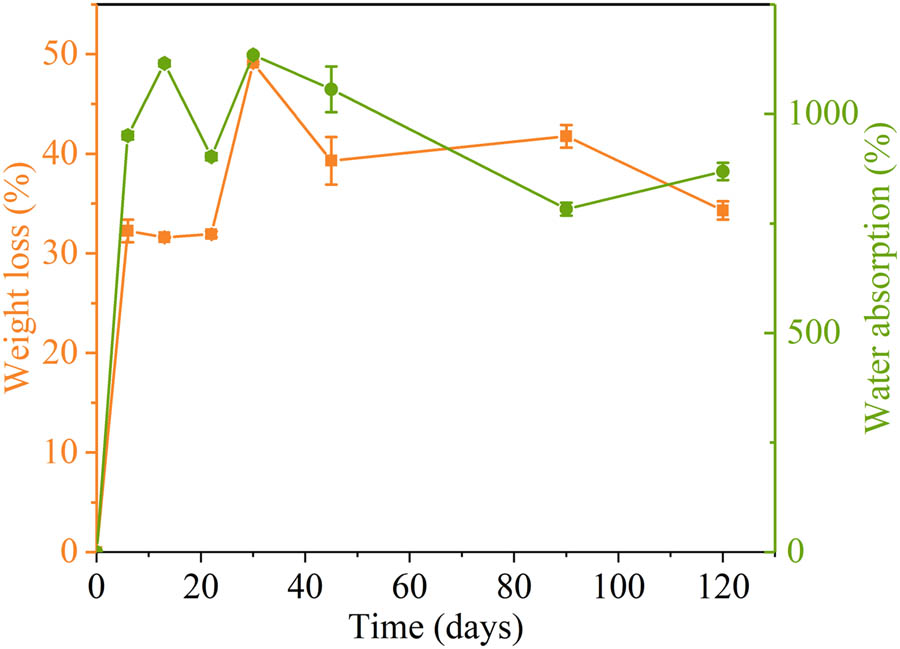
Weight loss and water absorption of modified PVA1788 in natural seawater.
3.2 Seawater degradation of PVA/PLA blends
Since the compatibility of two phases in blend systems not only affects the mechanical properties of blends, but also influences its degradation properties (41), we added a small amount of ADR during the melt extrusion process to improve the compatibility of the PVA/PLA blends. As shown in Figure 2, comparing the SEM images of the cross-sections of two PVA/PLA blends before and after adding ADR, it is observed that the blends have different degrees of phase separation. In the system containing PVA0588, when the PVA content is 50 wt%, it shows better compatibility compared with the content of 30 wt%. However, the compatibility in the system containing 50 wt% PVA1788 is worse, compared with the content of 30 wt%. On the one hand, PVA may form hydrogen bonds with the oxygen atoms of the ester groups, and partial miscibility can be achieved between PVA and PLA (42,43); on the other hand, during melt processing at the same temperature, PVA0588 has the same melt viscosity as PLA, making it easier to mix the two phases evenly. After adding 0.5 wt% ADR 4370S, the micro voids produced by phase separation become less and slightly smaller in size. Especially in the PVA1788/PLA = 50/50 system (4a, 4b), the massive agglomeration of PVA has almost disappeared.
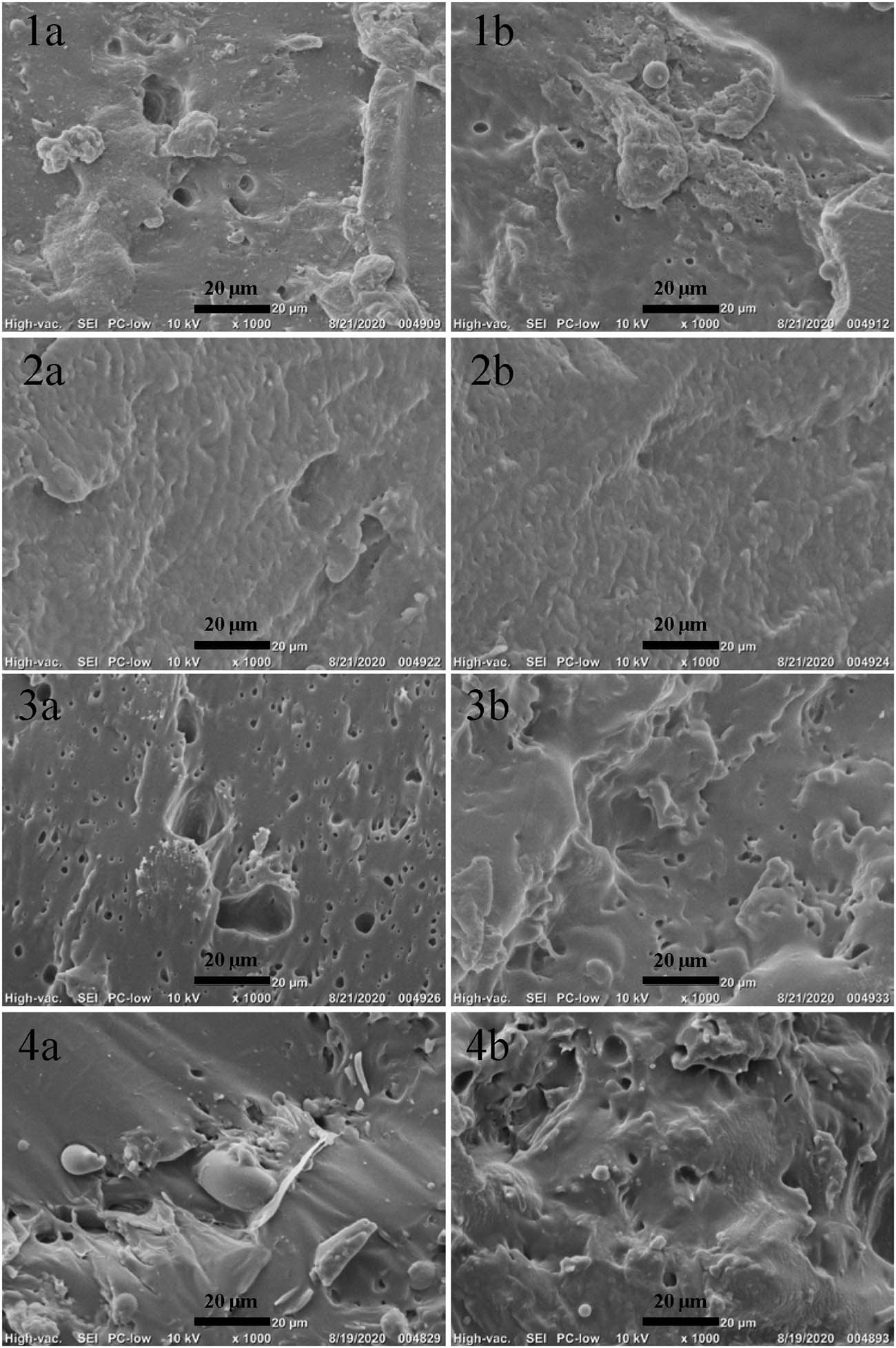
SEM images of the cross-section of PVA/PLA blend specimens: (1) PVA0588/PLA = 30/70, (2) PVA0588/PLA = 50/50, (3) PVA1788/PLA = 30/70, (4) PVA1788/PLA = 50/50, (1a–4a) the cross-section of the sample without compatibilizer, (1b–4b) the cross-section of the sample with compatibilizer.
Tensile test is performed on the PVA/PLA blend specimens, and the measured mechanical properties are shown in Table 3. The tensile strength and elongation at break of modified PVA0588 are 31.7 MPa and 314.4%, respectively, and those of PVA1788 are 37.9 MPa and 181.3%, respectively. Compared with the corresponding values in literature (37), the tensile strength of this modified PVA is lower, but the elongation at break increases significantly, which is related to the degree of plasticization. After adding PVA0588 with better toughness, compared to pure PLA (tensile strength 76.5 MPa, elongation at break 9.1%), the blends sacrifice part of the strength while significantly improving the toughness, especially the elongation at break of the system containing 50 wt% PVA0588 increases to 111.9%, which is consistent with the compatibility results of the previous SEM analysis. On the contrary, in the system containing PVA1788, when the PVA content is 50 wt%, the tensile strength and elongation at break are significantly reduced. After adding 0.5 wt% of ADR 4370S, the mechanical properties of the blends are improved to varying degrees. The tensile strength of blends with a PVA content of 30 wt% does not increase significantly, but the toughness increases. When the PVA content is 50 wt%, the tensile strength and elongation at break of blends are significantly improved. In summary, after adding 0.5 wt% ADR 4370S to the PVA/PLA blends, the compatibility has been improved to a certain extent, and the PVA/PLA blends obtain a more uniform structure.
Mechanical properties of PLA and PVA/PLA blends before degradation
| Sample | Tensile strengtha (MPa) | Elongation at breaka (%) | Tensile strengthb (MPa) | Elongation at breakb (%) |
|---|---|---|---|---|
| PLA | 76.5 ± 2.3 | 9.1 ± 3.0 | — | — |
| PVA0588/PLA = 30/70 | 31.9 ± 3.3 | 61.1 ± 28.4 | 31.3 ± 7.6 | 173.3 ± 19.0 |
| PVA0588/PLA = 50/50 | 24.4 ± 2.5 | 111.9 ± 42.9 | 30.6 ± 0.4 | 277.9 ± 4.6 |
| PVA1788/PLA = 30/70 | 38.2 ± 1.6 | 4.2 ± 0.6 | 39.2 ± 3.6 | 8.3 ± 0.6 |
| PVA1788/PLA = 50/50 | 15.6 ± 1.5 | 3.7 ± 1.8 | 24.8 ± 4.2 | 9.0 ± 2.7 |
| Modified PVA0588 | 31.7 ± 1.6 | 314.4 ± 24.7 | — | — |
| Modified PVA1788 | 37.9 ± 1.1 | 181.3 ± 20.7 | — | — |
- a
Before adding ADR 4370S.
- b
After adding ADR 4370S.
3.2.1 Morphology
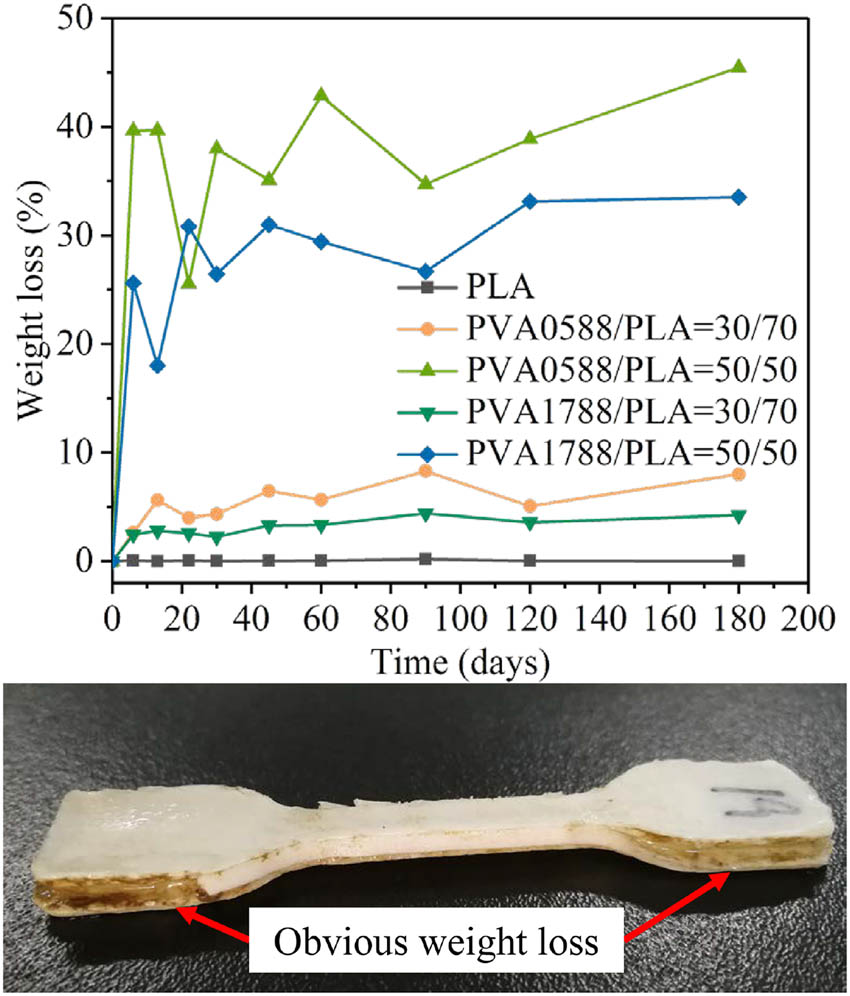
The morphology of PLA and PVA/PLA blends after degradation in natural seawater for 180 days is shown in Figure 3a. There is no significant change in pure PLA. However, the PVA/PLA blend specimens become brittle and easily crushed, resulting in a complete loss of mechanical properties, and significantly changed morphology is also observed. Because PVA0588 is very easy to dissolve, white spots left after dissolution appear on the surface of the blend specimens containing PVA0588, and a large area of dissolution/degradation gap appears on the side (see Figure 3b), resulting in a large degree of internal hollowness. Because PVA1788 is partially dissolved and swelled in natural seawater, many cracks appear on the surface of the blend specimens containing PVA1788, and the overall specimens show a certain degree of bending deformation. With the increase of PVA content, these changes become more obvious.
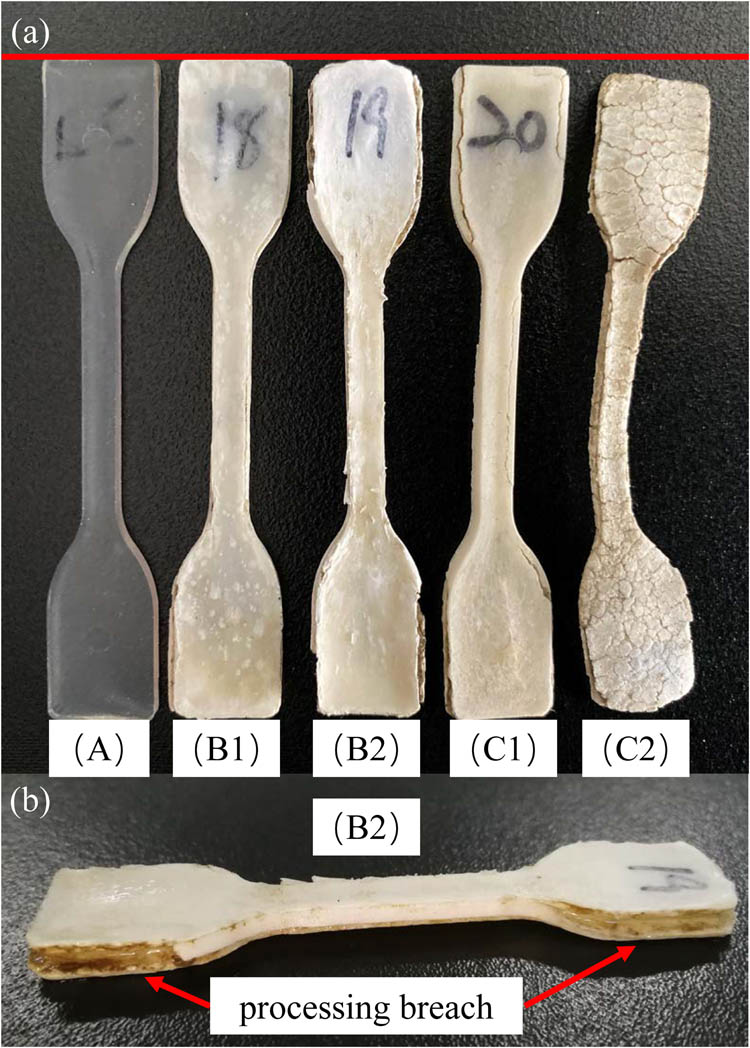
(a) Surface morphology after degradation. The letters A, B, and C represent PLA, PVA0588/PLA, and PVA1788/PLA, respectively; The numbers 1 and 2 represent the mass ratios of PVA/PLA: 30/70 and 50/50, respectively. (b) Side view of PVA0588/PLA = 50/50 specimens (B2).
Scanning electron microscopy was used to observe the surfaces and cross-sections of the specimens before and after degradation, as shown in Figure 4. It is found that after 180 days in natural seawater, no obvious changes are observed on the surface and cross-section of pure PLA after degradation (1b and 1d), which is consistent with the report in literature (19). The specimen of PVA0588/PLA = 30/70 exhibits holes and cracks (2b and 2d) caused by the dissolution of PVA0588 on the surface and inside. As the content of water-soluble PVA0588 increases, when the content of PVA0588 is 50 wt%, the hole density on the surface becomes denser (3b), and dense holes are also observed on the internal surface of the specimen, which means the holes left by PVA dissolving extend from the surface to the inside. It is precisely because of the existence of holes extending from the outside to the inside that countless channels leading to the interior of specimens are formed. These channels promote the entry of water and microorganisms, thereby causing the dissolution or/and degradation of the interior of specimens.
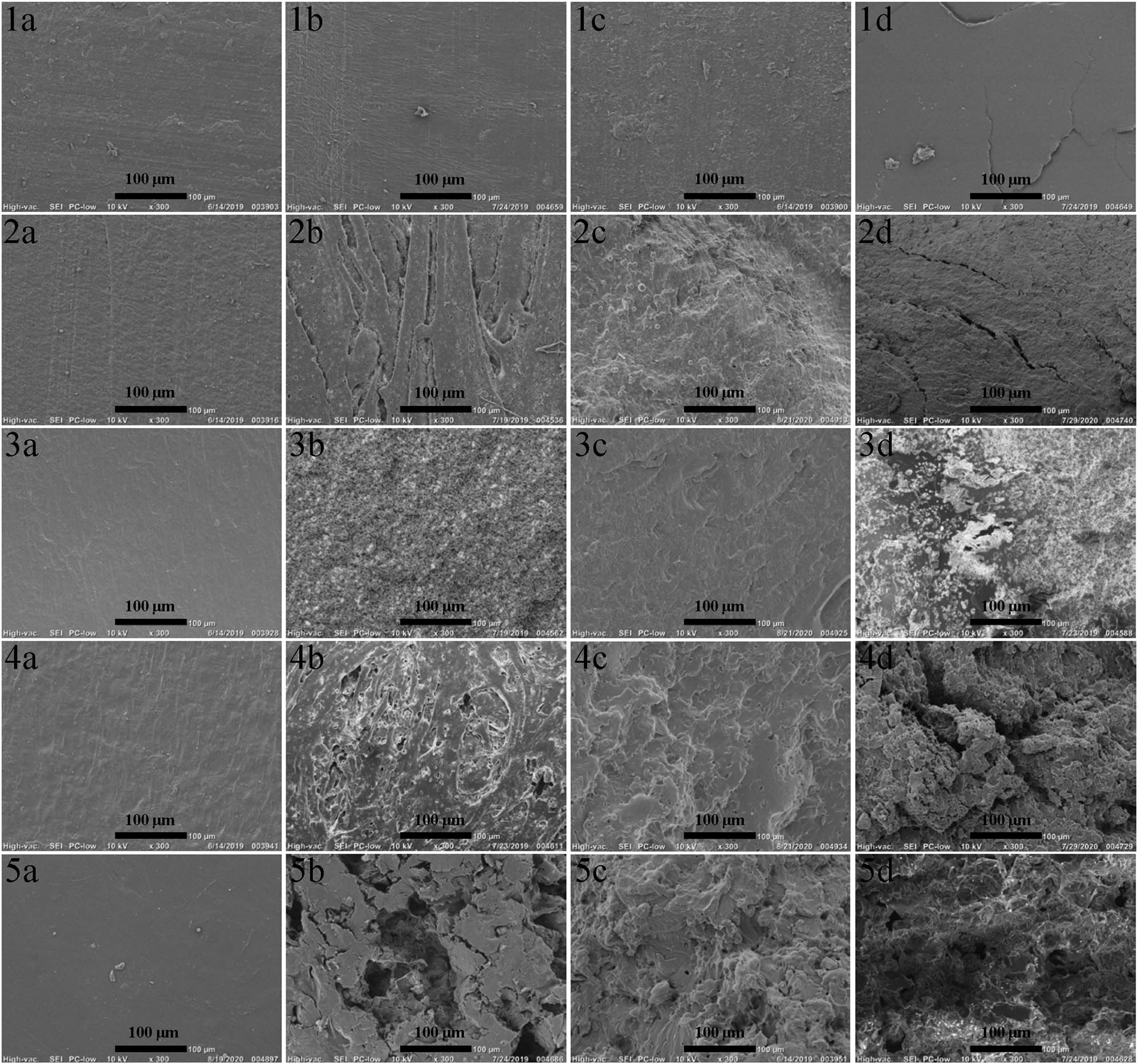
SEM images of PLA and PVA/PLA specimens after immersion in natural seawater for 180 days: (1) PLA, (2) PVA0588/PLA = 30/70, (3) PVA0588/PLA = 50/50, (4) PVA1788/PLA = 30/70, (5) PVA1788/PLA = 50/50, (1a–5a) surfaces of the specimens before degradation, (1b–5b) surfaces of the specimens after degradation, (1c–5c) cross-sections of the specimens before degradation, (1d–2d, 4d–5d) cross-sections of the specimens after degradation, and (3d) internal surface of the specimens.
Compared with the systems containing easily water-soluble PVA0588, different micro-morphological changes are observed in PVA1788/PLA blends after being placed in natural seawater for 180 days. A few holes (4b) caused by the dissolution of PVA appear on the surface of PVA1788/PLA = 30/70; however, obvious cracks appear on the surface and inside of the specimen, due to the swelling of PVA1788 in the hard matrix of PLA. With the increase of PVA1788 content to 50 wt%, the cracks and holes on the surface widen and deepen, as well as deep and large holes appear inside, which is consistent with the observation results of the macro morphology in Figure 3. It is not difficult to imagine that the holes and cracks generated by the dissolution or water-absorbing swelling of PVA0588 or PVA1788 will help water and microorganisms entering inside to contact PLA, thereby promoting the degradation process of the PLA matrix itself.
3.2.2 Weight loss
As shown in Figure 5, the weight loss of pure PLA specimens is not significant after being immersed in natural seawater for 180 days, which is consistent with literature (44). When water-soluble PVA is introduced, the weight loss increases significantly, and with the increase of PVA content, the rate of weight loss increases, which is consistent with the results of morphological changes analysis. When the PVA content is 30 wt%, the total weight loss does not exceed 10%, which may be because water molecules cannot penetrate deeply, owing to the continuous PLA phase acted as a barrier to prevent dissolution of PVA. When the PVA content reaches 50 wt%, the weight loss curves of blends corresponding to PVA0588 or PVA1788 in natural seawater exhibit a linear upward trend in the first 6 days, and then tend to rise gently. Between them, for the system containing the better water-soluble PVA0588, the weight loss rate is faster, and the weight loss quickly reaches 39.7% on the 6th day and finally reaches the highest weight loss percentage of 45.4% after 180 days. Similarly, for the system containing PVA1788, the weight loss quickly reaches 25.6% on the 6th day and finally reaches 33.5% after 180 days. In summary, it can be inferred that the weight loss process of the PVA/PLA = 50/50 systems in natural seawater exhibits two stages: the first stage is the linear weight loss caused by the rapid dissolution process of modified PVA; the second stage is the slow weight loss caused by the degradation process of PLA. This seems to reflect that the water-soluble PVA has a certain promotion effect on the weight loss of PLA degradation in natural seawater, and this promotion effect may become more obvious over time.
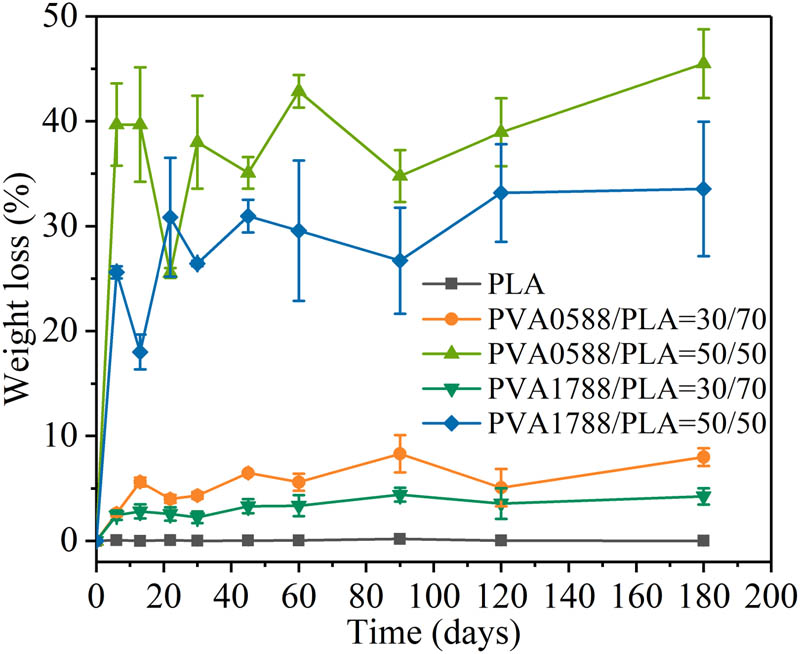
The percentage of weight loss of PLA and PVA/PLA blends in natural seawater over time.
3.2.3 Molecular weight change
In order to verify the effect of the holes and cracks left by the dissolution/swelling of PVA in blends on promoting the seawater degradation of PLA, we study the molecular weight changes of PLA in blends after degradation. PLA was extracted from the blends by using chloroform, and GPC tests were performed on the PLA in chloroform at 40°C. As shown in Figure 6, pure PLA before degradation shows an unideal single peak. Pure PLA after degradation slightly shifts to a lower molecular weight relative to before degradation, which signifies that the PLA specimens undergo bulk degradation in seawater to a certain extent. The unimodal peaks of PLA in blends shift to a lower molecular weight more obviously, with PVA0588/PLA = 50/50 shifting most obviously, which means that the degradation degree of PLA in blends is higher than that of pure PLA.
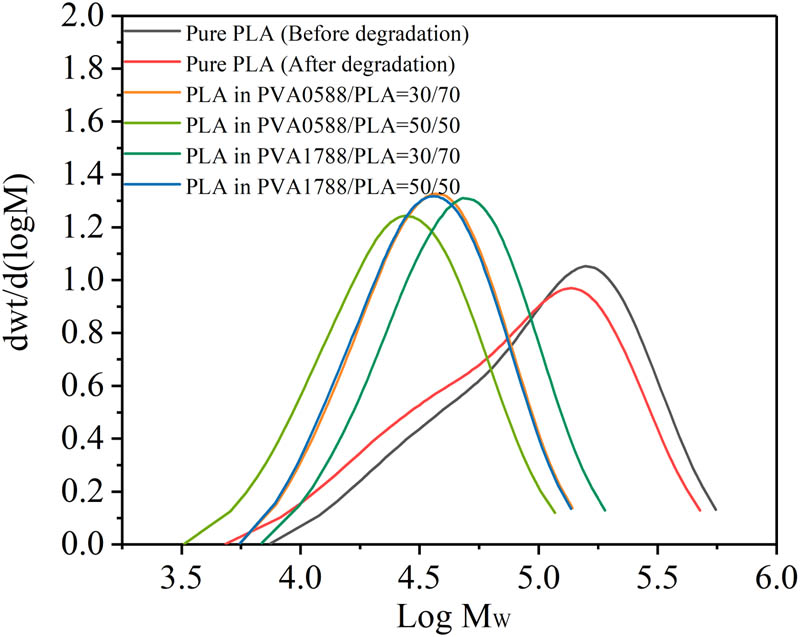
GPC curves of pure PLA before degradation, pure PLA and PLA in blends after natural seawater degradation for 180 days.
In order to compare with the degradation degree of PLA in blends, the peaks of pure PLA can be approximately treated as a unimodal peak to obtain the average molar mass and PI value for further analysis. As shown in Table 4, Mn, Mw, and PI values obtained from the GPC tests are summarized. The initial Mn and PI of pure PLA are 6.6 × 10⁴ g mol−1 and 2.2, respectively. After being immersed in natural seawater for 180 days, the molecular weight of pure PLA decreases slightly (from 6.6 × 10⁴ to 4.8 × 10⁴ g mol−1), while the molecular weight distribution increases slightly (from 2.2 to 2.5). The molecular weight of PLA in blends is significantly reduced to different degrees compared with the initial value, and the systems with higher PVA content have a more obvious downward trend. Among them, the Mn of PLA in PVA0588/PLA = 50/50 decreases by 70%, from 6.6 × 10⁴ to 2.0 × 10⁴ g mol−1. It is noteworthy that the molecular weight distribution of PLA in blends decreases significantly. This may be because the holes and cracks caused by the dissolution or swelling of PVA act as channels for water molecules and microorganisms, while promoting the degradation of the PLA phase, and the small molecules and oligomers produced during the degradation process can easily diffuse out without autocatalytic effect, thereby reducing the molecular weight distribution. The above results show that blending water-soluble PVA with PLA to achieve water solubility is indeed effective in promoting the degradation of PLA in seawater. In this way, compared with pure PLA, PLA in the blends exhibits a faster weight loss in natural seawater, which is consistent with the previous results inferred from weight loss.
Changes in the molecular weight and distribution of pure PLA and PLA in blends after degradation in natural seawater for 180 days
| Sample | Mn × 10−4 (g mol−1) | Mn × 10−4 (g mol−1) | PI | Mn/Mn0 (%) |
|---|---|---|---|---|
| Pure PLAa | 6.6 | 14.7 | 2.2 | 100 |
| Pure PLAb | 4.8 | 12.0 | 2.5 | 72.7 |
| PLA-1 | 2.8 | 4.2 | 1.5 | 42.4 |
| PLA-2 | 2.0 | 3.3 | 1.6 | 30.3 |
| PLA-3 | 3.6 | 5.6 | 1.6 | 54.5 |
| PLA-4 | 2.7 | 4.1 | 1.5 | 40.9 |
- a
Before degradation.
- b
After degradation; PLA-1 to PLA-4, respectively, represent PLA in the blend of PVA0588/PLA = 30/70, PVA0588/PLA = 50/50, PVA1788/PLA = 30/70, PVA1788/PLA = 50/50 after degradation.
3.2.4 1H NMR
By analyzing the chemical compositions and relative proportions of the blends before and after degradation, we can further obtain the relative degree of the two processes of PVA dissolution and PLA degradation in the blend systems. A small amount of the blends before and after degradation were dissolved in deuterated DMSO and characterized by 1H NMR. The 1H NMR spectra of the blends are compared with those of pure PLA and modified PVA. As shown in Figure 7, the 1H NMR spectra of the blends before degradation correspond to the characteristic peaks of pure PLA and modified PVA. It is worth noting that two obvious quartets (5.42–5.47 and 5.18–5.23 ppm), both of which attributed to the –CH of PLA, are actually detected in the blends, especially in the systems containing PVA0588 with better compatibility. This may be because the oxygen atoms on some of the ester bonds in PLA form intermolecular hydrogen bonds with the hydroxyl groups of PVA, which to a less extent causes the deshielding of the βH resonance and makes the proton peak of –CH shift to the low field, from 5.18–5.23 to 5.42–5.47 ppm. After being immersed in seawater for a long time, the peaks corresponding to the plasticizers (g, f) in the 1H NMR spectra of the blends and the quartet (a, 5.42–5.47 ppm) of –CH in PLA disappear. Although the 1H NMR spectra of the blends after degradation contain both the characteristic peaks of PLA and PVA, it can be clearly observed that the relative peak intensity between the characteristic peaks of PLA and PVA changes to a certain extent. Furthermore, we integrated the –CH characteristic peaks of PLA and –OH characteristic peaks of PVA and calculated according to Eq. 2 to obtain the relative mass fractions of PVA (wPVA) before and after degradation, which are summarized in Table 5.
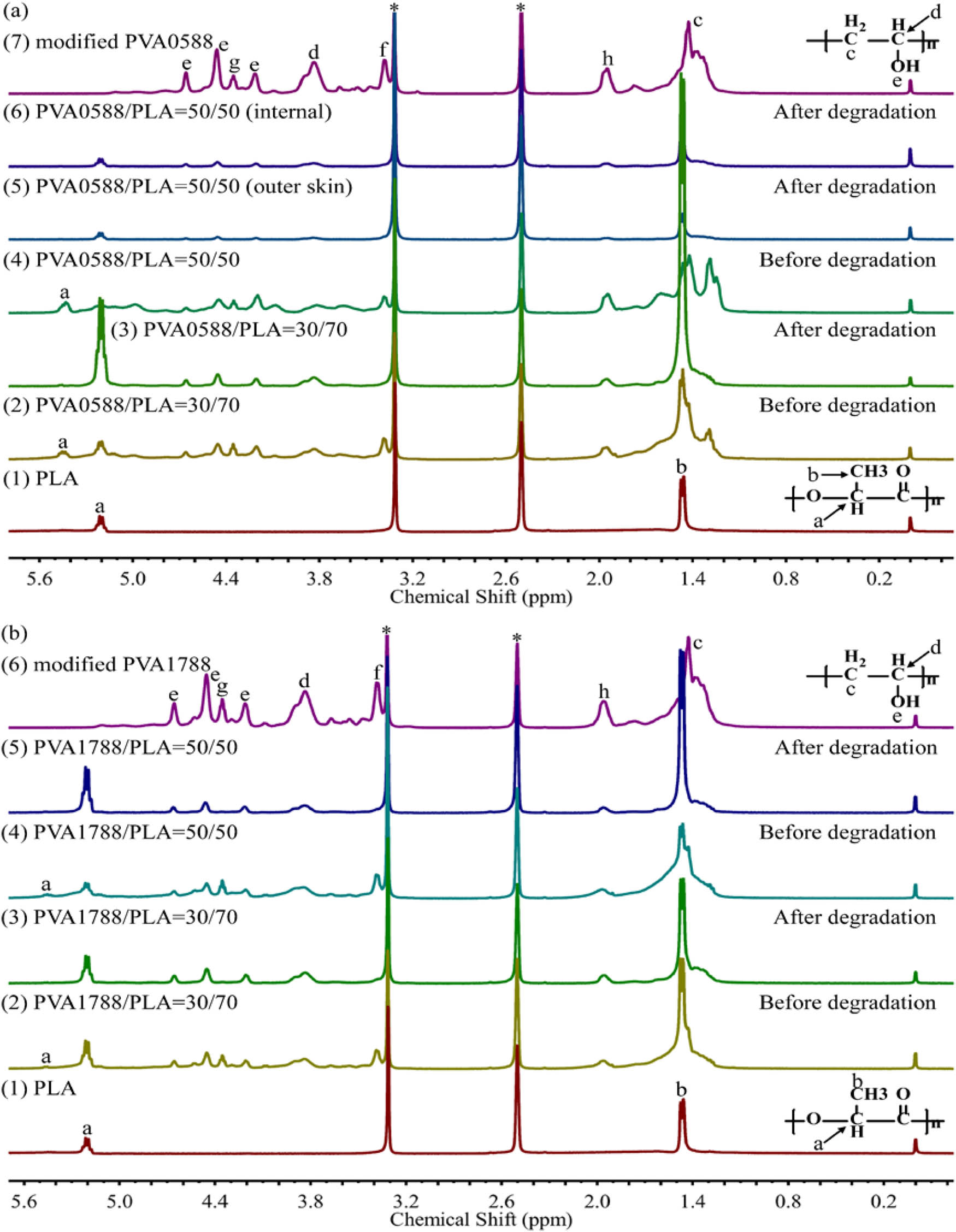
1H NMR spectra of PLA, modified PVA, and PVA/PLA blends before and after natural seawater degradation for 180 days: (a) modified PVA0588; (b) modified PVA1788, * represents the solvent DMSO absorption peak, letter h is the absorption peak of acetone, and other letters represent the characteristic peaks of different groups in the sample, respectively.
Changes in the relative mass fractions of PVA in the blends before and after degradation in natural seawater
| Sample | Before degradation wPVA (%) | After degradation wPVA (%) |
|---|---|---|
| PVA0588/PLA = 30/70 | 44.97 | 16.92 |
| PVA0588/PLA = 50/50a | 51.34 | 41.72 |
| PVA0588/PLA = 50/50b | 51.34 | 38.96 |
| PVA1788/PLA = 30/70 | 38.98 | 40.67 |
| PVA1788/PLA = 50/50 | 52.05 | 25.46 |
- a
Internal.
- b
Outer skin.
The relative mass fractions of PVA in PVA0588/PLA = 30/70 and PVA1788/PLA = 50/50 decrease significantly, which means that the departure caused by the dissolution of PVA is mainly responsible for the degradation process of the blends in natural seawater. In the PVA0588/PLA = 50/50 system, most of the middle is dissolved and left, and the wPVA in the internal or out skin of remaining part (from 51.34% to 41.72% and 38.96%, respectively) is lower than other systems, which indicates that while the PVA is dissolved and left, the degradation of PLA is also proceeding to a large extent, in accordance with the GPC results. In the PVA1788/PLA = 30/70 system, wPVA only slightly increases, which is because PVA1788 is wrapped by PLA and hardly dissolved, but it swells due to water absorption. The cracks caused by swelling promote the degradation of PLA to a certain extent, but the molecular weight of PLA only drops to 3.6 × 10⁴ g mol−1, which is still not easy to further degrade and leave. Combining the previous results of weight loss and molecular weight, it can be concluded that the degree of PVA dissolution in the early stage of the blends in natural seawater determines the degree of PLA degradation in the later stage. In the blends mainly undergoing the dissolution of PVA in natural seawater, PLA is distinctly degraded, corresponding to a significant decrease in molecular weight.
4 Conclusions
In order to promote the degradation of PLA in seawater, we introduced the water-soluble PVA as a degradation accelerator into the hard-to-hydrolyze PLA matrix, and an appropriate amount of compatibilizer was added to improve the compatibility of the two polymers. PLA/PVA blends were prepared by simple melt blending and a 180-day seawater degradation performance test was conducted in natural seawater. The results of weight loss and molecular weight changes demonstrate that the weight loss rate of PVA/PLA blends in natural seawater is significantly increased, and the degradation rate of the PLA phase is also obviously improved compared with pure PLA. The weight loss process of PVA/PLA blends in natural seawater includes two processes: the dissolution/swelling of PVA and the degradation of PLA. The degree of rapid dissolution of PVA in the early stage determines the degree of slow degradation of PLA, and the above two processes complement and promote each other. As observed in SEM, the holes left by the dissolution or the cracks caused by swelling of water-soluble PVA promote the entry of water and microorganisms, thereby promoting the degradation of PLA, and when the PVA content increases, the promotion effect is more obvious. It is worth noting that in the current time scale, the weight loss percentages of PVA/PLA blends have not been observed to exceed the initial percentages of PVA, and the compatibility of the PVA/PLA systems needs to be further improved, which not only affects the mechanical properties but also the degradation performance. Longer experimental time and further improvement of compatibility as well as making a profound study for the biodegradability of PVA in seawater may be required in the following research.
Acknowledgments
The authors would like to thank the National Natural Science Foundation of China (Project No. 51973228) and Youth Innovation Promotion Association, CAS (2018033) for financial support.
The author also thanks Shujun Zhao for his help in experimental sampling.
References
(1) Veiga JM, Vlachogianni T, Pahl S, Thompson RC, Kopke K, Doyle TK, et al. Enhancing public awareness and promoting co-responsibility for marine litter in Europe: The challenge of MARLISCO. Mar Pollut Bull. 2016;102(2):309–15. 10.1016/j.marpolbul.2016.01.031.Search in Google Scholar PubMed
(2) Costa da JP, Santos PSM, Duarte AC, Rocha-Santos T. (Nano)plastics in the environment-sources, fates and effects. Sci Total Env. 2016;566-567:15–26. 10.1016/j.scitotenv.2016.05.041.Search in Google Scholar PubMed
(3) Sebille van E, Wilcox C, Lebreton L, Maximenko N, Hardesty BD, Franeker van JA, et al. A global inventory of small floating plastic debris. Env Res Lett. 2015;10(12):124006. 10.1088/1748-9326/10/12/124006.Search in Google Scholar
(4) Krueger MC, Harms H, Schlosser D. Prospects for microbiological solutions to environmental pollution with plastics. Appl Microbiol Biot. 2015;99(21):8857–74. 10.1007/s00253-015-6879-4.Search in Google Scholar PubMed
(5) Jambeck JR, Geyer R, Wilcox C, Siegler TR, Perryman M, Andrady A, et al. Plastic waste inputs from land into the ocean. Science. 2015;347(6223):768–71. 10.1126/science.1260352.Search in Google Scholar PubMed
(6) Eriksen M, Lebreton LC, Carson HS, Thiel M, Moore CJ, Borerro JC, et al. Plastic pollution in the World’s Oceans: More than 5 trillion plastic pieces weighing over 250,000 tons afloat at sea. PLoS One. 2014;9(12):0111913. 10.1371/journal.pone.0111913.Search in Google Scholar PubMed PubMed Central
(7) Cole M, Lindeque P, Halsband C, Galloway TS. Microplastics as contaminants in the marine environment: A review. Mar Pollut Bull. 2011;62(12):2588–97. 10.1016/j.marpolbul.2011.09.025.Search in Google Scholar PubMed
(8) Kara LL, Skye MF, Nikolai AM, Giora P, Emily EP, Jan H, et al. Plastic accumulation in the North Atlantic Subtropical Gyre. Science. 2010;329:1185–8. 10.1126/science.1192321.Search in Google Scholar PubMed
(9) Kubota M, Takayama K, Namimoto D. Pleading for the use of biodegradable polymers in favor of marine environments and to avoid an asbestos-like problem for the future. Appl Microbiol Biot. 2005;67(4):469–76. 10.1007/s00253-004-1857-2.Search in Google Scholar PubMed
(10) Klein R, Wurm FR. Aliphatic polyethers: Classical polymers for the 21st Century. Macromol Rapid Comm. 2015;36(12):1147–65. 10.1002/marc.201500013.Search in Google Scholar PubMed
(11) Shah AA, Kato S, Shintani N, Kamini NR, Nakajima-Kambe T. Microbial degradation of aliphatic and aliphatic-aromatic co-polyesters. Appl Microbiol Biot. 2014;98(8):3437–47. 10.1007/s00253-014-5558-1.Search in Google Scholar PubMed
(12) Luckachan GE, Pillai CKS. Biodegradable polymers – A review on recent trends and emerging perspectives. J Polym Env. 2011;19(3):637–76. 10.1007/s10924-011-0317-1.Search in Google Scholar
(13) Chiellini E, Solaro R. Biodegradable polymeric materials. Adv Mater. 1996;8(4):305–13.10.1002/adma.19960080406Search in Google Scholar
(14) Rajan KP, Thomas SP, Gopanna A, Al-Ghamdic A, Chavali M. Polyblends and composites of poly (lactic acid) (PLA): a review on the state of the art. J Polym Eng. 2018;1(2):1–15. 10.24294/jpse.v1i3.723.Search in Google Scholar
(15) Zhu Y, Romain C, Williams CK. Sustainable polymers from renewable resources. Nature. 2016;540(7633):354–62.10.1038/nature21001Search in Google Scholar PubMed
(16) Mehta R, Kumar V, Bhunia H, Upadhyay SN. Synthesis of poly(lactic acid): A review. J Macromol R. 2005;45(4):325–49. 10.1080/15321790500304148.Search in Google Scholar
(17) Zhao LS, Cai YH. Insight on the effect of a piperonylic acid derivative on the crystallization process, melting behavior, thermal stability, optical and mechanical properties of poly(l-lactic acid). E-Polymers. 2017;17(6):449–62. 10.1515/epoly-2017-0024.Search in Google Scholar
(18) Sypaseuth FD, Gallo E, Çiftci S, Schartel B. Polylactic acid biocomposites: approaches to a completely green flame retarded polymer. E-Polymers. 2020;20(1):203–13. 10.1515/epoly-2020-0027.Search in Google Scholar
(19) Deroiné M, Le Duigou A, Corre YM, Le Gac PY, Davies P, César G, et al. Accelerated ageing of polylactide in aqueous environments: Comparative study between distilled water and seawater. Polym Degrad Stabil. 2014;108:319–29. 10.1016/j.polymdegradstab.2014.01.020.Search in Google Scholar
(20) Bagheri AR, Laforsch C, Greiner A, Agarwal S. Fate of so-called biodegradable polymers in seawater and freshwater. Glob Chall. 2017;1(4):1700048. 10.1002/gch2.201700048.Search in Google Scholar PubMed PubMed Central
(21) Tsuji H, Suzuyoshi K. Environmental degradation of biodegradable polyesters 1. Poly(e-caprolactone), poly[(R)-3-hydroxybutyrate], and poly(l-lactide) films in controlled static seawater. Polym Degrad Stabil. 2002;75:347–55.10.1016/S0141-3910(01)00240-3Search in Google Scholar
(22) Tsuji H, Suzuyoshi K. Environmental degradation of biodegradable polyesters 2. Poly(“-caprolactone), poly[(R)-3-hydroxybutyrate], and poly(l-lactide) films in natural dynamic seawater. Polym Degrad Stabil. 2002;75:357–65.10.1016/S0141-3910(01)00239-7Search in Google Scholar
(23) Wang GX, Huang D, Zhang W, Ji JH. Degradation performance of typical biodegradable polyesters in seawater. J Funct Polym. 2020;33:1–8. 10.14133/j.cnki.1008-9357.20191015001.Search in Google Scholar
(24) Ho KLG, Pometto AL, Hinz PN. Effects of temperature and relative humidity on polylactic acid plastic degradation. J Env Polym Degr. 1999;7(2):83–92.10.1023/A:1021808317416Search in Google Scholar
(25) Wan SX, Guo XS, Zhu HF, Jiang GY, Li F. Research on the dynamic change of the microbial community in the process of naturally composting. J Anhui Agri Sci. 2009;37(28):13710–1.Search in Google Scholar
(26) Fricke AH, Thum AB. Temperature recording in shallow marine environments. T Roy Soc S Afr. 1975;41(4):351–7. 10.1080/00359197509519449.Search in Google Scholar
(27) Watson SW, Novitsky TJ, Quinby HL, Valois FW. Determination of bacterial number and biomass in the marine environment. Appl Env Microb. 1977;33(4):940–6.10.1128/aem.33.4.940-946.1977Search in Google Scholar
(28) Chen XL, Wang LM, Shi JG, Shi H, Liu YL. Environmental degradation of starch/poly(lactic acid) composite in seawater. Polym Polym Compos. 2011;19(7):559–65. 10.1177/096739111101900705.Search in Google Scholar
(29) Guzman-Sielicka A, Janik H, Sielicki P. Proposal of new starch-blends composition quickly degradable in marine environment. J Polym Env. 2013;21(3):802–6. 10.1007/s10924-012-0558-7.Search in Google Scholar
(30) Rotini OT, Dammann E, Nord FF. Dehydrisation by fusarium ini bolley-14 articles on the mechanism of enzyme action. Biochem Z. 1936;288(5/7):414–20.Search in Google Scholar
(31) Chiellini E, Corti A, D’Antone S, Solaro R. Biodegradation of poly(vinyl alcohol) based materials. Prog Polym Sci. 2003;28(6):963–1014. 10.1016/s0079-6700(02)00149-1.Search in Google Scholar
(32) Kawai F, Hu X. Biochemistry of microbial polyvinyl alcohol degradation. Appl Microbiol Biot. 2009;84(2):227–37. 10.1007/s00253-009-2113-6.Search in Google Scholar PubMed
(33) Marušincová H, Husárová L, Růžička J, Ingr M, Navrátil V, Buňková L, et al. Polyvinyl alcohol biodegradation under denitrifying conditions. Int Biodeter Biodegr. 2013;84:21–8. 10.1016/j.ibiod.2013.05.023.Search in Google Scholar
(34) Corti A, Solaro R, Chiellini E. Biodegradation of poly(vinyl alcohol) in selected mixed microbial culture and relevant culture filtrate. Polym Degrad Stabil. 2002;75:447–58.10.1016/S0141-3910(01)00247-6Search in Google Scholar
(35) Nogi Y, Yoshizumi M, Miyazaki M. Thalassospira povalilytica sp. nov., a polyvinyl-alcohol-degrading marine bacterium. Int J Syst Evol Microbiol. 2014;64:1149–53. 10.1099/ijs.0.058321-0.Search in Google Scholar PubMed
(36) Pin Lue Library. http://www.pinlue.com/article/2019/08/0403/179451952146.html.Search in Google Scholar
(37) Huang D, Hu ZD, Ding Y, Zhen ZC, Lu B, Ji JH, et al. Seawater degradable PVA/PCL blends with water-soluble polyvinyl alcohol as degradation accelerator. Polym Degrad Stabil. 2019;163:195–205. 10.1016/j.polymdegradstab.2019.03.011.Search in Google Scholar
(38) Jang J, Lee DK. Plasticizer effect on the melting and crystallization behavior of polyvinyl alcohol. Polymer. 2003;44(26):8139–46. 10.1016/j.polymer.2003.10.015.Search in Google Scholar
(39) Hao XH, Wen S. Glycerol plasticizer effect on the properties of plasticized polyvinyl. Guangzhou Chem Ind. 2015;43(3):77–9.Search in Google Scholar
(40) Liu F, Zhang KZ, Wang XJ. The summary of study on the modification method of polyvinyl alcohol. Chem Adhes. 2006;28(4):253–6.Search in Google Scholar
(41) Shuao XT, He Y, Asakawa N, Inoue Y. Miscibility and phase structure of binary blends of poly(l-lactide) and poly(vinyl alcohol). J Appl Polym Sci. 2001;81:762–72.10.1002/app.1493Search in Google Scholar
(42) Yeh JT, Yang MC, Wu CJ, Wu X, Wu CS. Study on the crystallization kinetic and characterzation of poly(lactic acid) and poly(vinyl alcohol) blends. Polym Technol Eng. 2008;47(12):1289–96. 10.1080/03602550802497958.Search in Google Scholar
(43) Liu Y, Wei H, Wang Z, Li Q, Tian N. Simultaneous enhancement of strength and toughness of pla induced by miscibility variation with PVA. Polymers-Basel. 2018;10(10):1–13. 10.3390/polym10101178.Search in Google Scholar PubMed PubMed Central
(44) Martin RT, Camargo LP, Miller SA. Marine-degradable polylactic acid. Green Chem. 2012;(1–3):1–6. 10.1039/b000000x.Search in Google Scholar
© 2020 Dan Huang et al., published by De Gruyter
This work is licensed under the Creative Commons Attribution 4.0 International License.
Articles in the same Issue
- Regular Articles
- The regulatory effects of the number of VP(N-vinylpyrrolidone) function groups on macrostructure and photochromic properties of polyoxometalates/copolymer hybrid films
- How the hindered amines affect the microstructure and mechanical properties of nitrile-butadiene rubber composites
- Novel benzimidazole-based conjugated polyelectrolytes: synthesis, solution photophysics and fluorescent sensing of metal ions
- Study on the variation of rock pore structure after polymer gel flooding
- Investigation on compatibility of PLA/PBAT blends modified by epoxy-terminated branched polymers through chemical micro-crosslinking
- Investigation on degradation mechanism of polymer blockages in unconsolidated sandstone reservoirs
- Investigation on the effect of active-polymers with different functional groups for EOR
- Fabrication and characterization of hexadecyl acrylate cross-linked phase change microspheres
- Surface-induced phase transitions in thin films of dendrimer block copolymers
- ZnO-assisted coating of tetracalcium phosphate/ gelatin on the polyethylene terephthalate woven nets by atomic layer deposition
- Animal fat and glycerol bioconversion to polyhydroxyalkanoate by produced water bacteria
- Effect of microstructure on the properties of polystyrene microporous foaming material
- Synthesis of amphiphilic poly(ethylene glycol)-block-poly(methyl methacrylate) containing trityl ether acid cleavable junction group and its self-assembly into ordered nanoporous thin films
- On-demand optimize design of sound-absorbing porous material based on multi-population genetic algorithm
- Enhancement of mechanical, thermal and water uptake performance of TPU/jute fiber green composites via chemical treatments on fiber surface
- Enhancement of mechanical properties of natural rubber–clay nanocomposites through incorporation of silanated organoclay into natural rubber latex
- Preparation and characterization of corn starch/PVA/glycerol composite films incorporated with ε-polylysine as a novel antimicrobial packaging material
- Preparation of novel amphoteric polyacrylamide and its synergistic retention with cationic polymers
- Effect of montmorillonite on PEBAX® 1074-based mixed matrix membranes to be used in humidifiers in proton exchange membrane fuel cells
- Insight on the effect of a piperonylic acid derivative on the crystallization process, melting behavior, thermal stability, optical and mechanical properties of poly(l-lactic acid)
- Lipase-catalyzed synthesis and post-polymerization modification of new fully bio-based poly(hexamethylene γ-ketopimelate) and poly(hexamethylene γ-ketopimelate-co-hexamethylene adipate) copolyesters
- Dielectric, mechanical and thermal properties of all-organic PI/PSF composite films by in situ polymerization
- Morphological transition of amphiphilic block copolymer/PEGylated phospholipid complexes induced by the dynamic subtle balance interactions in the self-assembled aggregates
- Silica/polymer core–shell particles prepared via soap-free emulsion polymerization
- Antibacterial epoxy composites with addition of natural Artemisia annua waste
- Design and preparation of 3D printing intelligent poly N,N-dimethylacrylamide hydrogel actuators
- Multilayer-structured fibrous membrane with directional moisture transportability and thermal radiation for high-performance air filtration
- Reaction characteristics of polymer expansive jet impact on explosive reactive armour
- Synthesis of a novel modified chitosan as an intumescent flame retardant for epoxy resin
- Synthesis of aminated polystyrene and its self-assembly with nanoparticles at oil/water interface
- The synthesis and characterisation of porous and monodisperse, chemically modified hypercrosslinked poly(acrylonitrile)-based terpolymer as a sorbent for the adsorption of acidic pharmaceuticals
- Crystal transition and thermal behavior of Nylon 12
- All-optical non-conjugated multi-functionalized photorefractive polymers via ring-opening metathesis polymerization
- Fabrication of LDPE/PS interpolymer resin particles through a swelling suspension polymerization approach
- Determination of the carbonyl index of polyethylene and polypropylene using specified area under band methodology with ATR-FTIR spectroscopy
- Synthesis, electropolymerization, and electrochromic performances of two novel tetrathiafulvalene–thiophene assemblies
- Wetting behaviors of fluoroterpolymer fiber films
- Plugging mechanisms of polymer gel used for hydraulic fracture water shutoff
- Synthesis of flexible poly(l-lactide)-b-polyethylene glycol-b-poly(l-lactide) bioplastics by ring-opening polymerization in the presence of chain extender
- Sulfonated poly(arylene ether sulfone) functionalized polysilsesquioxane hybrid membranes with enhanced proton conductivity
- Fmoc-diphenylalanine-based hydrogels as a potential carrier for drug delivery
- Effect of diacylhydrazine as chain extender on microphase separation and performance of energetic polyurethane elastomer
- Improved high-temperature damping performance of nitrile-butadiene rubber/phenolic resin composites by introducing different hindered amine molecules
- Rational synthesis of silicon into polyimide-derived hollow electrospun carbon nanofibers for enhanced lithium storage
- Synthesis, characterization and properties of phthalonitrile-etherified resole resin
- Highly thermally conductive boron nitride@UHMWPE composites with segregated structure
- Synthesis of high-temperature thermally expandable microcapsules and their effects on foaming quality and surface quality of foamed ABS materials
- Tribological and nanomechanical properties of a lignin-based biopolymer
- Hydroxyapatite/polyetheretherketone nanocomposites for selective laser sintering: Thermal and mechanical performances
- Synthesis of a phosphoramidate flame retardant and its flame retardancy on cotton fabrics
- Preparation and characterization of thermoresponsive poly(N-isopropylacrylamide) copolymers with enhanced hydrophilicity
- Fabrication of flexible SiO2 nanofibrous yarn via a conjugate electrospinning process
- Silver-loaded carbon nanofibers for ammonia sensing
- Polar migration behavior of phosphonate groups in phosphonate esterified acrylic grafted epoxy ester composites and their role in substrate protection
- Solubility and diffusion coefficient of supercritical CO2 in polystyrene dynamic melt
- Curcumin-loaded polyvinyl butyral film with antibacterial activity
- Experimental-numerical studies of the effect of cell structure on the mechanical properties of polypropylene foams
- Experimental investigation on the three-dimensional flow field from a meltblowing slot die
- Enhancing tribo-mechanical properties and thermal stability of nylon 6 by hexagonal boron nitride fillers
- Preparation and characterization of electrospun fibrous scaffolds of either PVA or PVP for fast release of sildenafil citrate
- Seawater degradation of PLA accelerated by water-soluble PVA
- Review Article
- Mechanical properties and application analysis of spider silk bionic material
- Additive manufacturing of PLA-based scaffolds intended for bone regeneration and strategies to improve their biological properties
- Structural design toward functional materials by electrospinning: A review
- Special Issue: XXXII National Congress of the Mexican Polymer Society
- Tailoring the morphology of poly(high internal phase emulsions) synthesized by using deep eutectic solvents
- Modification of Ceiba pentandra cellulose for drug release applications
- Redox initiation in semicontinuous polymerization to search for specific mechanical properties of copolymers
- pH-responsive polymer micelles for methotrexate delivery at tumor microenvironments
- Microwave-assisted synthesis of the lipase-catalyzed ring-opening copolymerization of ε-caprolactone and ω-pentadecanolactone: Thermal and FTIR characterization
- Rapid Communications
- Pilot-scale production of polylactic acid nanofibers by melt electrospinning
- Erratum
- Erratum to: Synthesis and characterization of new macromolecule systems for colon-specific drug delivery
Articles in the same Issue
- Regular Articles
- The regulatory effects of the number of VP(N-vinylpyrrolidone) function groups on macrostructure and photochromic properties of polyoxometalates/copolymer hybrid films
- How the hindered amines affect the microstructure and mechanical properties of nitrile-butadiene rubber composites
- Novel benzimidazole-based conjugated polyelectrolytes: synthesis, solution photophysics and fluorescent sensing of metal ions
- Study on the variation of rock pore structure after polymer gel flooding
- Investigation on compatibility of PLA/PBAT blends modified by epoxy-terminated branched polymers through chemical micro-crosslinking
- Investigation on degradation mechanism of polymer blockages in unconsolidated sandstone reservoirs
- Investigation on the effect of active-polymers with different functional groups for EOR
- Fabrication and characterization of hexadecyl acrylate cross-linked phase change microspheres
- Surface-induced phase transitions in thin films of dendrimer block copolymers
- ZnO-assisted coating of tetracalcium phosphate/ gelatin on the polyethylene terephthalate woven nets by atomic layer deposition
- Animal fat and glycerol bioconversion to polyhydroxyalkanoate by produced water bacteria
- Effect of microstructure on the properties of polystyrene microporous foaming material
- Synthesis of amphiphilic poly(ethylene glycol)-block-poly(methyl methacrylate) containing trityl ether acid cleavable junction group and its self-assembly into ordered nanoporous thin films
- On-demand optimize design of sound-absorbing porous material based on multi-population genetic algorithm
- Enhancement of mechanical, thermal and water uptake performance of TPU/jute fiber green composites via chemical treatments on fiber surface
- Enhancement of mechanical properties of natural rubber–clay nanocomposites through incorporation of silanated organoclay into natural rubber latex
- Preparation and characterization of corn starch/PVA/glycerol composite films incorporated with ε-polylysine as a novel antimicrobial packaging material
- Preparation of novel amphoteric polyacrylamide and its synergistic retention with cationic polymers
- Effect of montmorillonite on PEBAX® 1074-based mixed matrix membranes to be used in humidifiers in proton exchange membrane fuel cells
- Insight on the effect of a piperonylic acid derivative on the crystallization process, melting behavior, thermal stability, optical and mechanical properties of poly(l-lactic acid)
- Lipase-catalyzed synthesis and post-polymerization modification of new fully bio-based poly(hexamethylene γ-ketopimelate) and poly(hexamethylene γ-ketopimelate-co-hexamethylene adipate) copolyesters
- Dielectric, mechanical and thermal properties of all-organic PI/PSF composite films by in situ polymerization
- Morphological transition of amphiphilic block copolymer/PEGylated phospholipid complexes induced by the dynamic subtle balance interactions in the self-assembled aggregates
- Silica/polymer core–shell particles prepared via soap-free emulsion polymerization
- Antibacterial epoxy composites with addition of natural Artemisia annua waste
- Design and preparation of 3D printing intelligent poly N,N-dimethylacrylamide hydrogel actuators
- Multilayer-structured fibrous membrane with directional moisture transportability and thermal radiation for high-performance air filtration
- Reaction characteristics of polymer expansive jet impact on explosive reactive armour
- Synthesis of a novel modified chitosan as an intumescent flame retardant for epoxy resin
- Synthesis of aminated polystyrene and its self-assembly with nanoparticles at oil/water interface
- The synthesis and characterisation of porous and monodisperse, chemically modified hypercrosslinked poly(acrylonitrile)-based terpolymer as a sorbent for the adsorption of acidic pharmaceuticals
- Crystal transition and thermal behavior of Nylon 12
- All-optical non-conjugated multi-functionalized photorefractive polymers via ring-opening metathesis polymerization
- Fabrication of LDPE/PS interpolymer resin particles through a swelling suspension polymerization approach
- Determination of the carbonyl index of polyethylene and polypropylene using specified area under band methodology with ATR-FTIR spectroscopy
- Synthesis, electropolymerization, and electrochromic performances of two novel tetrathiafulvalene–thiophene assemblies
- Wetting behaviors of fluoroterpolymer fiber films
- Plugging mechanisms of polymer gel used for hydraulic fracture water shutoff
- Synthesis of flexible poly(l-lactide)-b-polyethylene glycol-b-poly(l-lactide) bioplastics by ring-opening polymerization in the presence of chain extender
- Sulfonated poly(arylene ether sulfone) functionalized polysilsesquioxane hybrid membranes with enhanced proton conductivity
- Fmoc-diphenylalanine-based hydrogels as a potential carrier for drug delivery
- Effect of diacylhydrazine as chain extender on microphase separation and performance of energetic polyurethane elastomer
- Improved high-temperature damping performance of nitrile-butadiene rubber/phenolic resin composites by introducing different hindered amine molecules
- Rational synthesis of silicon into polyimide-derived hollow electrospun carbon nanofibers for enhanced lithium storage
- Synthesis, characterization and properties of phthalonitrile-etherified resole resin
- Highly thermally conductive boron nitride@UHMWPE composites with segregated structure
- Synthesis of high-temperature thermally expandable microcapsules and their effects on foaming quality and surface quality of foamed ABS materials
- Tribological and nanomechanical properties of a lignin-based biopolymer
- Hydroxyapatite/polyetheretherketone nanocomposites for selective laser sintering: Thermal and mechanical performances
- Synthesis of a phosphoramidate flame retardant and its flame retardancy on cotton fabrics
- Preparation and characterization of thermoresponsive poly(N-isopropylacrylamide) copolymers with enhanced hydrophilicity
- Fabrication of flexible SiO2 nanofibrous yarn via a conjugate electrospinning process
- Silver-loaded carbon nanofibers for ammonia sensing
- Polar migration behavior of phosphonate groups in phosphonate esterified acrylic grafted epoxy ester composites and their role in substrate protection
- Solubility and diffusion coefficient of supercritical CO2 in polystyrene dynamic melt
- Curcumin-loaded polyvinyl butyral film with antibacterial activity
- Experimental-numerical studies of the effect of cell structure on the mechanical properties of polypropylene foams
- Experimental investigation on the three-dimensional flow field from a meltblowing slot die
- Enhancing tribo-mechanical properties and thermal stability of nylon 6 by hexagonal boron nitride fillers
- Preparation and characterization of electrospun fibrous scaffolds of either PVA or PVP for fast release of sildenafil citrate
- Seawater degradation of PLA accelerated by water-soluble PVA
- Review Article
- Mechanical properties and application analysis of spider silk bionic material
- Additive manufacturing of PLA-based scaffolds intended for bone regeneration and strategies to improve their biological properties
- Structural design toward functional materials by electrospinning: A review
- Special Issue: XXXII National Congress of the Mexican Polymer Society
- Tailoring the morphology of poly(high internal phase emulsions) synthesized by using deep eutectic solvents
- Modification of Ceiba pentandra cellulose for drug release applications
- Redox initiation in semicontinuous polymerization to search for specific mechanical properties of copolymers
- pH-responsive polymer micelles for methotrexate delivery at tumor microenvironments
- Microwave-assisted synthesis of the lipase-catalyzed ring-opening copolymerization of ε-caprolactone and ω-pentadecanolactone: Thermal and FTIR characterization
- Rapid Communications
- Pilot-scale production of polylactic acid nanofibers by melt electrospinning
- Erratum
- Erratum to: Synthesis and characterization of new macromolecule systems for colon-specific drug delivery
