
IUPAC | CHAINS 2023

Busy times for the Scientific Program Committee of IUPAC | CHAINS 2023 as they are putting together an exciting program covering as many aspects of chemistry as possible. Co-chairs Petra de Jongh and Hermen Overkleeft provide a first impression of what to expect.
With submissions closed for almost all elements of the program, the challenge of completing the huge puzzle that will result in a full conference program is underway. It is up to the Scientific Program Committee of IUPAC |CHAINS 2023, consisting of Dutch and international scientists to ensure that the public is presented with a varied program full of inspiring science. The program was be announced in the course of May, and C2W | Mens & Molecule was granted a preview by Petra de Jongh (Utrecht University) and Hermen Overkleeft (Leiden University), co-chairs of the Scientific Program Committee.
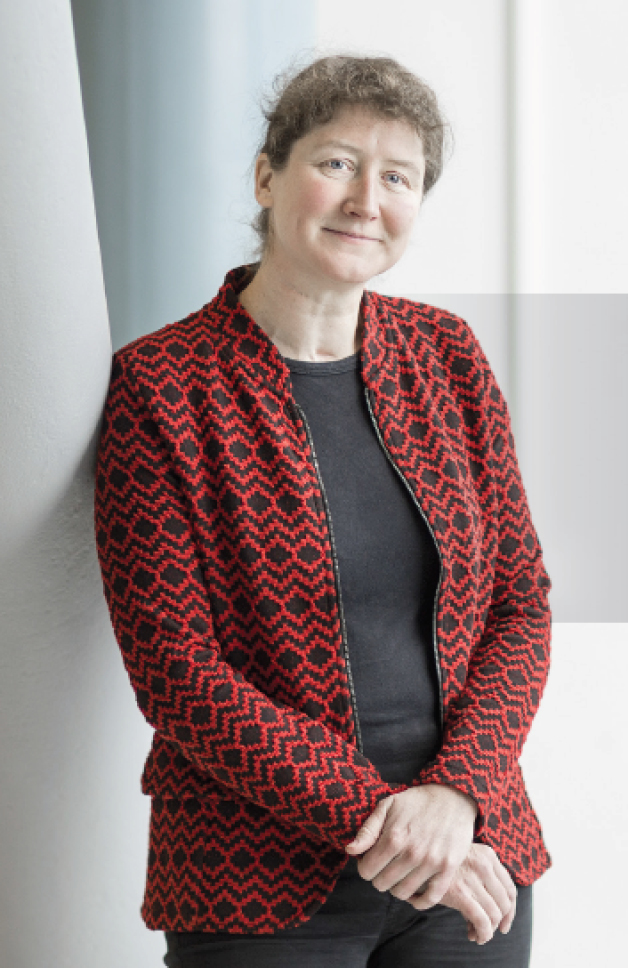
Petra de Jongh

Hermen Overkleeft
Is it difficult to put together a good program?
Petra-de-Jongh: “It is not really difficult, but it is definitely a challenge and above all a fantastic honor to organize this international conference. I am very happy that we have enthusiastic committees supporting, and that so many chemists have contributed ideas for the program by submitting abstracts and focus sessions. This allows us to cover many current, relevant topics.”Overkleeft: “I completely agree, the sheer number of submissions enable us to show the full spectrum of chemistry. And the topics are even broader compared to the annual CHAINS conference, as there will be even more social and societal issues being covered. I am also pleased that the young chemists are so actively involved with their own Young Program.”
Are you pleased with the program so far?
Overkleeft: “Definitely! For example, I am very happy with the plenary speakers, it is a nice international mix of top scientists covering the full breadth of chemistry. I am very curious to learn what they will tell us all.”De Jongh: “It is quite unique for the Netherlands to have such a varied group of top speakers together; you don’t meet these people every day. And it is nice that many speakers make the connection between fundamental research and application. Furthermore, I think it is very encouraging that the relevant, topical issues in society, such as the energy transition and the materials transition we are facing, are also reflected in the congress program. Chemistry is crucial, and this is increasingly being recognized.”
What were your priorities when putting together the program?
De Jongh: “Our main aim was to show the full breadth of chemistry, and we selected the themes accordingly. And we also wanted to give scientists in the field the opportunity to show what the important developments are and where their interest lies. We don’t control that top-down, but we do see certain topics coming back multiple times in the sessions and abstracts that are submitted.”Overkleeft: “What I noticed is that there are many topics that actually fit within different themes. We try to facilitate that exchange also from an organizational point of view, so that the different theme committees know how to find each other and the interdisciplinary nature of some topics becomes clearly visible.”
What are you personally looking forward to the most?
Overkleeft: ‘I would rather not mention any names, because everyone we invite has a valuable contribution to the conference. However, I am of course curious about the developments in my own field, and I also look forward to the poster sessions. Walking among the poster boards is a great way to meet interesting people. And I am also curious about the activities of the Young Program, who, for example, want to organize “Meet & Greet” opportunities with plenary speakers.”De Jongh: “I really hope we can put together an interesting program for all the young researchers who will have to make a difference on these topics in the future. I like the fact that we can bring them into contact with the top researchers in the various fields, and I hope they will be inspired by these meetings.”
Curious about the program? Check out www.iupac2023.org/program for the latest updates!
Social Program
A lot to see at IUPAC|CHAINS and The Hague
Of course, the main focus of IUPAC|CHAINS 2023 is to present a solid base of inspiring scientific work by renowned chemists and young talent. But after a long day of parallel sessions, plenary speakers and focus sessions, we also offer you activities that give you the chance to have fun, broaden your horizon and get to know new people.
All the details of this extra program can be found on www.iupac2023.org/evening-program, where you can also sign up for the activities. Here we want to give you a quick insight in what you might expect.
Welcome reception
After the opening ceremony on Sunday evening, all attendees are invited to join the welcome reception at the World Forum to celebrate the start of the congress.
Chemistry Pubquiz
Do you think your knowledge about chemistry is up to scratch? Then sign up for the chemistry pubquiz on Monday evening, in the largest Irish Pub in The Hague: O’Caseys. You will be randomly assigned a team, and together you will try to solve the challenging questions that our hosts, professors Nathaniel Martin and Sander van Kasteren, throw your way!
Chemistry party
After a day of cutting-edge science, you might want to join the Chemistry Party at Bleyenberg to blow off some steam on Tuesday evening. Meet up with old or new friends, relax at the Rooftop Bar, dance the night away or—if enough people sign up—even enjoy some karaoke!
Technical Tours
On Wednesday afternoon you will get some free time to explore the city or the nearby beach, but there are also several Technical Tours which you can join. All these tours give you the chance to see more of the Netherlands but still learn something. You can for instance sign up to learn more about the restauration of the Night’s Watch (Nachtwacht), making cheese or brewing beer, or visit an interesting company or organisation.
Gala Dinner at the Great Church (Grote kerk)
Right in the historic heart of the city centre of The Hague, you will find the iconic location for our gala dinner: the Grote Kerk. Together with the Binnenhof, where the Dutch government resides, the Grote Kerk is one of the oldest buildings in The Hague. A perfect location for a nice 3-course meal and some fine drinks on Thursday Evening.
Exploring The Hague
Of course we can also understand if you want to go explore The Hague on your own. And there is much to see! The Hague is home to several nice museums and also close to the beach and other big cities in the Netherlands. For tips on where to go, see www.iupac2023.org/what-to-do.
Registration
Registration is still open!
Have you already registered for the World Chemistry Congress IUPAC|CHAINS 2023 from 20-25 August in The Hague, the Netherlands? Do so while you can still register for the regular fee. After August 4th, participants will have to pay the higher late fee, although discounts remain available for IUPAC Affiliate members, delegates or division or committee members.
Do you want to attend our international congress full of inspiring speakers, interesting discussions and network opportunities in the World Forum in The Hague? Register now at www.iupac2023.org/registration.
Program is online
If you want to take a look at the program of the World Chemistry Congress before signing up, you can! The whole program is now online at www.iupac2023.org/program. So are you curious to see which subjects will be discussed during IUPAC|CHAINS 2023, when your favourite plenary speaker will take the stage or what sessions will be organized in your field? Go to the website and check out the program!
6th International Mass Spectrometry School—Fundamentals, advances, instrumentation, and applications
The 6th International Mass Spectrometry School (IMSS 2023), organized by the International Mass Spectrometry Foundation and by the Division of Mass Spectrometry of the Italian Chemical Society, will be held in Cagliari (Italy) on September 17-22, 2023.
IMSS 2023 is a six-day school aimed to give a formation in mass spectrometry, starting from fundamentals up to advances, instrumentation and applications, to graduate, PhD, post-doc students, and all those working in different areas of science, ranging from chemistry, biosciences, food, environment, physics to omics sciences, medicine, interested to improve their knowledge and education in mass spectrometry.
This edition returns to Italy, in the magnificent island of Sardinia, for celebrating its 10th anniversary.
The school joins together participants from academia, public and private research centers and industry, and it is an useful occasion for allowing meeting of students and tutors coming from different countries and for creating new links and networking.
Info at the website:
https://www.spettrometriadimassa.it/imss2023
© 2023 IUPAC & De Gruyter. This work is licensed under a Creative Commons Attribution-NonCommercial-NoDerivatives 4.0 International License. For more information, please visit: http://creativecommons.org/licenses/by-nc-nd/4.0/
Articles in the same Issue
- Masthead - Full issue pdf
- Past President’s Column
- Reflections on the past and future
- Features
- How Cool Are Chemists?
- Responsible Chemistry
- Reconciling Science and Foreign Relations in The Hague
- Separating Politics and Science after the Chemists’ War
- IUPAC Wire
- Winners of the 2023 IUPAC-Solvay International Award for Young Chemists
- 2023 Nominees for election of IUPAC Officers, Executive and Science Boards
- IUPAC President Meets with the Japanese Chemistry Community
- Janos Fischer made IUPAC Emeritus Fellow
- Project Place
- FAIR datasets for acid dissociation constants
- Making an imPACt
- Analytical chemistry of engineered nanomaterials: Part 1. Scope, regulation, legislation, and metrology (IUPAC Technical Report)
- Properties and units in the clinical laboratory sciences. Part XXVII: online dynamic NPU manual (IUPAC Technical Report)
- Up for Discussion
- How can IUPAC stay relevant and make more impact?
- Conference Call
- Artificial Intelligence-Assisted Chemistry
- Malta X, Women in Science
- Teaching Chemistry for a Sustainable Future
- Open Data Sesame! Key Takeaways from Chemistry Europe’s First Data Day
- Chemistry’s in Sciences – IYBSSD celebration in Pakistan
- Where 2B & Y
- IUPAC | CHAINS 2023
- Mark Your Calendar
Articles in the same Issue
- Masthead - Full issue pdf
- Past President’s Column
- Reflections on the past and future
- Features
- How Cool Are Chemists?
- Responsible Chemistry
- Reconciling Science and Foreign Relations in The Hague
- Separating Politics and Science after the Chemists’ War
- IUPAC Wire
- Winners of the 2023 IUPAC-Solvay International Award for Young Chemists
- 2023 Nominees for election of IUPAC Officers, Executive and Science Boards
- IUPAC President Meets with the Japanese Chemistry Community
- Janos Fischer made IUPAC Emeritus Fellow
- Project Place
- FAIR datasets for acid dissociation constants
- Making an imPACt
- Analytical chemistry of engineered nanomaterials: Part 1. Scope, regulation, legislation, and metrology (IUPAC Technical Report)
- Properties and units in the clinical laboratory sciences. Part XXVII: online dynamic NPU manual (IUPAC Technical Report)
- Up for Discussion
- How can IUPAC stay relevant and make more impact?
- Conference Call
- Artificial Intelligence-Assisted Chemistry
- Malta X, Women in Science
- Teaching Chemistry for a Sustainable Future
- Open Data Sesame! Key Takeaways from Chemistry Europe’s First Data Day
- Chemistry’s in Sciences – IYBSSD celebration in Pakistan
- Where 2B & Y
- IUPAC | CHAINS 2023
- Mark Your Calendar
