
NAO Forum

Abstract
IUPAC Holds its First NAO Forum to Foster Internal Communication and Engagement within its Stakeholders
Only one month after IUPAC held a Special Council Meeting in which the changes to the Statutes, Bylaws, and Standing Orders were approved by 137 votes out of 162, IUPAC President Javier García Martinez convened the first NAO Forum in two different sessions on July 13 and 14 to allow representatives from all National Adhering Organizations (NAOs) to join. As he indicated in his letter sent to NAO representatives on June 7, the approval of the changes to the organizational structure “marked an important milestone but is only one more step in the building of a more effective, agile, and impactful organization.” In the same letter, he also invited all NAO representatives to join the first online NAO Forum.
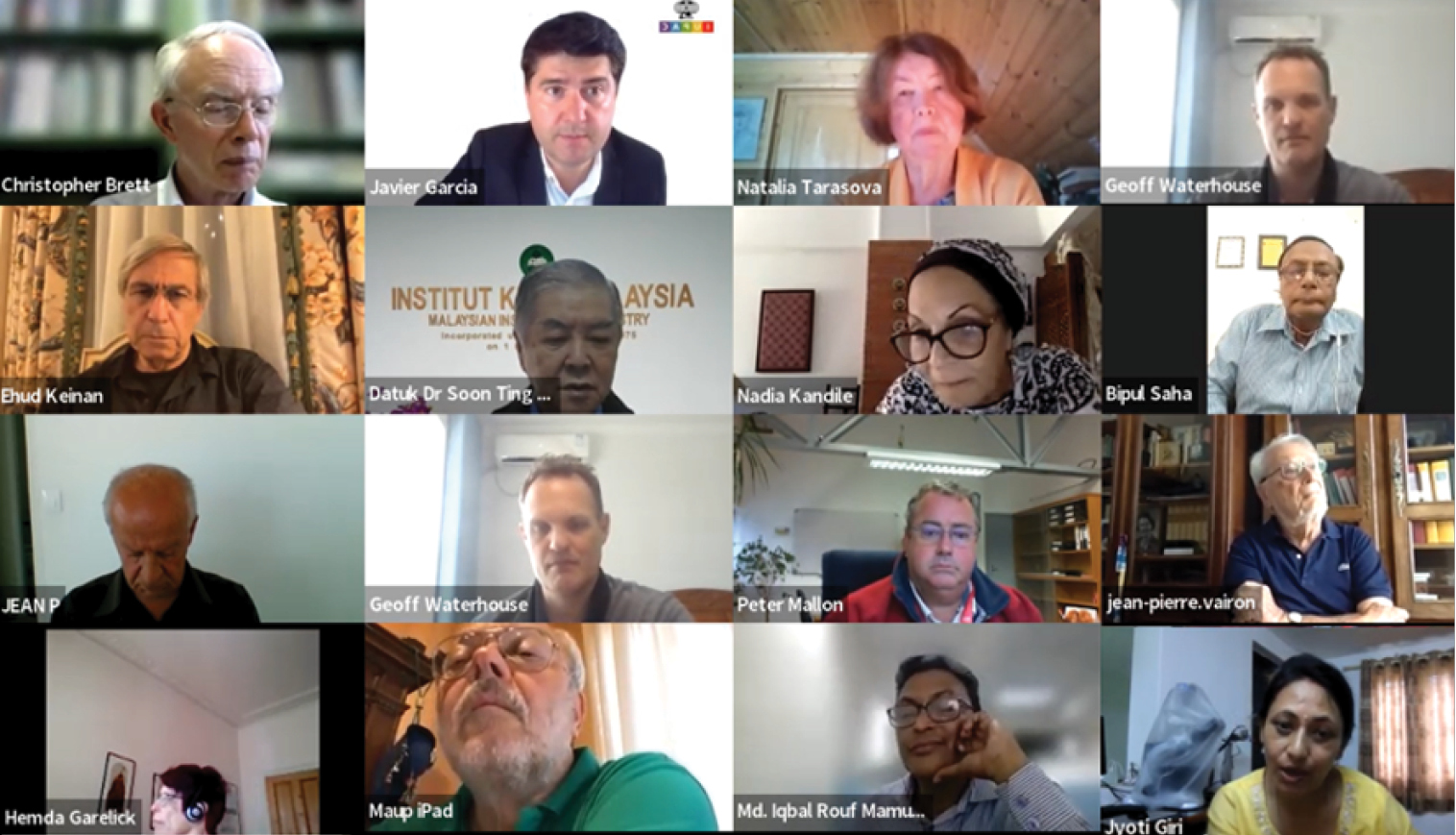
A fraction of the NAO Forum session held on 13 July 2022.
The NAO Forum is a new communication channel, suggested by the IUPAC Review Group, which is now part of thenew Statutes (IUPAC Statutes, S5.2, “There shall be at least one National Adhering Organization forum, preferably by videoconference, held in intermediate years”) that aims at facilitating and promoting communication between the IUPAC leadership team and our NAOs. In brief, the NAO Forum is an online conversation between IUPAC main stakeholders, convened by the IUPAC President at least once every biennium, preferably in those years where there is no General Assembly. During this online conversation, there are no reports from the Division, Standing Committees, or the Union’s Officers nor are there any motions that need to be voted on. Those topics that the President considers appropriate for the occasion are discussed and ample time is given for question, suggestion, or concerns. The NAO Forum’s objective is to create a more fluid, direct, and agile communication between the IUPAC leadership team and the NAOs, which until now only met once every two years, during Council meetings. This new communication channel makes use of low cost online technologies, while bringing many options for direct participation and the open exchange of ideas.
The two sessions of the NAO Forum began with a brief presentation by the President about the transition period that the IUPAC leadership team is working on to implement the approved organizational changes. (See Chem Int April 2022, vol. 44, no. 2, pp. 34-37. https://doi.org/10.1515/ci-2022-0228)
The President informed the Forum attendees that the IUPAC Executive Committee has already met to work on the design of the implementation plan of the changes approved in the June 4 Special Council meeting. The IUPAC vice president, Ehud Keinan, is chairing the working group in charge of conceiving and ultimately executing the changes. He also informed the NAOs´ representatives about the Opening Ceremony of the International Year of Basic Sciences for Sustainable Development (IYBSSD) that was held a few days prior, in the UNESCO Headquarters, in Paris, France, on July 8. He reported on the financial resources secured from chemical organizations and companies to support our activities during the IYBSSD and encouraged all NAOs representatives to communicate in their respective countries about the opportunity that the IYBSSD represents. The NAOs were encouraged to organize activities that contribute to raising awareness of the role of chemistry in the construction of a more sustainable future and the achievement of the Sustainable Development Goals. IUPAC has a leading role in the IYBSSD, among other reasons, because the Global Women Breakfast 2023 will be one of the flagship activities of the IYBSSD.
After a couple of questions by the NAO representatives, Javier García Martinez gave a brief update on some of our most relevant current activities including the update of the IUPAC Gold Book, the significant progress made by Digital IUPAC, the status of the 2023 World Chemistry Congress and IUPAC General Assembly and the possibility of taking part in the scientific program of this major congress through the call for Focus Sessions, and the new Global Conversation on Sustainability in partnership with the International Younger Chemists Network (IYCN).
After this, the forum was opened for questions and discussion. Some of the topics covered in some detail included the Union new organizational structure. The IUPAC Secretary General, Richard Hartshorn, explained in detail how the first members of the Executive Board and Science Board of the Union will be elected. Finally, some NAO representatives informed the participants about the various initiatives they are carrying out in their respective countries and invited the attendees to join many of them.
The two sessions of the first NAO Forum were a success both in terms of the number of participants and the variety and relevance of the topics discussed, as expressed by several NAO representatives at the end of each session, when a brief evaluation this new initiative was discussed, proposing ways of improving it, and suggesting topics for future editions. The attendees made clear that they enjoyed this new channel of communication and very much welcomed the possibility of having more direct and frequent interaction with the IUPAC leadership team and of influencing in the activities of IUPAC between Council meetings.
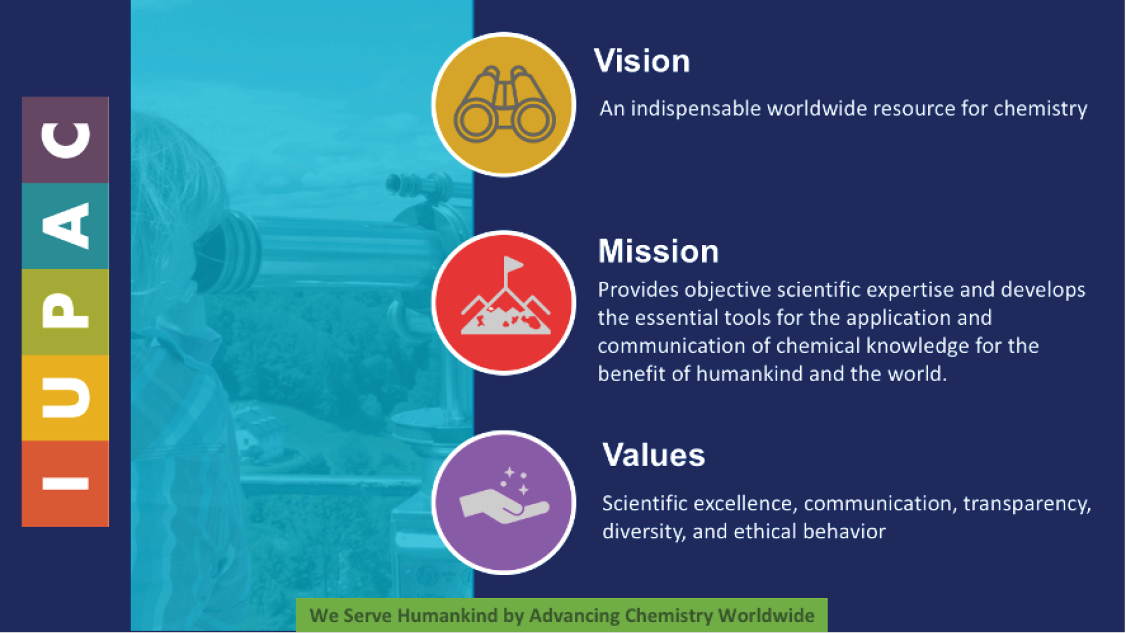
Through the NAO Forum, IUPAC leadership team aims at improving and promoting a more direct and agile communication with stakeholders to better serve the chemistry community while delivering on IUPAC vision, mission, and core values.
The President thanked everyone who made the NAO Forum possible, and especially the representatives of NAOs for making time in their busy schedules to join this online conversation.
For questions, ideas, or concerns, contact jgarcia-martinez@iupac.org.
<https://iupac.org/iupac-first-nao-forum/>
©2022 IUPAC & De Gruyter. This work is licensed under a Creative Commons Attribution-NonCommercial-NoDerivatives 4.0 International License. For more information, please visit: http://creativecommons.org/licenses/by-nc-nd/4.0/
Articles in the same Issue
- Masthead - Full issue pdf
- Vice President's Column
- The Chemist’s Oath
- Features
- IUPAC Top Ten Emerging Technologies in Chemistry 2022
- Implementing Data Sharing Policies at De Gruyter
- Behind the Scenes: Stories of the Global Women’s Breakfast
- IUPAC Wire
- Vivek Polshettiwar is Awarded the 2022 IUPAC-Chemrawn VII Prize For Green Chemistry
- IUPAC Announces the 2022 Top Ten Emerging Technologies in Chemistry
- IUPAC International Award For Advances In Harmonized Approaches To Crop Protection Chemistry—Call For Nominations
- 2023 IUPAC-Solvay International Award For Young Chemists—Call For Applicants
- 2023 Distinguished Women in Chemistry/Chemical Engineering Award—Call for Nominations
- IUPAC Elections for the 2024–2025 Term
- NAO Forum
- Project Place
- Bioavailability and Significance of Endocrine Disruptive Compounds in Ecosystems
- IUPAC Projects Contributions to the UN Sustainable Development Goals: Past, present, and future
- Bookworm
- Multi-Scale Biogeochemical Processes in Soil Ecosystems: Critical Reactions and Resilience to Climate Changes
- Green Chemistry and Sustainable Development
- Conference Call
- International Year of Basic Sciences for Sustainable Development
- Making Global Green Connections: The Importance of Green Chemistry Summer School for Sustainable Development
- International Polymer Characterization
Articles in the same Issue
- Masthead - Full issue pdf
- Vice President's Column
- The Chemist’s Oath
- Features
- IUPAC Top Ten Emerging Technologies in Chemistry 2022
- Implementing Data Sharing Policies at De Gruyter
- Behind the Scenes: Stories of the Global Women’s Breakfast
- IUPAC Wire
- Vivek Polshettiwar is Awarded the 2022 IUPAC-Chemrawn VII Prize For Green Chemistry
- IUPAC Announces the 2022 Top Ten Emerging Technologies in Chemistry
- IUPAC International Award For Advances In Harmonized Approaches To Crop Protection Chemistry—Call For Nominations
- 2023 IUPAC-Solvay International Award For Young Chemists—Call For Applicants
- 2023 Distinguished Women in Chemistry/Chemical Engineering Award—Call for Nominations
- IUPAC Elections for the 2024–2025 Term
- NAO Forum
- Project Place
- Bioavailability and Significance of Endocrine Disruptive Compounds in Ecosystems
- IUPAC Projects Contributions to the UN Sustainable Development Goals: Past, present, and future
- Bookworm
- Multi-Scale Biogeochemical Processes in Soil Ecosystems: Critical Reactions and Resilience to Climate Changes
- Green Chemistry and Sustainable Development
- Conference Call
- International Year of Basic Sciences for Sustainable Development
- Making Global Green Connections: The Importance of Green Chemistry Summer School for Sustainable Development
- International Polymer Characterization
