
A novel separation method of the valuable components for activated clay production wastewater
-
Lvshan Zhou
 ,
Hongjuan Sun
,
Hongjuan Sun

Abstract
The acidic wastewater produced by the wet production of activated clay contains valuable components such as iron and aluminum. The precipitation method was successfully introduced to separate iron and aluminum from the activated clay production wastewater step by step, which can not only recover the valuable components, but also avoid environmental pollution. In the separation process, gypsum, iron aluminum phosphate, alumina, and sodium sulfate were prepared, and the phase compositions of separation products were analyzed by XRD and IR. The main influencing factors in the separation of iron and aluminum components were studied by single factor experiment. The results show that at the optimized conditions, phosphorus/iron molar ratio 6.0, the system pH 3.0, the reaction temperature 343 K, and the reaction time 90 min, the iron(iii) ion in the system can form a sodium-containing aluminum iron phosphate double salt, and the filtrate after separating Fe3+ and part of Al3+ can meet the requirements for forming high-purity Al2O3. During the phosphate precipitation process, the hypothesis should be correct that Al3+ reacts with
1 Introduction
Bentonite is a clay rock composed mainly of montmorillonite. Montmorillonite is a 2:1 layered silicate mineral composed of [SiO4] tetrahedral sheet and [AlO6] octahedral sheet [1], its structural formula can be expressed as (Na,Ca)0.3–0.6{(Al, Mg)2Si4O10(OH)2}·nH2O [2,3]. Montmorillonite has many advantages, such as large specific surface area, good adsorption and cation exchange. The activated clay prepared with acid activation can be widely used in the decolorization of edible oil refining [4], sewage treatment [5], petrochemical refining and waste oil regeneration [6] and other fields. However, the wastewater generated during the acid activation process has not been reasonably separated and utilized.
Sulfuric acid [7], nitric acid [8], hydrochloric acid [9], etc. are usually used to activate bentonite for activated clay preparation. The acid activate process is divided into wet method, dry method and semi-dry method [10]. Sulphuric acid wet activation is the most important process for activated clay production. When bentonite is infiltrated in the sulfuric acid solution system, the free H+ quickly produces metal-proton exchange reaction with the interlayer cations Na+, Ca2+ of montmorillonite [11]. The octahedral cations, Al3+, Mg2+, Fe2+, etc., in the montmorillonite structure were partially dissolved out [12], which increased the negative charge of the montmorillonite structure layer and improved the adsorption decolorization performance [13]. Therefore, the acidic wastewater produced by wet process activated clay contains a certain amount of valuable components such as aluminum, iron, and magnesium. The wastwater composition is slightly different due to the raw materials and process.
In industry, the wastewater discharged in activated clay production is mainly neutralized by lime, carbide slag, etc. [14]. Although the neutralization process is simple and has good effects, there are valuable components such as aluminum and iron in the wastewater that cannot be effectively separated and utilized, and the neutralization slag is difficult to handle or use. Although the wastewater produced by the activated clay process has been used to separate valuable components to produce polyaluminum ferric sulfate, aluminum sulfate, alum, cryolite, etc. [15,16], there are still harsh reaction conditions and low product purity, and it is difficult to remove iron impurities. Compared with other chemical precipitation methods, the advantage of phosphate precipitation method is that the product is more stable under acidic conditions, and phosphoric acid, phosphate, phosphorus-containing organic matter, etc. are usually as a precipitant. The report pointed out that under strong acid conditions, Fe3+ was first used to replace Pb2+ in Pb-EDTA solution, and then disodium hydrogen phosphate was used to efficiently recover Pb2+ bearing precipitates [17]. Tang et al. [18] also combined phosphate precipitation with biological adsorption to separate the lead in the solution well. In Amrane and Bouhidel study [19], the valuable components in the acid leaching solution of sludge can be precipitated in steps effectively using different dosage of phosphoric acid.
In this article, the precipitation principle and precipitation-dissolution equilibrium of insoluble electrolyte in supersaturated state were applied. Based on the characteristics of valuable components of acid wastewater generated in the activated clay production process and the needs of production and environmental protection, the separation of iron and aluminum in the wastewater after pre-neutralization treatment was accomplished using phosphate precipitation and alkali precipitation respectively. By means of chemical composition analysis, IR and XRD analysis, the properties of separated product was studied. This paper focuses on achieving the efficient separation of valuable components such as iron and aluminum and solving the worries about the difficulty of acid wastewater handling in the activated clay production process.
2 Experimental
2.1 Materials and equipment
Trisodium phosphate dodecahydrate (AR) and sodium hydroxide (AR) are purchased from Chengdu Kelong Chemical Reagent CO., LTD., China.
The activated clay acidic raw liquid (HWW) is the wastewater generated during the sulfuric acid production process of an enterprise in Jiangxi, China. The main components and pH value of the waste liquid HWW and the solution (HWWS) after neutralization and filtering with calcium hydroxide are shown in Table 1.
Main components and pH value of HWW and HWWS
| Sample | Fe3+ (g L−1) | Al3+ (g L−1) |
|
pH |
|---|---|---|---|---|
| HWW | 5.04 | 9.48 | 192.72 | 0.23 |
| HWWS | 3.83 | 7.21 | 140.41 | 1.08 |
The equipment used in experiment mainly includes beaker (100, 250, 1,000, 2,500 mL), collector type constant temperature magnetic stirrer (Zhengzhou Yingyu Lingke Instrument Equipment Co., Ltd., China, DF-101S), circulating water type vacuum pump (Gongyi Yuhua Instrument Co., Ltd., China, SHZ-D(iii)), electric heating constant temperature oven (Shanghai Pudong Rongfeng Scientific Instrument Co., Ltd., China, 202-1), box-type resistance furnace (Mianyang Golden Crown Co., Ltd., China, KSD-6-1300), electronic balance (Yuyao JinNuo Balance instrument CO., LTD., China, JT2003), Youpu series ultrapure water machine (Chengdu Ultrapure Technology Co., Ltd., China, UPT-11-10T), digital pH meter (Shanghai Yidian Scientific Instrument Co., Ltd., China, PHS-3C).
2.2 Experimental principle
The activated clay production wastewater mainly contains Fe3+, Al3+,
During the stepwise separation of valuable components in HWW, the main reactions took place are as follow.
2.3 Procedures
The separation process of valuable components for the activated clay production wastewater mainly includes: neutralization, separation of iron and aluminum components, aluminum extraction, and evaporative crystallization.
In the neutralization stage, two groups of 600 mL HWW were added in a 1,000 mL beaker respectively, meanwhile added an appropriate amount of calcium hydroxide (Ca(OH)2) suspension at room temperature to adjust the system pH at the final reaction to about 1.0 under stirring for 2 h. After the reaction was completed, the obtained filtrate and the solution produced for washing precipitate were mixed to obtain the acidic waste liquid (HWWS) used in the experiment. The components of HWWS was showed in Table 1 and its pH was 1.08. The filter cake obtained by neutralization was washed and dried at 373 K for 12 h to obtain a gypsum product (HWWS-PG).
The separation process of iron and aluminum components is based on the metathesis reaction. In a 100 mL beaker placed in a water bath with a set reaction temperature, 50 mL HWWS and a certain amount of trisodium phosphate dodecahydrate (Na3PO4·12H2O) were added into at the same time, to reaction under stirring for a period of time. During reaction, the sodium hydroxide (NaOH) solution of 100 g L−1 was applied to adjust the system pH. When the reaction was accomplished, the reaction solution cooled was filtered, washed, and dried to obtain a solid product and a no ferric solution.
The no ferric solution was took as raw material in aluminum extraction process, which was diverted in a 250 mL beaker. The 100 g L−1 NaOH was applied to adjust the system pH to above 5.5. After reaction 60 min under stirring, the reaction solution was aged for 60 min, then filtered. The no ferric and aluminum filtrate was stored for future use, the filter cake was washed with ultrapure water to neutral and dried in 378 K for 2 h. The dried filter cake (Al(OH)3, HWWS-AH) was transferred to a ceramic crucible and calcined at 1,273 K for 120 min to obtain an alumina product (Al2O3, HWWS-AO).
The no ferric and aluminum solution mainly contains sodium sulfate, which is evaporated and crystallized to obtain sodium sulfate containing crystal water. Crystalline hydrate was transferred to a 308 K oven and dried for 2 h to obtain sodium sulfate product (Na2SO4, HWWS-SS).
2.4 Characterization
The content of iron [20] and aluminum [21] in the sample was analyzed by EDTA titration method, and the sulfate content was determined by barium sulfate gravimetric method [22]. The content of iron [23] and phosphorus [24] in the filtrate was analyzed by ultraviolet-visible spectrophotometry at 510 and 700 nm respectively. The instrument (EvolutionTM 300) used was produced by Thermo Corporation of the United States. Ultrapure water was used as the reference solution.
The sample was tested by the infrared spectroscopy (Nicolet-5700) produced by Nicholi Instruments from United States, and the KBr was used for sample preparation. The scanning range is 400 to 4,000 cm−1.
The X’pert Pro X-ray diffractometer manufactured by PANalytical Company from Netherlands was used for XRD analysis. The test conditions as follows, Cu target, tube voltage 40 kV, tube current 40 mA, emission slit (DS) (1/2)°, Anti-scattering slit (SS) 0.04 rad, receiving slit (AAS) 5.5 mm, scanning step 0.03°, scanning range 3–80°, time per step 10 s, continuous scanning.
The solid sate 31P NMR experiments were performed on a Bruker AVANCE NEO 400 WB spectrometer operating at 162.02 MHz for 31P. A 3.2 mm double resonance MAS probe was used for the experiments. The spinning rate was set to 10 kHz. The 31P chemical shift was calibrated using H6NO4P = 0.81 ppm for 31P.
X-ray fluorescence spectrometry (XRF) was tested on a X-ray fluorescence spectrometer (Axios) with ceramic light tube, whose maximum power is 2.4 kW.
-
Ethical approval: The conducted research is not related to either human or animal use.
3 Results and discussion
3.1 Composition of alkali-acid reaction precipitation slag
A total of 41.7 g residue (calculated as CaSO4·2H2O) was obtained by neutralizing from 1,200 mL HWW, it is slightly lower than the theoretical value of 4.21 g (100 mL HWW) −1. Figure 1 is the XRD diffraction pattern of the filter residue sample (HWWS-PG) obtained after neutralization treatment for activated clay production wastewater. It can be seen that the filter residue samples are mainly calcium sulfate dihydrate (CaSO4·2H2O, PDF # 33-0311) and a small amount of calcium sulfate hemihydrate (CaSO4·0.5H2O, PDF # 41-0244).
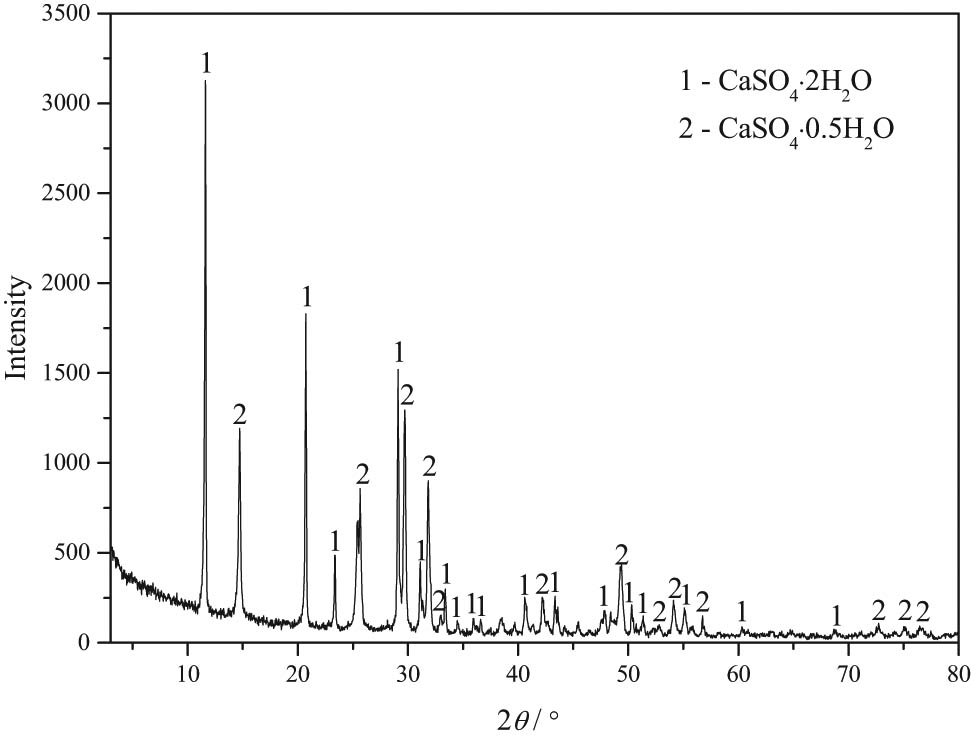
XRD pattern of neutralization filter residue sample (HWWS-PG).
Adding an appropriate amount of calcium hydroxide (Ca(OH)2) in HWW, the reaction (1) mainly reacted. The obtained residue quality is lower than the theoretical value mainly due to calcium sulfate dissolution, transfer loss, and the part residue contains only half of the crystal water. The main reason for the calcium sulfate hemihydrate formation is that in strong acidity systems, the calcium sulfate hemihydrate crystals are more stable, so structural adjustment reaction (2) occurred; on the other hand, during the drying process, part of the calcium sulfate dihydrate will lose crystals water to convert calcium sulfate hemihydrate [25].
3.2 Separation influencing factors of iron and aluminum components by salt-salt reaction
3.2.1 Phosphorus/iron molar ratio (n P/n Fe)
Figure 2 shows the iron and phosphorus content changes in the filtrate after the separation of iron and aluminum components under different phosphorus/iron molar ratios. It can be seen from the Figure 2 that as the n
P/
n
Fe value increases, the iron ions concentration in the solution decreases linearly and the total phosphorus concentration decreases; when the n
P/
n
Fe is 6.0, the iron content in the filtrate is less than 3 mg L−1, while the total phosphorus content is still at a higher concentration level. In a strong acid system,
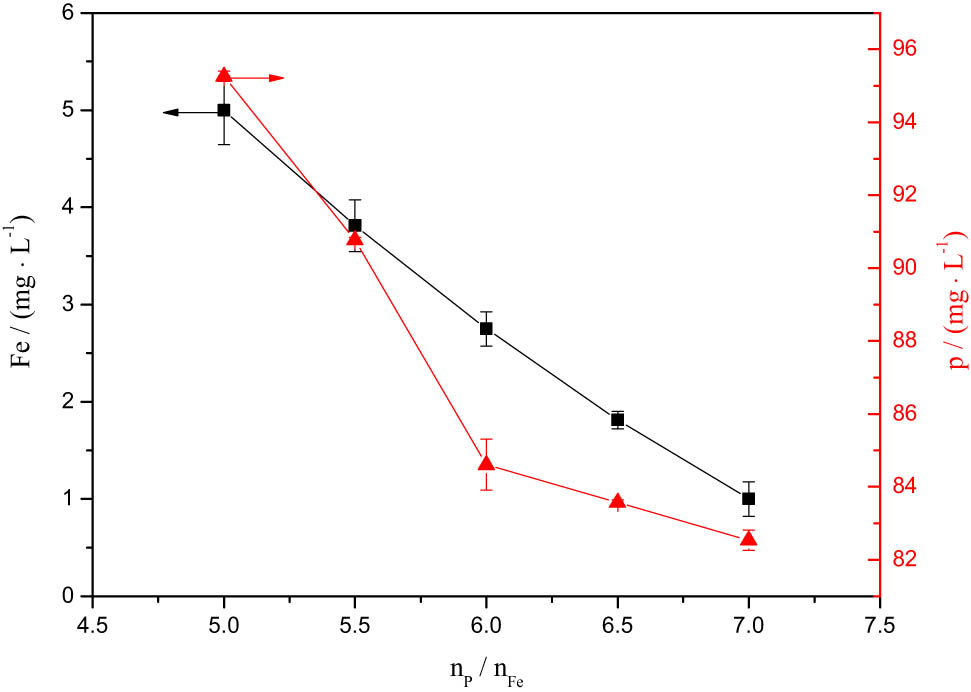
Content of iron and phosphorus in the filtrate at different phosphorus/iron molar ratios. T = 333 K, t = 60 min, pH = 2.0.
3.2.2 Reaction time (t)
Figure 3 presents the content changes of iron and phosphorus in the filtrate for the iron and aluminum components separation at different reaction time conditions. With the reaction time extension, the iron and total phosphorus contents in the solution both showed a trend of decreasing first and then increasing. After reaction for 90 min, the content of iron and total phosphorus in the system decreased to a relatively low level, which are respectively 4.75 and 88.3 mg L−1. Due to the low solubility of phosphates containing iron and aluminum, precipitates can be quickly formed during reaction, and there is also a reverse dissolution process, which gradually forms a precipitate-dissolution equilibrium; the excess
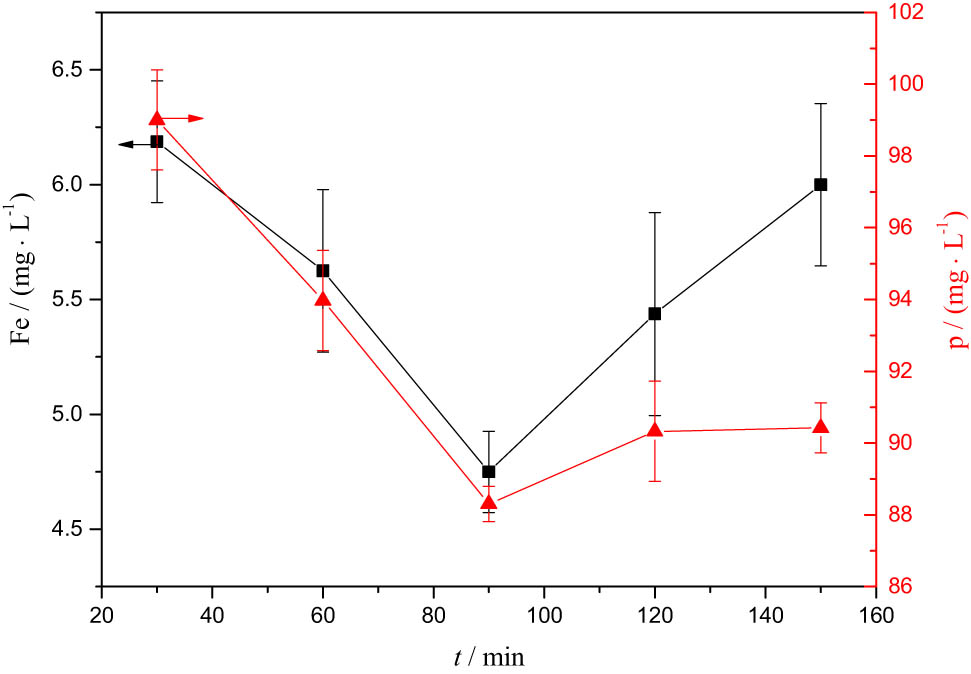
Content of iron and phosphorus in the filtrate at different reaction time. n P/ n Fe = 6.0, T = 333 K, pH = 2.0.
3.2.3 Reaction temperature (T)
Figure 4 is a graph showing the reaction temperature effect on the iron and aluminum components separation. As the reaction temperature continues to increase, the residual iron and phosphorus contents in the resulting filtrate rapidly decrease at 313 to 343 K, and tend to be stable when it exceeds 343 K. The iron concentration in filtrate can be less than 1 mg L−1. By increasing the reaction temperature, the iron separation effect can be significantly improved, indicating that the formation of phosphates containing iron and aluminum is easy to proceed under higher temperature conditions. The temperature increase effectively accelerates the molecular motion, which increases the effective collisions number and reaction speed. Therefore, increasing temperature has a significant positive effect on the iron and aluminum components separation.
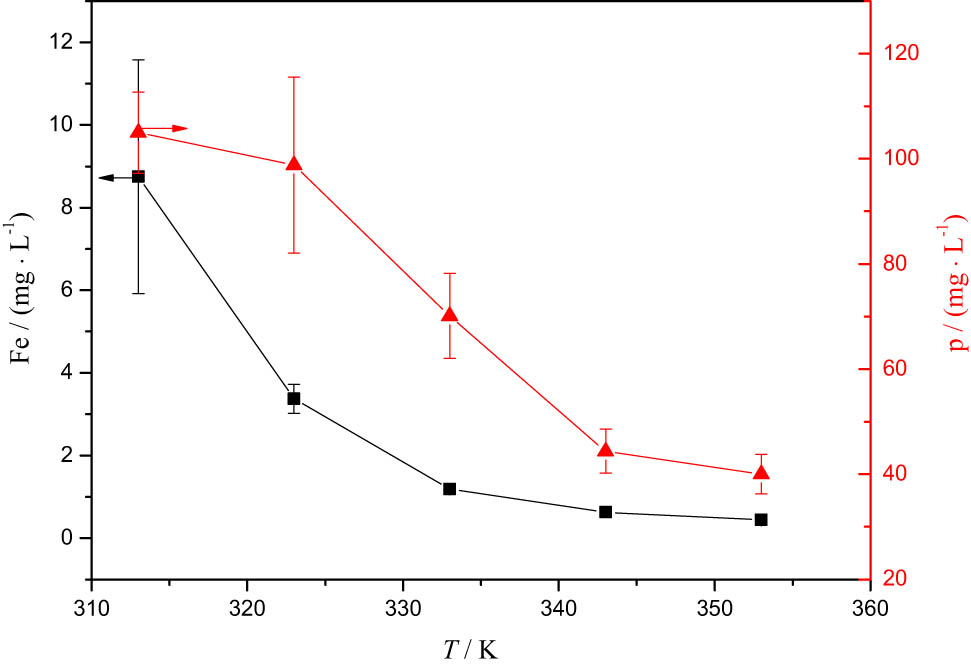
Content of iron and phosphorus in the filtrate at different reaction temperature. n P/ n Fe = 6.0, t = 60 min, pH = 2.0.
3.2.4 System pH
The effect of system pH on the iron and aluminum components separation is depicted in Figure 5. It can be seen from Figure 5 that under low pH conditions, the separation effect of iron components is poor, and as the pH value increases, the separation effect is improved significantly. When the system pH is 3.0, the iron and total phosphorus concentration in the filtrate can reach to after separation 0.56 and 5.86 mg L−1 respectively. Therefore, the system pH 3.0 is the better operating condition for the follow-up operations. Under low pH conditions, the free H+ in the system can react with OH− to generate H2O, which promotes the formation of soluble mono (di) hydrogen phosphate (reactions (6)–(9)), in turn making Fe3+ unable to be separated as precipitation. By adjusting the system pH with sodium hydroxide, it can effectively inhibit the progress of the reactions (6) and (7), and promote the precipitation separation of Fe3+ and
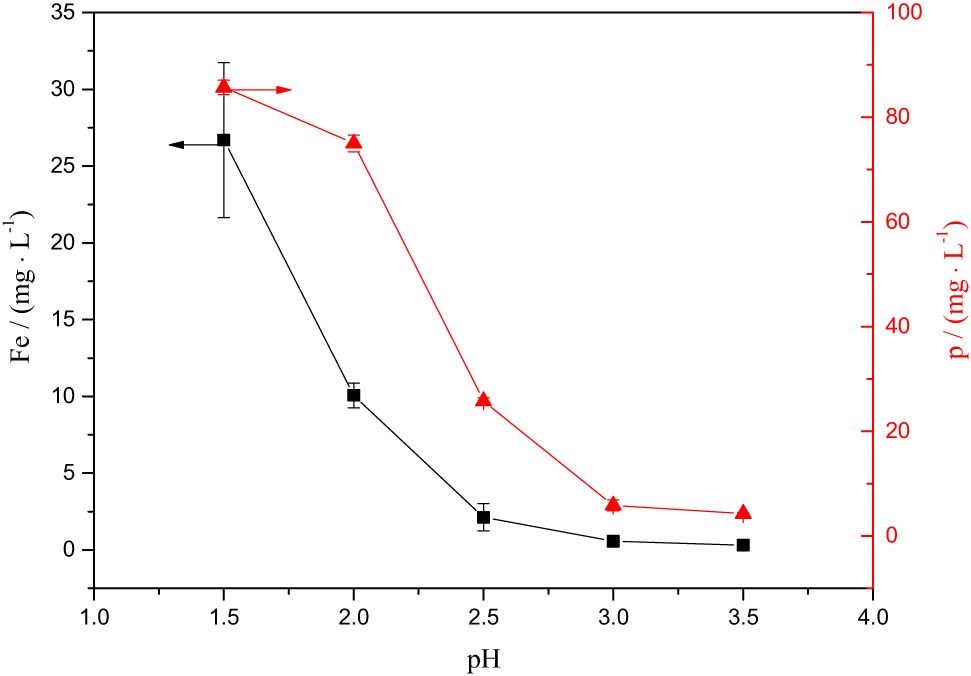
Content of iron and phosphorus in the filtrate at different system pH. n P/ n Fe = 6.0, T = 333 K, t = 60 min.
3.2.5 Separation of iron and phosphorus under the optimal conditions
Based on the single-factor experiments, the iron and aluminum separation results are showed in Table 2 using optimized process conditions, phosphorus/iron molar ratio 6.0, system pH 3.0, reaction temperature 343 K, reaction time 90 min. It can be seen from Table 2 that under optimized operating conditions, the separation effect is outstanding and relatively stable. The average content of iron and total phosphorus in the filtrate are 0.07 and 0.85 mg L−1 respectively, and the average iron recovery rate (η Fe) is 98.26%. During the iron component separation, the iron concentration in the filtrate after separation has a positive correlation with the total phosphorus content. The more stable the iron-containing phosphate produced in the system, the better the iron separation effect. The optimization experiment results show that it is feasible to separate iron and aluminum components in HWWS by phosphate precipitation method. The iron and total phosphorus content in the filtrate after iron removal are very low, which can meet the needs of subsequent separation to obtain high-purity products.
Analysis results of filtrate after iron and aluminum separation under optimized conditions
| Serial number | Feinitial (mg L−1) | Fefinal (mg L−1) | Pfinal (mg L−1) | η Fe a (%) | Relative standard deviation (RSD) (%) |
|---|---|---|---|---|---|
| BTFY-YH-1 | 3.83 | 0.12 | 2.26 | 96.87 | |
| BTFY-YH-2 | 3.83 | 0.03 | 0.09 | 99.22 | 1.25 |
| BTFY-YH-3 | 3.83 | 0.05 | 0.19 | 98.69 |
- a
η Fe = (Feinitial − Fefinal)/Feinitial × 100%.
Figure 6 is the infrared spectrum and solid state 31P NMR spectra of iron aluminum-containing phosphate after calcination, respectively. The filter cake obtained under optimized conditions was washed using ultra-pure water and dried at 378 K for 2 h to obtain iron aluminum-containing phosphate products (HWWS-FP), and then the intermediate products were calcined in a 923 K resistance furnace for 120 min to obtain products (HWWS-FPC).
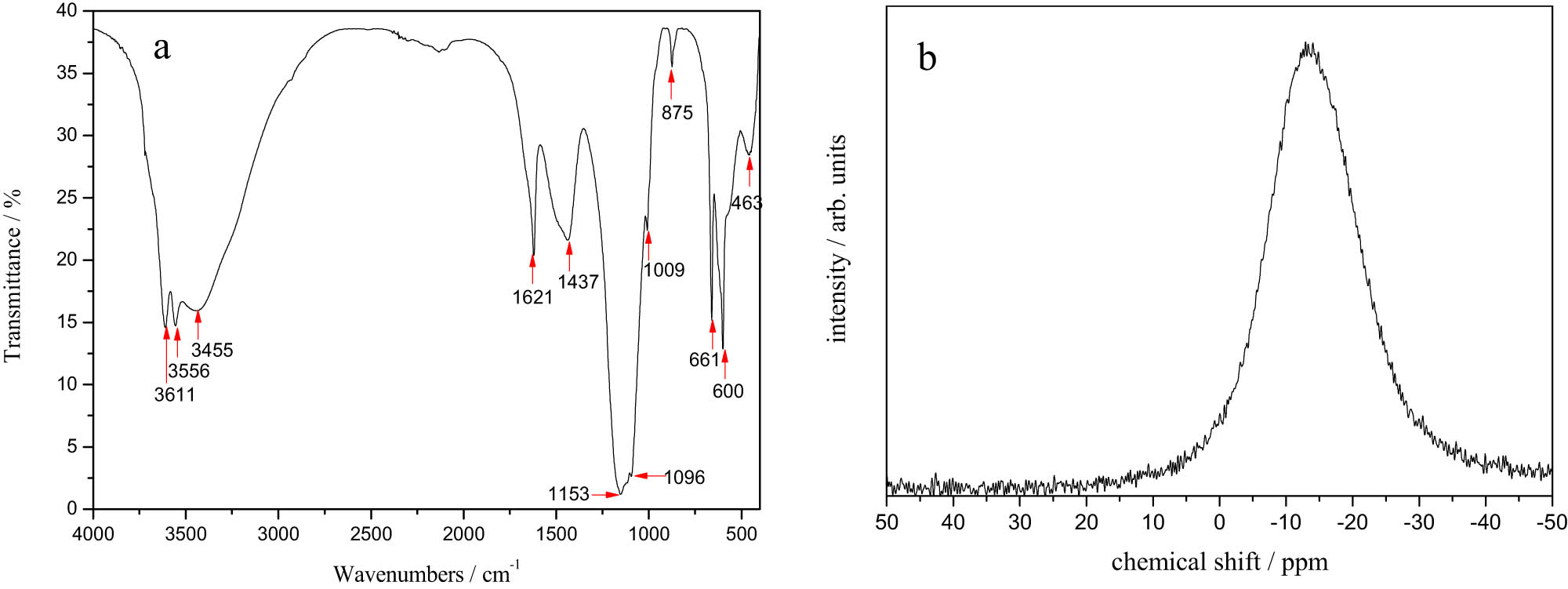
Infrared spectrum (a) and solid state 31P NMR spectra (b) of the intermediate product (HWWS-IP) for iron and aluminum components separation under optimized conditions.
It can be seen from Figure 6a that 1,153 cm−1 could be ascribed to the P═O bond, 1,096, 1,009, 875 cm−1 could be assigned to the characteristic absorption peaks of P–O–H (Al), 661 and 600 cm−1 belong to the deformation vibration of O–P–O, which is slightly smaller than the reported value [26,27], the stretching vibration of –OH in O═P(OH)2 at 1,621 cm−1, peaks at 463 cm−1 belongs to the bending vibration of P–O–Al, the value is less than 486 cm−1 reported in the literature. The incorporation of iron will cause the characteristic absorption peak of aluminum phosphate to move to a low wave number, because the mass and radius of Fe3+ are larger than Al3+, and the Fe–O bond is longer than Al–O bond [28]. Peaks at 3,556 and 3,611 cm−1 could be assigned to Al(OH)3 [29], peaks at 1,437 and 3,455 cm−1 could be ascribed to carbonate and adsorbed water, respectively [30].
In Figure 6b, the peak at −14.12 ppm was corresponded to AlPO4 according Xu’s work [31]. Because it contains active hydrogen bonds, such as –OH, its characteristic peak is really wide.
In Figure 7, XRD diffraction pattern of iron aluminum-containing phosphate before and after calcination were shown. The result was displayed that the uncalcined iron aluminum-containing phosphates are amorphous, and the crystallization can be ordered through calcination. Due to the presence of sodium in the separation system, the product contains a certain amount of sodium. The sample analysis result of calcinated product is consistent with the standard card of the K–Fe–Al–PO4 phase, but the characteristic diffraction peak moves to a high diffraction angle, owing to Na+ radius is less than that of K+, and the sodium isomorphically replaces potassium which causes the spacing between crystal planes to become smaller. When Al3+ reacts with
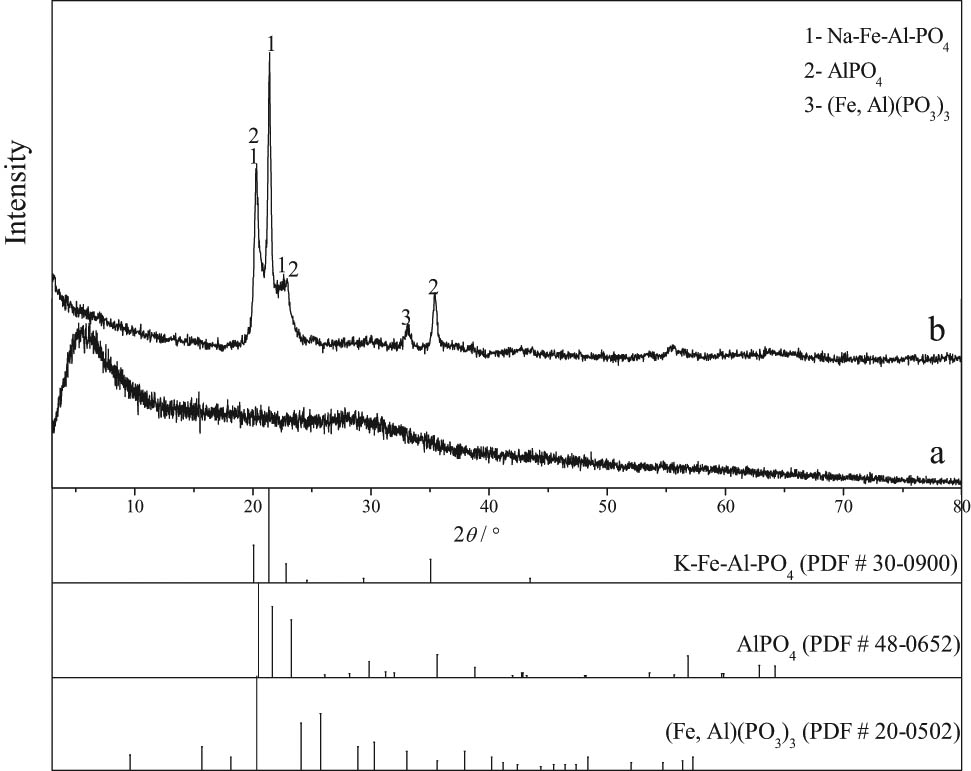
XRD patterns of iron aluminum-containing phosphates generated during the iron and aluminum separation under optimized conditions. (a) Uncalcined sample (HWWS-FP); (b) calcined sample (HWWS-FPC).
Compositon of the iron aluminum-containing phosphates generated (wt%)
| P2O5 | Al2O3 | Fe2O3 | SO3 | Na2O | SiO2 | K2O | CaO |
|---|---|---|---|---|---|---|---|
| 41.93 | 38.71 | 11.84 | 6.34 | 0.83 | 0.18 | 0.08 | 0.09 |
Note: The chemical elements in the iron aluminum-containing phosphates generated are in the form of oxide.
3.3 Aluminum components separation using alkali-salt reaction
The filtrate after iron and aluminum components separation under optimized conditions was used for aluminum extraction experiment. A total of about 200 mL of filtrate was collected, in which the aluminum content was 2.43 g L−1. According to the aluminum extraction step shown in section 4.3. The total mass of aluminum oxide prepared is 1.17 g, which was lower than the theoretical value of 1.84 g owing to transfer loss.
Figure 8 is the XRD patterns of aluminum hydroxide and alumina products. It can be seen that the aluminum hydroxide produced by adding sodium hydroxide is amorphous (Figure 8a). After calcination, a well-crystallized alumina can be obtained (Figure 8b), mainly occurs reactions (12) and (13). Due to the good adsorption and flocculation of aluminum hydroxide [33], sodium sulfate co-precipitation occurs during the precipitation process, resulting in a small amount of sodium sulfate in the calcined product alumina (PDF # 10-0173). The high-purity alumina can be obtained by washing and drying for calcined product (Figure 8c).
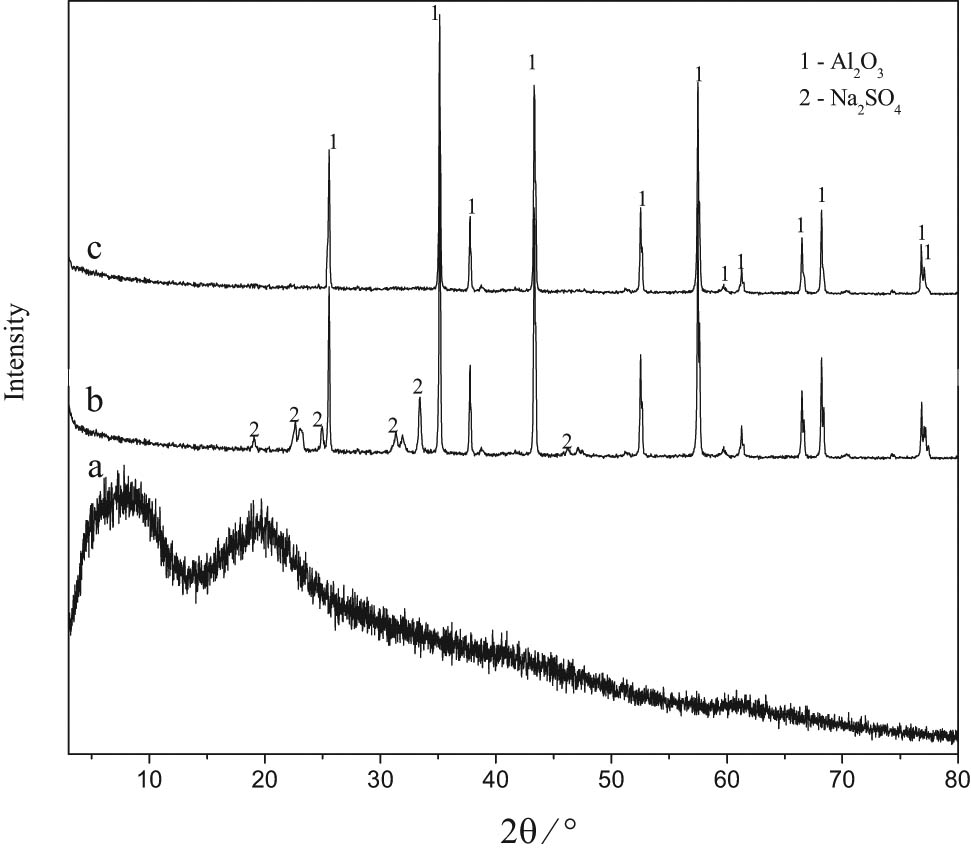
XRD patterns of aluminum-containing samples during aluminum extraction. (a) Aluminum hydroxide (HWWS-AH); (b) alumina (HWWS-AO); (c) alumina (after washing, HWWS-AOW).
3.4 Sodium sulfate recovery by evaporation and crystallization
The solution after aluminum extraction is about 250 mL. Due to the incorporation of the solution for washing aluminum hydroxide and the loss in the operation process, the
The XRD pattern of sodium sulfate obtained by evaporation and crystallization for the solution after aluminum extraction was depicted in Figure 9. The filtrate is concentrated by evaporation and cooled to crystallize for producing sodium sulfate containing crystal water (reaction (14)), Through drying, the crystal water will lost (reaction (15)). The characteristic diffraction peaks of anhydrous products completely match with the standard card (PDF # 37-1465). In figure, no other substances diffraction peaks are found, which means the product purity is high.
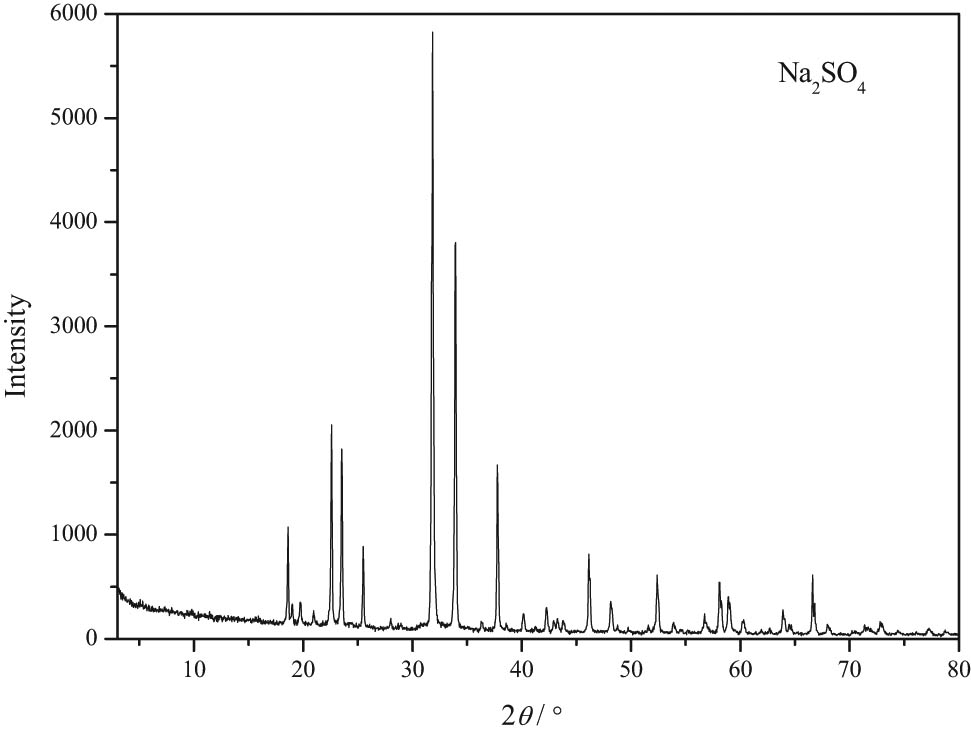
XRD pattern of sodium sulfate (HWWS-SS) sample.
3.5 Mechanism of iron aluminum phosphate double salt formation
Owing to the solubility product of iron phosphate and aluminum phosphate are very small, about Ksp,iron phosphate = 1.3 × 10⁻²² and Ksp,aluminum phosphate = 5.8 × 10⁻¹⁹ respectively at 298 K, so the
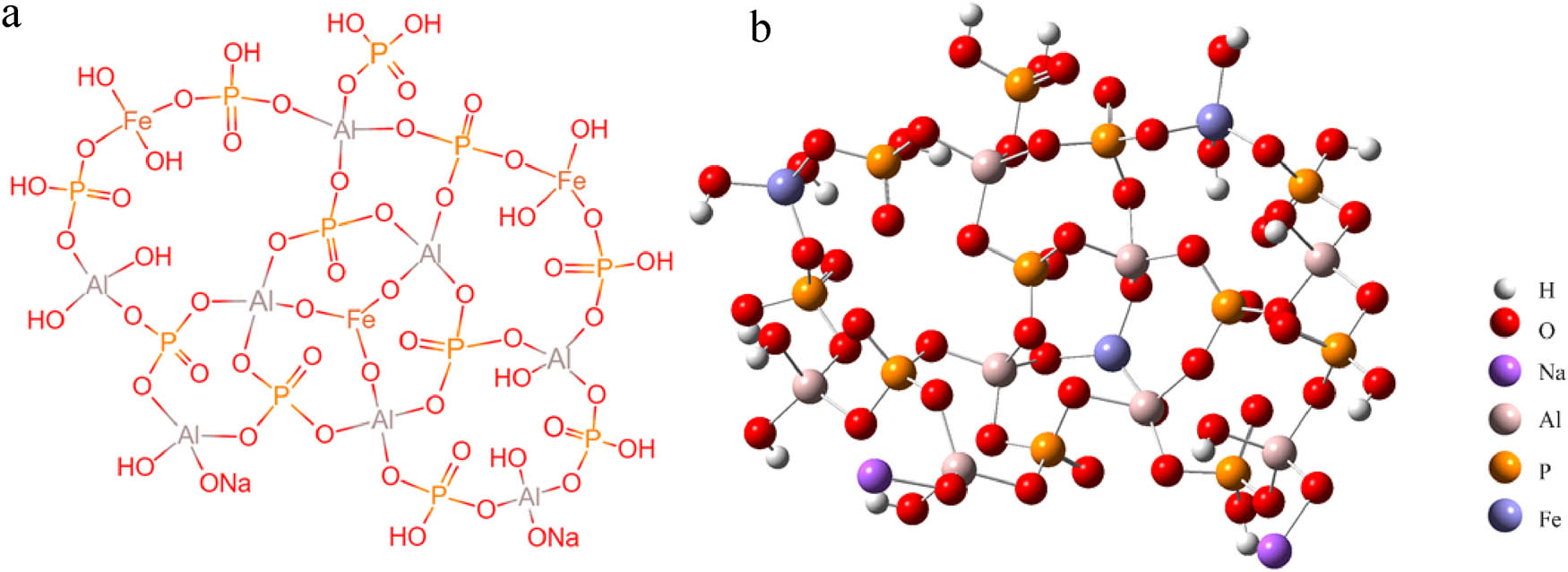
Structural formula (a) and ball and stick model (b) of sodium iron aluminum phosphate.
4 Conclusion
In this paper, based on the characteristics of strongly acidity, complex components, and difficulty in separation and comprehensive utilization for the activated clay production wastewater, and results of chemical composition analysis, the valuable components in the wastewater are separated successfully by stepwise precipitation. The influencing factors of the iron and aluminum components separation process were studied by single factor experimental method. The separation conditions were selected based on the iron and phosphorus content of target filtrate, and the phase composite of solid products in the separation process were analyzed. The main conclusions are as follows.
The phosphate precipitate produced during the iron and aluminum components separation changes from disorder to order under high temperature conditions; according to the analysis results of IR and XRD, it is conjectured that in a strongly acid sulfate system, when Al3+ reacting with
The precipitation method was used to successfully separate valuable components such as iron and aluminum from the acid wastewater produced by activated clay. Gypsum, sodium-containing iron aluminum phosphate, aluminum oxide, and sodium sulfate were prepared. The comprehensive utilization of wastewater and no waste production in separation process are achieved.
The operating conditions of the separation process for iron and aluminum components were investigated using the single factor experimental method. The optimized operating parameters were: phosphorus/iron molar ratio 6.0, system pH 3.0, reaction temperature 343 K, and reaction time 90 min. Under optimized conditions, the phosphate precipitation method can be used to effectively separate iron and produce sodium-containing iron aluminum phosphate double salts. The filtrate after iron separation can meet the requirements for the subsequent generation of high purity products.
Acknowledgements
This research was financially supported by the Programs of the National Natural Science Foundation of China (grant number 41972042); the National Key R&D Program of China (grant number 2018YFC1802902); the Scientific and Technological Innovation Team Foundation of Southwest University of Science and Technology, China (grant number 17LZXT11); the Program Projects Funded of Sichuan University of Arts and Science (grant number 2018SCL001Y); the Project of Dazhou Science and Technology Bureau (grant numbers18ZDYF0008, 19YYJC0020).
-
Funding information: This research was financially supported by the Programs of the National Natural Science Foundation of China (grant number 41972042); the National Key R&D Program of China (grant number 2018YFC1802902); the Scientific and Technological Innovation Team Foundation of Southwest University of Science and Technology, China (grant number 17LZXT11); the Program Projects Funded of Sichuan University of Arts and Science (grant number 2018SCL001Y); the Project of Dazhou Science and Technology Bureau (grant numbers18ZDYF0008, 19YYJC0020).
-
Author contributions: L. S. Zhou – methodology, experiment, characterization, writing – original draft preparation, T. J. Peng – conceptualization, funding acquisition, project administration, supervision, writing – original draft preparation, H. J. Sun – funding acquisition, project administration, supervision, writing – review & editing, D. Fu – characterization, writing – reviewing and editing, C. Lai – funding acquisition, writing – reviewing and editing.
-
Conflict of interest: There is no conflict of interest.
-
Data availability statement: All data generated or analyzed during this study are included in this published article.
References
[1] Schnetzer F, Thissen P, Giraudo N, Emmerich K. Unraveling the coupled processes of (de)hydration and structural changes in Na+-saturated montmorillonite. J Phys Chem C. 2016;120:15282–87.10.1021/acs.jpcc.6b04986Search in Google Scholar
[2] Doi A, Ejtemaei M, Nguyen AV. Effects of ion specificity on the surface electrical properties of kaolinite and montmorillonite. Miner Eng. 2019;143:105929.10.1016/j.mineng.2019.105929Search in Google Scholar
[3] Li P, Zhang H, Xia M, Wang F, Zhu S, Lei W. The synergistic effect and microscopic mechanism of co-adsorption of three emerging contaminants and copper ion on gemini surfactant modified montmorillonite. Ecotox Environ Safe. 2019;184:109610.10.1016/j.ecoenv.2019.109610Search in Google Scholar PubMed
[4] Foletto EL, Paz DS, Gündel A. Acid-activation assisted by microwave of a Brazilian bentonite and its activity in the bleaching of soybean oil. Appl Clay Sci. 2013;84:63–7.10.1016/j.clay.2013.08.017Search in Google Scholar
[5] Komadel P. Acid activated clays: materials in continuous demand. Appl Clay Sci. 2016;131:84–99.10.1016/j.clay.2016.05.001Search in Google Scholar
[6] Chen TC, Jaja JF, Sapitan F, Ballesteros FC, Lu MC. Using activated clay for adsorption of sulfone compounds in diesel. J Clean Prod. 2016;124:378–82.10.1016/j.jclepro.2016.03.004Search in Google Scholar
[7] Guiza S, Hajji H, Bagane M. External mass transport process during the adsorption of fluoride from aqueous solution by activated clay. CR Chim. 2019;22:161–8.10.1016/j.crci.2019.02.001Search in Google Scholar
[8] Salem S, Salem A, Babaei AA. Preparation and characterization of nano porous bentonite for regeneration of semi-treated waste engine oil: applied aspects for enhanced recovery. Chem Eng J. 2015;260:368–76.10.1016/j.cej.2014.09.009Search in Google Scholar
[9] Rezapour M, Abdollahi H, Khorrami H, Valmazuei JT. Application of raw, HCl- and H2SO4-activated bentonite as adsorbents for the removal of Zn2+ and Pb2+ from aqueous solution. Desalin Water Treat. 2016;57:3654–63.10.1080/19443994.2014.987826Search in Google Scholar
[10] Chen L, Wu L, Huang K, Tong Z, Lin Z, Wei T. Preparation of activated clay by semidry method using mixed-layer illite/smectite clay. Conser Utili Miner Resour. 2016;2:48–53.Search in Google Scholar
[11] Kubitsa P. Structure and chemical characteristics of modified clays. Nato Sci. 1999;362:3–18.10.1007/978-94-011-4499-5_1Search in Google Scholar
[12] Ajemba R. Alteration of bentonite from Ughelli by nitric acid activation: kinetics and physicochemical properties. Indian J Sci Technol. 2013;6:4076–83.10.17485/ijst/2013/v6i2.20Search in Google Scholar
[13] Hussin F, Aroua MK, Wan MAWD. Textural characteristics, surface chemistry and activation of bleaching earth: a review. Chem Eng J. 2011;170:90–106.10.1016/j.cej.2011.03.065Search in Google Scholar
[14] Huang L, Yu S, Qiu Y, Lu F. The new technologies of treatment of wastewater from activated clay process and recycling of useful components in it. Guangdong Chem Ind. 2011;38:61–2.Search in Google Scholar
[15] Wu L, Zhang K, Huang Y, Tong Z, Wei T. Synthesis of polymeric aluminum ferric sulfate by using waste water in the activated clay production. Technol Water Treat. 2014;40:22–5.Search in Google Scholar
[16] Zhao M, Xu Y, Zhang C, Rong HW, Zeng GM. New trends in removing heavy metals from wastewater. Appl Microbiol Biotechnol. 2016;100:6509–18.10.1007/s00253-016-7646-xSearch in Google Scholar
[17] Kim C, Ong S. Recycling of lead-contaminated EDTA wastewater. J Hazard Mater. 1999;69:273–86.10.1016/S0304-3894(99)00115-6Search in Google Scholar
[18] Tang J, Xi J, Yu J, Chi R, Chen J. Novel combined method of biosorption and chemical precipitation for recovery of Pb2+ from wastewater. Environ Sci Pollut Res. 2018;25:28705–12.10.1007/s11356-018-2901-6Search in Google Scholar
[19] Amrane C, Bouhidel KE. Integrated diffusion dialysis precipitation-cementation for selective recovery of leaching chemicals and metal values from electroplating sludge. Hydrometall. 2018;177:34–40.10.1016/j.hydromet.2018.02.011Search in Google Scholar
[20] Xian Y. Experimental study on the optimization of the determination method for the total iron content in industrial boiler acid pickling waste liquor. Ind Water Treat. 2015;35:92–5.Search in Google Scholar
[21] Han S, Ma N, Zhi H, Feng X, Zhang X. Determination of aluminium ion in mining wastewater by EDTA complexometric titration. Phys Testing Chem Anal Part B (Chem Anal). 2018;54:1218–21.Search in Google Scholar
[22] Zhou L, Ming D, Li Z, Li H. Research of rapid determination for pyrosulfate potassium by means of barium sulfate gravimetry. Chem Eng. 2013;27:28–9.Search in Google Scholar
[23] Zhu J, Yang X, Fan F, Li Y. Factors affecting the determination of iron species in the presence of ferric iron. Appl Water Sci. 2018;8:228.10.1007/s13201-018-0876-6Search in Google Scholar
[24] Ma J, Yuan Y, Zhou T, Yuan D. Determination of total phosphorus in natural waters with a simple neutral digestion method using sodium persulfate. Limnol Oceanogr Methods. 2017;15:372–80.10.1002/lom3.10165Search in Google Scholar
[25] Jiang M, Sun H, Peng T. Extraction of iron oxide from titanium gypsum by sulfuric acid leaching and phase transform of gypsum. Chem Ind Eng Prog. 2019;38:2030–6.Search in Google Scholar
[26] Wu X, Fu X, Huang J, Jia Z. Synthesis and characterization of new layered organic polymer-inorganic hybrid catalyst support materials aluminium poly(styrene-phenylvinyl phosphonate)-phosphate. Chin J Inorg Chem. 2018;28:2341–6.Search in Google Scholar
[27] Rokita M, Handke M, Mozgawa W. The AlPO4 polymorphs structure in the light of Raman and IR spectroscopy studies. J Mol Struct. 2000;555:351–6.10.1016/S0022-2860(00)00620-7Search in Google Scholar
[28] Liu S, Tang W, Long B, Yang H. Morphology of iron aluminophosphate synthesized by solid-state chemical reaction at low temperature. Chin J Process Eng. 2010;10:348–54.Search in Google Scholar
[29] Wang LY, Tong DS, Zhao LZ, Liu FG, An N, Yu WH, et al. Utilization of alum sludge for producing aluminum hydroxide and layered double hydroxide. Ceram Int. 2014;40:15503–14.10.1016/j.ceramint.2014.07.012Search in Google Scholar
[30] Nakmoto K. Infrared and raman spectra of inorganic and coordination compounds, 4th ed. In: Huang DR, Jiang RQ, editors. Beijing: Translation Chemical Industry Press; 1991.Search in Google Scholar
[31] Xu G, Zhang Y, Shao H, Sun J. Pyrolysis temperature affects phosphorus transformation in biochar: chemical fractionation and 31P NMR analysis. Sci Total Environ. 2016;569-570:65–72.10.1016/j.scitotenv.2016.06.081Search in Google Scholar PubMed
[32] Luo Y, Liang X, Li X, Wang S, Gao X, Zhang Z, et al. Iron doped aluminophosphate molecular sieve with improved adsorption capacity for water vapor. Adsorption. 2018;24:551–61.10.1007/s10450-018-9966-xSearch in Google Scholar
[33] Saitoh T, Saitoh M, Hattori C, Hiraide M. Rapid removal of cationic dyes from water by coprecipitation with aluminum hydroxide and sodium dodecyl sulfate. J Environ Chem Eng. 2014;2:752–8.10.1016/j.jece.2013.11.015Search in Google Scholar
[34] Peters Alan W. Random siting of aluminum in faujastite. J Phys Chem. 1982;86:3489–91.10.1021/j100214a043Search in Google Scholar
[35] Lin C. Syntheses, structures, and charaterizations of novel aluminophosphates, aluminophosphite, and gallium phosphites templated by DMAP. PhD thesis, Chongqing University, Chongqing; 2018.Search in Google Scholar
[36] Wu XW, Li ZB, Shi CQ, Liang JF, Zhang JL. High thermal resistant fireproof and waterproof aluminum dihydrogen phosphate-expanded perlite composite thermal insulation board. Environ Prog Sustain Energy. 2017;37:1319–26.10.1002/ep.12813Search in Google Scholar
© 2021 Lvshan Zhou et al., published by De Gruyter
This work is licensed under the Creative Commons Attribution 4.0 International License.
Articles in the same Issue
- Regular Articles
- Qualitative and semi-quantitative assessment of anthocyanins in Tibetan hulless barley from different geographical locations by UPLC-QTOF-MS and their antioxidant capacities
- Effect of sodium chloride on the expression of genes involved in the salt tolerance of Bacillus sp. strain “SX4” isolated from salinized greenhouse soil
- GC-MS analysis of mango stem bark extracts (Mangifera indica L.), Haden variety. Possible contribution of volatile compounds to its health effects
- Influence of nanoscale-modified apatite-type calcium phosphates on the biofilm formation by pathogenic microorganisms
- Removal of paracetamol from aqueous solution by containment composites
- Investigating a human pesticide intoxication incident: The importance of robust analytical approaches
- Induction of apoptosis and cell cycle arrest by chloroform fraction of Juniperus phoenicea and chemical constituents analysis
- Recovery of γ-Fe2O3 from copper ore tailings by magnetization roasting and magnetic separation
- Effects of different extraction methods on antioxidant properties of blueberry anthocyanins
- Modeling the removal of methylene blue dye using a graphene oxide/TiO2/SiO2 nanocomposite under sunlight irradiation by intelligent system
- Antimicrobial and antioxidant activities of Cinnamomum cassia essential oil and its application in food preservation
- Full spectrum and genetic algorithm-selected spectrum-based chemometric methods for simultaneous determination of azilsartan medoxomil, chlorthalidone, and azilsartan: Development, validation, and application on commercial dosage form
- Evaluation of the performance of immunoblot and immunodot techniques used to identify autoantibodies in patients with autoimmune diseases
- Computational studies by molecular docking of some antiviral drugs with COVID-19 receptors are an approach to medication for COVID-19
- Synthesis of amides and esters containing furan rings under microwave-assisted conditions
- Simultaneous removal efficiency of H2S and CO2 by high-gravity rotating packed bed: Experiments and simulation
- Design, synthesis, and biological activities of novel thiophene, pyrimidine, pyrazole, pyridine, coumarin and isoxazole: Dydrogesterone derivatives as antitumor agents
- Content and composition analysis of polysaccharides from Blaps rynchopetera and its macrophage phagocytic activity
- A new series of 2,4-thiazolidinediones endowed with potent aldose reductase inhibitory activity
- Assessing encapsulation of curcumin in cocoliposome: In vitro study
- Rare norisodinosterol derivatives from Xenia umbellata: Isolation and anti-proliferative activity
- Comparative study of antioxidant and anticancer activities and HPTLC quantification of rutin in white radish (Raphanus sativus L.) leaves and root extracts grown in Saudi Arabia
- Comparison of adsorption properties of commercial silica and rice husk ash (RHA) silica: A study by NIR spectroscopy
- Sodium borohydride (NaBH4) as a high-capacity material for next-generation sodium-ion capacitors
- Aroma components of tobacco powder from different producing areas based on gas chromatography ion mobility spectrometry
- The effects of salinity on changes in characteristics of soils collected in a saline region of the Mekong Delta, Vietnam
- Synthesis, properties, and activity of MoVTeNbO catalysts modified by zirconia-pillared clays in oxidative dehydrogenation of ethane
- Synthesis and crystal structure of N,N′-bis(4-chlorophenyl)thiourea N,N-dimethylformamide
- Quantitative analysis of volatile compounds of four Chinese traditional liquors by SPME-GC-MS and determination of total phenolic contents and antioxidant activities
- A novel separation method of the valuable components for activated clay production wastewater
- On ve-degree- and ev-degree-based topological properties of crystallographic structure of cuprite Cu2O
- Antihyperglycemic effect and phytochemical investigation of Rubia cordifolia (Indian Madder) leaves extract
- Microsphere molecularly imprinted solid-phase extraction for diazepam analysis using itaconic acid as a monomer in propanol
- A nitric oxide-releasing prodrug promotes apoptosis in human renal carcinoma cells: Involvement of reactive oxygen species
- Machine vision-based driving and feedback scheme for digital microfluidics system
- Study on the application of a steam-foam drive profile modification technology for heavy oil reservoir development
- Ni–Ru-containing mixed oxide-based composites as precursors for ethanol steam reforming catalysts: Effect of the synthesis methods on the structural and catalytic properties
- Preparation of composite soybean straw-based materials by LDHs modifying as a solid sorbent for removal of Pb(ii) from water samples
- Synthesis and spectral characterizations of vanadyl(ii) and chromium(iii) mixed ligand complexes containing metformin drug and glycine amino acid
- In vitro evaluation of lactic acid bacteria with probiotic activity isolated from local pickled leaf mustard from Wuwei in Anhui as substitutes for chemical synthetic additives
- Utilization and simulation of innovative new binuclear Co(ii), Ni(ii), Cu(ii), and Zn(ii) diimine Schiff base complexes in sterilization and coronavirus resistance (Covid-19)
- Phosphorylation of Pit-1 by cyclin-dependent kinase 5 at serine 126 is associated with cell proliferation and poor prognosis in prolactinomas
- Molecularly imprinted membrane for transport of urea, creatinine, and vitamin B12 as a hemodialysis candidate membrane
- Optimization of Murrayafoline A ethanol extraction process from the roots of Glycosmis stenocarpa, and evaluation of its Tumorigenesis inhibition activity on Hep-G2 cells
- Highly sensitive determination of α-lipoic acid in pharmaceuticals on a boron-doped diamond electrode
- Synthesis, chemo-informatics, and anticancer evaluation of fluorophenyl-isoxazole derivatives
- In vitro and in vivo investigation of polypharmacology of propolis extract as anticancer, antibacterial, anti-inflammatory, and chemical properties
- Topological indices of bipolar fuzzy incidence graph
- Preparation of Fe3O4@SiO2–ZnO catalyst and its catalytic synthesis of rosin glycol ester
- Construction of a new luminescent Cd(ii) compound for the detection of Fe3+ and treatment of Hepatitis B
- Investigation of bovine serum albumin aggregation upon exposure to silver(i) and copper(ii) metal ions using Zetasizer
- Discoloration of methylene blue at neutral pH by heterogeneous photo-Fenton-like reactions using crystalline and amorphous iron oxides
- Optimized extraction of polyphenols from leaves of Rosemary (Rosmarinus officinalis L.) grown in Lam Dong province, Vietnam, and evaluation of their antioxidant capacity
- Synthesis of novel thiourea-/urea-benzimidazole derivatives as anticancer agents
- Potency and selectivity indices of Myristica fragrans Houtt. mace chloroform extract against non-clinical and clinical human pathogens
- Simple modifications of nicotinic, isonicotinic, and 2,6-dichloroisonicotinic acids toward new weapons against plant diseases
- Synthesis, optical and structural characterisation of ZnS nanoparticles derived from Zn(ii) dithiocarbamate complexes
- Presence of short and cyclic peptides in Acacia and Ziziphus honeys may potentiate their medicinal values
- The role of vitamin D deficiency and elevated inflammatory biomarkers as risk factors for the progression of diabetic nephropathy in patients with type 2 diabetes mellitus
- Quantitative structure–activity relationship study on prolonged anticonvulsant activity of terpene derivatives in pentylenetetrazole test
- GADD45B induced the enhancing of cell viability and proliferation in radiotherapy and increased the radioresistance of HONE1 cells
- Cannabis sativa L. chemical compositions as potential plasmodium falciparum dihydrofolate reductase-thymidinesynthase enzyme inhibitors: An in silico study for drug development
- Dynamics of λ-cyhalothrin disappearance and expression of selected P450 genes in bees depending on the ambient temperature
- Identification of synthetic cannabinoid methyl 2-{[1-(cyclohexylmethyl)-1H-indol-3-yl] formamido}-3-methylbutanoate using modern mass spectrometry and nuclear magnetic resonance techniques
- Study on the speciation of arsenic in the genuine medicinal material honeysuckle
- Two Cu(ii)-based coordination polymers: Crystal structures and treatment activity on periodontitis
- Conversion of furfuryl alcohol to ethyl levulinate in the presence of mesoporous aluminosilicate catalyst
- Review Articles
- Hsien Wu and his major contributions to the chemical era of immunology
- Overview of the major classes of new psychoactive substances, psychoactive effects, analytical determination and conformational analysis of selected illegal drugs
- An overview of persistent organic pollutants along the coastal environment of Kuwait
- Mechanism underlying sevoflurane-induced protection in cerebral ischemia–reperfusion injury
- COVID-19 and SARS-CoV-2: Everything we know so far – A comprehensive review
- Challenge of diabetes mellitus and researchers’ contributions to its control
- Advances in the design and application of transition metal oxide-based supercapacitors
- Color and composition of beauty products formulated with lemongrass essential oil: Cosmetics formulation with lemongrass essential oil
- The structural chemistry of zinc(ii) and nickel(ii) dithiocarbamate complexes
- Bioprospecting for antituberculosis natural products – A review
- Recent progress in direct urea fuel cell
- Rapid Communications
- A comparative morphological study of titanium dioxide surface layer dental implants
- Changes in the antioxidative properties of honeys during their fermentation
- Erratum
- Erratum to “Corrosion study of copper in aqueous sulfuric acid solution in the presence of (2E,5E)-2,5-dibenzylidenecyclopentanone and (2E,5E)-bis[(4-dimethylamino)benzylidene]cyclopentanone: Experimental and theoretical study”
- Erratum to “Modified TDAE petroleum plasticiser”
- Corrigendum
- Corrigendum to “A nitric oxide-releasing prodrug promotes apoptosis in human renal carcinoma cells: Involvement of reactive oxygen species”
- Special Issue on 3rd IC3PE 2020
- Visible light-responsive photocatalyst of SnO2/rGO prepared using Pometia pinnata leaf extract
- Antihyperglycemic activity of Centella asiatica (L.) Urb. leaf ethanol extract SNEDDS in zebrafish (Danio rerio)
- Selection of oil extraction process from Chlorella species of microalgae by using multi-criteria decision analysis technique for biodiesel production
- Special Issue on the 14th Joint Conference of Chemistry (14JCC)
- Synthesis and in vitro cytotoxicity evaluation of isatin-pyrrole derivatives against HepG2 cell line
- CO2 gas separation using mixed matrix membranes based on polyethersulfone/MIL-100(Al)
- Effect of synthesis and activation methods on the character of CoMo/ultrastable Y-zeolite catalysts
- Special Issue on Electrochemical Amplified Sensors
- Enhancement of graphene oxide through β-cyclodextrin composite to sensitive analysis of an antidepressant: Sulpiride
- Investigation of the spectroelectrochemical behavior of quercetin isolated from Zanthoxylum bungeanum
- An electrochemical sensor for high sensitive determination of lysozyme based on the aptamer competition approach
- An improved non-enzymatic electrochemical sensor amplified with CuO nanostructures for sensitive determination of uric acid
- Special Issue on Applied Biochemistry and Biotechnology 2020
- Fast discrimination of avocado oil for different extracted methods using headspace-gas chromatography-ion mobility spectroscopy with PCA based on volatile organic compounds
- Effect of alkali bases on the synthesis of ZnO quantum dots
- Quality evaluation of Cabernet Sauvignon wines in different vintages by 1H nuclear magnetic resonance-based metabolomics
- Special Issue on the Joint Science Congress of Materials and Polymers (ISCMP 2019)
- Diatomaceous Earth: Characterization, thermal modification, and application
- Electrochemical determination of atenolol and propranolol using a carbon paste sensor modified with natural ilmenite
- Special Issue on the Conference of Energy, Fuels, Environment 2020
- Assessment of the mercury contamination of landfilled and recovered foundry waste – a case study
- Primary energy consumption in selected EU Countries compared to global trends
- Modified TDAE petroleum plasticiser
- Use of glycerol waste in lactic acid bacteria metabolism for the production of lactic acid: State of the art in Poland
- Topical Issue on Applications of Mathematics in Chemistry
- Theoretical study of energy, inertia and nullity of phenylene and anthracene
- Banhatti, revan and hyper-indices of silicon carbide Si2C3-III[n,m]
- Topical Issue on Agriculture
- Occurrence of mycotoxins in selected agricultural and commercial products available in eastern Poland
- Special Issue on Ethnobotanical, Phytochemical and Biological Investigation of Medicinal Plants
- Acute and repeated dose 60-day oral toxicity assessment of chemically characterized Berberis hispanica Boiss. and Reut in Wistar rats
- Phytochemical profile, in vitro antioxidant, and anti-protein denaturation activities of Curcuma longa L. rhizome and leaves
- Antiplasmodial potential of Eucalyptus obliqua leaf methanolic extract against Plasmodium vivax: An in vitro study
- Prunus padus L. bark as a functional promoting component in functional herbal infusions – cyclooxygenase-2 inhibitory, antioxidant, and antimicrobial effects
- Molecular and docking studies of tetramethoxy hydroxyflavone compound from Artemisia absinthium against carcinogens found in cigarette smoke
- Special Issue on the Joint Science Congress of Materials and Polymers (ISCMP 2020)
- Preparation of cypress (Cupressus sempervirens L.) essential oil loaded poly(lactic acid) nanofibers
- Influence of mica mineral on flame retardancy and mechanical properties of intumescent flame retardant polypropylene composites
- Production and characterization of thermoplastic elastomer foams based on the styrene–ethylene–butylene–styrene (SEBS) rubber and thermoplastic material
- Special Issue on Applied Chemistry in Agriculture and Food Science
- Impact of essential oils on the development of pathogens of the Fusarium genus and germination parameters of selected crops
- Yield, volume, quality, and reduction of biotic stress influenced by titanium application in oilseed rape, winter wheat, and maize cultivations
- Influence of potato variety on polyphenol profile composition and glycoalcaloid contents of potato juice
- Carryover effect of direct-fed microbial supplementation and early weaning on the growth performance and carcass characteristics of growing Najdi lambs
- Special Issue on Applied Biochemistry and Biotechnology (ABB 2021)
- The electrochemical redox mechanism and antioxidant activity of polyphenolic compounds based on inlaid multi-walled carbon nanotubes-modified graphite electrode
- Study of an adsorption method for trace mercury based on Bacillus subtilis
- Special Issue on The 1st Malaysia International Conference on Nanotechnology & Catalysis (MICNC2021)
- Mitigating membrane biofouling in biofuel cell system – A review
- Mechanical properties of polymeric biomaterials: Modified ePTFE using gamma irradiation
Articles in the same Issue
- Regular Articles
- Qualitative and semi-quantitative assessment of anthocyanins in Tibetan hulless barley from different geographical locations by UPLC-QTOF-MS and their antioxidant capacities
- Effect of sodium chloride on the expression of genes involved in the salt tolerance of Bacillus sp. strain “SX4” isolated from salinized greenhouse soil
- GC-MS analysis of mango stem bark extracts (Mangifera indica L.), Haden variety. Possible contribution of volatile compounds to its health effects
- Influence of nanoscale-modified apatite-type calcium phosphates on the biofilm formation by pathogenic microorganisms
- Removal of paracetamol from aqueous solution by containment composites
- Investigating a human pesticide intoxication incident: The importance of robust analytical approaches
- Induction of apoptosis and cell cycle arrest by chloroform fraction of Juniperus phoenicea and chemical constituents analysis
- Recovery of γ-Fe2O3 from copper ore tailings by magnetization roasting and magnetic separation
- Effects of different extraction methods on antioxidant properties of blueberry anthocyanins
- Modeling the removal of methylene blue dye using a graphene oxide/TiO2/SiO2 nanocomposite under sunlight irradiation by intelligent system
- Antimicrobial and antioxidant activities of Cinnamomum cassia essential oil and its application in food preservation
- Full spectrum and genetic algorithm-selected spectrum-based chemometric methods for simultaneous determination of azilsartan medoxomil, chlorthalidone, and azilsartan: Development, validation, and application on commercial dosage form
- Evaluation of the performance of immunoblot and immunodot techniques used to identify autoantibodies in patients with autoimmune diseases
- Computational studies by molecular docking of some antiviral drugs with COVID-19 receptors are an approach to medication for COVID-19
- Synthesis of amides and esters containing furan rings under microwave-assisted conditions
- Simultaneous removal efficiency of H2S and CO2 by high-gravity rotating packed bed: Experiments and simulation
- Design, synthesis, and biological activities of novel thiophene, pyrimidine, pyrazole, pyridine, coumarin and isoxazole: Dydrogesterone derivatives as antitumor agents
- Content and composition analysis of polysaccharides from Blaps rynchopetera and its macrophage phagocytic activity
- A new series of 2,4-thiazolidinediones endowed with potent aldose reductase inhibitory activity
- Assessing encapsulation of curcumin in cocoliposome: In vitro study
- Rare norisodinosterol derivatives from Xenia umbellata: Isolation and anti-proliferative activity
- Comparative study of antioxidant and anticancer activities and HPTLC quantification of rutin in white radish (Raphanus sativus L.) leaves and root extracts grown in Saudi Arabia
- Comparison of adsorption properties of commercial silica and rice husk ash (RHA) silica: A study by NIR spectroscopy
- Sodium borohydride (NaBH4) as a high-capacity material for next-generation sodium-ion capacitors
- Aroma components of tobacco powder from different producing areas based on gas chromatography ion mobility spectrometry
- The effects of salinity on changes in characteristics of soils collected in a saline region of the Mekong Delta, Vietnam
- Synthesis, properties, and activity of MoVTeNbO catalysts modified by zirconia-pillared clays in oxidative dehydrogenation of ethane
- Synthesis and crystal structure of N,N′-bis(4-chlorophenyl)thiourea N,N-dimethylformamide
- Quantitative analysis of volatile compounds of four Chinese traditional liquors by SPME-GC-MS and determination of total phenolic contents and antioxidant activities
- A novel separation method of the valuable components for activated clay production wastewater
- On ve-degree- and ev-degree-based topological properties of crystallographic structure of cuprite Cu2O
- Antihyperglycemic effect and phytochemical investigation of Rubia cordifolia (Indian Madder) leaves extract
- Microsphere molecularly imprinted solid-phase extraction for diazepam analysis using itaconic acid as a monomer in propanol
- A nitric oxide-releasing prodrug promotes apoptosis in human renal carcinoma cells: Involvement of reactive oxygen species
- Machine vision-based driving and feedback scheme for digital microfluidics system
- Study on the application of a steam-foam drive profile modification technology for heavy oil reservoir development
- Ni–Ru-containing mixed oxide-based composites as precursors for ethanol steam reforming catalysts: Effect of the synthesis methods on the structural and catalytic properties
- Preparation of composite soybean straw-based materials by LDHs modifying as a solid sorbent for removal of Pb(ii) from water samples
- Synthesis and spectral characterizations of vanadyl(ii) and chromium(iii) mixed ligand complexes containing metformin drug and glycine amino acid
- In vitro evaluation of lactic acid bacteria with probiotic activity isolated from local pickled leaf mustard from Wuwei in Anhui as substitutes for chemical synthetic additives
- Utilization and simulation of innovative new binuclear Co(ii), Ni(ii), Cu(ii), and Zn(ii) diimine Schiff base complexes in sterilization and coronavirus resistance (Covid-19)
- Phosphorylation of Pit-1 by cyclin-dependent kinase 5 at serine 126 is associated with cell proliferation and poor prognosis in prolactinomas
- Molecularly imprinted membrane for transport of urea, creatinine, and vitamin B12 as a hemodialysis candidate membrane
- Optimization of Murrayafoline A ethanol extraction process from the roots of Glycosmis stenocarpa, and evaluation of its Tumorigenesis inhibition activity on Hep-G2 cells
- Highly sensitive determination of α-lipoic acid in pharmaceuticals on a boron-doped diamond electrode
- Synthesis, chemo-informatics, and anticancer evaluation of fluorophenyl-isoxazole derivatives
- In vitro and in vivo investigation of polypharmacology of propolis extract as anticancer, antibacterial, anti-inflammatory, and chemical properties
- Topological indices of bipolar fuzzy incidence graph
- Preparation of Fe3O4@SiO2–ZnO catalyst and its catalytic synthesis of rosin glycol ester
- Construction of a new luminescent Cd(ii) compound for the detection of Fe3+ and treatment of Hepatitis B
- Investigation of bovine serum albumin aggregation upon exposure to silver(i) and copper(ii) metal ions using Zetasizer
- Discoloration of methylene blue at neutral pH by heterogeneous photo-Fenton-like reactions using crystalline and amorphous iron oxides
- Optimized extraction of polyphenols from leaves of Rosemary (Rosmarinus officinalis L.) grown in Lam Dong province, Vietnam, and evaluation of their antioxidant capacity
- Synthesis of novel thiourea-/urea-benzimidazole derivatives as anticancer agents
- Potency and selectivity indices of Myristica fragrans Houtt. mace chloroform extract against non-clinical and clinical human pathogens
- Simple modifications of nicotinic, isonicotinic, and 2,6-dichloroisonicotinic acids toward new weapons against plant diseases
- Synthesis, optical and structural characterisation of ZnS nanoparticles derived from Zn(ii) dithiocarbamate complexes
- Presence of short and cyclic peptides in Acacia and Ziziphus honeys may potentiate their medicinal values
- The role of vitamin D deficiency and elevated inflammatory biomarkers as risk factors for the progression of diabetic nephropathy in patients with type 2 diabetes mellitus
- Quantitative structure–activity relationship study on prolonged anticonvulsant activity of terpene derivatives in pentylenetetrazole test
- GADD45B induced the enhancing of cell viability and proliferation in radiotherapy and increased the radioresistance of HONE1 cells
- Cannabis sativa L. chemical compositions as potential plasmodium falciparum dihydrofolate reductase-thymidinesynthase enzyme inhibitors: An in silico study for drug development
- Dynamics of λ-cyhalothrin disappearance and expression of selected P450 genes in bees depending on the ambient temperature
- Identification of synthetic cannabinoid methyl 2-{[1-(cyclohexylmethyl)-1H-indol-3-yl] formamido}-3-methylbutanoate using modern mass spectrometry and nuclear magnetic resonance techniques
- Study on the speciation of arsenic in the genuine medicinal material honeysuckle
- Two Cu(ii)-based coordination polymers: Crystal structures and treatment activity on periodontitis
- Conversion of furfuryl alcohol to ethyl levulinate in the presence of mesoporous aluminosilicate catalyst
- Review Articles
- Hsien Wu and his major contributions to the chemical era of immunology
- Overview of the major classes of new psychoactive substances, psychoactive effects, analytical determination and conformational analysis of selected illegal drugs
- An overview of persistent organic pollutants along the coastal environment of Kuwait
- Mechanism underlying sevoflurane-induced protection in cerebral ischemia–reperfusion injury
- COVID-19 and SARS-CoV-2: Everything we know so far – A comprehensive review
- Challenge of diabetes mellitus and researchers’ contributions to its control
- Advances in the design and application of transition metal oxide-based supercapacitors
- Color and composition of beauty products formulated with lemongrass essential oil: Cosmetics formulation with lemongrass essential oil
- The structural chemistry of zinc(ii) and nickel(ii) dithiocarbamate complexes
- Bioprospecting for antituberculosis natural products – A review
- Recent progress in direct urea fuel cell
- Rapid Communications
- A comparative morphological study of titanium dioxide surface layer dental implants
- Changes in the antioxidative properties of honeys during their fermentation
- Erratum
- Erratum to “Corrosion study of copper in aqueous sulfuric acid solution in the presence of (2E,5E)-2,5-dibenzylidenecyclopentanone and (2E,5E)-bis[(4-dimethylamino)benzylidene]cyclopentanone: Experimental and theoretical study”
- Erratum to “Modified TDAE petroleum plasticiser”
- Corrigendum
- Corrigendum to “A nitric oxide-releasing prodrug promotes apoptosis in human renal carcinoma cells: Involvement of reactive oxygen species”
- Special Issue on 3rd IC3PE 2020
- Visible light-responsive photocatalyst of SnO2/rGO prepared using Pometia pinnata leaf extract
- Antihyperglycemic activity of Centella asiatica (L.) Urb. leaf ethanol extract SNEDDS in zebrafish (Danio rerio)
- Selection of oil extraction process from Chlorella species of microalgae by using multi-criteria decision analysis technique for biodiesel production
- Special Issue on the 14th Joint Conference of Chemistry (14JCC)
- Synthesis and in vitro cytotoxicity evaluation of isatin-pyrrole derivatives against HepG2 cell line
- CO2 gas separation using mixed matrix membranes based on polyethersulfone/MIL-100(Al)
- Effect of synthesis and activation methods on the character of CoMo/ultrastable Y-zeolite catalysts
- Special Issue on Electrochemical Amplified Sensors
- Enhancement of graphene oxide through β-cyclodextrin composite to sensitive analysis of an antidepressant: Sulpiride
- Investigation of the spectroelectrochemical behavior of quercetin isolated from Zanthoxylum bungeanum
- An electrochemical sensor for high sensitive determination of lysozyme based on the aptamer competition approach
- An improved non-enzymatic electrochemical sensor amplified with CuO nanostructures for sensitive determination of uric acid
- Special Issue on Applied Biochemistry and Biotechnology 2020
- Fast discrimination of avocado oil for different extracted methods using headspace-gas chromatography-ion mobility spectroscopy with PCA based on volatile organic compounds
- Effect of alkali bases on the synthesis of ZnO quantum dots
- Quality evaluation of Cabernet Sauvignon wines in different vintages by 1H nuclear magnetic resonance-based metabolomics
- Special Issue on the Joint Science Congress of Materials and Polymers (ISCMP 2019)
- Diatomaceous Earth: Characterization, thermal modification, and application
- Electrochemical determination of atenolol and propranolol using a carbon paste sensor modified with natural ilmenite
- Special Issue on the Conference of Energy, Fuels, Environment 2020
- Assessment of the mercury contamination of landfilled and recovered foundry waste – a case study
- Primary energy consumption in selected EU Countries compared to global trends
- Modified TDAE petroleum plasticiser
- Use of glycerol waste in lactic acid bacteria metabolism for the production of lactic acid: State of the art in Poland
- Topical Issue on Applications of Mathematics in Chemistry
- Theoretical study of energy, inertia and nullity of phenylene and anthracene
- Banhatti, revan and hyper-indices of silicon carbide Si2C3-III[n,m]
- Topical Issue on Agriculture
- Occurrence of mycotoxins in selected agricultural and commercial products available in eastern Poland
- Special Issue on Ethnobotanical, Phytochemical and Biological Investigation of Medicinal Plants
- Acute and repeated dose 60-day oral toxicity assessment of chemically characterized Berberis hispanica Boiss. and Reut in Wistar rats
- Phytochemical profile, in vitro antioxidant, and anti-protein denaturation activities of Curcuma longa L. rhizome and leaves
- Antiplasmodial potential of Eucalyptus obliqua leaf methanolic extract against Plasmodium vivax: An in vitro study
- Prunus padus L. bark as a functional promoting component in functional herbal infusions – cyclooxygenase-2 inhibitory, antioxidant, and antimicrobial effects
- Molecular and docking studies of tetramethoxy hydroxyflavone compound from Artemisia absinthium against carcinogens found in cigarette smoke
- Special Issue on the Joint Science Congress of Materials and Polymers (ISCMP 2020)
- Preparation of cypress (Cupressus sempervirens L.) essential oil loaded poly(lactic acid) nanofibers
- Influence of mica mineral on flame retardancy and mechanical properties of intumescent flame retardant polypropylene composites
- Production and characterization of thermoplastic elastomer foams based on the styrene–ethylene–butylene–styrene (SEBS) rubber and thermoplastic material
- Special Issue on Applied Chemistry in Agriculture and Food Science
- Impact of essential oils on the development of pathogens of the Fusarium genus and germination parameters of selected crops
- Yield, volume, quality, and reduction of biotic stress influenced by titanium application in oilseed rape, winter wheat, and maize cultivations
- Influence of potato variety on polyphenol profile composition and glycoalcaloid contents of potato juice
- Carryover effect of direct-fed microbial supplementation and early weaning on the growth performance and carcass characteristics of growing Najdi lambs
- Special Issue on Applied Biochemistry and Biotechnology (ABB 2021)
- The electrochemical redox mechanism and antioxidant activity of polyphenolic compounds based on inlaid multi-walled carbon nanotubes-modified graphite electrode
- Study of an adsorption method for trace mercury based on Bacillus subtilis
- Special Issue on The 1st Malaysia International Conference on Nanotechnology & Catalysis (MICNC2021)
- Mitigating membrane biofouling in biofuel cell system – A review
- Mechanical properties of polymeric biomaterials: Modified ePTFE using gamma irradiation
